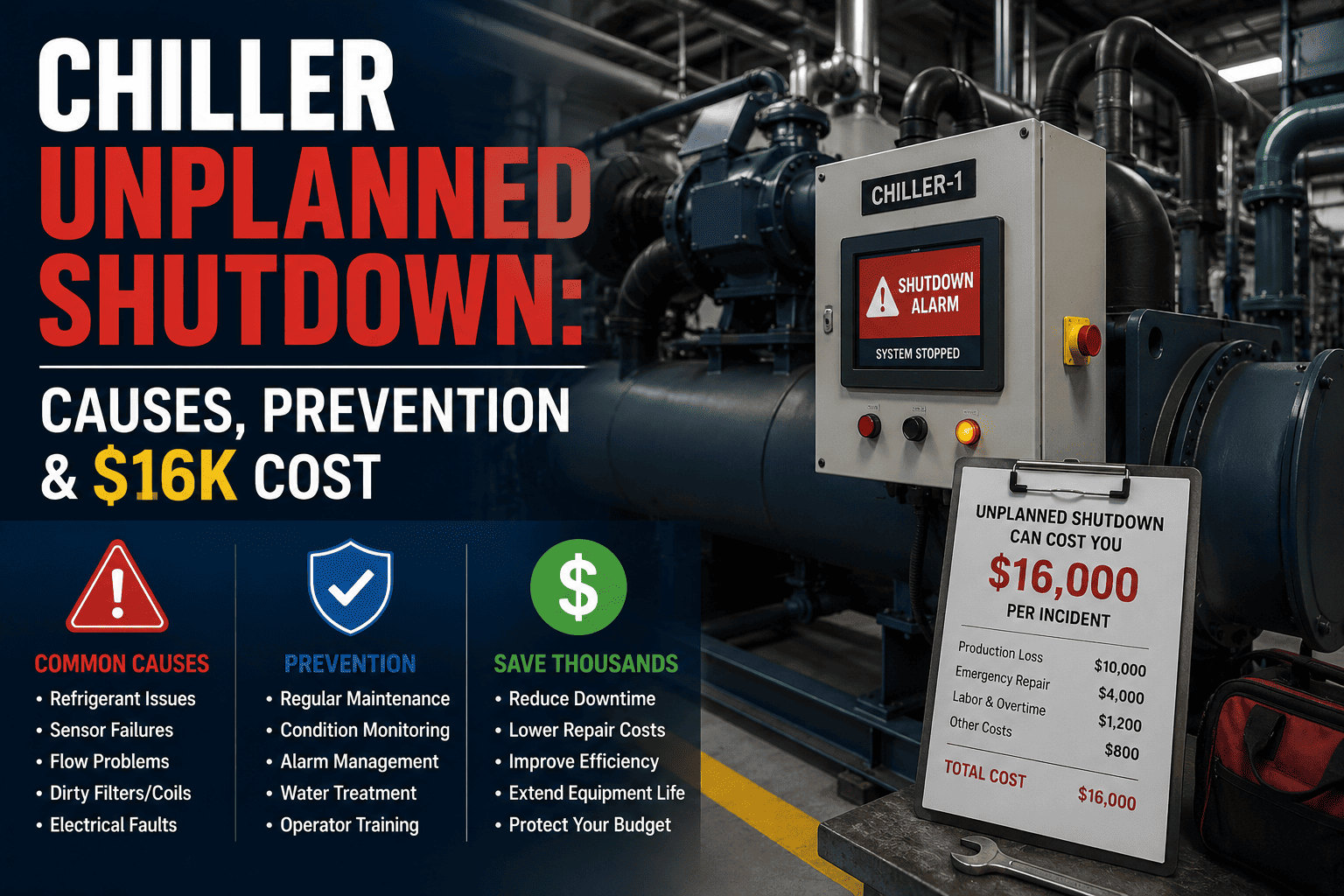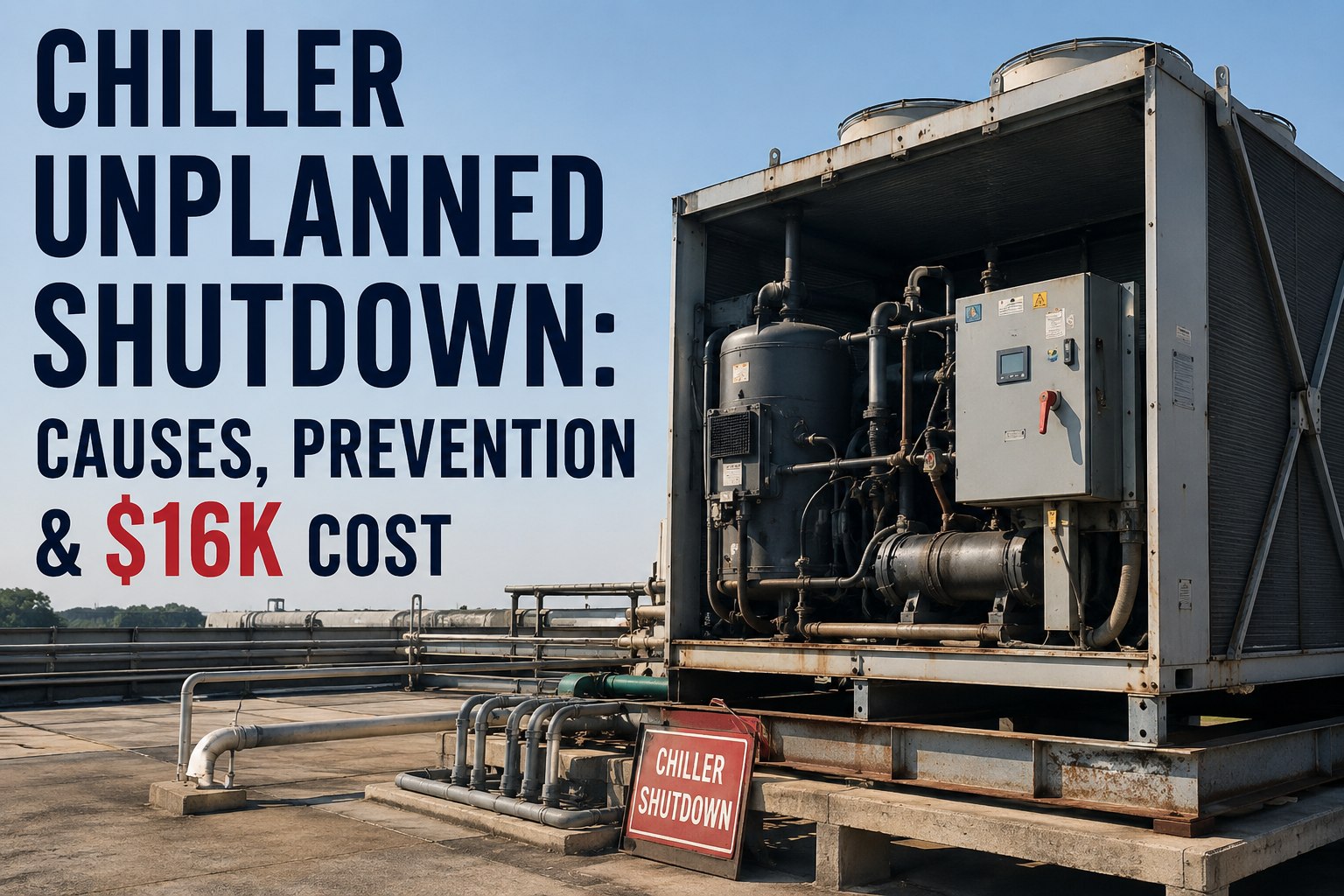
A chiller unplanned shutdown costs industrial and commercial facilities an average of $16,000 per emergency repair event, factoring in rush labor, replacement parts, and lost operational output. The primary chiller shutdown causes include refrigerant leaks, condenser tube fouling, lubrication system failures, and undetected electrical faults—all of which escalate during reactive, run-to-failure maintenance models. Preventing chiller failure requires a systematic shift from emergency troubleshooting to data-driven predictive maintenance, which is where a modern CMMS becomes essential. By implementing OxMaint for chiller shutdown prevention, maintenance teams can reduce emergency downtime by up to 50% and eliminate the recurring costs of reactive repairs. Start your Start Free Trial today to transition from costly emergency response to proactive asset reliability.
$16,000 per shutdown — can your maintenance budget absorb the next failure?
When a chiller goes down unannounced, the financial impact compounds by the hour. Rush refrigerant charges, overtime labor, and spoiled inventory turn a preventable wear issue into a five-figure emergency. OxMaint's predictive CMMS flags the warning signs 7–14 days before catastrophic failure.
What causes a chiller unplanned shutdown? The 5 most common failure modes
Over 80% of emergency chiller shutdowns stem from five degradation patterns that develop over weeks or months. Identifying which failure mode is accelerating on your assets is the first step in chiller failure prevention.
Refrigerant Leaks & Charge Loss
Low refrigerant charge causes the evaporator pressure to drop, tripping low-pressure safeties. A 10% refrigerant loss reduces cooling capacity by 15–20% and forces the compressor to run overloaded, accelerating wear. Without continuous monitoring, leaks go undetected until the shutdown event triggers.
Condenser & Evaporator Tube Fouling
Scale buildup and biological fouling insulate heat-transfer surfaces. Just 0.6mm of scale increases energy consumption by 20% and raises head pressure until the high-pressure safety switch forces an emergency chiller shutdown. Regular tube cleaning is the most underutilized preventive task in commercial facilities.
Lubrication System Failures
Compressor bearing failures represent 40% of total chiller breakdown causes. Degraded oil, clogged filters, and faulty oil pumps starve the bearings of lubrication. When oil differential pressure drops below 12 PSI, the compressor seizes within minutes if the safety controller does not intervene.
Electrical Faults & Motor Burnout
Stator winding insulation degrades due to thermal stress and voltage imbalances. A 3% voltage unbalance increases motor heating by 25%, shortening insulation life by half. Megger testing and thermal imaging are critical preventive maintenance tasks that catch these faults before a catastrophic short circuit triggers an unplanned shutdown.
Control System & Sensor Drift
Failed entering-chilled-water sensors, drifting pressure transducers, and corrupted controller logic cause false safety trips. While not a mechanical failure, these sensor faults account for 15% of all chiller downtime causes, and they are the most preventable with automated CMMS sensor calibration scheduling.
The true chiller emergency repair cost: a $16,000 anatomy
When finance teams ask why an emergency chiller shutdown cost $16,000, the answer lies in the cascading rush costs. Here is a real-world breakdown from a 2024 facility audit of a 180-asset commercial building experiencing a 400-ton centrifugal chiller failure.
| Cost Component | Standard Rate | Emergency Rate | Total Billed |
|---|---|---|---|
| Mechanical Contractor Labor (12 hrs @ 3x overtime) | $145/hr | $435/hr | $5,220 |
| Expedited OEM Compressor Bearing Kit | $2,400 | $3,800 | $3,800 |
| R134a Refrigerant Recharge (120 lbs) | $25/lb | $40/lb | $4,800 |
| Electrical Subcontractor (Motor Megger & Rewire) | $1,200 | $2,500 | $2,500 |
| Collateral Loss (Data Center Server Throttling) | — | — | $0 |
| Total Emergency Repair Cost | $16,320 | ||
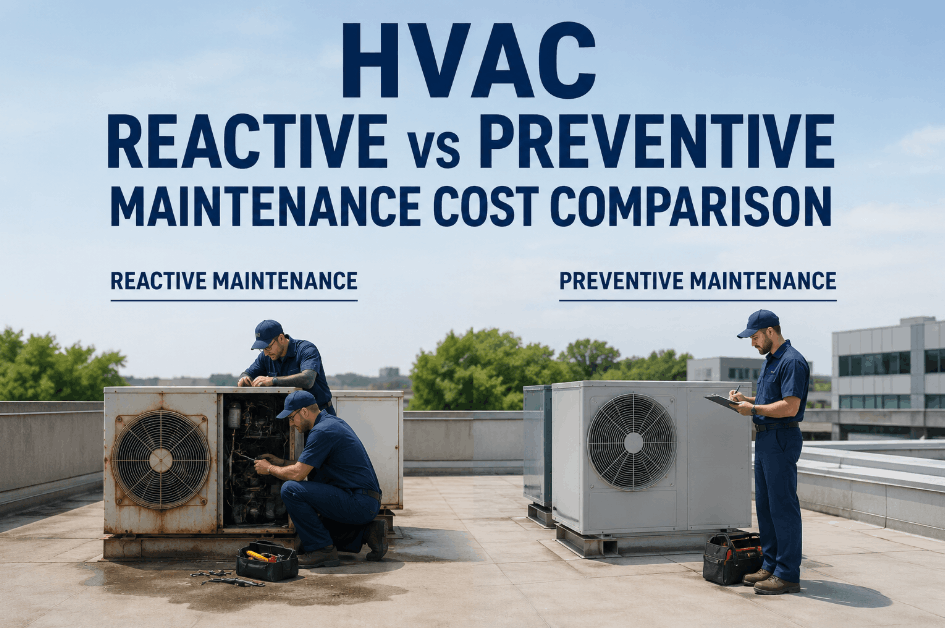
In this scenario, a $200 quarterly vibration analysis and a $450 oil sampling test—totaling $2,600 annually—would have detected the bearing degradation months before the emergency. The facility paid a 628% premium by operating reactively instead of using a chiller emergency CMMS to schedule condition-based interventions.
How to prevent chiller failure with a condition-based maintenance program
Moving from time-based preventive maintenance to condition-based predictive maintenance reduces unplanned chiller shutdowns by up to 50%. This timeline outlines the 12-month progression of a reliability program powered by OxMaint.
Asset Registry & Baseline Data Capture
Upload all chiller assets into OxMaint, mapping OEM specifications, serial numbers, and baseline operating pressures. Digital work orders replace paper logs, and QR codes are mounted on equipment for instant mobile access to maintenance history.
PM Schedule Automation & Compliance
Deploy automated preventive maintenance triggers for tube cleaning, oil changes, and refrigerant top-offs based on runtime hours. Ensure all tasks meet ASHRAE Guideline 3 and ISO 55000 compliance standards for audit readiness.
Predictive Sensor Integration
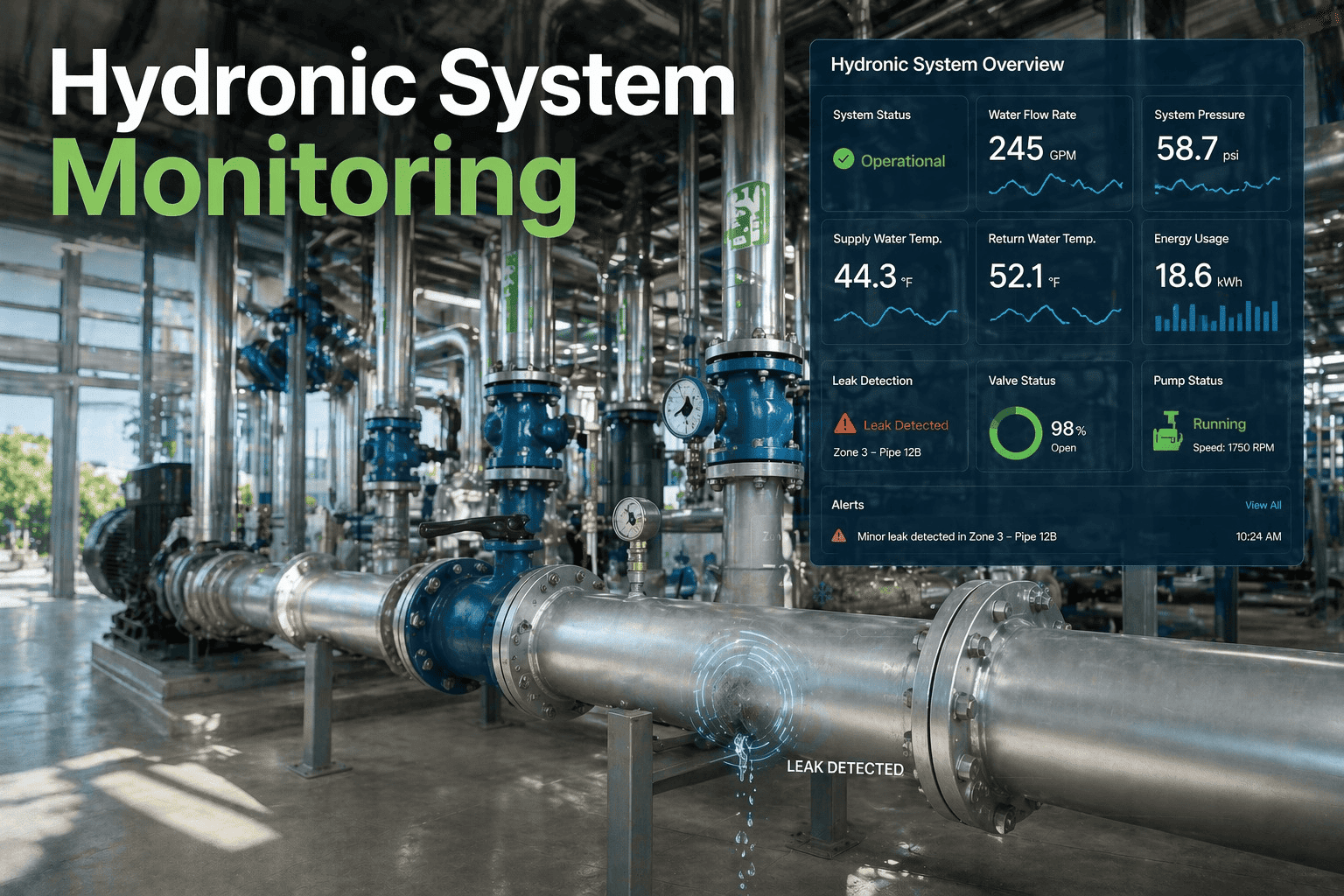
Integrate IoT vibration sensors and oil quality monitors. OxMaint's AI analytics begin correlating data trends—such as rising bearing temperatures paired with increasing vibration amplitudes—to predict chiller failure 7–14 days before a safety trip occurs.
Reliability Optimization & ROI Realization
Analyze maintenance analytics dashboards to identify remaining reactive work orders. Facilities typically achieve a 30–50% reduction in unplanned downtime and a 15% drop in energy consumption through optimized heat-transfer cleaning cycles.
How OxMaint helps prevent chiller unplanned shutdowns
OxMaint is an AI-powered CMMS and EAM platform designed specifically for maintenance and reliability teams transitioning away from reactive troubleshooting. Here is how our capabilities directly map to chiller shutdown prevention.
AI Predictive Failure Alerts
Machine learning models analyze vibration, temperature, and pressure trends to flag bearing degradation and refrigerant leaks 7–14 days before a shutdown. Outcome: Cut unplanned downtime by 30–50%.
Automated PM Work Orders
Trigger condition-based work orders for tube cleaning, oil sampling, and filter replacements based on runtime hours or sensor thresholds. Outcome: Eliminate missed PMs and reduce emergency repair costs by 40%.
Spare Parts & Refrigerant Tracking
Maintain real-time inventory of critical bearings, seals, and refrigerant cylinders. Automated reorder points ensure parts are always in stock before a failure is predicted. Outcome: Cut rush-order freight premiums by 90%.
Maintenance Analytics & OEE Dashboards
Track MTBF, MTTR, and asset availability in real-time. Prove compliance with ISO 55000 and ASHRAE standards during audits with automated digital logs. Outcome: Achieve 98%+ audit pass rates effortlessly.
Stop budgeting $16K for preventable chiller failures
See OxMaint on your assets — book a 30-min demo and learn how to predict and prevent chiller shutdowns before they cost you a dime.
Chiller unplanned shutdown: causes, costs & prevention
What is the average cost of a chiller emergency shutdown?
The average chiller emergency repair cost is $16,000 per event, driven by 3x overtime labor rates, expedited OEM parts freight, and emergency refrigerant recharges. For mission-critical facilities like data centers or food processing, collateral downtime losses can push the total above $50,000 per hour. You can eliminate these rush premiums by starting a Start Free Trial with OxMaint to automate your preventive maintenance scheduling.
What are the most common causes of chiller breakdowns?
The most common chiller breakdown causes are refrigerant leaks, condenser tube fouling, compressor lubrication failures, electrical motor burnouts, and control sensor drift. Over 80% of these failures develop gradually over weeks, meaning continuous monitoring via a CMMS can detect the degradation long before a safety trip forces an emergency shutdown.
How does a CMMS prevent chiller failure?
A chiller emergency CMMS like OxMaint prevents failure by automating condition-based preventive maintenance work orders, tracking real-time IoT sensor data for predictive analytics, and maintaining critical spare parts inventory. This proactive approach reduces unplanned downtime by 30–50% and ensures interventions happen during planned maintenance windows, not during emergencies.
How often should chillers undergo preventive maintenance?
Quarterly preventive maintenance is the minimum standard for commercial chillers, including oil sampling, filter replacement, and refrigerant level checks. Annual maintenance should include tube cleaning, megger testing, and full control calibration. Facilities using predictive maintenance can extend these intervals safely based on actual equipment condition rather than a fixed calendar.
Can predictive maintenance really predict chiller shutdowns?
Yes. By integrating vibration analysis, oil quality monitoring, and pressure trend data, predictive maintenance algorithms can identify bearing wear, refrigerant leaks, and heat-transfer degradation 7–14 days before a catastrophic failure. To see how this works on your specific assets, Book a Demo with our reliability engineering team.
Ready to eliminate $16K chiller emergencies?
Join the maintenance teams using OxMaint to predict failures, automate work orders, and keep their chillers running at peak efficiency.
Free 14-day trial · No credit card