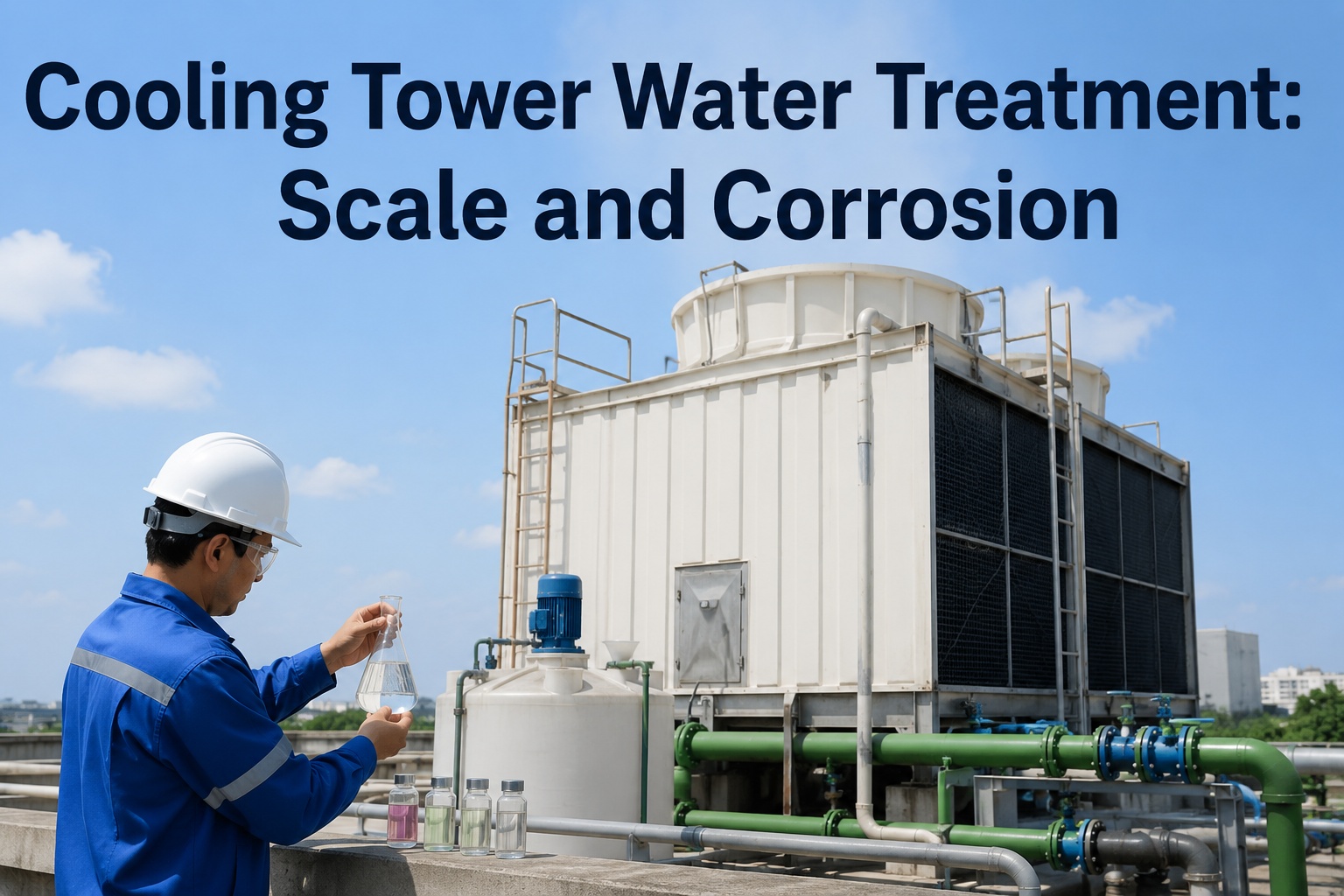
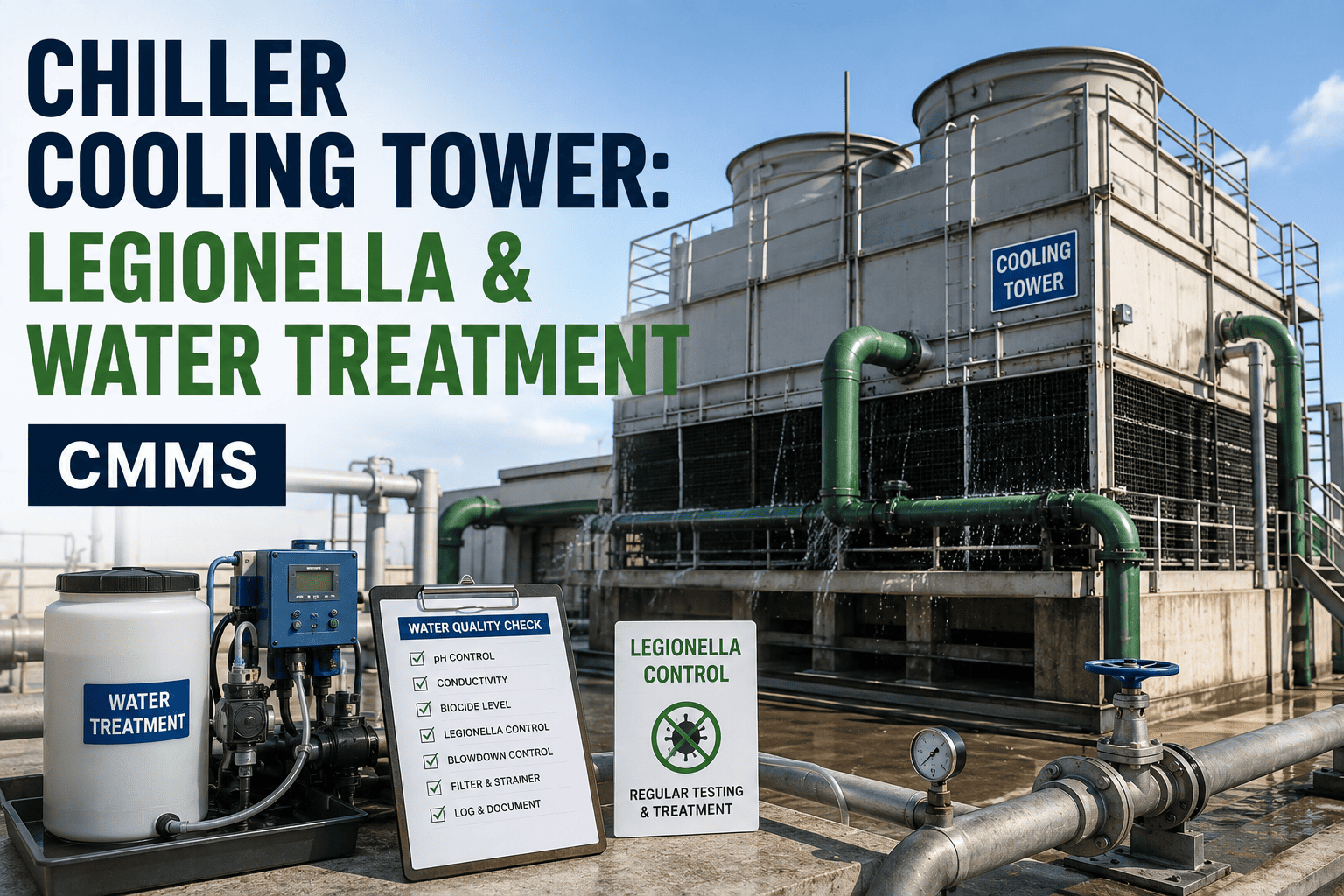
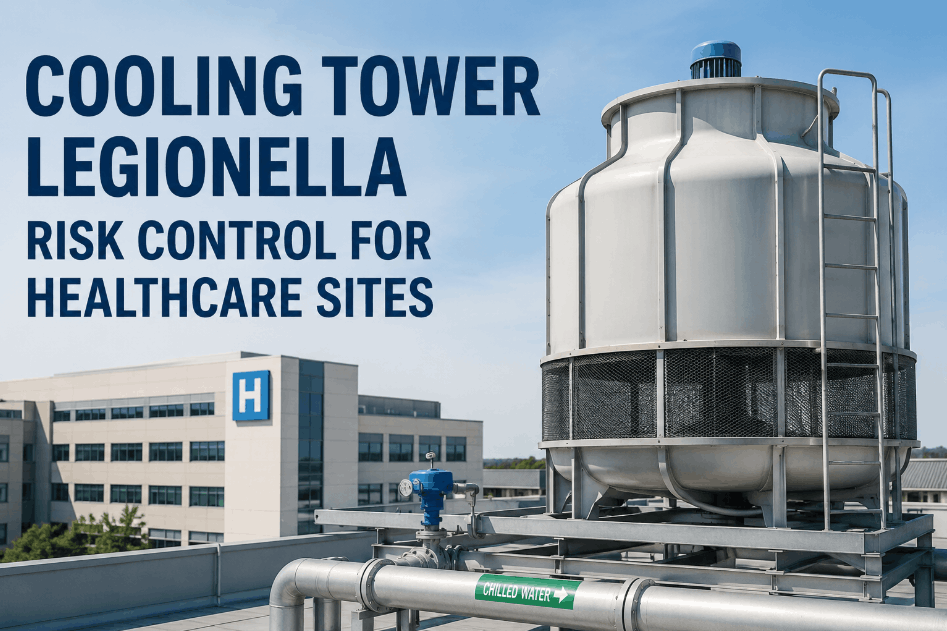
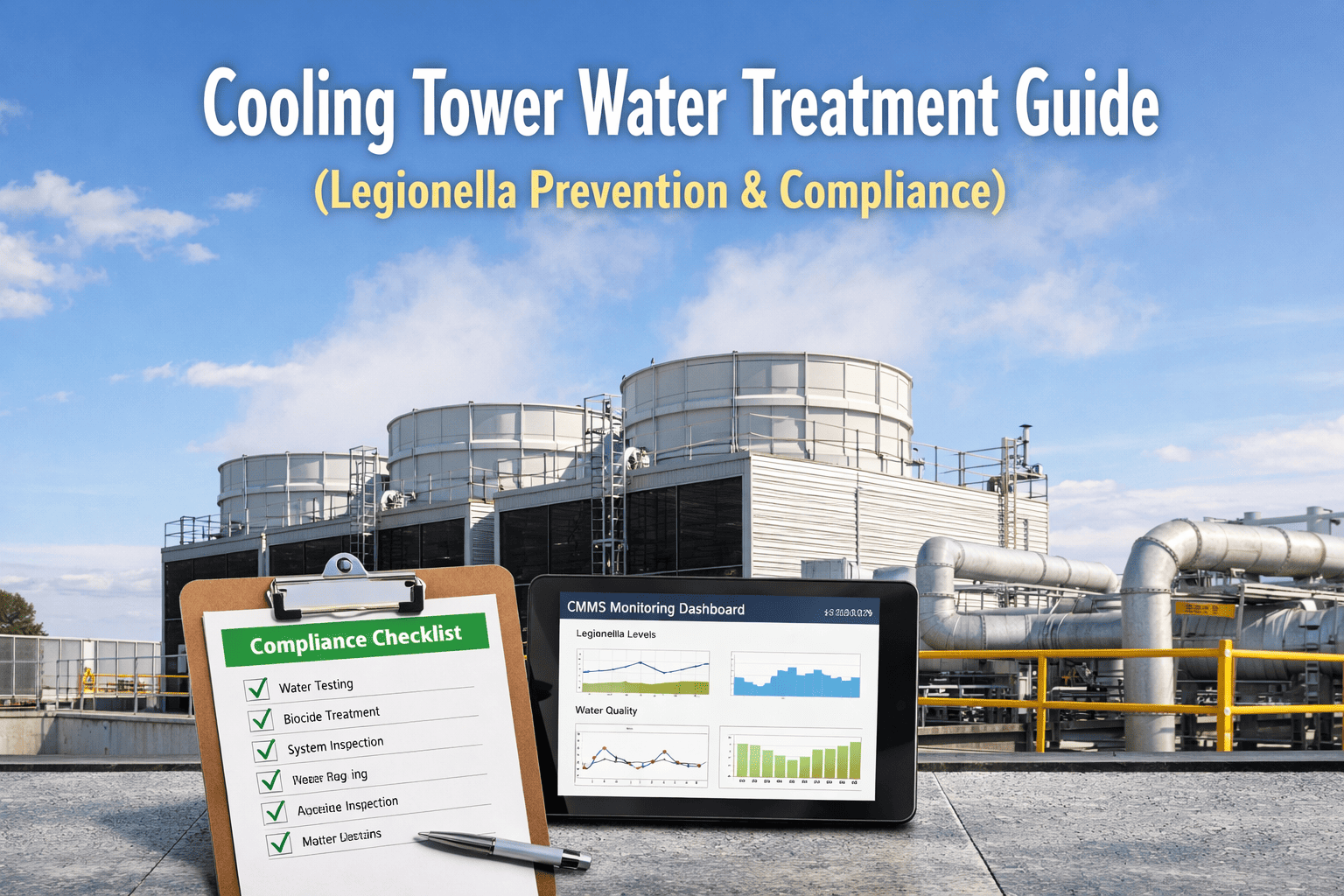
A 500-ton cooling tower serving a downtown hospital develops a thin biofilm layer across its fill media over six weeks. The water treatment vendor's monthly visit is still two weeks away. Meanwhile, water temperature rises 4°F above design conditions, forcing the chiller plant to work harder. Then a routine environmental health inspection detects Legionella pneumophila at 1,200 CFU/L—twelve times the action threshold. The hospital shuts down the tower immediately. Emergency chemical treatment, environmental testing, and regulatory reporting cost $165,000. Two staff members and one immunocompromised patient test positive for Legionnaires' disease. Lawsuits follow. The total financial exposure exceeds $2.8 million. All because a $3,500 quarterly cleaning and a $200/month biocide treatment program weren't executed on schedule. The bacteria didn't appear overnight—the maintenance program simply wasn't designed to prevent what cooling towers inevitably breed without vigilance.
Digital cooling tower maintenance management powered by CMMS platforms, automated water chemistry monitoring, and compliance-driven workflows transforms this equation. Instead of relying on monthly vendor visits and manual log sheets, intelligent maintenance systems continuously track water conductivity, pH, biocide residual, temperature differentials, and basin conditions—triggering interventions the moment parameters drift outside safe ranges. The global cooling tower market reached $4.8 billion in 2024 and is growing at 5.2% CAGR, while Legionella testing and water management compliance markets are expanding at 12.4% CAGR driven by ASHRAE Standard 188, CMS requirements for healthcare facilities, and New York City Local Law 77 mandates now being replicated in jurisdictions worldwide. Leading facility teams are building digital Legionella prevention into their operations today—schedule a demo to see how Oxmaint brings compliant cooling tower management to your facility.
Cooling Tower Maintenance Intelligence
Preventing Legionella & maximizing efficiency through digital management
$4.8B
Global cooling tower market value in 2024
10,000+
Legionnaires' cases reported annually in the U.S.
25-40%
Energy savings with optimized tower maintenance
$0.5-2.8M
Average cost per Legionella outbreak incident
The Dual Mandate: Why Cooling Tower Maintenance Is Uniquely Critical
Cooling towers occupy a singular position in building maintenance: they're the only major HVAC asset where maintenance failure can directly kill people. No other building system simultaneously carries life-safety risk from waterborne pathogens, regulatory compliance obligations with criminal liability, massive energy optimization potential, and environmental discharge responsibilities. This dual mandate—protecting human health while maximizing energy efficiency—demands a maintenance approach far more rigorous, documented, and digitally managed than any other building system. Treating cooling tower maintenance like routine HVAC upkeep is a liability time bomb.
Health & Safety Mandate
Legionella Prevention
Cooling towers are the #1 source of Legionnaires' disease outbreaks. Biofilm harbors bacteria even in treated water. ASHRAE 188 requires documented Water Management Programs.
Regulatory Compliance
NYC Local Law 77, CMS healthcare requirements, state registration mandates, and EPA discharge permits—all requiring documented maintenance with audit trails.
Liability Exposure
Legionella lawsuits average $500K-$2.8M per incident. Criminal charges possible for negligent maintenance. Insurance increasingly requires documented WMPs.
Efficiency & Performance Mandate
Energy Optimization
Every 1°F increase in condenser water temperature raises chiller energy consumption 1-2%. Fouled towers can waste 25-40% of chiller plant energy annually.
Water Conservation
Improperly managed cycles of concentration waste 20-50% more water than necessary. Scale and corrosion from poor chemistry destroy fill media and basins.
Equipment Longevity
Corrosion, scale, and biological fouling reduce tower lifespan from 20-25 years to 8-12 years. Fill media replacement alone costs $50,000-$200,000+.
The Legionella Risk Chain: Where Maintenance Breaks the Cycle
Legionella bacteria exist naturally in freshwater at low, harmless concentrations. Cooling towers create the perfect amplification environment: warm water (77-108°F), nutrient-rich biofilm surfaces, stagnant zones in basins and dead legs, and aerosol generation that distributes contaminated droplets across surrounding areas. Every link in this amplification chain represents a maintenance intervention point. Digital CMMS platforms ensure none of these intervention points are missed—because in Legionella prevention, a single skipped task can create conditions for exponential bacterial growth within 48-72 hours.
Legionella Amplification Chain & Maintenance Intervention Points
01
Entry
Legionella enters via makeup water supply at low concentrations (typically <1 CFU/mL)
Intervention: Makeup water treatment, inlet filtration, source water testing
02
Colonization
Bacteria attach to biofilm on fill media, basin surfaces, and dead-leg piping where flow is minimal
Intervention: Biocide treatment, biofilm removal, dead-leg elimination, basin cleaning
03
Amplification
Warm water (77-108°F) + nutrients + biofilm protection = exponential growth to dangerous concentrations
Intervention: Temperature management, biocide residual monitoring, water chemistry control
04
Dissemination
Tower drift eliminates aerosolize contaminated water droplets, spreading bacteria up to 2+ miles downwind
Intervention: Drift eliminator maintenance, aerosol containment, high-efficiency eliminators
05
Exposure
Susceptible individuals inhale contaminated aerosols—elderly, immunocompromised, and smokers at highest risk
Intervention: Validated WMP, routine Legionella testing, outbreak response protocol
Critical Water Chemistry Parameters for Digital Monitoring
Cooling tower water chemistry is a dynamic balancing act between corrosion control, scale prevention, biological growth inhibition, and environmental compliance. The parameters interact—adjusting pH to control scale can reduce biocide effectiveness; increasing blowdown to manage conductivity increases water consumption and chemical costs. Digital monitoring systems that track these parameters continuously and correlate their interactions make the difference between reactive troubleshooting and proactive water management. Manual weekly testing simply cannot capture the rapid chemistry swings that occur during load changes, weather events, or process upsets.
Essential Cooling Tower Water Chemistry Parameters
Parameter
Target Range
Why It Matters
Monitoring Frequency
Conductivity (TDS)
1,500-3,000 μS/cm
Controls cycles of concentration—too high causes scale, too low wastes water and chemicals
Continuous
pH
7.0-9.0
Affects corrosion rate, scale tendency, and biocide effectiveness simultaneously
Continuous
ORP (Biocide Residual)
300-500 mV
Indicates oxidizing biocide activity—primary defense against Legionella and biofilm
Continuous
Alkalinity
100-500 ppm as CaCO₃
Buffers pH swings and influences calcium carbonate scale potential (LSI calculation)
Weekly
Hardness
200-800 ppm as CaCO₃
Drives calcium scale formation on fill and heat exchange surfaces—reduces heat transfer efficiency
Weekly
Legionella Culture
<100 CFU/L
Direct pathogen measurement—actionable thresholds defined by ASHRAE 188 and local regulation
Monthly / per WMP
Cooling Tower Component Maintenance Matrix
Cooling towers contain mechanical, structural, and chemical treatment components that each degrade on different timelines and through different mechanisms. Digital CMMS platforms manage this complexity by maintaining component-level asset records with distinct maintenance schedules, condition triggers, and inspection protocols—ensuring nothing falls through the cracks in a system where a single missed task can create either a health hazard or a significant energy penalty.
Component Maintenance Priority & Task Framework
Legionella Critical
Fill Media & Distribution
Monthly: Visual inspection for fouling, algae, debris accumulation
Quarterly: Pressure wash or chemical clean, distribution nozzle flush
Annual: Fill media integrity assessment, replacement planning for degraded sections
Fouled fill reduces thermal performance 10-30% and harbors Legionella biofilm
Legionella Critical
Basin & Sump
Weekly: Inspect for sediment, debris, and biological growth
Quarterly: Full basin drain, clean, disinfect, and structural inspection
Annual: Basin coating inspection, leak testing, sump heater verification
Basin sediment is the primary Legionella reservoir—cleaning is the #1 prevention task
Legionella Critical
Drift Eliminators
Monthly: Visual inspection for damage, displacement, and bypass gaps
Semi-Annual: Full cleaning and alignment verification
Annual: Drift rate measurement, replacement of degraded sections
Damaged eliminators increase Legionella aerosol emission up to 100x above specification
Performance Critical
Fan Assembly & Drive
Monthly: Vibration reading, belt/gear inspection, motor amp draw check
Quarterly: Bearing lubrication, fan blade pitch verification, VFD parameter check
Annual: Complete mechanical inspection, alignment, and balance verification
Fan failure eliminates tower capacity—emergency rental towers cost $5,000-$15,000/week
Performance Critical
Water Treatment System
Daily: Chemical feed pump operation, biocide residual verification
Weekly: Chemical inventory, controller calibration check, coupon rack reading
Monthly: Full water analysis, corrosion rate review, treatment program optimization
Treatment interruption allows bacterial growth to resume within 24-48 hours
Performance Critical
Structural & Mechanical
Monthly: Louver condition, casing integrity, access door seals check
Quarterly: Valve operation test, strainer cleaning, overflow verification
Annual: Structural steel inspection, anchor bolt torque, seismic restraint check
Structural deterioration causes catastrophic collapse—$500K-$2M replacement cost
Ready to Digitize Your Cooling Tower Compliance?
Stop relying on paper logs and monthly vendor visits. Build an audit-ready, Legionella-compliant cooling tower program with Oxmaint's digital platform.
Compliance Framework: ASHRAE 188 & Beyond
Cooling tower maintenance compliance is no longer optional—it's a legal obligation with expanding enforcement. ASHRAE Standard 188 requires documented Water Management Programs for all buildings with cooling towers. CMS mandates compliance for Medicare-certified healthcare facilities. New York City Local Law 77 imposes registration, quarterly inspections, and annual certification requirements with fines up to $10,000 per violation—and similar regulations are spreading to other jurisdictions. Digital CMMS platforms transform compliance from a paperwork burden into an automated, audit-ready process where every inspection, test result, and corrective action is timestamped, documented, and instantly retrievable.
Cooling Tower Regulatory Compliance Landscape
Federal
ASHRAE Standard 188
Requires documented Water Management Program including risk assessment, control measures, monitoring, corrective actions, and verification. Recognized as standard of care in litigation.
Key requirement: Documented WMP with management team, risk analysis, control limits, corrective actions, and verification procedures
Healthcare
CMS Requirements
Centers for Medicare & Medicaid Services requires ASHRAE 188-compliant WMPs for all Medicare-certified healthcare facilities. Non-compliance risks survey citations and reimbursement.
Key requirement: Facility-specific WMP with routine Legionella testing, documented corrective actions, and staff training records
Local Law
NYC Local Law 77 (Model)
Mandates cooling tower registration, quarterly Legionella testing, annual certification, and immediate reporting of positive results. Fines up to $10,000/violation. Being replicated nationwide.
Key requirement: Registration, quarterly testing, annual certification by qualified inspector, 24-hour positive result notification
Environmental
EPA & State Discharge
Cooling tower blowdown requires NPDES permits in many jurisdictions. Chemical treatment products, chromate alternatives, and thermal discharge all have regulatory thresholds.
Key requirement: Blowdown discharge permits, chemical inventory documentation, environmental monitoring records
Implementation Blueprint: Building a Digital Cooling Tower Program
Implementing digital cooling tower management requires a phased approach that addresses compliance documentation first (highest liability risk), then layers in performance optimization and predictive capabilities. Unlike other HVAC systems where a gradual rollout works, cooling tower compliance has no grace period—if you have a tower, you need a documented WMP now. Digital platforms accelerate this from months of manual documentation to weeks of structured deployment.
Your 90-Day Digital Cooling Tower Management Roadmap
Days 1-30
Compliance Foundation
Register all cooling towers per local jurisdiction requirements
Document Water Management Program per ASHRAE 188 framework
Inventory all tower components, water treatment equipment, and chemical programs
Deploy CMMS with cooling tower compliance templates and audit-trail logging
Days 31-60
Monitoring & Workflows
Install continuous water chemistry monitoring (conductivity, pH, ORP minimum)
Configure automated Legionella testing schedules and result tracking
Build digital inspection checklists with photo documentation requirements
Train all maintenance and water treatment staff on digital workflows
Days 61-90
Intelligence & Optimization
Activate condition-based triggers for water chemistry excursions
Launch energy performance dashboards tracking approach temperature and efficiency
Implement automated compliance reporting for regulatory submissions
Document baseline performance and plan multi-site expansion
Day 90+
Scale & Predict
Expand to all cooling towers across portfolio
Implement predictive analytics for fill degradation and fan motor health
Integrate with chiller plant optimization for system-level efficiency gains
Automate annual certification and regulatory renewal documentation
Measuring ROI: The Three-Dimensional Business Case
Cooling tower maintenance ROI is uniquely three-dimensional: risk avoidance (Legionella liability), energy savings (chiller plant efficiency), and asset preservation (tower lifespan extension). Most ROI calculations for other HVAC systems focus primarily on energy—but for cooling towers, the risk avoidance component alone often dwarfs all other financial considerations. A single Legionella incident typically costs $500,000 to $2.8 million when you include remediation, testing, legal defense, regulatory fines, and reputation damage. Preventing just one incident over a tower's lifetime pays for decades of premium maintenance.
Cooling Tower Maintenance ROI: Three Dimensions
Risk Avoidance
$0.5-2.8M
Avoided per Legionella incident prevented
100%
Audit readiness with digital compliance documentation
Eliminated
Regulatory fines from missed testing or documentation gaps
Energy Savings
25-40%
Reduction in chiller plant energy from optimized tower performance
15-30%
Water and chemical cost savings through optimized cycles
2-4°F
Approach temperature improvement from clean fill and proper water treatment
Asset Preservation
2x
Tower lifespan extension (12yr → 25yr) with proper maintenance
50-70%
Fewer emergency mechanical repairs and unplanned shutdowns
Deferred
$200K-$1M+ tower replacement capital through lifespan extension
A commercial real estate portfolio with 28 cooling towers across 9 properties implemented digital CMMS-based cooling tower management. In the first year, they achieved zero Legionella positive test results (vs. 3 positives the prior year requiring $78,000 in remediation), reduced chiller plant energy costs by 22% ($310,000 annual savings) through optimized tower approach temperatures, and documented sufficient compliance records to reduce their environmental liability insurance premiums by 15% ($42,000 annually). Total first-year savings of $430,000 against a platform investment of $68,000 delivered 6.3x ROI—and that calculation excludes the incalculable value of zero Legionella incidents in a portfolio that includes two healthcare facilities. Create your free Oxmaint account today and start building audit-ready cooling tower documentation with real-time water quality intelligence.
Protect Lives. Protect Efficiency. Protect Your Organization.
Digital cooling tower management isn't optional—it's the standard of care. Build your ASHRAE 188-compliant program with Oxmaint's purpose-built platform.
Frequently Asked Questions
What is a Water Management Program and do I need one?
A Water Management Program (WMP) is a documented system for controlling waterborne pathogen risk in building water systems, required by ASHRAE Standard 188 for any building with a cooling tower. It includes a management team designation, system description and flow diagrams, hazard analysis identifying risk points, control measures with monitoring procedures, corrective action protocols, and verification through routine Legionella testing. If your building has a cooling tower, you legally need a WMP—and in litigation, not having one is treated as evidence of negligence.
How often should cooling towers be tested for Legionella?
ASHRAE 188 recommends routine Legionella culture testing as part of verification procedures but doesn't specify exact frequency—leaving it to the WMP team's risk assessment. In practice, most compliant programs test monthly during cooling season and quarterly year-round. NYC Local Law 77 mandates quarterly testing. Healthcare facilities under CMS requirements typically test monthly. Digital CMMS platforms automate testing schedules, track results, and trigger corrective actions when counts exceed thresholds (typically >100 CFU/L for investigation, >1,000 CFU/L for immediate action).
How does cooling tower maintenance affect chiller energy efficiency?
Cooling tower performance directly determines condenser water temperature—and every 1°F increase in condenser water costs approximately 1-2% more chiller energy. A fouled tower with degraded fill, scaled heat exchange surfaces, or poor water distribution can easily deliver condenser water 5-10°F warmer than design—translating to 5-20% higher chiller energy consumption. Maintaining clean fill media, proper water treatment, correct fan speed control, and optimal cycles of concentration typically saves 25-40% of total chiller plant energy compared to poorly maintained towers.
What's the difference between Legionella culture testing and qPCR?
Culture testing grows viable Legionella bacteria on selective media over 7-14 days, providing a count of live organisms (CFU/L). It's the regulatory standard but slow. Quantitative PCR (qPCR) detects Legionella DNA within 2-4 hours, providing rapid results—but detects both live and dead organisms, potentially overestimating risk. Best practice uses both: qPCR for rapid screening and outbreak investigation, culture testing for regulatory compliance and trend monitoring. Digital CMMS platforms track both testing methodologies and correlate results for comprehensive risk assessment.
Can digital maintenance management help with seasonal startup and shutdown?
Absolutely—seasonal transitions are the highest-risk periods for both Legionella growth and equipment damage. CMMS platforms automate comprehensive startup procedures (basin cleaning, disinfection, fill inspection, mechanical checkout, water treatment initialization, and baseline Legionella testing before operation) and shutdown protocols (system drainage, wet-lay or dry-lay preservation, winterization, and documentation). These guided workflows ensure every critical step is completed, documented, and verified—eliminating the startup shortcuts that cause the majority of early-season Legionella positive results and mechanical failures.