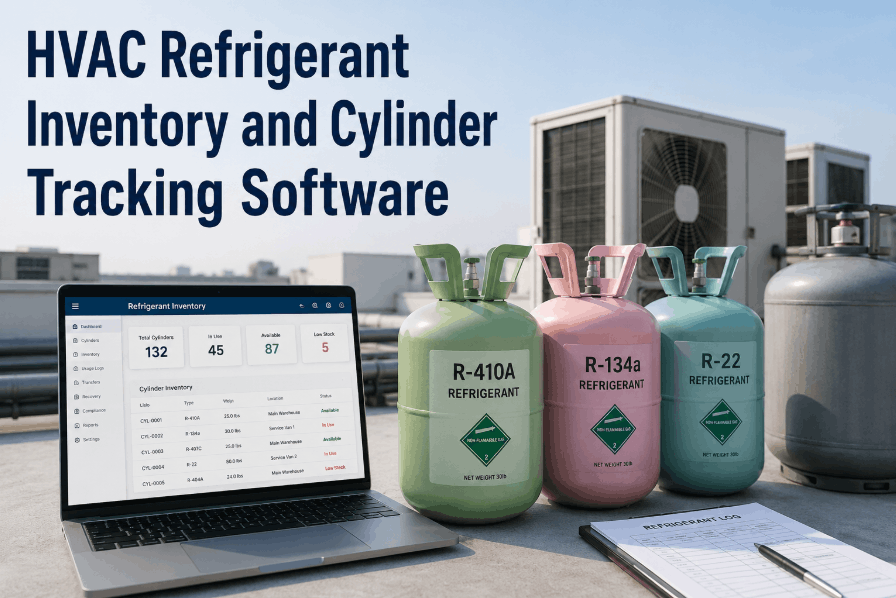
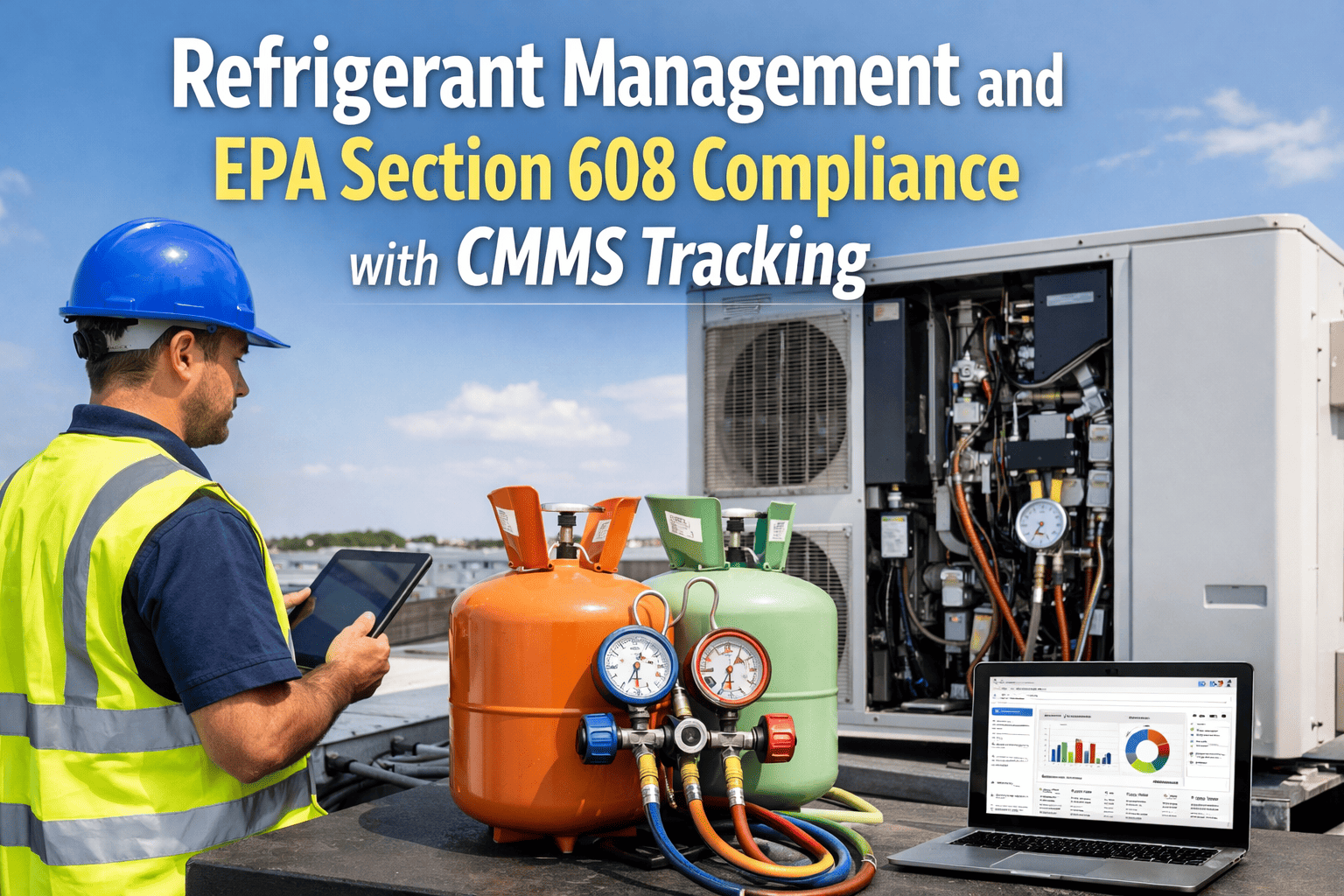
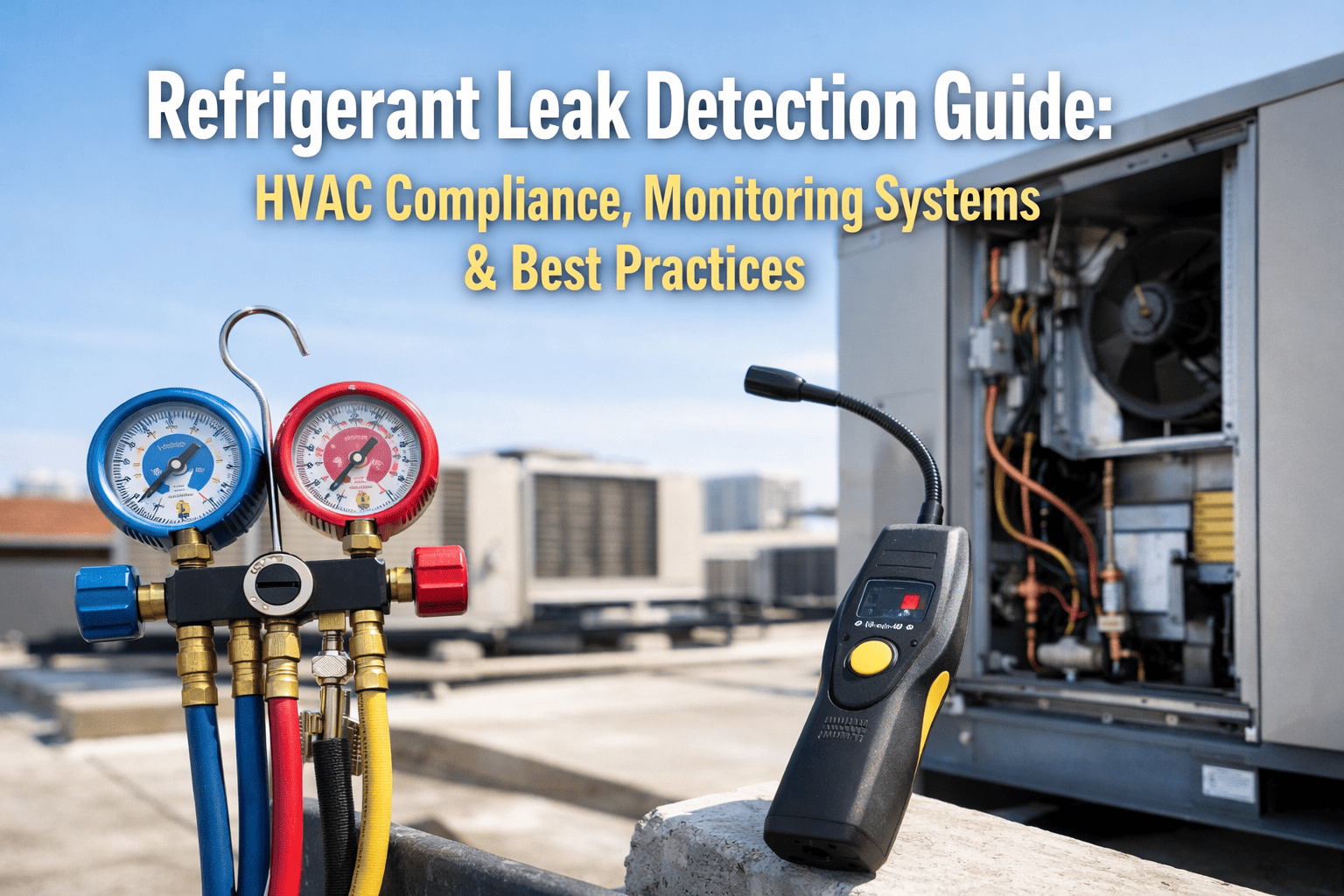
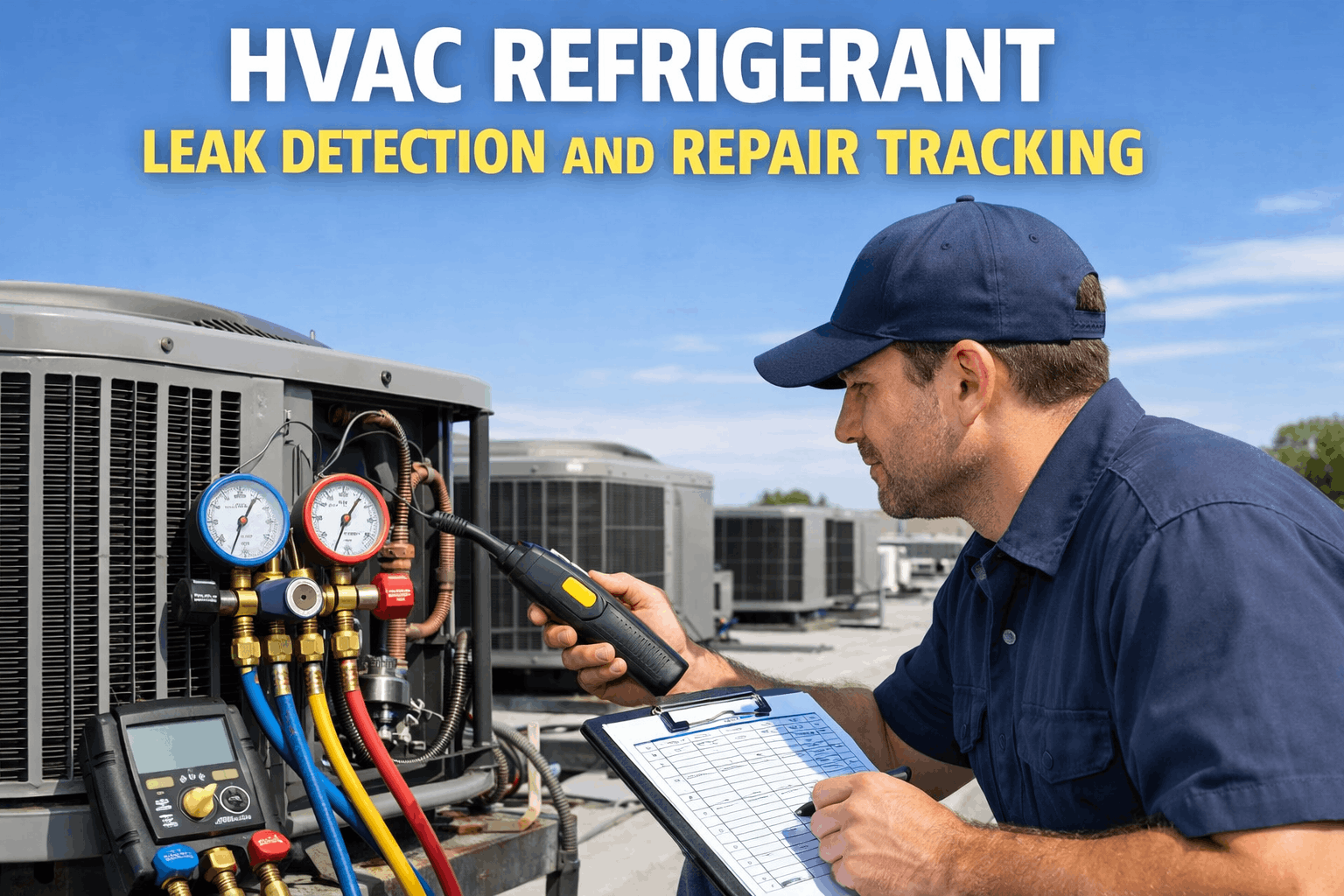
Your technician just topped off a rooftop unit with 15 pounds of R-410A. Did anyone log it? Is that unit's cumulative leak rate now above the EPA threshold? Can you prove it in an audit? If the answer to any of those questions is "I'm not sure," your facility is one inspection away from fines that start at $44,539 per day per violation under the Clean Air Act. EPA Section 608 isn't a suggestion—it's federal law. Every pound of refrigerant your organization purchases, recovers, reclaims, or vents must be tracked, documented, and available for regulatory review. Yet most HVAC operations still manage this with spreadsheets, paper logs, or nothing at all. The gap between what the EPA requires and what most facilities actually document is where compliance risk lives—and it's growing.
$44,539
Maximum EPA fine per violation per day under the Clean Air Act enforcement
87%
Of facilities fail to maintain complete refrigerant records required by EPA Section 608
30 days
Maximum time allowed to repair a leak once it exceeds the applicable trigger rate
What EPA Section 608 Actually Requires
Section 608 of the Clean Air Act regulates the handling, recovery, and documentation of refrigerants used in HVAC and refrigeration equipment. The requirements aren't optional and they aren't vague—the EPA spells out exactly what must be tracked, by whom, and for how long. The challenge for most facilities isn't understanding the law. It's operationalizing it across dozens or hundreds of equipment assets with technicians who rotate, vendors who change, and record-keeping systems that were never designed for compliance. Facilities that sign up for automated refrigerant tracking close this gap by digitizing every pound from purchase to recovery.
Leak Rate Tracking
Calculate and document annualized leak rates for every appliance containing 50+ lbs of refrigerant. Commercial systems trigger at 20%; industrial/comfort cooling at 30%.
Repair Deadlines
Once a leak exceeds the trigger rate, you have 30 days to complete the repair and verify it. Extensions require documented retrofit or retirement plans filed within the deadline.
Record Retention
Maintain service records for every appliance for a minimum of 3 years. Records must include date, technician, refrigerant type, quantity added/removed, and leak test results.
Purchase & Recovery Logs
Track every refrigerant transaction: purchases from certified suppliers, quantities charged into systems, amounts recovered during service, and volumes sent for reclamation or destruction.
Technician Certification
Every person who opens a refrigerant circuit must hold the appropriate EPA 608 certification (Type I, II, III, or Universal). Facilities must verify and document certification status.
Venting Prohibition
Knowingly venting or releasing refrigerants is illegal. All refrigerant must be recovered before opening equipment for service, repair, or disposal—no exceptions.
The Cost of Non-Compliance: What's Really at Stake
EPA enforcement isn't theoretical. The agency conducts inspections, responds to complaints, and pursues violations aggressively—particularly for repeat offenders and facilities with high-GWP refrigerants. The penalties scale with severity, but even a single documentation gap can trigger an investigation that consumes months of management time and legal fees before a single fine is assessed.
Compliant
All records current, leak rates tracked, repairs documented within deadlines, technician certs verified
Impact: Zero risk. Audit-ready at any time.
Documentation Gaps
Service records incomplete, leak calculations not performed, purchase logs missing entries
Impact: Warning notices, mandatory corrective action, potential $5,000–$15,000 in penalties.
Missed Repair Deadlines
Leak rate exceeded threshold but repair not completed within 30 days, no retrofit/retirement plan filed
Impact: Per-day fines up to $44,539. Cumulative penalties can reach six figures within weeks.
Knowing Violations
Intentional venting, falsified records, operating without certified technicians, repeated non-compliance
Impact: Criminal prosecution, fines exceeding $1M, facility shutdown orders, personal liability for managers.
The pattern in every EPA enforcement case is the same: the facility couldn't produce the records. Not that the work wasn't done—but that it wasn't documented in a way that satisfied the inspector. This is exactly the problem that software solves. Companies that sign up for digital refrigerant compliance tracking build an audit trail automatically with every service event, eliminating the documentation gap that triggers most violations.
Automate EPA 608 Compliance Before Your Next Audit
OXmaint tracks every pound of refrigerant from purchase through recovery — automatically calculating leak rates, enforcing repair deadlines, documenting technician certifications, and generating EPA-ready reports with zero manual effort.
What Refrigerant Tracking Software Actually Does
Compliance software doesn't just digitize your paper logs—it automates the calculations, alerts, and reporting that make EPA 608 compliance continuous instead of retroactive. Here's what a purpose-built refrigerant tracking platform handles that spreadsheets and paper never will.
Leak Rate Auto-Calculation
Trigger: 20%
Automatic Leak Rate Monitoring
Every refrigerant charge event automatically recalculates the annualized leak rate for that appliance. When rates approach the EPA trigger threshold, the system alerts your team before it becomes a violation—not after. No manual calculations, no missed thresholds, no surprises during audits.
Deadline Enforcement & Escalation
The moment a leak rate crosses the threshold, a 30-day countdown begins automatically. The system assigns the repair work order, sends escalation alerts at 7, 14, and 25 days, and flags any appliance approaching its deadline on the compliance dashboard. If a repair can't be completed in time, the system prompts for retrofit or retirement documentation.
Refrigerant Ledger
Purchased
+120 lbs
Charged to RTU-07
-18 lbs
Charged to AHU-03
-24 lbs
Recovered from CH-01
+42 lbs
On Hand:
120 lbs R-410A
Pound-for-Pound Refrigerant Ledger
Every refrigerant transaction is logged with date, technician, appliance ID, quantity, and refrigerant type—creating a complete chain of custody from purchase through charge, recovery, and reclamation. The running balance reconciles automatically, flagging discrepancies that could indicate undocumented venting or record-keeping errors before they become audit findings.
Compliance Dashboard: Everything Auditors Ask For
When an EPA inspector arrives, the clock starts. Every minute spent searching for records is a minute of exposure. A compliance dashboard puts every data point an auditor needs on a single screen—no searching, no compiling, no guessing. Here's what your dashboard should surface in real time.
Refrigerant Accountability
96% reconciled
Repair Compliance Rate
100% within deadline
Documentation Completeness
98% of service records complete
That dashboard isn't a mockup—it's what compliance looks like when every refrigerant event flows through a system designed for EPA 608 requirements. Facilities that book a free demo to see the live compliance dashboard can watch how leak rates calculate in real time, how repair deadlines auto-escalate, and how the system generates the exact reports auditors request—in seconds, not days.
Manual Tracking vs. Compliance Software: The Audit Test
The real test of any compliance process is what happens when someone asks to see your records. Paper-based and spreadsheet-based systems consistently fail this test—not because the data doesn't exist, but because it can't be produced quickly, completely, or confidently. Here's how the two approaches compare when it matters most.
"Show me the leak rate history for unit RTU-07."
Manual
Search through service binders, cross-reference refrigerant purchase logs, manually calculate annualized rates. Takes 2–4 hours. May be incomplete.
Software
Pull up asset profile. Leak rate history displayed with every charge event, auto-calculated rates, and threshold alerts. Takes 10 seconds.
"Prove this repair was completed within 30 days of detection."
Manual
Find the original service ticket, locate the repair invoice, hope the dates are documented clearly. Often undocumented.
Software
Detection date, work order creation, repair completion, and verification test—all timestamped with technician and photo documentation.
"Where is the refrigerant you purchased last quarter?"
Manual
Check purchase orders, try to match against service tickets, account for recovery cylinders in the warehouse. Rarely reconciles.
Software
Refrigerant ledger shows every pound: purchased, charged by appliance, recovered, reclaimed. Running balance reconciles automatically.
Expert Perspective: Why Compliance Software Pays for Itself
"
Every facility I've audited that relies on manual refrigerant tracking has gaps. Not because people are careless—because the volume of transactions makes manual tracking humanly impossible at scale. A mid-size facility with 50 appliances might have 200+ refrigerant events per year. Each one needs a date, technician ID, appliance ID, refrigerant type, quantity, and leak rate recalculation. That's over 1,200 data points annually that all need to be accurate, complete, and retrievable on demand. Software doesn't forget. Software doesn't miscalculate. And software doesn't panic when an auditor walks through the door.
01
Eliminate Calculation Errors
Annualized leak rate formulas involve charge quantities, system capacity, and time periods. Manual calculation errors are the #1 source of compliance failures in EPA audits.
02
Never Miss a Deadline
The 30-day repair window is absolute. Automated countdowns with escalation alerts ensure every repair is tracked from detection through verified completion.
03
Audit-Ready in Seconds
Generate appliance-specific or facility-wide compliance reports with one click. Every data point timestamped, every transaction linked, every record exportable.
The HVAC operations that pass EPA audits without stress share one trait: they stopped treating refrigerant tracking as a paperwork exercise and started treating it as a software-managed compliance system. If you're ready to make that shift, book a free demo to see automated EPA 608 compliance in action.
Track Every Pound. Meet Every Deadline. Pass Every Audit.
OXmaint automates EPA 608 refrigerant tracking from purchase through recovery — with automatic leak rate calculations, 30-day repair countdowns, technician certification management, and one-click audit reports. Compliance isn't optional. Make it effortless.
Frequently Asked Questions
What records does EPA Section 608 require for refrigerant tracking?
EPA Section 608 requires documentation of every refrigerant transaction for appliances containing 50 or more pounds of refrigerant. This includes the date of service, type and quantity of refrigerant added or recovered, appliance identification, technician name and certification number, leak check results, and calculated annualized leak rates. All records must be retained for a minimum of three years and be available for EPA inspection upon request. Additionally, facilities must maintain logs of all refrigerant purchases, recovery events, and reclamation shipments to demonstrate full chain-of-custody accountability.
What are the EPA leak rate thresholds that trigger mandatory repairs?
The EPA sets different trigger rates depending on appliance type. Commercial refrigeration equipment has a trigger rate of 20%, while comfort cooling (HVAC) and industrial process refrigeration systems have a trigger rate of 30%. Once the annualized leak rate exceeds the applicable threshold, the facility has 30 days to complete the repair and perform a successful verification test. If the repair cannot be completed within 30 days, the facility must develop and document a retrofit or retirement plan within the same timeframe. Failure to meet these deadlines constitutes a violation subject to penalties up to $44,539 per day.
How does refrigerant tracking software calculate leak rates automatically?
The software captures every refrigerant charge event—date, quantity, appliance, and refrigerant type—and applies the EPA's annualized leak rate formula automatically. The formula divides the total refrigerant added to an appliance over a 12-month period by the system's full charge capacity, then expresses the result as a percentage. Because the calculation updates in real time with each service event, the system can alert maintenance teams when a leak rate is approaching the threshold—before it crosses into violation territory. This proactive monitoring eliminates the manual calculation errors that are the most common source of compliance failures.
What happens during an EPA refrigerant compliance audit?
During an EPA audit, inspectors will request service records for specific appliances, refrigerant purchase and recovery logs, technician certification documentation, leak rate calculations, and proof that any required repairs were completed within the 30-day window. They may inspect equipment on-site to verify refrigerant circuit integrity and check for signs of venting. The audit typically covers the most recent three years of records. Facilities using compliance software can produce all required documentation within minutes. Facilities relying on manual records often require days or weeks to compile equivalent documentation—and frequently discover gaps that result in findings.
Can refrigerant tracking software help with the HFC phasedown regulations?
Yes. The AIM Act's HFC phasedown schedule is reducing the production and consumption of high-GWP refrigerants through 2036. Tracking software helps facilities manage this transition by monitoring which refrigerant types are installed in each appliance, flagging systems using refrigerants subject to phasedown restrictions, tracking available inventory against projected service needs, and identifying equipment that should be prioritized for retrofit to lower-GWP alternatives. This forward-looking visibility helps facilities plan capital expenditures and avoid being caught with critical equipment dependent on refrigerants that are increasingly scarce and expensive.