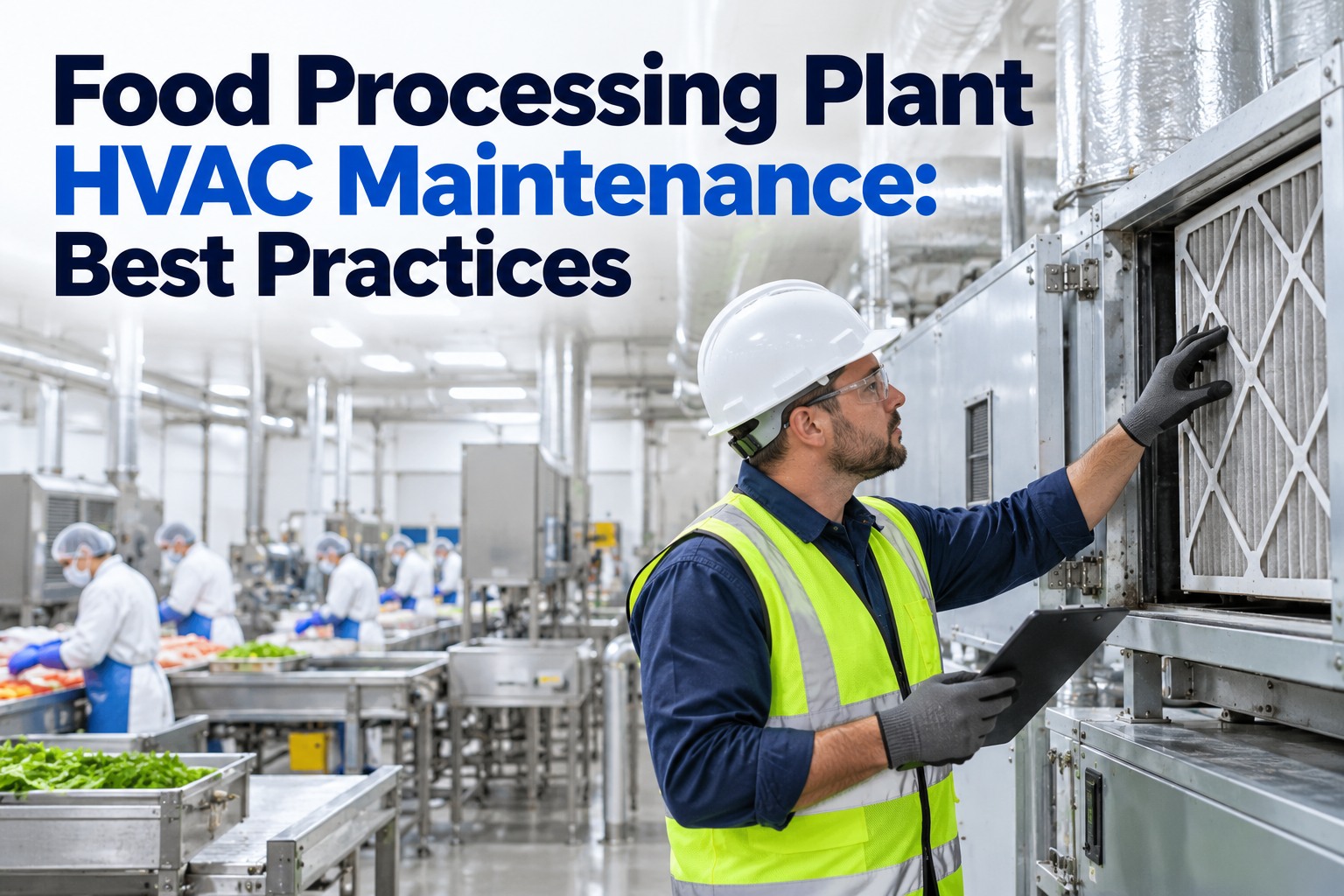
In a food plant, air is an ingredient you don't want to touch the product. It moves from clean areas toward dirtier ones, carries moisture that can drip or condense, and arrives through filters that quietly load up between visits. When HVAC slips, you don't just get an uncomfortable room. You get pressure that no longer holds, wet surfaces where they shouldn't be, and gaps in the records an auditor expects to see. This guide explains how food plant HVAC works as a hygiene control, what to check on each system, and how to maintain it without becoming a contamination risk yourself. OxMaint AI maintenance management software helps you schedule the work and keep the records in one place.
Food Processing Plant HVAC Maintenance: Checklist & Best Practices
Protect clean zones, control humidity and condensation, and keep filter and pressure records ready for audit. Use the airflow map, control-point matrix, and hygienic maintenance routine below, then run them as scheduled work in OxMaint AI.
HVAC Is Part of Your Food Safety Controls
In many food plants, air systems sit inside the hygienic zoning and food safety plan, not just the facilities budget. Three things matter most. Start free and keep HVAC work linked to each zone.
Follow the Air: The Pressure Cascade
Plants typically arrange zones so air flows from the cleanest, highest-pressure area outward. Each step down is relatively lower pressure. Your own zone classification and pressure targets come from your food safety plan, so use this as a mental model. Book a demo to map your zones in OxMaint AI.
When filters load up, doors stay open, or sensors drift, pressure differences shrink quietly. That's why filter condition and pressure readings belong on your PM checklist.
The Control-Point Matrix: Check, Then Record
Each HVAC control point needs a check and a record. Frequencies depend on your risk assessment, manufacturer guidance, and food safety plan. Start free and turn each row into a recurring task.
| Control point | Maintenance checks | Record to keep |
|---|---|---|
| Air handling units & filters | Replace pre- and final filters; check housings and seals; inspect fans, belts, and bearings | Filter change date, pressure drop, who and what grade |
| Pressure differentials | Read gauges between zones; check door seals and balance; calibrate sensors | Readings per zone, out-of-range actions |
| Coils, drain pans & condensate | Clean coils; keep drains flowing; inspect pans for standing water or residue | Cleaning date, findings, sanitation sign-off |
| Insulation & ductwork | Look for wet, damaged, or stained insulation; check duct joints and diffusers | Photos and repair work orders |
| Temperature & humidity | Verify sensors and setpoints; check dehumidification and reheat operation | Trend logs, excursions, corrective actions |
| Exhaust, dust collection & make-up air | Clean grease and dust filters; verify airflow and fan operation | Inspection and cleaning history |
| Unit coolers & refrigeration | Check coils, defrost, fans, and drains over product areas | Service reports, leak checks, defrost issues |
A Maintenance Task Shouldn't Create a Food Safety Problem.
Opening an air handler above a processing line carries real contamination risk. OxMaint AI lets you attach checklists and SOP steps to each task, assign it to the right technician, and keep a dated record of what was done and what was found.
Hygienic Maintenance: Before, During, After
Food plants expect maintenance staff to follow the same hygiene rules as production. Align the exact steps with your QA team. Book a demo to build this into every work order.
- Notify QA or production if work touches a hygienic zone
- Plan timing to avoid exposed product
- Count and control tools, parts, and fasteners
- Wear zone-appropriate clothing and follow entry rules
- Protect product and surfaces below the work area
- Keep debris, water, and filter material contained
- Avoid creating dust or drips over open product
- Lock out and follow site safety rules
- Clean and sanitize per site procedure
- Account for every tool and part
- Verify operation, pressure, and airflow
- Record, sign off, and release the area
Failure Patterns That Hide in Plain Sight
Starter Maintenance Rhythm
A reference rhythm to adapt, not a rulebook. Your food safety plan and equipment manuals take priority. Start free and set your own intervals.
How OxMaint AI Supports Food Plant HVAC Teams
The goal is simple: every task done on time, and every record easy to find. Start free and load your first air handler.
Frequently Asked Questions
Keep the Air Clean and the Records Complete.
Load your air handlers by zone, schedule the checks, and keep a dated record of every filter, reading, and repair in OxMaint AI.