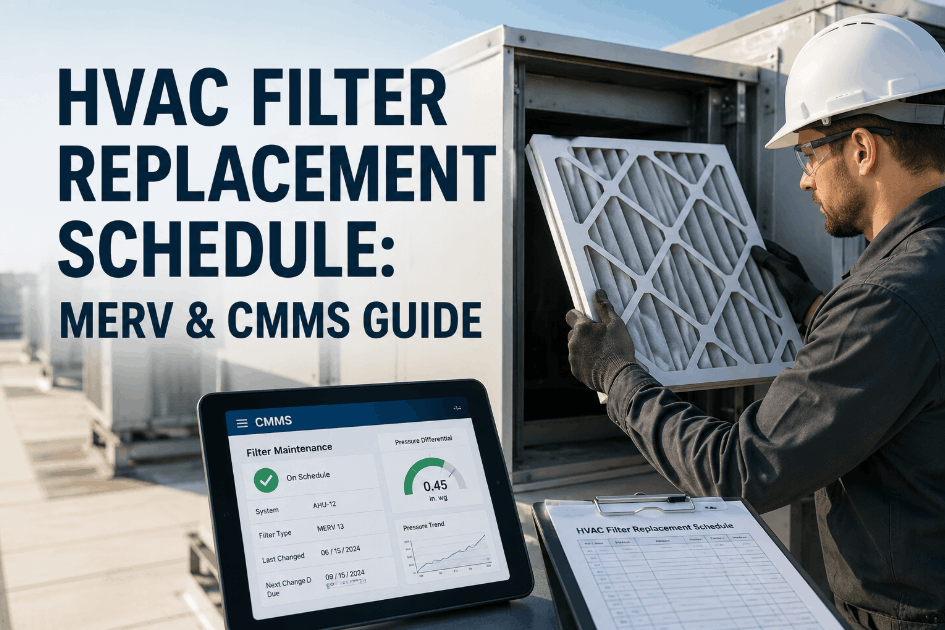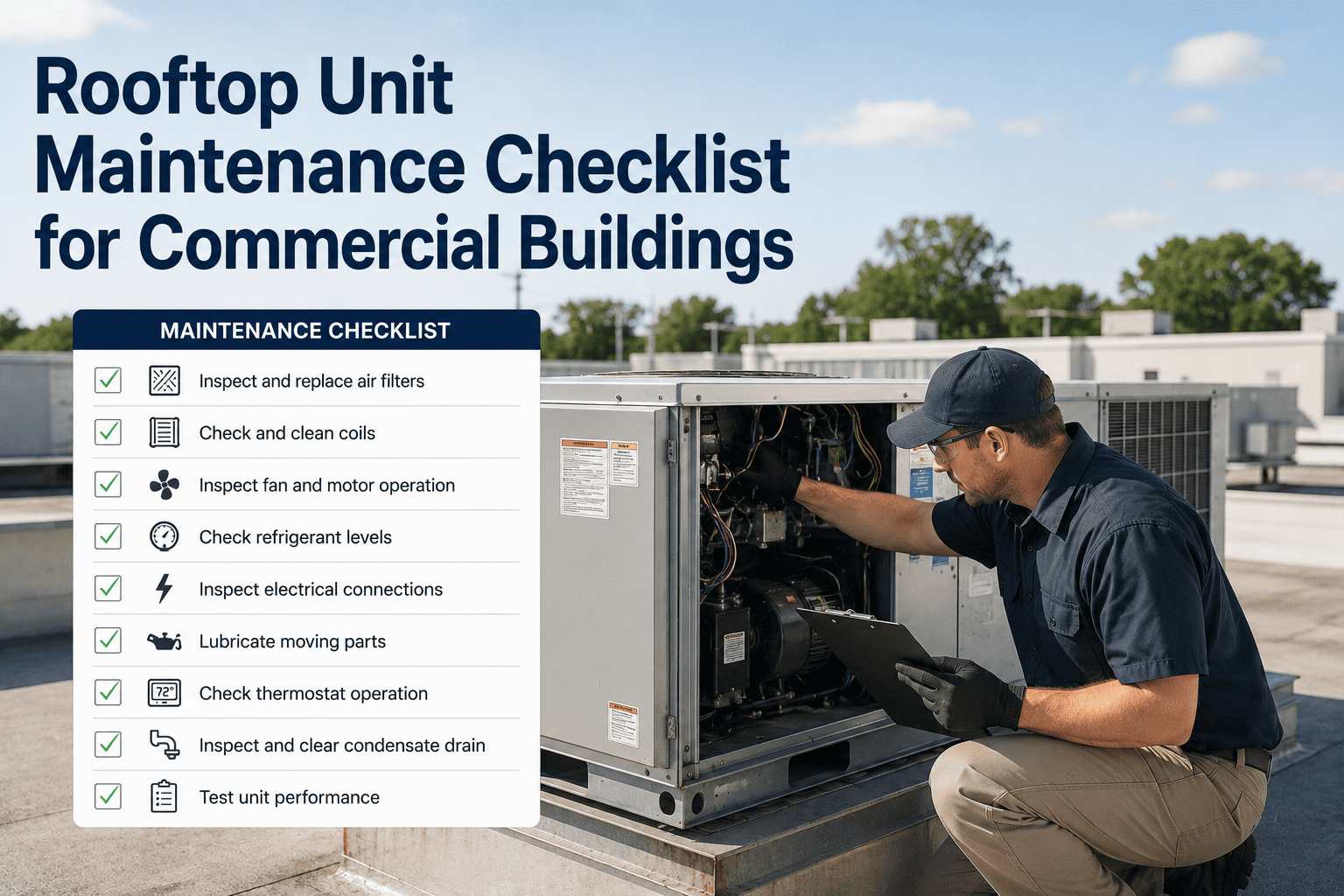
HVAC Air Filter Replacement Schedule for Commercial Buildings

By Willam Jerry on October 10, 2026

hvac-air-filter-replacement-schedule

Air filters are the cheapest part of a commercial HVAC system and the most often forgotten. A loaded filter restricts airflow, so fans work harder, coils cool less effectively, energy use creeps up and occupants start complaining about stuffy rooms. Multiply that across dozens of air handling units and the real problem is not the filter. It is knowing which filter is due where, and when. Below is a practical replacement schedule by filter type and building type, plus the signs that say "change it now". OxMaint AI maintenance management software turns that schedule into automatic work orders for every unit.

HVAC Air Filter Replacement Schedule · Commercial Buildings

HVAC Air Filter Replacement Schedule for Commercial Buildings.

Overdue filters usually come from scattered spreadsheets and missed reminders, not neglect. OxMaint AI maintenance management software connects filter inspections, issues found and work orders to a recurring PM schedule for every air handler, so the right filter gets checked or changed at the right time.

1Inspect
pressure drop, visible loading
→
2Log the issue
on a phone, with photos
→
3Work order
assigned with a due date
→
4Scheduled PM
next change raised automatically
Rule of thumb: inspect monthly; most pleated filters are replaced every 1 to 3 months. Always follow the manufacturer's final pressure drop.
Monthly
inspection, even when replacement is quarterly
1–3 mo
common range for pleated commercial filters
MERV
rating scale defined by ASHRAE 52.2
ΔP
pressure drop is the best change-out signal

How Often to Change Each Filter Type

The longer bar means a longer typical interval. These are common ranges, and the manufacturer's data sheet always wins. Start free and set an interval for each filter bank.

Pre-filter / panel

~1 month
Pleated (MERV 8–13)

1–3 months
Bag / pocket

3–6 months
Rigid / box

6–12 months
HEPA / final

By pressure drop

Schedule by Building Type

Occupancy, dust, outdoor air quality and run hours all change how fast filters load. Use these as starting points, then adjust from inspection records. Book a demo to tune intervals per building.

Hospitals & clinics
Tighter control
Follow infection-control requirements and tight pressure monitoring.
Offices
Standard
Inspect monthly, replace roughly every 1–3 months.
Restaurants & food service
Shorter
Grease and cooking particles load filters quickly.
Retail & malls
Shorter
High foot traffic and long operating hours.
Schools
Standard
Check more often in peak seasons and after breaks.
Industrial & warehouses
Shorter
Dust and process particles need pre-filters.

Fifty Air Handlers. Fifty Different Filter Dates. One Spreadsheet.

A calendar reminder cannot tell you which units are overdue, which filters were swapped for the wrong size, or where pressure drop is climbing. OxMaint AI keeps every filter bank, size and due date in one place and raises the work order on time.

Change Early When You See These Signs

A calendar is a starting point. Conditions decide the real date. Start free and log inspection results per unit.

⏱
Pressure drop at limit
Gauge or sensor reaches the manufacturer's final resistance.
👁
Visible loading
Dirt, lint, grease or damage on the filter face.
🌬
Weak airflow
Hot or stuffy spaces and complaints from occupants.
⚡
Rising energy use
Fans drawing more power for the same cooling.
🏗
Special events
Construction dust, wildfire smoke or heavy pollen.

A Simple 12-Month Filter Calendar

A typical commercial plan inspects every month and replaces pleated filters each quarter. Adjust to your site. Book a demo to see this calendar run itself.

JANReplace
FEBInspect
MARInspect
APRReplace
MAYInspect
JUNInspect
JULReplace
AUGInspect
SEPInspect
OCTReplace
NOVInspect
DECInspect

Does a Higher MERV Rating Mean Better?

Not automatically. Finer filtration adds resistance, and a fan not designed for it will move less air. Check system capacity before upgrading. Start free and record each unit's filter spec.

MERV 1–4
Basic. Catches large particles like lint and dust.
MERV 5–8
Better capture of mould spores and fine dust.
MERV 9–12
Good commercial grade with finer particles.
MERV 13–16
High efficiency. Verify fan capacity first.

How OxMaint AI Runs Your Filter Program

Filter Register
Every unit's filter type, size and quantity on record.
Auto Work Orders
Inspections and replacements raised on schedule.
Mobile Inspections
Log pressure readings and photos on site.
Overdue Alerts
Know which units slipped before occupants complain.
Stock Tracking
Keep the right filters on the shelf.
Service History
Searchable records across every building.

Frequently Asked Questions

How often should commercial HVAC filters be changed?
Most pleated filters are replaced every 1 to 3 months and inspected monthly, but dust, occupancy and run hours can shorten that. Start free and set your schedule.
What happens if filters are not changed?
Airflow drops, fans use more energy, coils foul faster and comfort and air quality suffer. Book a demo of overdue alerts.
How do I know when a filter is dirty enough to replace?
Compare pressure drop with the manufacturer's final resistance, and look for visible loading and weak airflow. Start free and log readings.
Is a higher MERV filter always better?
No. It can raise resistance beyond what your fan handles. Match the rating to the system. Book a demo of the filter register.
How does a CMMS help with filter replacement?
OxMaint AI schedules inspections, creates work orders, tracks stock and keeps a record per unit. Start free and see it work.

Never Chase a Filter Date Again.

Set the interval once, let OxMaint AI raise the work orders, and keep every building breathing easy. Start with one building and see the difference this quarter.

Share This Story, Choose Your Platform!