HVAC Cooling Season Startup Checklist for Commercial Buildings
By Willam Jerry on October 22, 2026
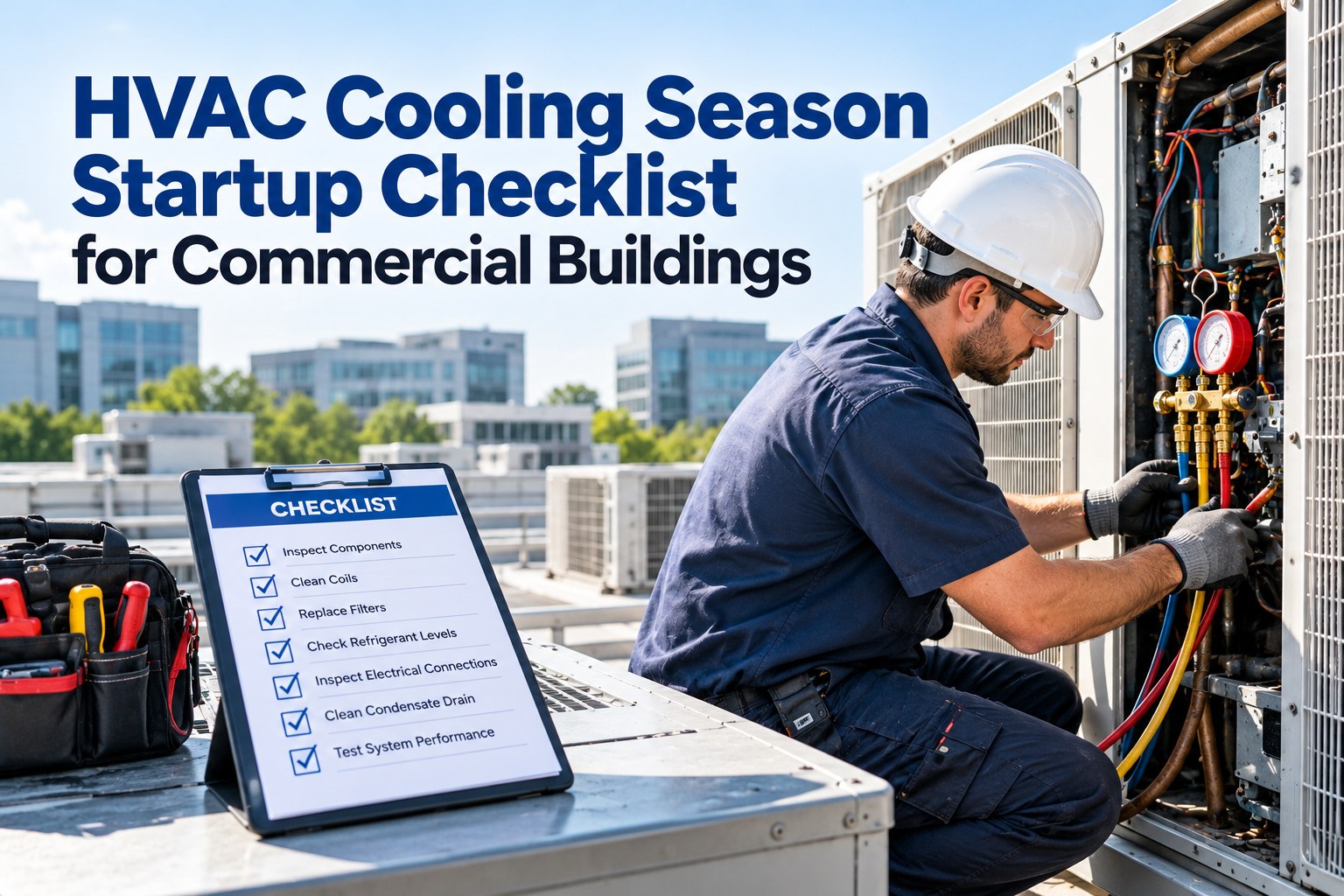
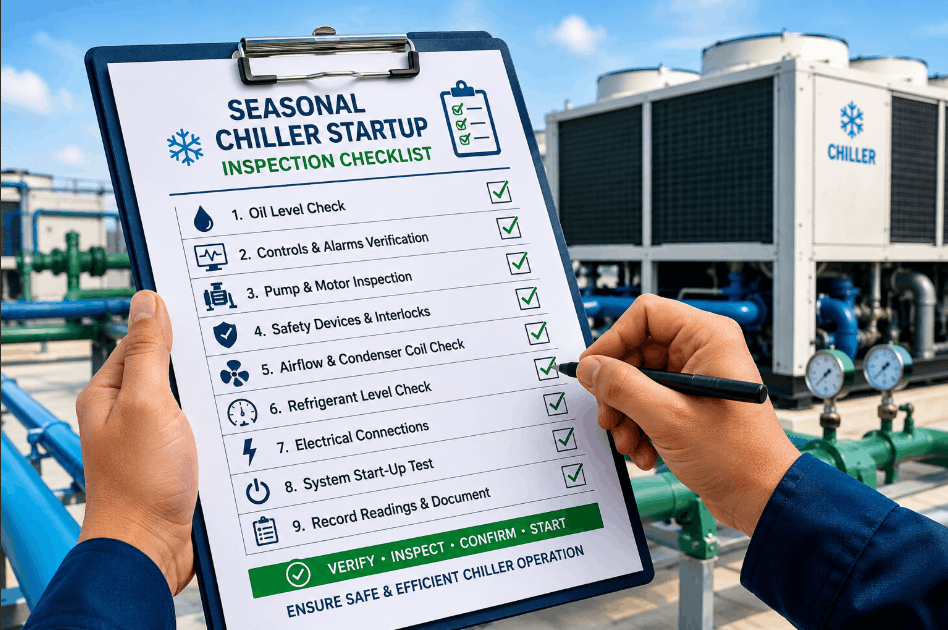
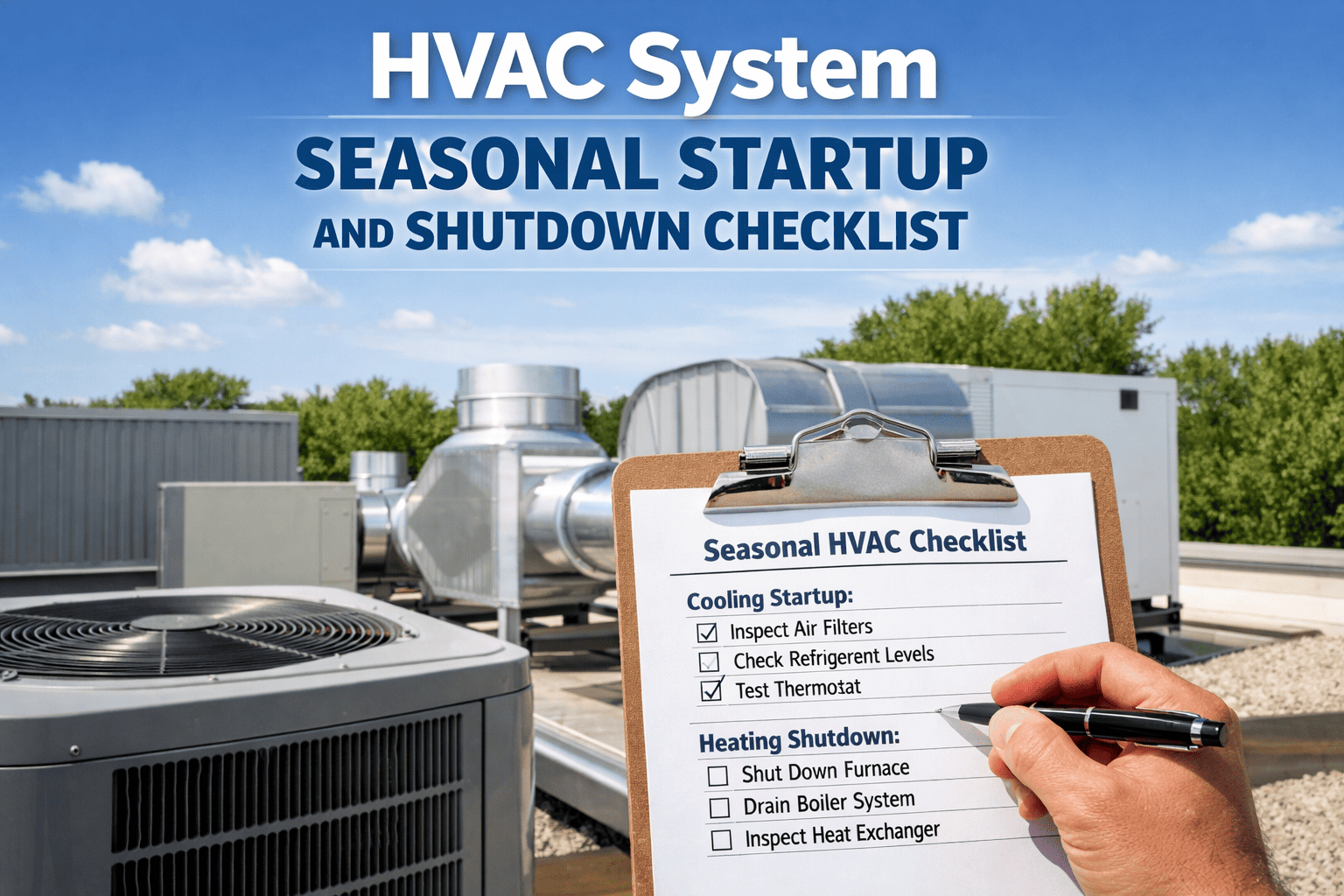
The first 90°F day of May is the wrong day to find out that condenser fan 3 of 4 on RTU-07 did not survive the winter. By the time the tenant complaint lands, the facilities team is in react mode and the service vendor is booking two weeks out. A proper cooling-season startup walks the plant 30 days before the first expected demand — condenser coils cleaned, refrigerant verified, filters swapped, drains cleared, controls commissioned, and a performance test run against last summer's baseline so a drift is visible before the heat arrives. This checklist walks the whole thing. OXMAINT AI is the AI-powered HVAC maintenance software that holds the 48-item startup checklist on one register, auto-fires it at T-30, logs every sign-off and keeps the performance baseline live against the current reading.
HVAC COOLING SEASON STARTUP CHECKLIST · COMMERCIAL BUILDINGS · 2026
HVAC Cooling Season Startup Checklist for Commercial Buildings
Four sections, 48 native-checkbox items, one 30-day pre-season countdown. OXMAINT AI auto-fires the walk at T-30, logs every sign-off and rebuilds the readiness score live.
A cooling-season startup is a calendar. Each milestone pulls work from the next; a slipped T-21 catches a slipped T-7. OXMAINT AI auto-fires each milestone and tracks completion against the first-expected-demand date for the local climate.
T-30 d
Pre-season walk
All assets physically walked; findings logged; parts long-leads identified and ordered.
T-21 d
Mechanical PM window
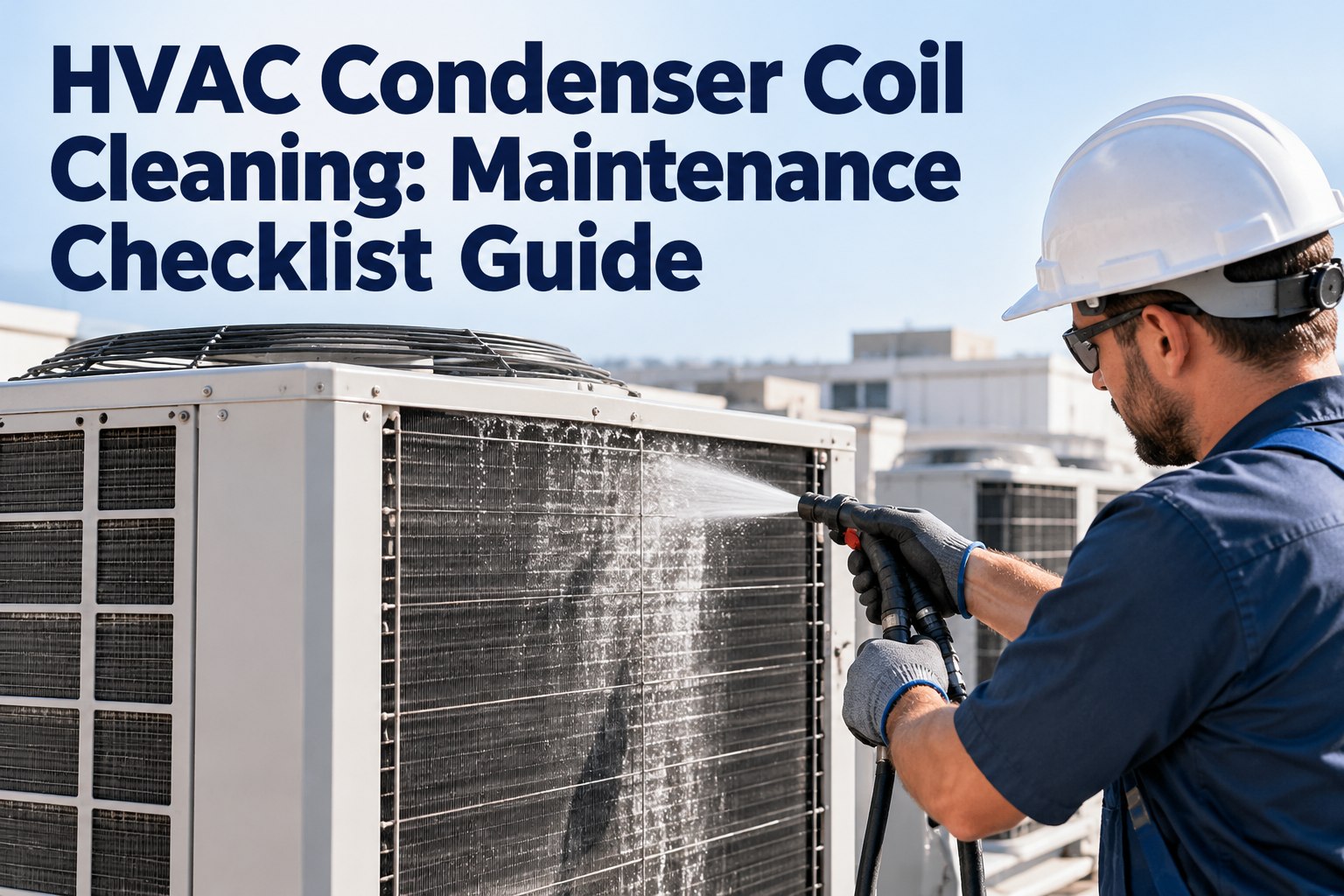
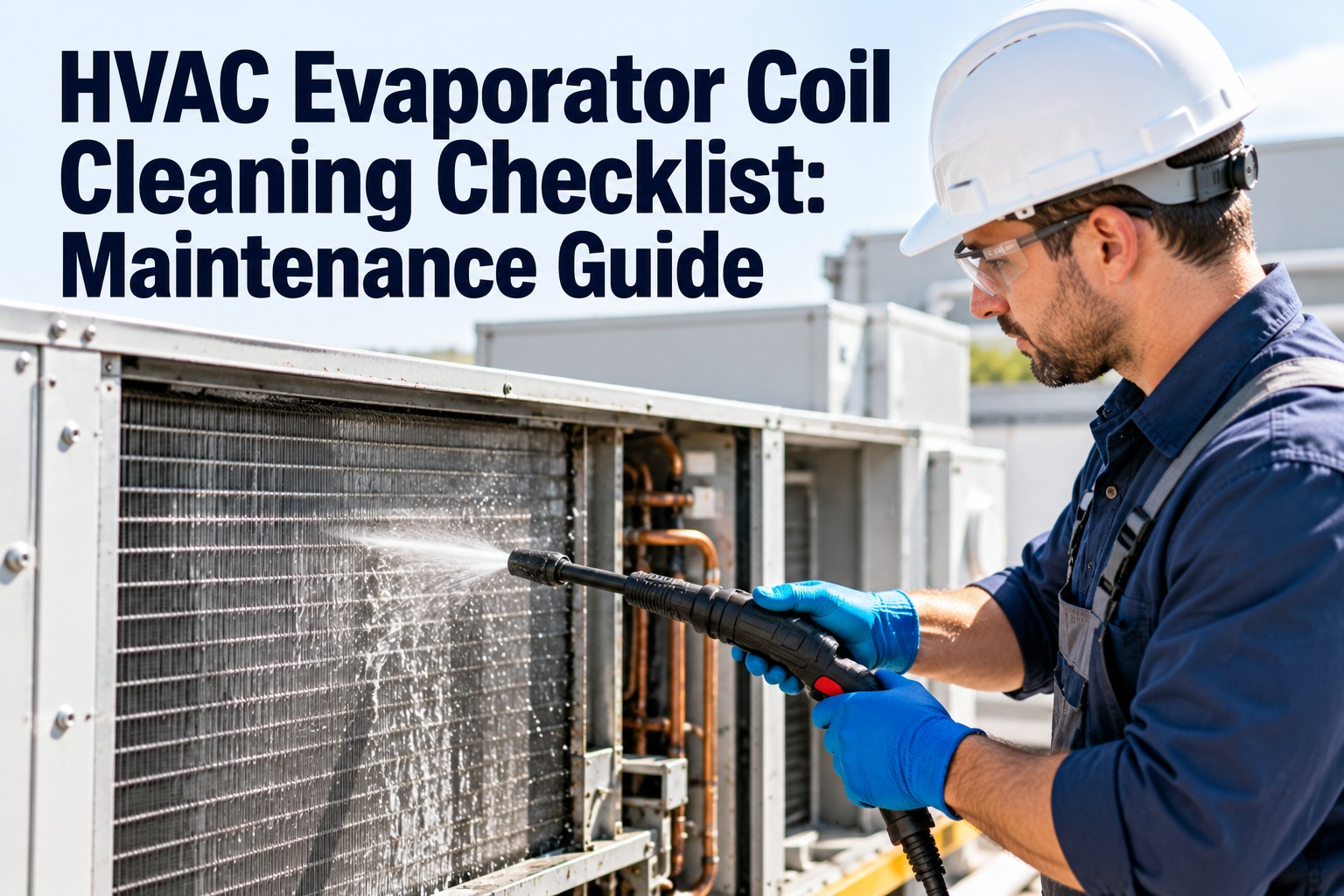
Coil clean, filter swap, belt / fan check, refrigerant verify. The physical work.
Section 4 · Commissioning Run & Baseline Checklist (T-7)
Twelve items. Every unit runs under load; the performance baseline captures the number the whole season will be judged against.
Live Startup Readiness Score — Day-By-Day
As each item is ticked and closed in OXMAINT AI, the readiness score rebuilds live. The FM sees exactly which section is holding the campus back from fully startup-ready.
COOLING SEASON READINESS · CAMPUS · T-9 DAYS
41 / 48
85%
items complete per unit avg · 7 open across 3 RTUs
S1 · Pre-season walk12 / 12
S2 · Mechanical PM11 / 12
S3 · Electrical & controls8 / 12
S4 · Commissioning & baseline10 / 12
Electrical & controls section pulling the score — thermal imaging and BMS setpoint sweep still open on RTU-07 and RTU-14
Performance Baseline Sheet — What To Capture, Why It Matters
A startup without a baseline is a startup you cannot trend. These eight numbers get captured on commissioning day and compared to last summer's baseline; drift above threshold auto-raises an investigation WO.
The efficiency number · season-start baseline becomes benchmark for the season
The First 90°F Day Is When Nothing Should Be New.
If the FM opens the dashboard on peak-demand day and the readiness score is 100% with every baseline captured, the day is a non-event. OXMAINT AI makes it a non-event.
The 30-day countdown trigger, four-section checklist, performance baseline, readiness score and the live unit board all live natively in the OXMAINT AI HVAC maintenance software — load the startup program into OXMAINT AI today.
Climate-Zone T-30 Trigger
Startup checklist auto-fires 30 days before the local first-expected-demand date — the FM does not have to remember.
Four-Section Mobile Walk
Native-checkbox walk on the technician's phone, photo per critical item, sign-off against unit serial.
Readiness Scorecard
Live percentage per section with the lagging section visible — no closing-day surprise.
Performance Baseline
Eight commissioning numbers captured and compared to last season; drift raises an investigation WO.
EPA 608 Gate
Refrigerant and leak-check items require a Section 608 certified tech sign-off; license stored on the record.
End-Of-Season Export
End-of-cooling-season report compiles the startup, mid-season tickets and shutdown findings for next year's plan.
Frequently Asked Questions
When should the startup checklist actually run?
30 days before the first forecast day above 75-80°F for the local climate — typically late March to late April depending on region. OXMAINT AI uses the local climate zone to auto-schedule, so a Dallas campus fires earlier than a Minneapolis one.
What's the single highest-value item on the list?
The commissioning-run performance baseline. The individual PM items keep the unit alive; the baseline makes any drift during the season visible against a real number. OXMAINT AI holds the baseline live so a mid-season performance call-out starts with the delta, not with reconstruction.
Who needs to be certified for which items?
Refrigerant handling and leak detection: EPA Section 608 (Type I/II/III/Universal as applicable). Electrical safety-circuit testing: facility-tech or vendor technician qualified per local code. Controls commissioning: typically a BMS-certified tech. OXMAINT AI stores the license level per template.
How does the startup feed into the rest of the year?
The baseline captured at commissioning becomes the reference against which mid-season performance is compared; the parts drawn feed next year's inventory forecast; the open-WO count at startup informs the labor plan. OXMAINT AI keeps the whole loop as one record.
Load the cooling-season startup into the OXMAINT AI HVAC maintenance software — climate-zone T-30 trigger, four-section mobile walk, live readiness score, performance baseline capture and the EPA-608 certified gate. The first 90°F day is a non-event, every year.