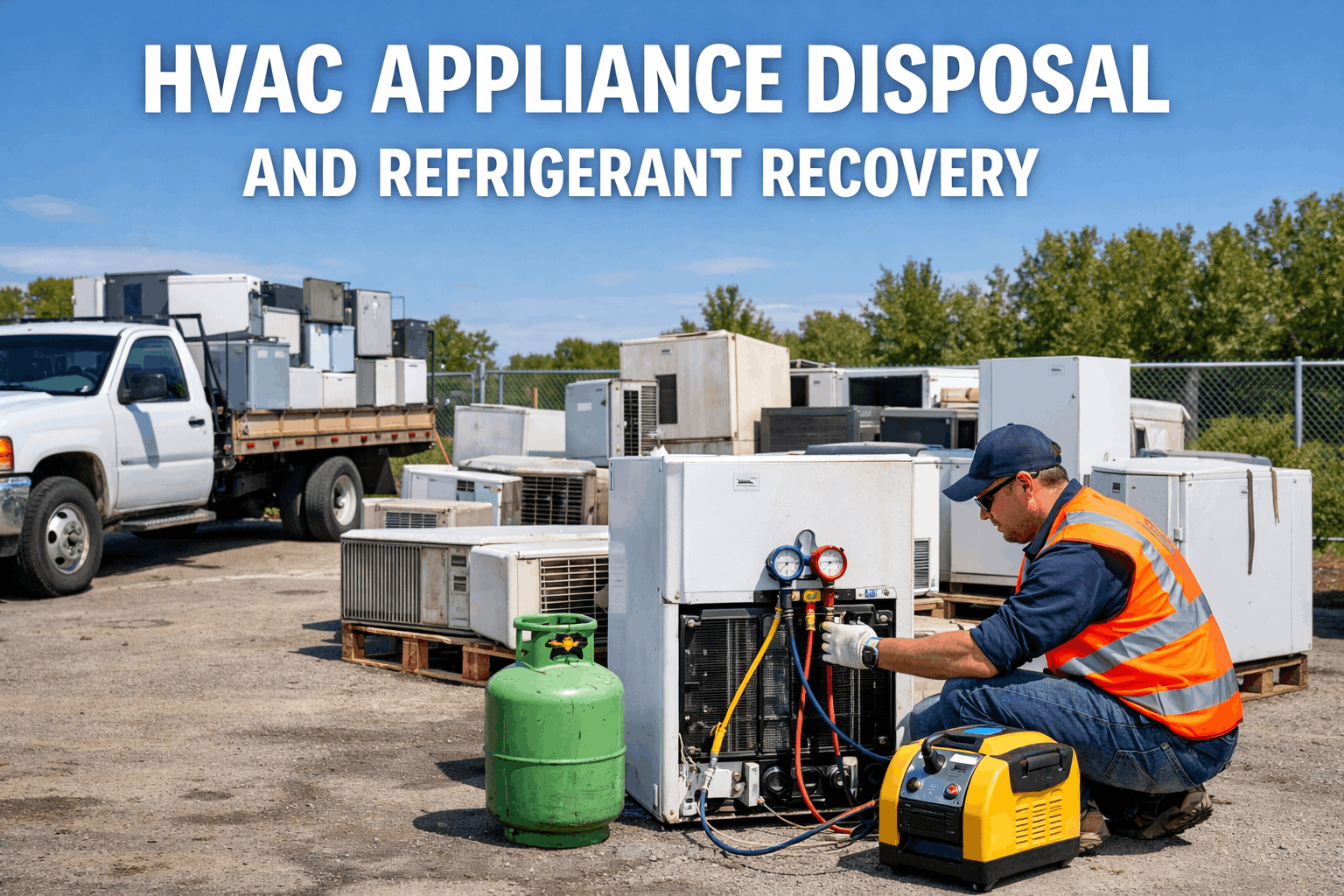
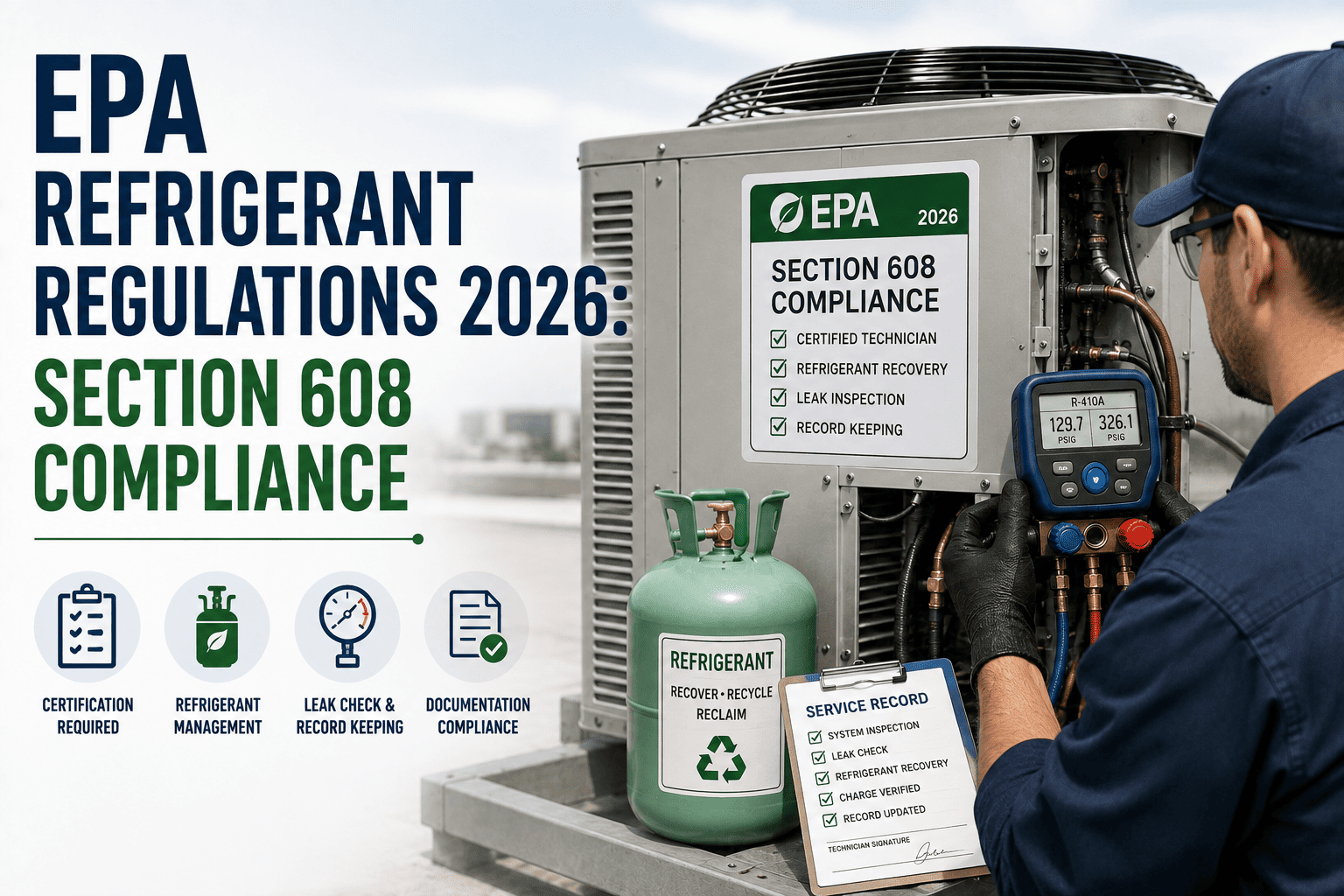
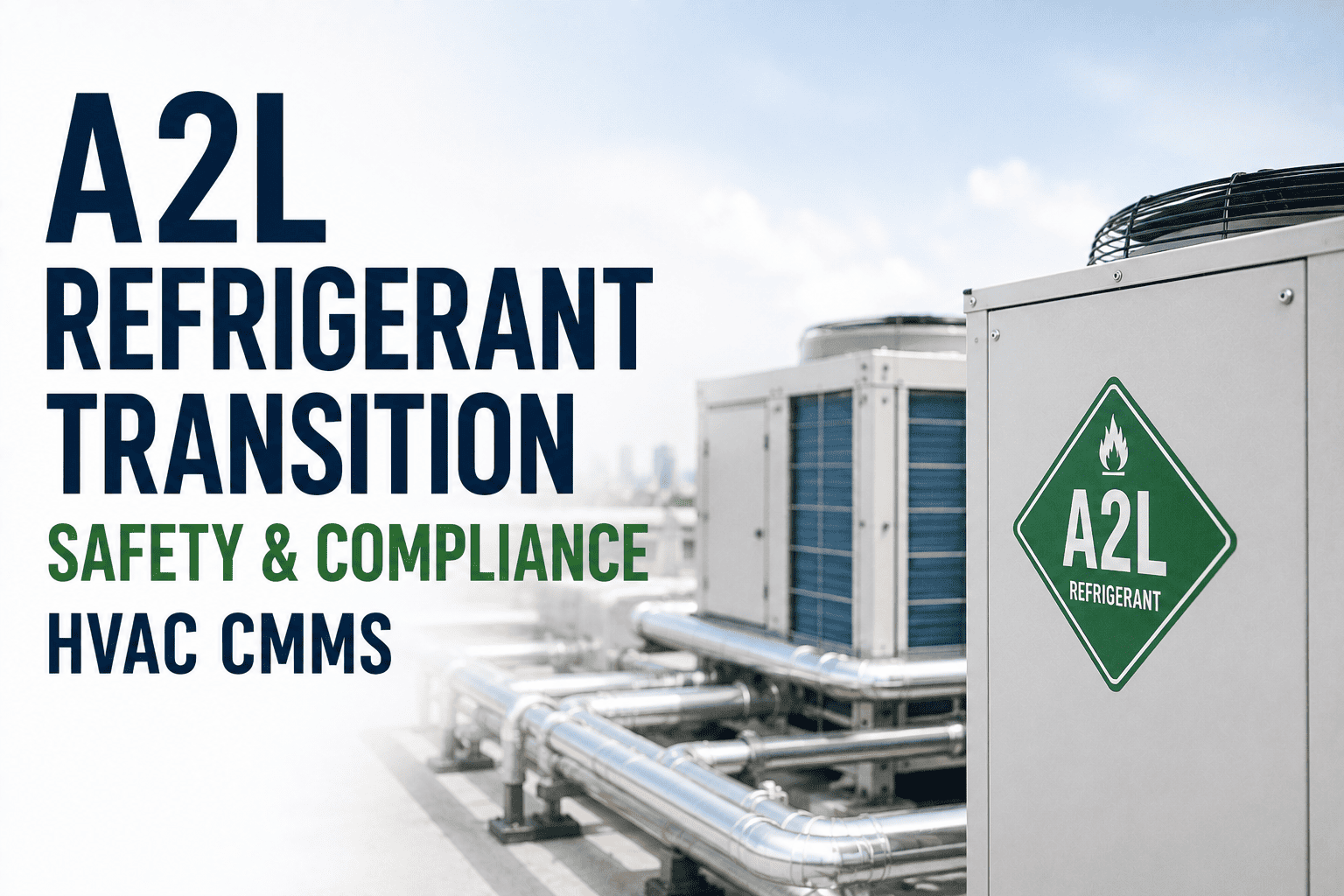
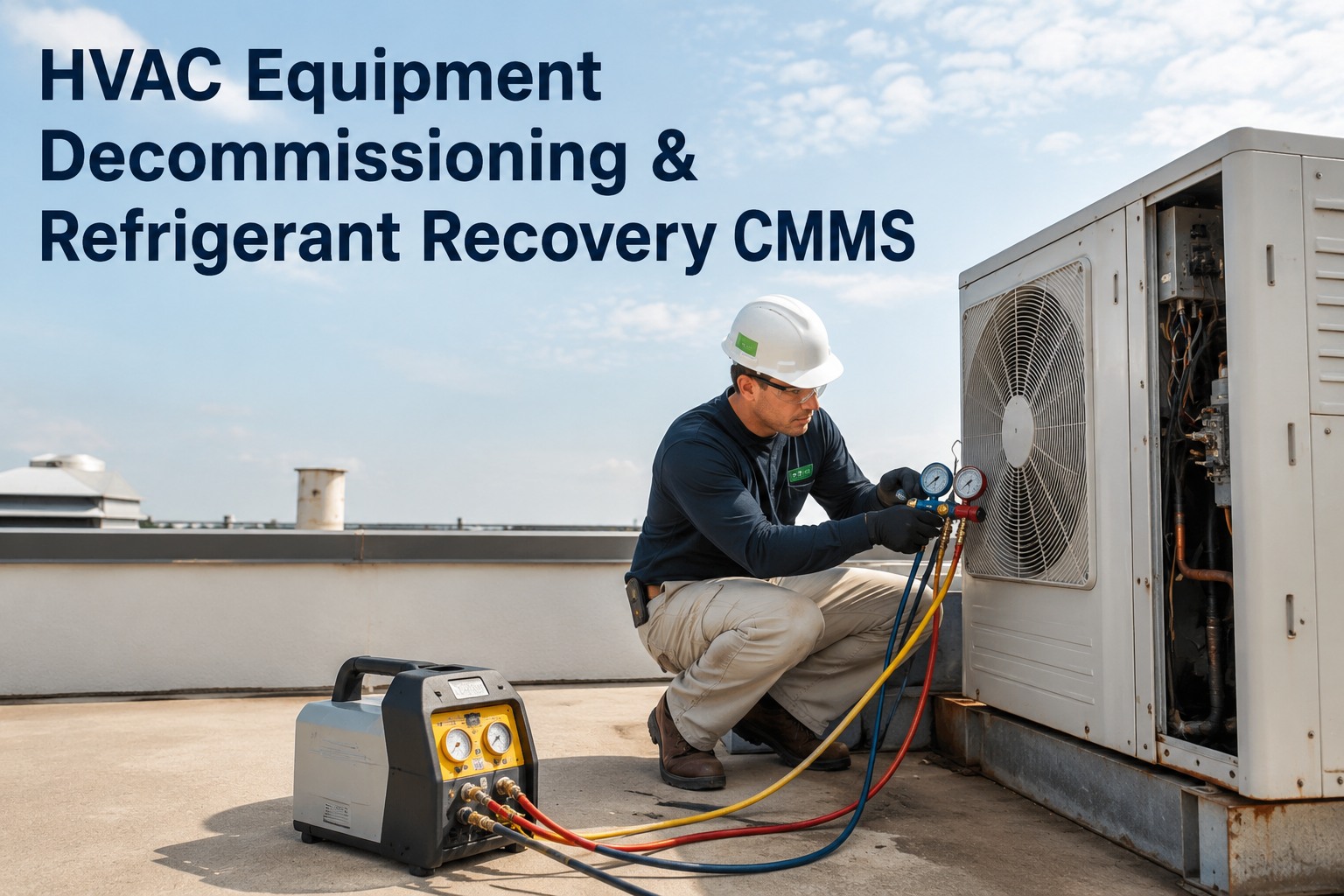
That 20-year-old rooftop unit you just condemned still has 35 pounds of R-22 inside it. What happens next determines whether your company stays compliant or triggers a federal violation. Under EPA regulations, every ounce of refrigerant must be recovered before any HVAC appliance is scrapped, recycled, or sent to a landfill — no exceptions. The technician who opens that circuit must hold proper certification. The recovery equipment must be certified. The recovered refrigerant must be tracked to its final destination: reclamation, reuse, or destruction. And every step must be documented. Yet across the industry, appliance disposal remains one of the most poorly managed compliance areas. A 2024 enforcement review found that refrigerant recovery violations accounted for over 30% of all EPA Section 608 penalties — making it the single largest category of HVAC compliance failures. The equipment is at the end of its life. Your compliance obligations are not.
30%
Of all EPA 608 penalties involve refrigerant recovery and disposal violations
100%
Refrigerant recovery required before any appliance is scrapped, recycled, or disposed
6 lbs
Average refrigerant left in "empty" systems — enough to trigger a venting violation if not recovered
$44K+
Per-day fine for knowing violations including improper venting during equipment disposal
EPA Requirements for HVAC Appliance Disposal
The EPA doesn't distinguish between a window unit and a 500-ton chiller when it comes to disposal requirements — refrigerant must be recovered from all appliances before they are disposed of, regardless of size, age, or condition. The specific requirements vary by appliance type and the certification level of the technician performing the work. Facilities that sign up for disposal compliance tracking ensure every decommissioned unit follows the documented pathway from condemnation to compliant disposal.
Section 608
Mandatory Recovery Before Disposal
All refrigerant must be recovered from appliances before they are disposed of, regardless of appliance type or refrigerant quantity. Applies to every person who disposes of, maintains, services, or repairs appliances.
40 CFR 82.156
Required Recovery Levels
Systems must be evacuated to specific vacuum levels based on appliance type and date of manufacture. Self-contained recovery equipment must be EPA-certified and tested annually.
40 CFR 82.166
Technician Certification
Only EPA 608-certified technicians may recover refrigerant. Certification type must match the appliance category: Type I for small, Type II for high-pressure, Type III for low-pressure, or Universal.
40 CFR 82.174
Record-Keeping Requirements
Records of refrigerant recovered, recycled, or sent for reclamation must be maintained and made available to EPA upon request. Records must identify the appliance, quantity, and disposition.
AIM Act
HFC Phasedown Implications
As HFC production allowances decrease, recovered refrigerant becomes increasingly valuable. Proper recovery and reclamation supports the reclaimed refrigerant supply chain critical during the phasedown.
Clean Air Act
Venting Prohibition
Knowingly venting or releasing refrigerant during disposal is a federal crime. Penalties include fines up to $44,539 per day per violation. Bounty provisions allow private citizens to report violations for reward.
The Disposal Pathway: From Condemnation to Compliance
Every HVAC appliance that reaches end of life must follow a documented pathway. The pathway branches depending on the refrigerant destination — reclamation, reuse, or destruction — but every branch requires the same foundational steps: certified recovery, accurate documentation, and verified chain of custody.
START
Equipment Condemned
Unit flagged for disposal via work order. Asset record updated with condemnation reason, date, and approver.
STEP 1
Pre-Disposal Checklist
Verify refrigerant type and estimated charge. Confirm technician certification type matches appliance. Stage certified recovery equipment.
STEP 2
Refrigerant Recovery
Recover all refrigerant to EPA-required vacuum levels. Document quantity recovered, cylinder ID, and equipment serial numbers.
Refrigerant Destination
Reclamation
Sent to EPA-certified reclaimer for processing to ARI-700 purity standards. Reclaimer provides certificate of reclamation.
On-Site Reuse
Recovered refrigerant recycled and recharged into other equipment owned by the same entity. No reclamation required for same-owner reuse.
Destruction
Sent to EPA-approved destruction facility. Required for contaminated or obsolete refrigerants with no reclamation value.
CLOSE
Appliance Disposed & Record Closed
Asset marked as disposed in CMMS. Full disposal record archived: recovery documentation, refrigerant destination, scrap/recycling vendor, and compliance sign-off.
Every stage in that pathway generates documentation that auditors will ask for. Companies that sign up for automated disposal workflow management ensure no step is skipped and every record is linked to the asset, the technician, and the refrigerant transaction — creating a compliance trail that holds up under any level of scrutiny.
Every Disposal Documented. Every Pound Recovered. Every Audit Passed.
OXmaint automates HVAC appliance disposal compliance — from condemnation work orders through refrigerant recovery, chain-of-custody tracking, and archived disposal records. One platform for the entire end-of-life process.
The Disposal Compliance Checklist
Most disposal violations don't happen because teams don't know the rules — they happen because a step gets skipped under time pressure. A structured checklist embedded in every disposal work order eliminates that risk by making compliance the default workflow, not something a technician has to remember.
Pre-Recovery
Equipment condemned and disposal work order created with asset ID
Refrigerant type and estimated remaining charge documented
Assigned technician's EPA 608 certification verified for appliance type
Recovery equipment certification current and documented
During Recovery
Refrigerant recovered to required vacuum level per appliance type
Exact quantity recovered recorded in pounds (weighed, not estimated)
Recovery cylinder tagged with refrigerant type, quantity, date, and technician
Post-Recovery
Refrigerant destination confirmed: reclamation, reuse, or destruction
Scrap vendor or recycler documentation obtained with pickup date
Asset status updated to "Disposed" with complete audit trail archived
Violation Scenarios: What Disposal Non-Compliance Actually Looks Like
Disposal violations rarely involve malicious intent. They happen when busy teams skip steps, make assumptions, or fail to document work that was actually done. Here are the most common scenarios that lead to EPA enforcement actions — and what proper tracking would have prevented.
The "It Was Already Empty" Assumption
Technician assumes the condemned unit has no refrigerant left because it wasn't cooling. Ships it to scrap without recovery. Inspector finds residual 6 lbs still in the system at the recycler.
Prevention: Software requires documented recovery with weighed quantity before asset can be marked for disposal — even if quantity recovered is zero, it must be verified.
The Missing Recovery Documentation
Refrigerant was properly recovered, but the technician didn't log the quantity, cylinder ID, or destination. When audited, the company has no proof recovery occurred.
Prevention: Digital work order captures recovery details in mandatory fields at point of service. Work order cannot be closed without complete documentation.
The Uncertified Contractor
Building owner hires a general demolition contractor to remove old HVAC equipment. Contractor cuts refrigerant lines without recovery. Building owner is liable as the appliance owner.
Prevention: CMMS enforces disposal workflow that verifies technician certification before any decommission work order can proceed. Contractor credentials must be uploaded.
Measuring Disposal Compliance Performance
Disposal events may be less frequent than routine maintenance, but each one carries disproportionate compliance risk. These metrics tell you whether your disposal process is airtight or whether you're accumulating risk with every unit you decommission. Teams that book a free demo to see disposal analytics can watch these metrics populate from real disposal work orders in the system.
Recovery Documentation Rate
Target: 100%
Percentage of disposals with complete recovery records — 6% gap represents undocumented disposals
Certified Technician Compliance
Target: 100%
All recovery work performed by technicians with verified, current EPA 608 certification
Refrigerant Destination Tracked
Target: 100%
Recovered refrigerant with documented final destination — 12% missing reclamation or destruction certificates
Average Recovery per Disposal
Benchmark: 85%+ of rated charge
Average pounds recovered vs. system rated charge — low ratios indicate pre-disposal refrigerant loss
Expert Perspective: Disposal Is Where Compliance Programs Are Won or Lost
"
I've seen perfectly managed HVAC operations — great PM programs, solid work order systems, clean documentation — fall apart at the disposal stage. Equipment reaches end of life and suddenly the normal process goes out the window. The unit gets hauled away by whoever has a truck available. The refrigerant recovery gets done but nobody logs it. The scrap vendor takes the equipment and the paperwork trail ends. Every one of those gaps is a violation waiting to surface. The fix is simple: make disposal a formal work order category with the same mandatory documentation fields as any other service event. Recovery quantity, technician cert, cylinder tracking, destination confirmation — all required before the work order closes. You don't need a separate disposal system. You need your existing system to treat disposal with the same rigor it treats every other maintenance activity.
Treat Disposal as a Work Order
Every decommissioned unit should generate a formal disposal work order in your CMMS with mandatory fields for recovery, documentation, and sign-off — not an email or verbal instruction.
Track the Refrigerant to Its End
Recovery without destination tracking is incomplete compliance. Know whether each recovered pound was reclaimed, reused, or destroyed — and have the certificate to prove it.
Verify Contractor Credentials
If you hire a third party for equipment removal, their technicians need verified EPA 608 certs too. As the appliance owner, you bear the compliance liability regardless of who does the work.
Decommission with Confidence. Recover Every Pound. Close Every Record.
OXmaint turns appliance disposal into a fully documented, compliance-enforced workflow — from condemnation through recovery, destination tracking, and archived disposal records. Protect your operation at the end of every equipment lifecycle.
Frequently Asked Questions
What are the EPA requirements for HVAC appliance disposal?
Under EPA Section 608, all refrigerant must be recovered from any HVAC appliance before it is disposed of, scrapped, or recycled. This applies to every appliance regardless of size, type, or refrigerant quantity. Recovery must be performed by an EPA 608-certified technician using certified recovery equipment. The refrigerant must be evacuated to specific vacuum levels based on appliance type. Records must document the recovery date, technician, quantity recovered, refrigerant type, appliance identification, and the final destination of the recovered refrigerant. These records must be retained for a minimum of three years and be available for EPA inspection.
What happens to refrigerant recovered during HVAC disposal?
Recovered refrigerant has three compliant destinations. First, it can be sent to an EPA-certified reclaimer who processes it to ARI-700 purity standards for resale — this is the preferred option for uncontaminated refrigerants with market value. Second, it can be recycled and recharged into other equipment owned by the same entity without reclamation, as EPA regulations permit same-owner reuse. Third, it can be sent to an EPA-approved destruction facility, which is required for heavily contaminated refrigerants or obsolete types with no reclamation market. Regardless of destination, the chain of custody must be documented from recovery through final disposition.
Who is liable for improper refrigerant disposal — the owner or the contractor?
Both parties can be held liable under the Clean Air Act. However, the appliance owner bears primary responsibility for ensuring that refrigerant is properly recovered before disposal, even when hiring third-party contractors for equipment removal. If a demolition or scrap contractor cuts refrigerant lines without performing recovery, the building owner can be fined alongside the contractor. This is why it is critical to verify that any contractor performing equipment removal holds proper EPA 608 certification and follows documented recovery procedures. Building owners should require proof of certification, recovery documentation, and signed compliance acknowledgments before any equipment is removed from the premises.
How does software automate HVAC disposal compliance?
Disposal compliance software creates a structured workflow that starts when equipment is condemned. The system generates a disposal work order with mandatory fields for refrigerant type, estimated charge, certified technician assignment, and recovery documentation. Technicians cannot close the work order without recording the quantity recovered, the recovery cylinder identification, and the intended refrigerant destination. The system verifies that the assigned technician holds the correct EPA 608 certification type for the appliance being disposed of. After recovery, the system tracks the refrigerant to its final destination — reclamation, reuse, or destruction — and archives the complete disposal record linked to the asset. This creates an unbroken audit trail from condemnation to compliant disposal.
How valuable is recovered refrigerant during the HFC phasedown?
Recovered and reclaimed refrigerant is becoming increasingly valuable as the AIM Act reduces HFC production allowances. R-410A prices have already risen significantly, and reclaimed refrigerant is exempt from phasedown production caps — making it a critical supply source. Facilities that properly recover refrigerant during disposal can either reuse it in their own equipment or sell it through certified reclaimers at market rates. Proper recovery tracking ensures that this value is captured rather than lost to undocumented venting or disposal. Companies managing large equipment portfolios can offset a meaningful percentage of their refrigerant purchasing costs through systematic recovery and reclamation programs.