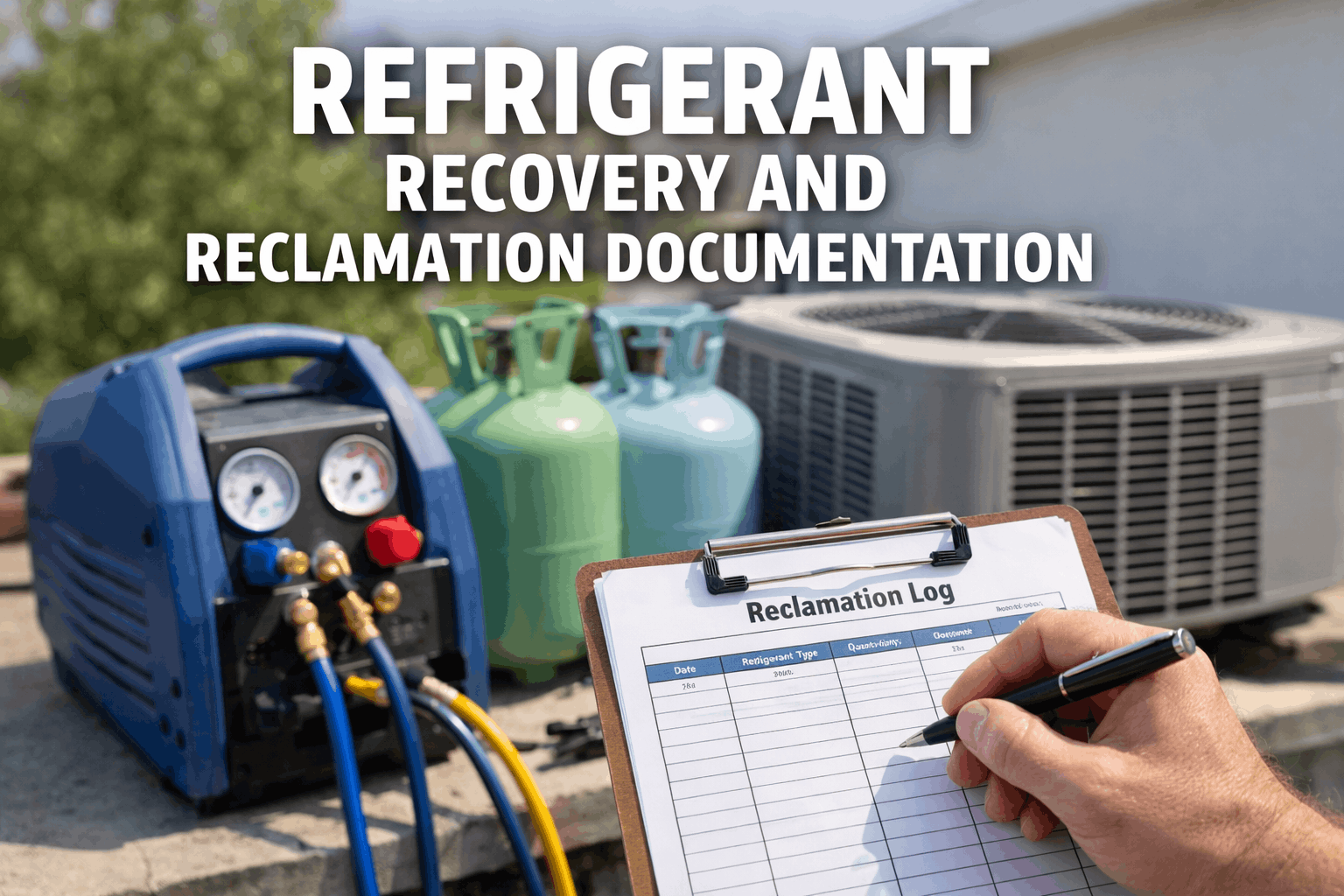
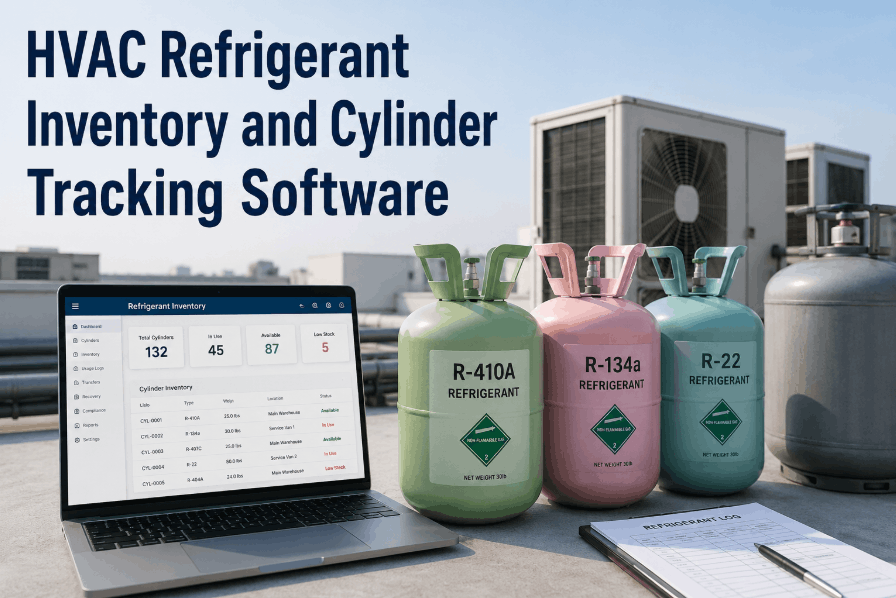
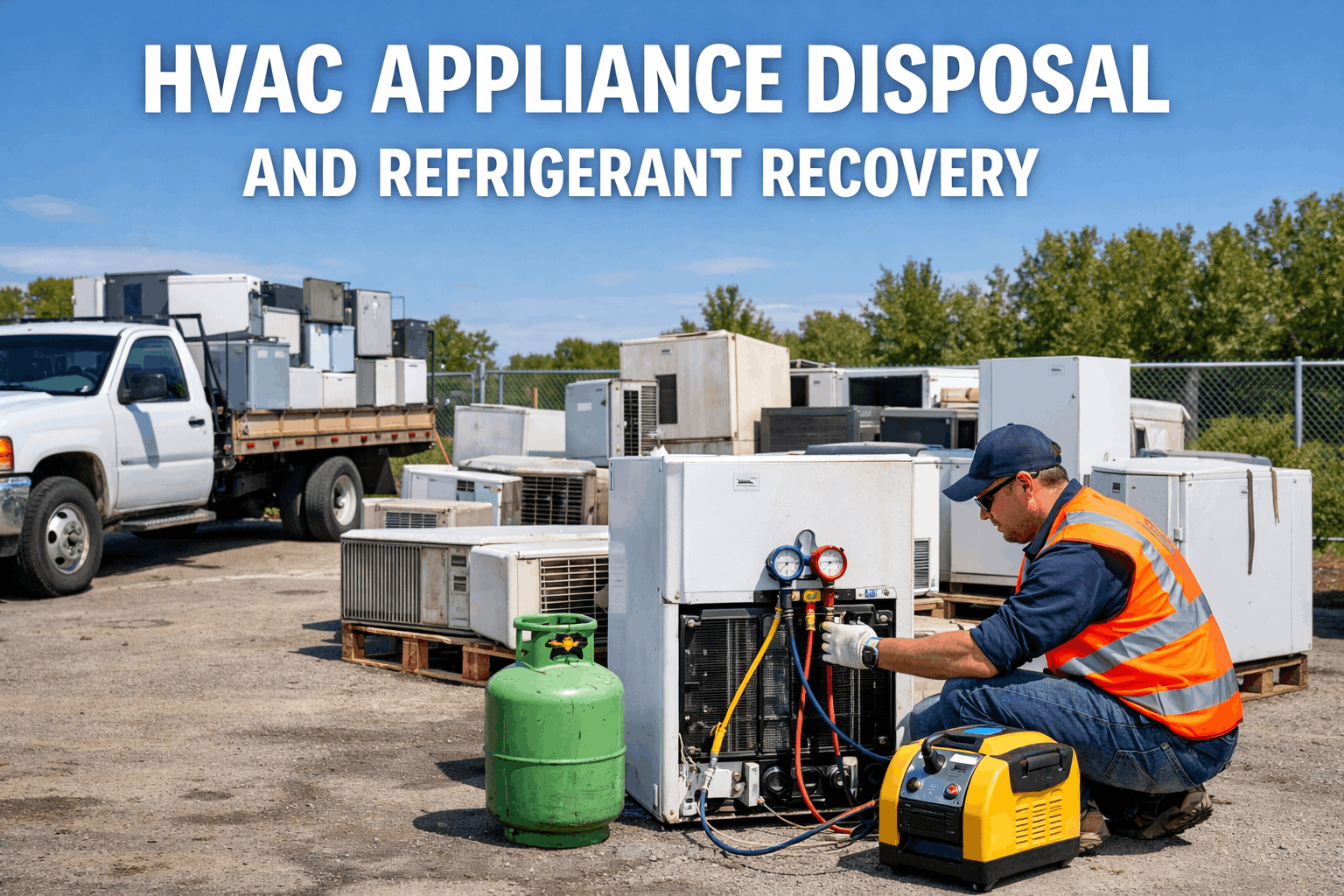
Your technician just recovered 18 pounds of R-410A from a rooftop unit decommission. He tagged the recovery cylinder, loaded it in the van, and drove back to the shop. Three weeks later, that cylinder is sitting in a corner with a faded label and no record of which job it came from, what type of refrigerant is inside, who recovered it, or where it's supposed to go next. Multiply that by 30–50 recovery events per year for a mid-size contractor, and you have a documentation gap wide enough for an EPA enforcement officer to drive a truck through. The EPA requires cradle-to-grave documentation for every pound of refrigerant—from the moment it leaves an appliance through recovery, storage, transport, reclamation, and final disposition. Yet a 2024 industry survey found that 58% of HVAC contractors have incomplete or missing recovery documentation for at least a quarter of their annual recoveries. That's not a paperwork inconvenience—it's a per-day, per-violation fine exposure of up to $44,539, plus loss of Section 608 certification eligibility. The contractors who avoid these penalties aren't doing less recovery work. They're documenting it properly from the first pound.
3 Years
Minimum EPA record retention for all recovery and reclamation documentation
58%
Of contractors have incomplete recovery documentation for 25%+ of annual recoveries
$44,539
Maximum EPA fine per day per violation for missing refrigerant recovery records
What Recovery and Reclamation Documentation Actually Requires
Most contractors understand that they need to recover refrigerant before disposing of equipment. Far fewer understand the full scope of documentation the EPA requires at each stage. Recovery isn't just the physical act of removing refrigerant—it's a regulated chain-of-custody process that demands specific records at every handoff point. When any link in the documentation chain breaks, the entire record becomes indefensible during an audit.
Facilities and contractors that sign up for automated recovery documentation build these records in real time—as the recovery happens—rather than reconstructing them weeks later when details have faded and cylinders have been shuffled between jobs.
The Recovery-to-Reclamation Documentation Chain
Every handoff requires documented evidence. Missing one link invalidates the chain.
Step 1
Pre-Recovery Assessment
Identify refrigerant type (verify with identifier—never assume from nameplate), record appliance full charge, calculate current charge level, and document appliance ID and location.
Required records: Refrigerant type confirmation, appliance ID, charge size, technician name & EPA cert
Step 2
Recovery Execution
Evacuate refrigerant using certified equipment to EPA-mandated vacuum levels. Weigh recovery cylinder before and after. Record exact pounds recovered and recovery machine ID.
Required records: Pounds recovered, recovery machine cert #, vacuum level achieved, cylinder ID
Step 3
Cylinder Labeling & Storage
Tag recovery cylinder with refrigerant type, source appliance, date recovered, technician, and pounds. Store in compliant location separated by type. Never mix refrigerants in a single cylinder.
Required records: Cylinder tag with all identification data, storage location log, segregation verification
Step 4
Transport to Reclaimer
Ship to EPA-certified reclamation facility with completed shipping manifest. DOT hazmat regulations apply—proper cylinder handling, labeling, and transport documentation required.
Required records: Shipping manifest, reclaimer facility name & EPA ID, weight at shipment, carrier details
Step 5
Reclamation or Destruction
Reclaimer processes refrigerant to ARI-700 purity standard or destroys contaminated/obsolete types at approved facility. Contractor receives confirmation of final disposition.
Required records: Reclamation certificate, destruction verification, final weight confirmation, chain-of-custody closeout
Documentation Compliance Scorecard: Where Contractors Fail
EPA inspectors follow a predictable checklist when auditing recovery and reclamation records. Understanding what they look for—and where contractors most commonly fail—lets you identify your documentation gaps before an inspector does. The scorecard below maps each compliance area to its failure rate and the consequence of falling short.
Recovery Weight Documentation
Estimated rather than weighed—"about 12 lbs" doesn't pass
High
Technician Cert on File
Cert expired, wrong type for equipment class, or not linked to specific recovery
High
Recovery Equipment Certification
Machine cert not current, no record linking machine to recovery event
Medium
Cylinder-to-Source Traceability
Recovery cylinder can't be traced back to specific appliance or job
Critical
Reclamation/Disposal Chain-of-Custody
No shipping manifest, no receiving confirmation, no destruction cert
Critical
3-Year Record Retention
Paper records lost, spreadsheets overwritten, or incomplete digital archives
High
The pattern is clear: the documentation areas with the lowest pass rates—cylinder traceability and disposal chain-of-custody—are precisely the ones that carry the highest enforcement consequences. These are the records that prove you didn't vent refrigerant. Without them, the EPA's default assumption is that unaccounted refrigerant was released. Contractors that sign up for end-to-end recovery documentation generate these chain-of-custody records automatically at every stage—eliminating the traceability gaps that cause audit failures.
Document Every Recovery. Close Every Chain-of-Custody.
OxMaint tracks refrigerant from the moment it leaves an appliance through recovery, storage, transport, and final reclamation—with EPA-ready documentation generated automatically at every handoff.
Recovery vs. Reclamation vs. Recycling: Know the Difference
These three terms are not interchangeable, and the EPA treats them as legally distinct activities with different documentation requirements. Confusing them in your records—or treating all recovered refrigerant the same regardless of its next step—is one of the most common compliance errors contractors make.
Removing refrigerant from an appliance and storing it in an external container without necessarily testing or processing it.
Who does itAny EPA 608-certified technician
Equipment neededCertified recovery machine + approved cylinder
ResultRecovered refrigerant in storage—not yet safe for reuse
DocumentationSource appliance, weight, type, tech cert, machine cert
Basic field cleaning of recovered refrigerant—typically oil separation and single-pass filtration—for reuse in the same owner's equipment.
Who does itTechnician on-site with recycling equipment
Equipment neededRecycling machine with filter dryer
ResultCleaned refrigerant—reusable only in same owner's systems
DocumentationRecycling method, test results, reuse location, weight
Processing recovered refrigerant at an EPA-certified facility to restore it to ARI-700 purity standard—making it equivalent to virgin product for resale and reuse in any system.
Who does itEPA-certified reclamation facility only
Equipment neededIndustrial distillation and purification systems
ResultARI-700 certified refrigerant—sellable and universally reusable
DocumentationReclamation certificate, purity test results, chain-of-custody complete
The Financial Case: What Proper Documentation Protects
Recovery documentation isn't just about avoiding fines—it's about protecting revenue streams and controlling costs that most contractors don't realize they're losing. Properly documented recovery operations unlock financial value at every stage, from avoided penalties to reclamation rebates to warranty protection.
EPA Penalty Exposure
Per-violation, per-day fines for missing recovery records, improper venting documentation, or failure to maintain 3-year retention. A single audit finding can generate penalties exceeding $100,000.
Reclamation Rebate Value
Certified reclaimers pay contractors for clean, properly documented recovered refrigerant. Without chain-of-custody records, the same refrigerant has zero rebate value and must be destroyed at your expense.
Warranty & Insurance Standing
Equipment warranties and contractor insurance policies increasingly require documented proof of compliant refrigerant handling. Gaps in recovery records void warranty claims and can increase insurance premiums.
Reduced Refrigerant Purchase Costs
Tracked recovery means tracked inventory. Contractors who document every recovered pound accurately buy 15–30% less virgin refrigerant because they know exactly what they have available for recycled reuse.
Digital vs. Paper Documentation: Audit Outcomes Compared
The documentation medium matters as much as the documentation itself. Paper-based recovery records fail audits at dramatically higher rates than digital systems—not because contractors document less on paper, but because paper records get lost, damaged, mislabeled, and can't be cross-referenced when inspectors ask for specific recovery events by date, appliance, or refrigerant type.
Avg audit prep time
3–5 days
Record retrieval
Manual search through binders
Cross-referencing
Not possible without manual effort
Missing record rate
25–40% of recovery events
Chain-of-custody proof
Partial at best
Typical audit outcome
Findings with corrective action
VS
Avg audit prep time
Under 30 minutes
Record retrieval
Instant search by date, asset, or type
Cross-referencing
Automatic—every record linked
Missing record rate
Under 2% with mandatory fields
Chain-of-custody proof
Complete with timestamps and signatures
Typical audit outcome
Clean pass with no findings
The audit prep time difference alone is worth the switch—but the real value is the outcome. Contractors using digital documentation pass audits at 4x the rate of paper-based operations. The records aren't better because they're digital; they're better because the system won't let technicians close a recovery without entering the required fields. That built-in enforcement eliminates the human-error gaps that cause audit failures. Teams ready to close their documentation gaps can schedule a demo to see recovery tracking from field to final disposition.
Expert Perspective: Making Recovery Documentation Automatic
"
The best recovery documentation system is one your technicians don't think about. If a tech has to fill out a separate form, open a separate app, or remember to log something after the job, it won't happen consistently. The documentation has to be embedded in the workflow—when the tech closes the work order, the recovery data is already captured because it was required to complete the job. That's the only model that works at scale. I've audited contractors with 50 vans who have better records than shops with 3 trucks, and the difference is never personnel quality—it's whether the system forces documentation or hopes for it. Force it, and your records are audit-proof. Hope for it, and you're one inspection away from a five-figure fine.
→ Embed documentation into the work order closure process—not as a separate step
→ Require mandatory fields: weight, type, source, tech cert, cylinder ID—no shortcuts
→ Automate the handoff to reclamation—shipping manifests pre-populated from recovery data
4x
Higher audit pass rate with digital vs. paper documentation
92%
Record completion rate with mandatory-field systems vs. 58% with optional logging
5 min
Average documentation time per recovery event with mobile workflow vs. 25 min on paper
The technology exists to make recovery documentation faster, more complete, and audit-proof. If your operation handles more than a few recovery events per month, book a free demo to see how the full recovery-to-reclamation documentation workflow operates on both the technician's mobile device and the office dashboard.
Every Pound Recovered. Every Record Complete. Every Audit Ready.
OxMaint automates refrigerant recovery documentation from field to final disposition. Technicians log recoveries on their phone, chain-of-custody records build automatically, and EPA-ready reports are one click away.
Frequently Asked Questions
What documentation is required for refrigerant recovery under EPA regulations?
EPA Section 608 requires documentation of every refrigerant recovery event including: refrigerant type and quantity recovered (measured by weight, not estimated), source appliance identification with full charge size, date of recovery, name and EPA 608 certification number of the technician performing the recovery, recovery machine identification and certification status, recovery cylinder ID and storage location. Additionally, all subsequent handoffs must be documented—transport manifests to reclamation facilities, receiving confirmations, reclamation certificates or destruction verification, and final disposition records. All documentation must be retained for a minimum of three years and produced on demand during EPA inspections.
What's the difference between refrigerant recovery, recycling, and reclamation?
Recovery is the physical removal of refrigerant from an appliance into an external container—it involves no processing. Recycling is basic field cleaning of recovered refrigerant through oil separation and filtration, making it suitable for reuse only in the same owner's equipment (not for resale). Reclamation is industrial-level processing performed exclusively at EPA-certified facilities, restoring refrigerant to ARI-700 purity standard—making it chemically equivalent to virgin product and approved for resale and use in any system. Each activity has distinct documentation requirements: recovery needs source and weight records, recycling needs method and reuse documentation, and reclamation requires full chain-of-custody from recovery through certified processing with purity test results.
How long must refrigerant recovery records be retained?
EPA regulations require a minimum three-year retention period for all refrigerant recovery, recycling, reclamation, and disposal records. This includes recovery event records (weights, types, technician certs, source appliances), transfer and transport documentation (shipping manifests, carrier information), reclamation or destruction certificates from receiving facilities, and refrigerant purchase records. During this three-year window, records must be accessible and producible on demand during an EPA inspection—not archived in a way that requires days to retrieve. Many contractors maintain records beyond the three-year minimum as a best practice, particularly for equipment with long service histories or for refrigerant types subject to phasedown tracking.
What are the penalties for improper refrigerant recovery documentation?
EPA penalties for refrigerant recovery violations can reach $44,539 per day per violation under current enforcement guidelines. Penalties apply to: failure to recover refrigerant before disposing of equipment, failure to maintain required recovery documentation, using uncertified recovery equipment, failure to verify technician EPA certification, inability to demonstrate chain-of-custody from recovery to final disposition, and venting refrigerant (knowingly or through negligent handling). A single audit finding involving multiple recovery events can generate penalties exceeding $100,000. Additionally, contractors found in violation may lose eligibility for EPA Section 608 certification—effectively preventing them from handling refrigerant at all.
How can HVAC contractors automate recovery and reclamation documentation?
Digital CMMS platforms automate recovery documentation by embedding it into the normal work order workflow. When a technician performs a recovery, the mobile app requires mandatory fields—refrigerant type, weight (before and after), source appliance ID, cylinder ID, and technician cert—before the work order can be closed. The system automatically links the recovery event to the source asset, updates refrigerant inventory, generates cylinder tags, and creates the foundation for the chain-of-custody record. When cylinders are shipped to reclamation, the system pre-populates shipping manifests from recovery data and tracks receiving confirmation from the reclaimer. The result is complete, audit-ready documentation generated in approximately 5 minutes per recovery event versus 25+ minutes with paper methods, with a record completion rate of 92% versus 58% for optional logging systems.