Somewhere in your facility right now, an HVAC unit is running low on refrigerant. You don't know which one. You don't know how much it's lost. And you won't find out until a tenant complains about warm air or a technician notices ice on the suction line during a routine visit—days or weeks after the loss started. Every pound of refrigerant that leaves a system without being documented is a compliance risk, a performance loss, and money evaporating into the atmosphere. A single commercial rooftop unit losing half a pound per month costs you $200–$400 annually in refrigerant alone—before you factor in the 2–4% efficiency loss per pound of undercharge that inflates your energy bills. Multiply that across 50, 100, or 500 units, and the invisible cost of untracked refrigerant charges becomes one of the largest controllable expenses in your HVAC operation.
Of refrigerant losses go undetected until system performance visibly degrades
Average annual refrigerant cost per commercial building due to untracked slow leaks
Efficiency loss per pound of undercharge — compounding energy costs every operating hour
What Refrigerant Charge Tracking Actually Means
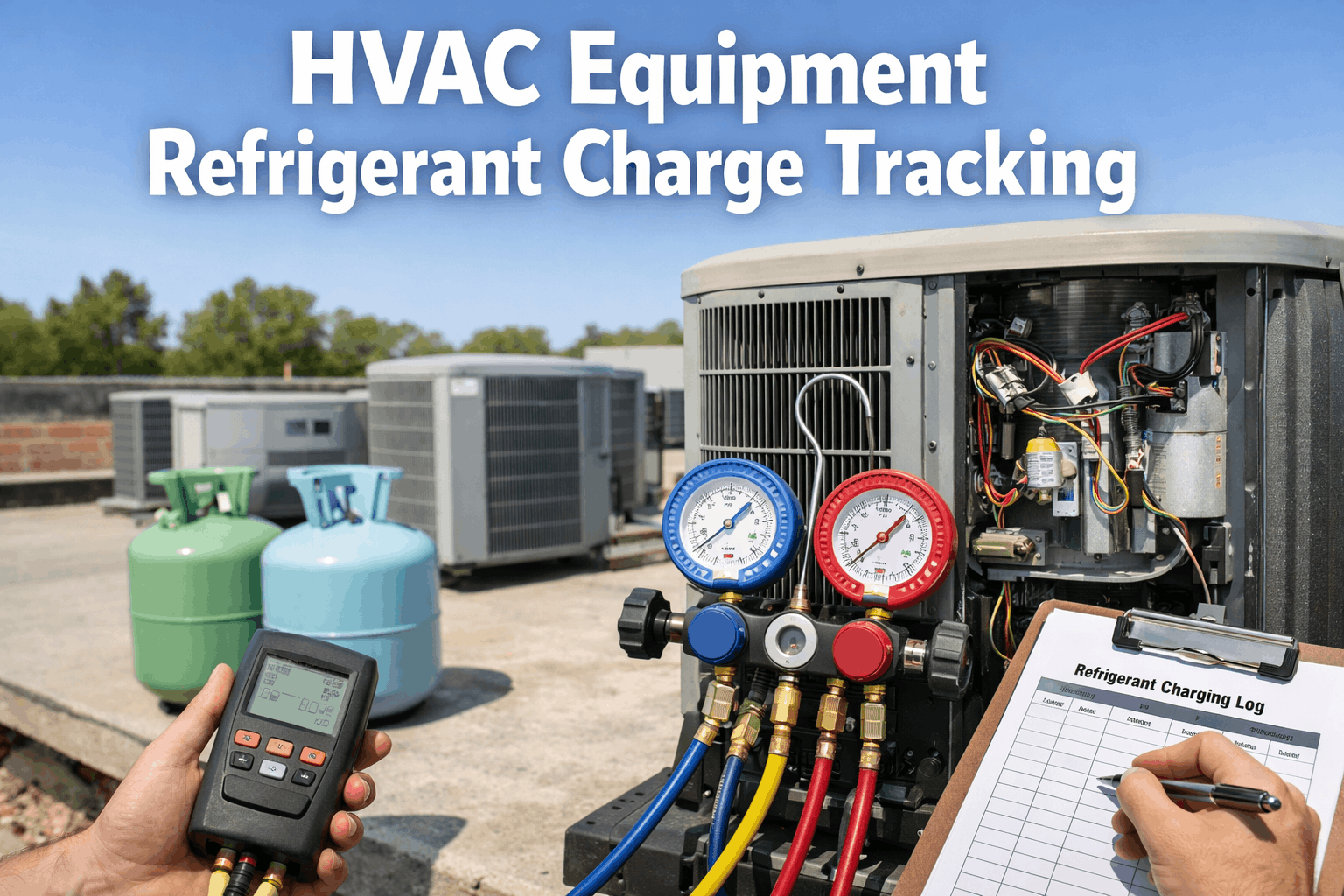
Refrigerant charge tracking is the continuous, documented monitoring of how much refrigerant is in every HVAC system at every point in time—and accounting for every pound that enters or leaves each unit. It's not the same as leak detection (though it enables it) and it's not just an EPA requirement (though it satisfies one). Proper charge tracking connects three critical functions: performance optimization, regulatory compliance, and cost control. Without it, you're operating blind on all three.
Every Charge Event Documented
Date, technician, equipment ID, refrigerant type, quantity added or removed, pre-service and post-service pressures, and reason for service — all captured at the point of work.
Running Balance Per Unit
Every system maintains a live refrigerant balance — factory charge plus additions minus removals. Discrepancies between expected and actual charge levels are flagged automatically as potential leaks.
Full Chain of Custody
From the supplier invoice to the cylinder in your warehouse to the pounds charged into each unit and the recovery sent to reclaimers — every transaction linked and traceable.
HVAC operations that sign up for automated charge tracking replace guesswork with a continuous, auditable record that shows exactly where every pound of refrigerant is at any given moment — in inventory, in equipment, or accounted for in recovery.
Equipment Profile: What a Tracked Unit Looks Like
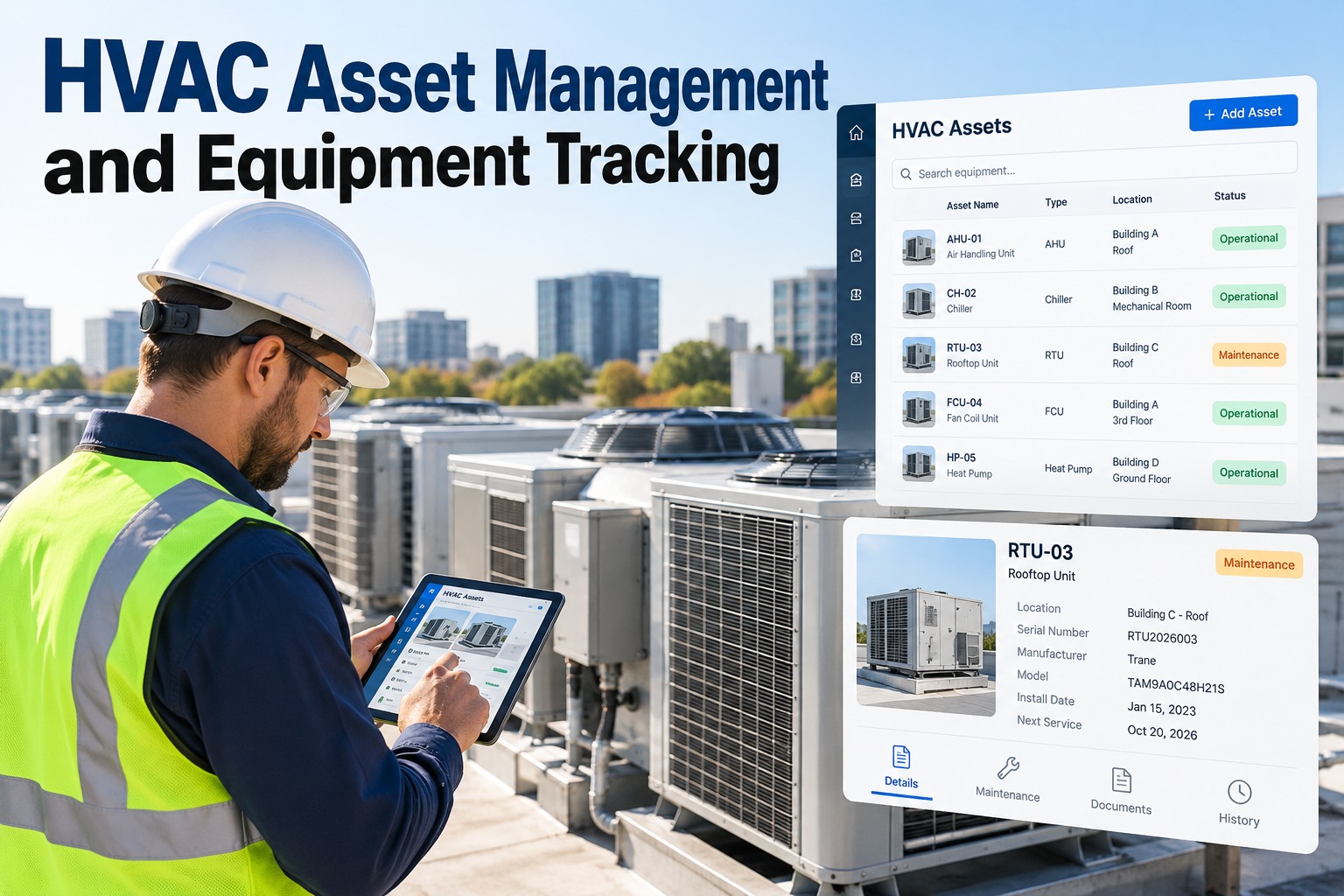
When charge tracking is done right, every piece of equipment in your portfolio has a living profile that tells you its refrigerant story at a glance. Here's what a properly tracked unit looks like in a charge management system — and why every data point matters.
Annualized Leak Rate
18.2%
Recent Charge Events
Jan 15, 2025
+4 lbs R-410A — Topped off after PM inspection found low suction pressure
Tech: M. Rodriguez
Sep 22, 2024
+3 lbs R-410A — Charged after Schrader valve replacement
Tech: J. Thompson
Jun 08, 2024
+5 lbs R-410A — Recharged following evaporator coil leak repair
Tech: A. Patel
The Refrigerant Data Flow: From Cylinder to Compliance Report
Charge tracking isn't a single action — it's a connected data flow that captures every movement of refrigerant through your operation. When any link in this chain is broken, compliance gaps and cost leaks appear. Here's how the data should flow in a properly instrumented system.
Purchase Order
Supplier, type, qty, cost, date, PO#
Inventory
Cylinder tracking, warehouse location, qty on hand
Charge Event
Asset ID, tech, qty, date, pressures, WO#
Compliance Record
Leak rate calc, EPA report, audit trail
Recovery / Reclaim
Qty recovered, reclaimer, disposal cert
Every node in that flow should be captured automatically when technicians log their work. Facilities that sign up for connected refrigerant tracking ensure no transaction falls between the cracks — from the moment refrigerant arrives on site to the moment it's recovered, reclaimed, or accounted for in an EPA report.
Know Where Every Pound of Refrigerant Is — Right Now
OXmaint tracks refrigerant from purchase through charge, recovery, and reclamation — with automatic leak rate calculations, equipment-level charge balances, and EPA-ready documentation generated from every service event.
What Happens Without Charge Tracking: The Cascade Effect
Untracked refrigerant charges don't just create compliance gaps — they set off a cascade of operational problems that compound over time. Each missed data point makes the next problem harder to detect and more expensive to fix.
1
Charge Event Not Logged
Technician adds 6 lbs of R-410A during a service call but doesn't record the quantity in any system.
Invisible
2
Leak Rate Miscalculated
Without the charge data, the running leak rate for that unit is wrong. The system appears healthier than it actually is.
Compliance Risk
3
Repair Deadline Missed
The true leak rate exceeded the EPA threshold two months ago, but no one knows because the data is incomplete.
Violation
4
Inventory Doesn't Reconcile
60 lbs purchased but only 42 lbs accounted for across equipment charges and recovery. Where did 18 lbs go?
Audit Finding
5
System Fails Prematurely
The chronically undercharged unit burns out its compressor. A $6,000 repair that a $200 charge could have prevented.
$$$$ Loss
Refrigerant Inventory at a Glance
Charge tracking doesn't stop at the equipment level — it extends to your refrigerant supply chain. Knowing what's on your shelves, what's allocated to upcoming work orders, and when you need to reorder prevents both emergency purchases at premium prices and audit gaps from unaccounted inventory.
195 lbs on hand
/ 300 lbs capacity
Adequate
30 lbs on hand
/ 150 lbs capacity
Reorder
80 lbs on hand
/ 100 lbs capacity
Adequate
45 lbs on hand
/ 100 lbs capacity
Adequate
Alert System: Catching Problems Before They Become Violations
The value of charge tracking isn't just in the records — it's in what the system does with the data. Automated alerts transform passive documentation into active compliance management, catching problems at the earliest possible stage. Teams that book a free demo to see the alert system can watch how each trigger fires in real time.
Leak Rate Threshold Exceeded — AHU-12
Annualized leak rate reached 32.4%, exceeding the 30% comfort cooling trigger. 30-day repair countdown initiated.
2 hours ago
Approaching Threshold — RTU-03
Leak rate at 26.1% and trending upward. Current trajectory will exceed 30% trigger within 45 days.
6 hours ago
Inventory Low — R-22
R-22 inventory at 30 lbs (20% of capacity). Two upcoming work orders require estimated 18 lbs total. Reorder recommended.
1 day ago
Repair Verified — CH-04
Leak repair completed and verification test passed. Leak rate recalculated at 4.2%. Compliance restored. Work order closed.
2 days ago
Expert Perspective: Charge Tracking as a Profit Center
Most facilities treat refrigerant as a consumable — something you buy, use, and replace. The smart ones treat it as an asset. Every pound has a cost, a location, and a lifecycle. When you track charges at the equipment level, you don't just stay compliant — you start making money. You find the units that are silently eating refrigerant every quarter. You catch efficiency losses before they compound into five-figure energy overruns. You stop buying emergency refrigerant at 3x markup because you planned your inventory based on actual consumption data. Charge tracking isn't overhead. It's the closest thing to a profit lever that most HVAC operations have never pulled.
$
Refrigerant Is an Asset
Track it like one. Every pound has a purchase cost, a current location, and a recoverable value. The difference between "consumable" and "tracked asset" is thousands of dollars annually.
⚡
Undercharge Kills Efficiency
A system running 10% low on charge wastes 20–40% more energy. Charge tracking catches this drift before it becomes visible on utility bills — which is usually months too late.
?
Data Drives Capital Decisions
Equipment that's been charged three times in 12 months is telling you something. Charge history is the most reliable input for repair-vs-replace decisions that save thousands.
Stop Guessing. Start Tracking Every Pound.
OXmaint gives you equipment-level charge balances, automatic leak rate calculations, refrigerant inventory management, and real-time compliance alerts — all from the same platform your technicians use for work orders.
Frequently Asked Questions
What is refrigerant charge tracking for HVAC equipment?
Refrigerant charge tracking is the systematic documentation and monitoring of every refrigerant transaction for each HVAC unit in your portfolio. This includes recording the factory charge, every subsequent addition or removal of refrigerant, the running balance in each system, and the corresponding inventory changes in your warehouse. The data feeds automatic leak rate calculations, EPA compliance reporting, and cost analysis. Unlike periodic leak checks, charge tracking provides continuous visibility into refrigerant movements across your entire equipment base — ensuring that every pound is accounted for at all times.
How does charge tracking help detect refrigerant leaks earlier?
Every time a technician adds refrigerant to a system, the software recalculates the annualized leak rate based on the total quantity added over a rolling 12-month window relative to the system's full charge capacity. This calculation happens automatically with each charge event. When the rate approaches the EPA threshold (20% for commercial refrigeration, 30% for comfort cooling), the system generates proactive alerts. This is fundamentally different from waiting for performance symptoms — charge tracking detects the pattern of loss mathematically, often months before the system shows visible signs of degradation like reduced cooling capacity or iced coils.
What data should be captured at every charge event?
A complete charge event record should include: the date and time of service, the equipment asset ID and location, the technician name and EPA 608 certification number, the refrigerant type (R-410A, R-22, etc.), the exact quantity added or recovered in pounds, the reason for the charge (leak repair, PM top-off, new installation), pre-service and post-service suction and discharge pressures, the associated work order number, and any photos of the equipment or readings. This level of detail satisfies EPA documentation requirements, supports accurate leak rate calculations, and provides the data needed for cost analysis and repair-vs-replace decisions.
How does refrigerant charge tracking reduce HVAC operating costs?
Charge tracking reduces costs in four measurable ways. First, it identifies chronic leakers early — preventing the compounding expense of repeated charges on equipment that needs repair or replacement. Second, it catches undercharge conditions that degrade system efficiency by 2–4% per pound, reducing energy waste. Third, it enables inventory planning based on actual consumption data, eliminating emergency purchases at premium prices. Fourth, it provides the charge history needed to make informed repair-vs-replace decisions, preventing costly repairs on equipment that should be retired. Facilities with comprehensive charge tracking report 15–25% reductions in total refrigerant spending within the first year.
Can charge tracking software integrate with existing CMMS platforms?
Yes. Modern refrigerant charge tracking is typically a module within a broader CMMS platform rather than a standalone tool. This integration is critical because charge events happen during work orders — when technicians are already in the system logging their work. The charge data links directly to the equipment asset record, the work order, the technician profile, and the parts inventory. This means every charge event automatically updates the equipment's leak rate calculation, adjusts the refrigerant inventory balance, documents the technician's certification compliance, and feeds into the facility's EPA reporting — all without any duplicate data entry.