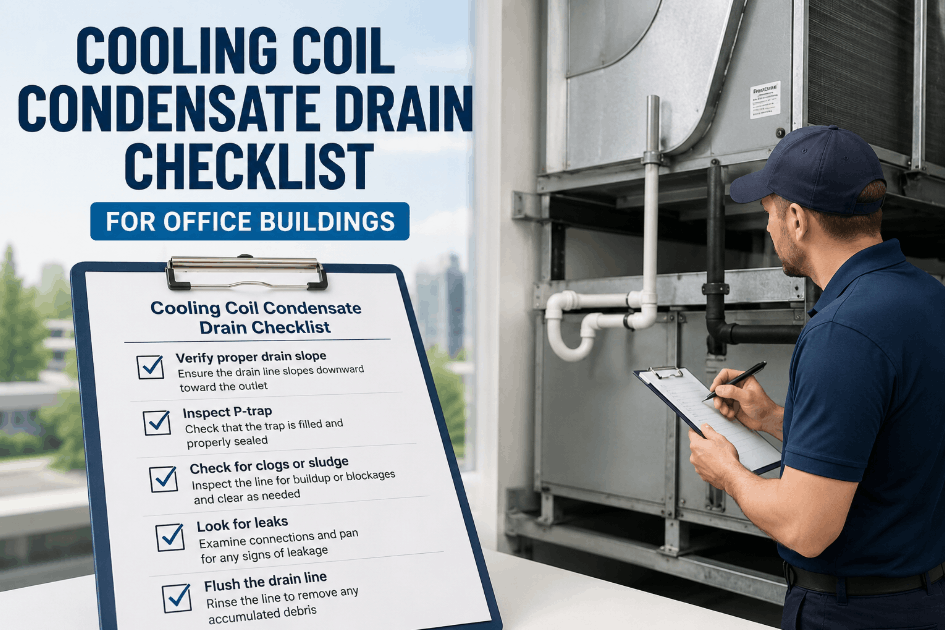
Condensate drain system failures are among the most preventable causes of ceiling water damage, mold development, and indoor air quality complaints in office building HVAC systems — yet drain pan condition, trap functionality, and drain line slope are among the least frequently inspected components in a typical building preventive maintenance program. Cooling coil condensate management is a continuous process during cooling season operation, and the gap between the moisture removal capacity of a well-maintained drain system and the damage potential of a blocked or improperly sloped one is measured in days rather than seasons. When drain pans accumulate sludge, P-traps lose their water seal during economizer or off-season periods, or drain line slope is lost after ceiling work repositions support points, the condensate system fails silently until water overflows the pan and reaches building materials or occupied spaces. Office building facility managers, HVAC service technicians, and property operations teams need a structured inspection process to verify condensate drain slope, trap condition, pan cleanliness, and biological growth control before the next cooling run period begins. Sign Up Free on Oxmaint to schedule cooling coil condensate drain inspections by AHU and coil asset, record pan and drain findings digitally, and trigger corrective work orders before drain failures produce ceiling leaks or IAQ incidents. From drain pan sludge assessment to P-trap priming confirmation and drain line flush verification, unstructured condensate drain inspection is one of the most correctable contributors to office building water damage and comfort complaints. Book a Demo to see how Oxmaint connects condensate drain inspection records to AHU asset history and corrective action tracking across every air handling unit in your office building portfolio.
1. Drain Pan Condition and Sludge Level
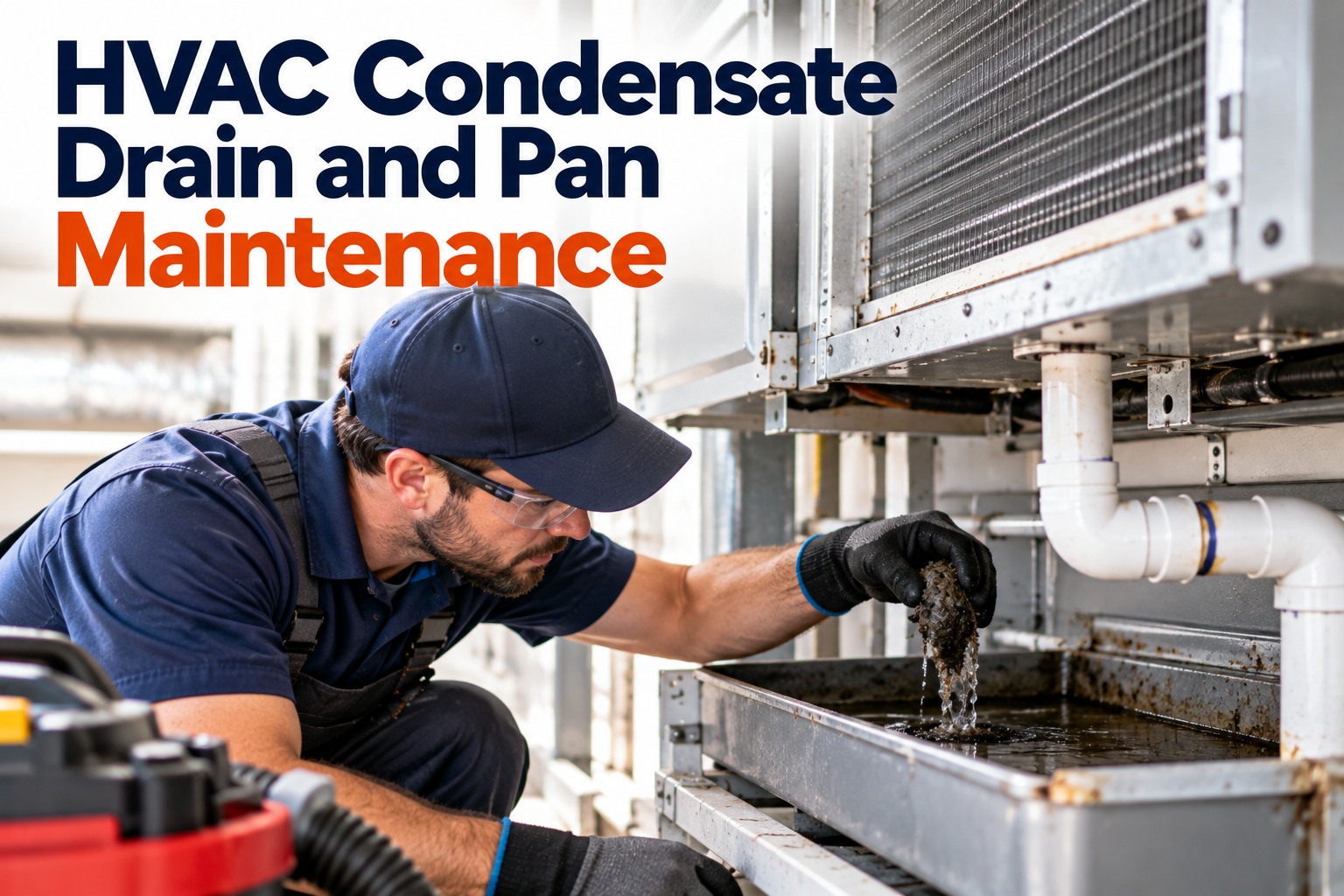
The drain pan is the primary collection point for coil condensate and the first failure point when biological growth, sediment, and debris accumulate faster than drain flow can clear them. Pan condition must be verified before cooling season startup to confirm that pan capacity and drain outlet clearance are sufficient for the condensate volume the coil will produce at design conditions.
2. Drain Line Slope, Routing, and Clearance
Drain line slope and unobstructed routing are required to maintain gravity drainage of condensate from pan to discharge point. Drain lines that lose slope after ceiling work, accumulate debris scale, or are compressed by ceiling tile supports produce partial blockages that reduce drainage capacity below the condensate rate the coil produces at peak load conditions.
3. P-Trap Condition and Prime Verification
P-traps in condensate drain systems prevent negative pressure in the AHU cabinet from drawing drain pan air and odors back into the supply airstream. Traps that lose their water seal during off-season periods or are installed incorrectly allow direct bypass of the drain seal and produce odor complaints before any drainage failure or water overflow is evident.
4. Overflow Protection and Drain Alarm Verification
Overflow protection devices and high-water alarms provide a secondary barrier against condensate water damage when primary drain system function is impaired. These devices must be functional and correctly positioned to intercept condensate before it reaches building materials — they are not a substitute for primary drain maintenance but are a critical backup when primary drain capacity is exceeded.
5. Biological Growth Control and Odor Prevention
Biological growth in condensate drain systems — algae, bacteria, and mold — is the most common cause of drain blockage and the primary source of musty odors distributed through office HVAC supply air. A structured biological growth control process applied consistently across all AHUs is more effective than reactive treatment after odor complaints are received from occupied spaces.