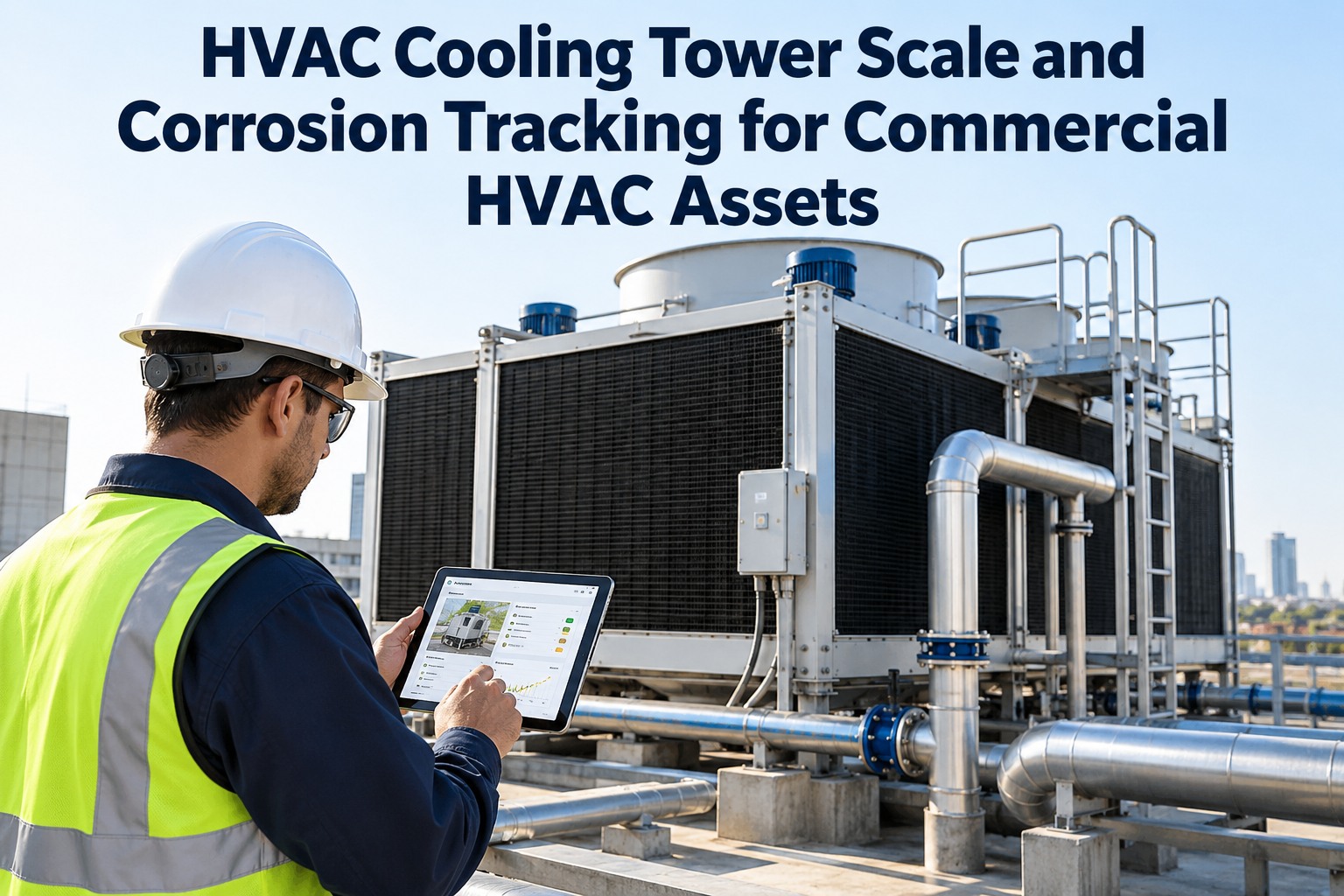
A cooling tower is a chemistry experiment running 24/7, and it's rigged against you in both directions. Push the water too hard toward mineral saturation and scale coats the tubes, choking heat transfer and driving energy up. Let it swing the other way and the same water turns corrosive, eating the metal it's supposed to cool. Scale and corrosion aren't two separate problems — they're the two cliffs on either side of a narrow path, and staying on it means tracking the water's chemistry and metal loss on a schedule, not noticing the damage after it's done. OxMaint AI maintenance management software logs every reading against the tower, trends it, and raises a work order the moment a value drifts out of range.
Track the Chemistry Before Scale and Corrosion Track Your Tower
Cooling-tower water lives between two failures: too saturated and it scales, too aggressive and it corrodes. The only way to hold the middle is to measure the parameters that predict both — pH, conductivity, cycles, corrosion rate — and act on the trend before the tubes tell you. OxMaint AI captures each reading against the asset, flags any value outside its range, and turns a drifting number into a work order while it's still a number, not a repair.
Two Failures, One Balance
Scale and corrosion pull in opposite directions — the conditions that suppress one tend to invite the other. Understanding both is what keeps water treatment from becoming whack-a-mole. Start free and track both sides of the balance in OxMaint AI.
between
The LSI: One Number for Which Way You're Tipping
The Langelier Saturation Index sums the water's tendency into a single figure — and tells you which cliff you're drifting toward before the damage shows. Book a demo to trend LSI drivers in OxMaint AI.
Treated alkaline towers intentionally sit slightly positive, holding calcium in solution with inhibitors rather than chasing a perfect zero. The point isn't a target number — it's watching the trend so a slow drift gets caught early. Sign up free and watch the trend, not just the reading, in OxMaint AI.
By the Time You Can See Scale, You've Already Paid for It.
A fraction of a millimetre of scale measurably cuts heat transfer; corrosion does its damage out of sight until a tube fails. Neither announces itself — the readings do, weeks ahead, if someone's tracking them. OxMaint AI keeps the log, spots the drift, and raises the action while it's still cheap.
The Parameters to Track — and Their Target Ranges
A treatment program is only as good as the numbers behind it. These are the core parameters, their common target ranges, and what each one warns you about. Start free and log every reading against its range in OxMaint AI.
| Parameter | Target range | What it warns of |
|---|---|---|
| pH | 7.0–9.0 | Low drifts corrosive; high drifts toward scale |
| Conductivity | ~1,500–2,500 µS/cm | Blowdown setpoint; rising = too many dissolved solids |
| Cycles of concentration | 4–6 cycles | Low wastes water; high risks scale |
| Corrosion rate — mild steel | < 3 MPY | Above 5 MPY = program failure |
| Corrosion rate — copper | < 0.5 MPY | Coupons run 60–90 days |
| Free chlorine residual | 0.5–1.0 ppm | Confirms active biocide |
| HPC count | < ~10,000 CFU/mL | Biological fouling & under-deposit corrosion risk |
Your water treatment provider sets the exact targets for your makeup water and metallurgy — these are the common commercial ranges to track against. Book a demo to load your own targets into OxMaint AI.
The Monitoring Cadence
Different parameters move at different speeds, so they're checked on different clocks. A tracking program runs on this rhythm — and each reading is only useful if it's recorded against the asset. Start free and schedule every check as a recurring task in OxMaint AI.
How OxMaint AI Tracks Scale and Corrosion
Readings scribbled on a log sheet catch nothing — the value is in the trend and the alert. OxMaint AI turns each measurement into a tracked, actionable data point. Start free and turn readings into a running system.
Frequently Asked Questions
Catch the Drift While It's Still a Number.
Scale and corrosion both do their damage quietly, and both are predicted weeks ahead by readings that mean nothing sitting on a clipboard. Track them against the asset, trend them, and act on the drift, and the tower stays on the narrow path between the two failures. OxMaint AI keeps the log, watches the trend, and raises the work order — so the first sign of trouble is an alert, not a failed tube.