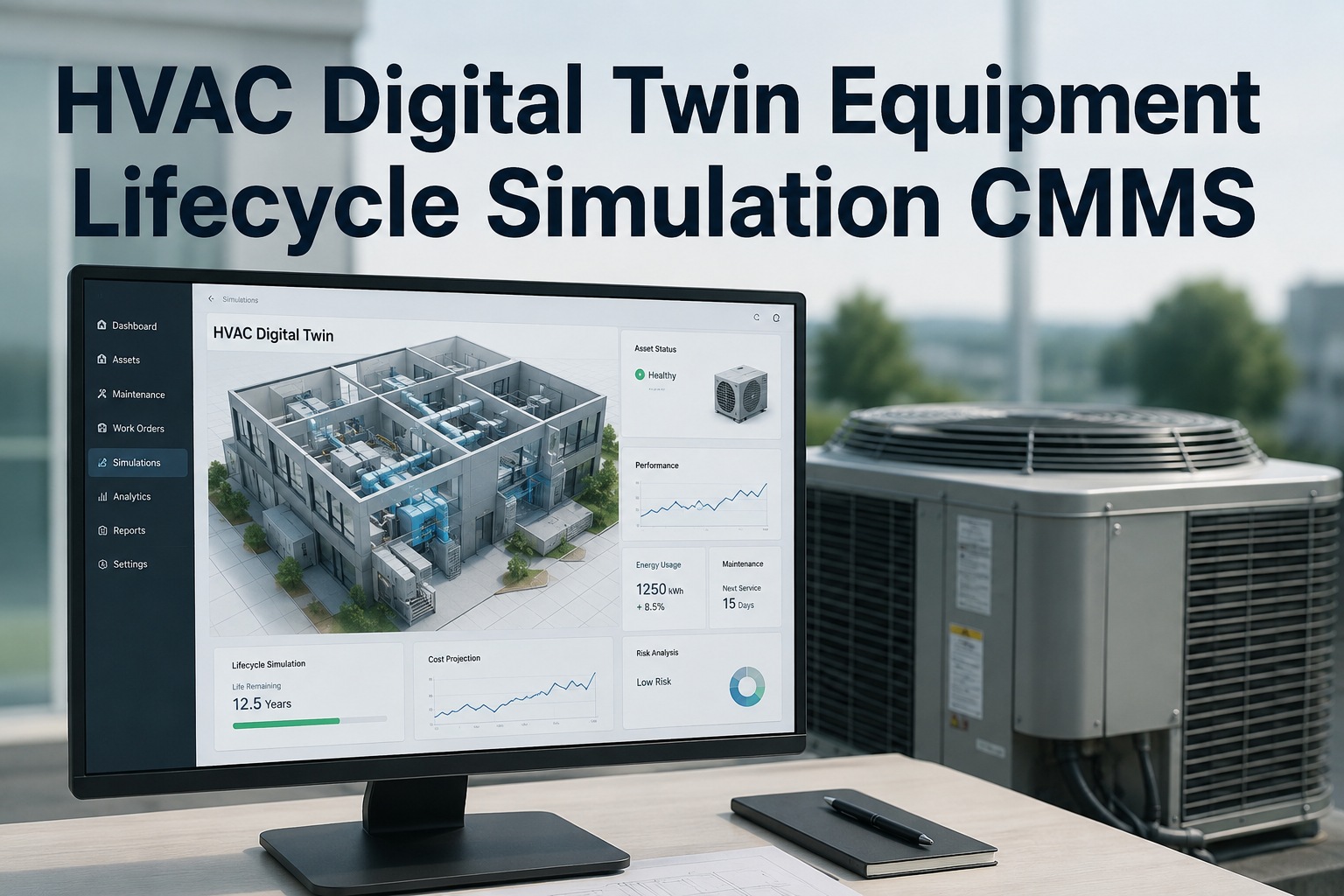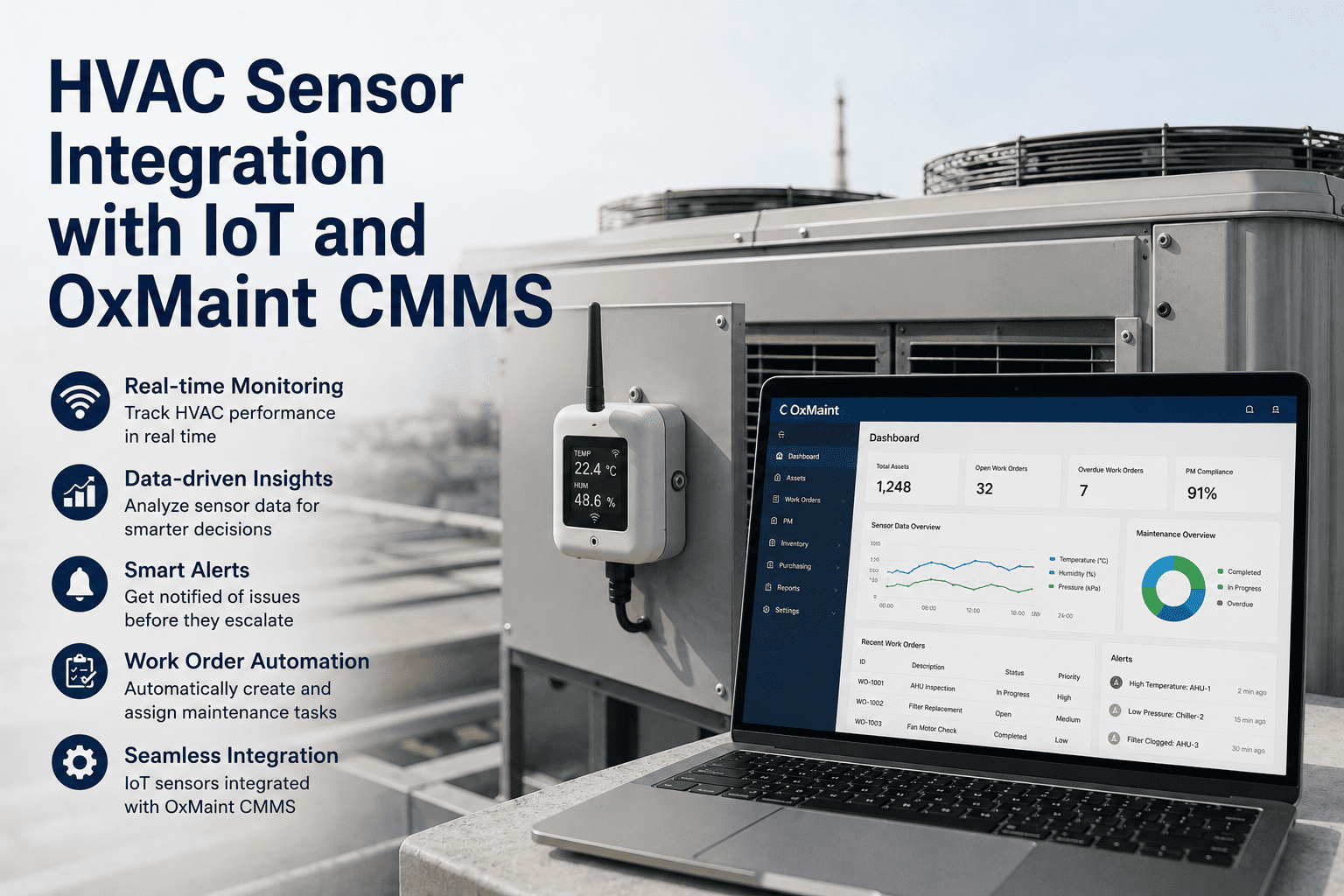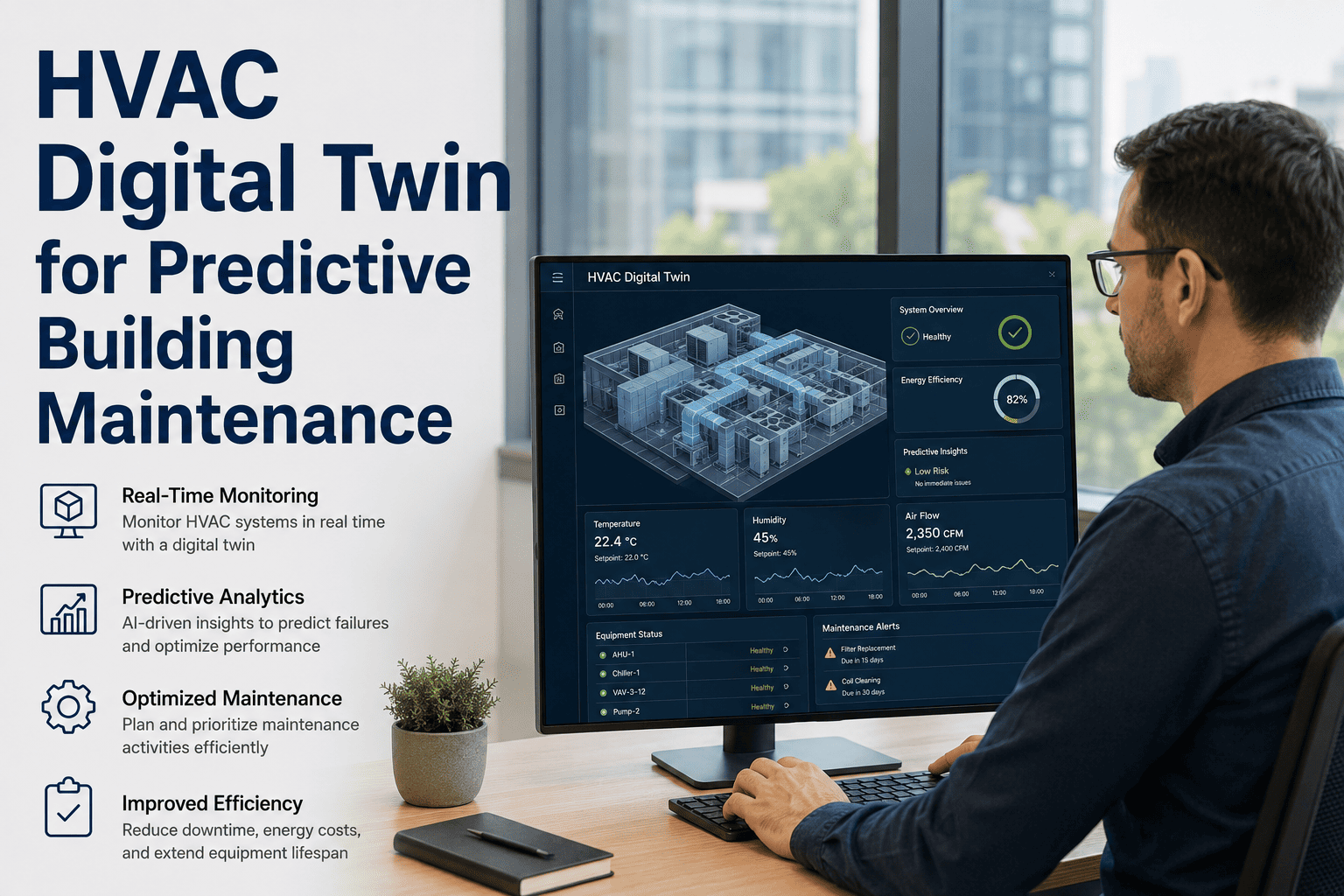
A digital twin is a live virtual replica of a physical HVAC system — updated continuously from sensor data, work order history, and operational parameters. When actual system performance deviates from the digital model, maintenance teams know exactly which component is drifting before it fails. OxMaint's Predictive Maintenance AI uses digital twin logic to compare expected vs. actual performance across chillers, AHUs, and RTUs, triggering work orders automatically when deviation thresholds are crossed.
How HVAC Digital Twins Work in Practice
A digital twin is built from three data sources: manufacturer performance curves, historical maintenance records, and real-time sensor streams. Together they define what "normal" looks like for each asset under any operating condition.
Digital Twin vs. Traditional PM: Performance Comparison
| Capability | Traditional PM Schedule | Digital Twin Predictive |
|---|---|---|
| Failure Detection Timing | After failure occurs | 2–6 weeks before failure |
| Maintenance Trigger | Fixed calendar schedule | Actual condition + deviation threshold |
| Root Cause Visibility | Post-failure investigation | Pre-failure diagnosis from sensor pattern |
| Energy Waste Detection | Monthly utility bill review | Real-time per-asset deviation alert |
| Unnecessary PM Events | 30–40% performed on healthy assets | PM triggered only when condition warrants |
| MTBF Improvement | Baseline — no trend visibility | 90–175 hours improvement (CBM data) |
See Predictive Maintenance in Action
OxMaint's AI compares real sensor data against expected performance baselines for every asset in your facility. Book a demo to see how deviation alerts translate into work orders before failures happen.
Digital Twin Applications by HVAC Asset Type
Expert Review
The most significant misconception about HVAC digital twins is that they require complete building automation system integration before they deliver value. In practice, a digital twin built from three sensor points — supply air temperature, return air temperature, and energy consumption — combined with a CMMS maintenance history generates actionable predictions for 80% of common failure modes. The value is not in the complexity of the model; it is in the consistency of the comparison between expected and actual. Facilities that implement deviation-based alerts connected to automated work order creation reduce unplanned downtime by 45–65% within the first operating year. The digital twin does not replace the technician — it tells the technician exactly where to go and what to look for before the equipment tells them with a failure alarm.
Digital Twin ROI: What Facility Teams Report
Your Facility Data Is Already Generating Predictions
OxMaint connects your existing sensors and work order history to build asset-level performance baselines starting on day one. No custom engineering required — the AI builds the model as your team works.
Frequently Asked Questions
What is an HVAC digital twin and how is it different from a BAS?
A Building Automation System (BAS) controls HVAC equipment in real time by executing setpoint commands and schedules. A digital twin is an analytical layer built on top of sensor data that models expected system behavior and flags deviations — it observes and predicts rather than controls. The two complement each other: a BAS provides the control signals and sensor readings, while the digital twin uses those readings to detect when performance is drifting from the expected model. OxMaint integrates with BAS data streams to build digital twin models without replacing existing control infrastructure.
How long does it take to build a meaningful HVAC digital twin baseline?
For most commercial HVAC assets, a statistically meaningful performance baseline requires 30–90 days of normal operation data — long enough to capture a representative range of load conditions, outdoor temperature variation, and occupancy cycles. OxMaint's AI begins building asset-specific baselines from the first day of sensor integration and refines the model continuously as more operational data accumulates. Early deviation alerts are available within the first 30 days, becoming progressively more precise through the first operating season. Book a demo to see the baseline-building timeline for your specific asset portfolio.
Does a digital twin require full BAS or sensor integration to be useful?
No. A digital twin can be built from partial sensor coverage and enhanced over time. Even three data points — supply air temperature, return air temperature, and power consumption — are sufficient to detect the most common failure precursors for air handling units. OxMaint's predictive model starts with whatever sensor data is available and generates maintenance recommendations calibrated to that level of data fidelity, with clear indicators showing which asset insights would improve with additional sensor coverage.
Can OxMaint's digital twin connect to existing BAS and IoT hardware?
Yes. OxMaint supports integration with major BAS platforms including Siemens Desigo, Johnson Controls Metasys, Honeywell Niagara, and Tridium, as well as direct IoT sensor streams via BACnet, Modbus, and MQTT protocols. Existing building data — including historical trend data — can be ingested to accelerate baseline model creation. The integration does not require replacing existing hardware; OxMaint reads from the existing data layer and adds the predictive analytics and CMMS work order generation on top.