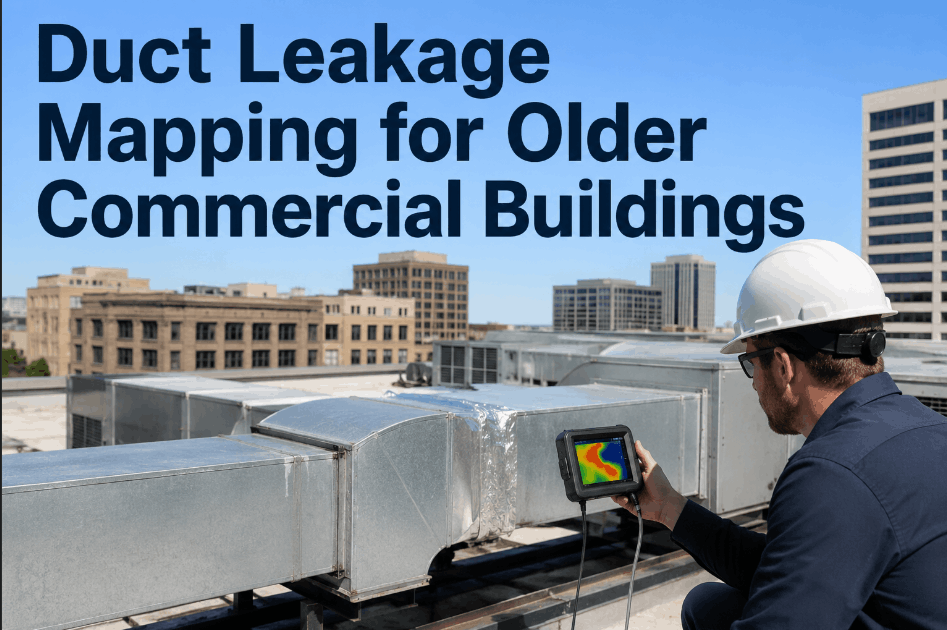
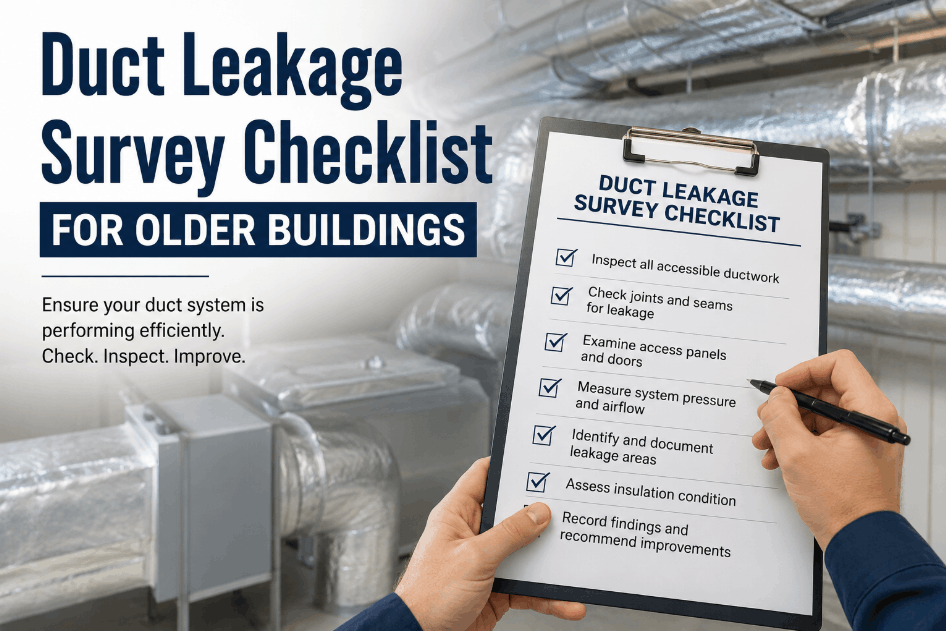
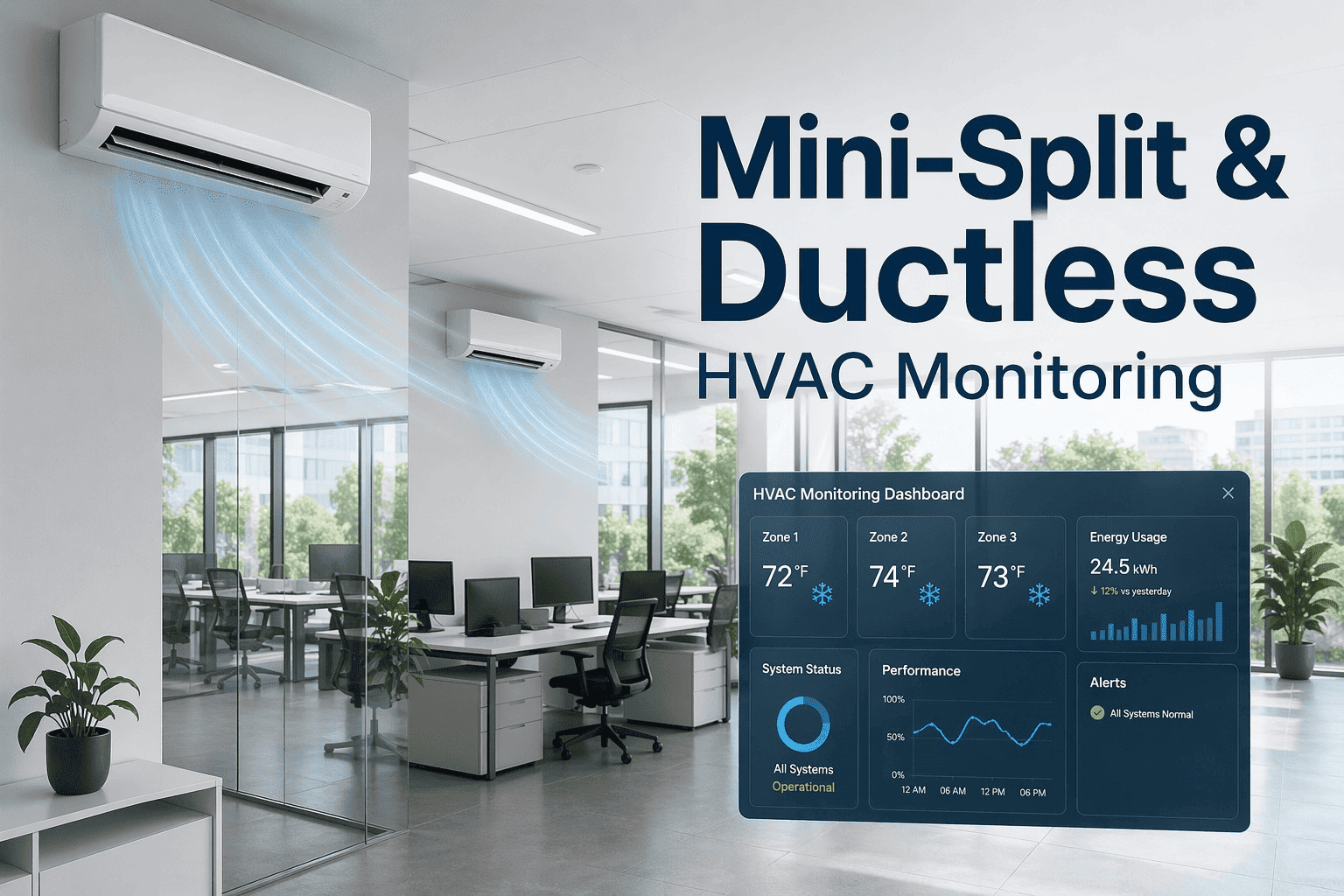
Duct leakage mapping turns a vague comfort complaint into a specific, fixable problem in older commercial buildings, where decades of retrofits and patched ductwork hide air loss that standard walkthroughs rarely catch. Without a structured way to track inspection findings, thermal anomalies, and zone-level complaints, leak detection stays anecdotal and air keeps escaping into ceilings and chases long after the last energy audit. Sign Up Free to start logging duct inspection findings by zone and asset, or Book a Demo to see how Oxmaint links thermal detection to a corrective work order automatically. Oxmaint gives facility teams a digital record of every duct run, inspection, and follow-up repair, so leak detection becomes a tracked program instead of a one-time energy audit.
Facility Management · Building Envelope · 2026
Duct Leakage Mapping for Older Commercial Buildings
Track inspection findings, thermal anomalies, and follow-up repairs by zone — so duct leakage in older buildings gets fixed instead of re-discovered every season.
64%Of older commercial buildings have undocumented duct leakage by zone
−27%Comfort complaint volume drop after structured duct leakage mapping
3×Faster leak detection with thermal-imaging-based inspection
94%Inspection-to-work-order follow-through with automated linkage
6 Signals That Duct Leakage Is Going Undetected
Duct leakage in older buildings rarely announces itself as a single failure — it shows up across recurring complaints, pressure readings, and inspection gaps that are easy to dismiss individually. The six signals below are what Oxmaint helps facility teams track to map leakage before it becomes a comfort or energy problem. Sign Up Free to start mapping these signals across your building portfolio.
Recurring Zone Complaints
Pattern: Same zone reports comfort issues across multiple seasons
Detection Gap
Repeated complaints in one zone usually point to a leak location nobody has formally mapped yet.
Undocumented Retrofit History
Pattern: Duct modifications from past renovations are untracked
Records Gap
Leak paths often follow old retrofit seams that no current building record shows.
Static Pressure Inconsistency
Pattern: Static pressure readings vary widely between similar zones
Detection Gap
Pressure imbalance is one of the earliest measurable signs that air is escaping the duct run.
Thermal Anomaly Clusters
Pattern: Heat signatures cluster around ceiling or chase areas
Records Gap
Thermal patterns reveal air loss into unconditioned spaces long before a visible symptom appears.
Inspection Frequency Drift
Pattern: Time between duct inspections keeps stretching
Detection Gap
Gaps between inspections let small leaks widen into larger energy and comfort losses.
No Inspection-to-Repair Link
Pattern: Failed inspection items don't automatically become work orders
Records Gap
Findings get logged but the corrective repair never gets scheduled or tracked through to completion.
Duct Leakage Control — Without vs. With Oxmaint
The difference between guessing at duct leakage and mapping it systematically shows up in complaint volume, energy spend, and how fast a finding turns into a finished repair. Book a Demo to see how your building's current inspection process compares.
Duct Leakage Mapping Maturity — Where Does Your Portfolio Sit?
Duct leakage control ranges from complaint-driven guesswork to thermal-verified inspections that auto-generate repairs. The framework below helps facility teams identify the specific gap costing the most comfort and energy performance today. Book a Demo to assess your portfolio's current duct leakage mapping maturity.
Duct Leakage Mapping Maturity
Score 5 = thermal-verified, auto-linked repairs · Score 1 = no structured tracking
5
Thermal-Verified, Auto-Linked Repairs
AI Vision thermal detection feeds checklist findings directly into work orders, and every zone has a documented duct history.
Profile: Leaks are mapped and repaired on a verified cycle instead of being rediscovered by complaint.
4
Scheduled Digital Inspections
Digital checklists run on a set cadence, but thermal detection isn't in use yet and follow-up repairs are still tracked manually.
Action: Add thermal-imaging-based detection and automatic work order linkage to close the loop.
3
Logged But Inconsistent
Inspections happen, but timing drifts and findings are recorded informally with no guaranteed follow-up.
Gap: Without a scheduled cadence, the same leak can go unnoticed across several seasons.
2
Complaint-Driven Only
Duct issues are investigated only after a tenant or occupant complaint, with no proactive inspection program.
Risk: Each complaint is treated as a one-off, so the underlying leak path never gets fully mapped.
1
No Structured Tracking
Duct condition is unknown until a major comfort or energy issue forces an investigation.
Risk: Energy loss and comfort complaints are already accumulating, just unattributed to their actual cause.
Map Your Building's Duct Leakage — Before the Next Season's Complaints.
Oxmaint tracks inspection findings, thermal anomalies, and repairs by zone — giving facility teams a real leakage map instead of a list of one-off complaints.
How Oxmaint Maps and Resolves Duct Leakage
Oxmaint combines digital inspection checklists with AI Vision thermal detection so leakage findings turn into tracked, assigned repairs instead of notes in a binder. Sign Up Free to start your first zone-by-zone inspection cycle, or Book a Demo to see the thermal detection workflow in action.
Inspection Management
Digital Checklists
Standardized duct inspection by zone
Digital checklists ensure every duct run is inspected the same way each time, with photo capture attached to each finding.
AI Vision Camera
Thermal Anomaly Detection
Heat-loss patterns detected automatically
Camera-based thermal analysis flags heat escaping into ceilings and chases, turning a pattern into a tracked finding without manual triage.
Work Order Management
Auto-Generated Repairs
Failed checklist items become work orders
A failed inspection item automatically creates a corrective work order, with the finding, photo, and location already attached.
Asset Management
Zone-Level History
Duct run and zone records tracked over time
Every inspection, repair, and thermal finding is tied to a duct asset record, building a real leakage history per zone over time.
"
We had the same comfort complaint on three floors every summer for years and never connected them to the same duct run. Once we started logging thermal findings through Oxmaint, we mapped the actual leak path in a single inspection cycle and the work order was assigned the same day. That complaint hasn't come back since.
Facilities Director — Commercial Office Portfolio, Chicago, USA
Frequently Asked Questions
What is duct leakage mapping?
It's the process of identifying and recording where ductwork is losing conditioned air, usually across multiple inspection cycles, so repairs target the actual leak path instead of guesswork.
Why is duct leakage harder to find in older commercial buildings?
Decades of retrofits and patched ductwork create leak paths that no longer match original building drawings, so undocumented history hides the real source.
How does Oxmaint use thermal imaging for duct inspections?
The AI Vision Camera detects heat-loss patterns around ceilings and chases, flagging anomalies that link directly to a checklist finding and work order.
Does a failed duct inspection automatically create a repair task?
Yes — failed checklist items in Oxmaint automatically generate a corrective work order tied to the specific finding and location.
Can Oxmaint track duct leakage across multiple buildings?
Yes — inspection and repair history are tracked per building and zone, with a portfolio-level view for teams managing several properties.
Stop Re-Discovering the Same Duct Leak Every Season.
Oxmaint tracks duct inspections, thermal findings, and repairs by zone — giving facility teams the leakage visibility to fix the source, not just the symptom.