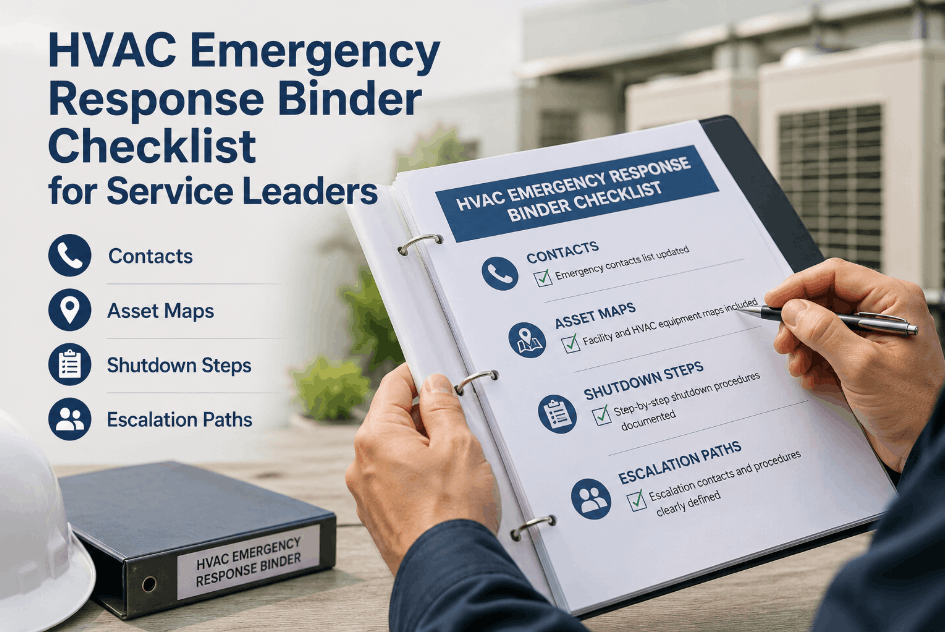
An HVAC emergency response binder is only useful if it's accurate at the exact moment someone reaches for it under pressure — and that's precisely when outdated binders fail. Contact lists go stale as vendors change and staff turn over, asset maps don't reflect equipment added during the last renovation, and shutdown procedures written years ago no longer match current valve and breaker layouts. During an actual emergency, a technician flipping through a binder with wrong phone numbers or an outdated mechanical room layout loses exactly the time the binder was supposed to save. Sign Up Free on Oxmaint to give service leaders a digital emergency response record tied directly to current asset data, vendor contacts, and shutdown procedures — so the binder reflects what's actually true today instead of what was true at last printing. Book a Demo to see how Oxmaint keeps emergency contact lists, asset maps, and escalation paths current and accessible from a technician's phone in the field, not just a binder sitting in an office that may not be reachable during the event. Use this checklist before your next emergency preparedness review.
1. Emergency Contact & Escalation Path Documentation
The fastest part of an emergency response is supposed to be knowing exactly who to call. Confirm every contact and escalation path in the binder is current and that the escalation order itself still matches how your team actually operates.
2. Asset Maps & Critical Shutdown Procedures
A responding technician needs to locate the right equipment and isolate it correctly without trial and error. Confirm asset maps and shutdown procedures reflect current mechanical layouts, not the layout that existed at last renovation.
3. Spare Parts & Vendor Reference Documentation
Emergency response speed often depends on whether a replacement part is on the shelf or needs to be sourced under pressure. Confirm spare parts inventory and vendor sourcing information in the binder are accurate and current.
4. Site-Specific Hazard & Access Information
Emergency responders, especially those unfamiliar with the site, need hazard and access information that's specific to the facility rather than generic safety language. Confirm this section reflects current site conditions and access realities.
5. Binder Review Cadence & Digital Accessibility
A binder reviewed once a year drifts out of date faster than that cadence can catch. Confirm review frequency matches the rate of change at your facility and that the information is reachable from wherever a responder actually is during an event.