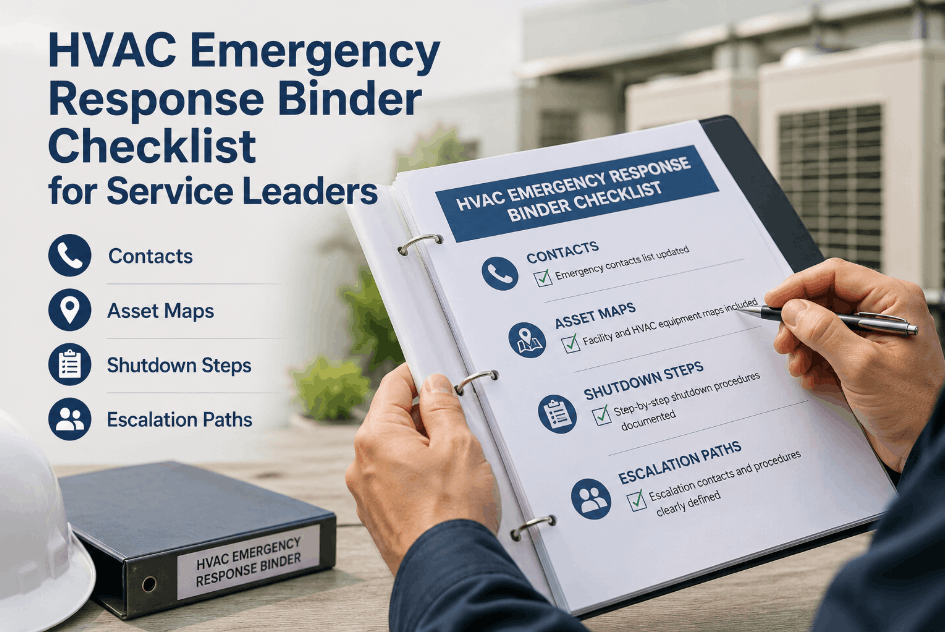
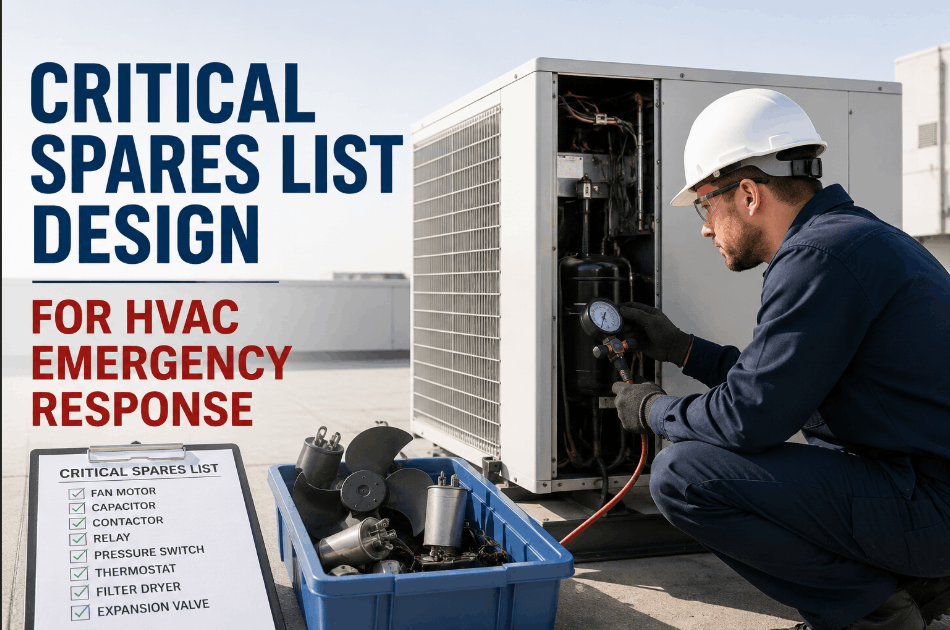
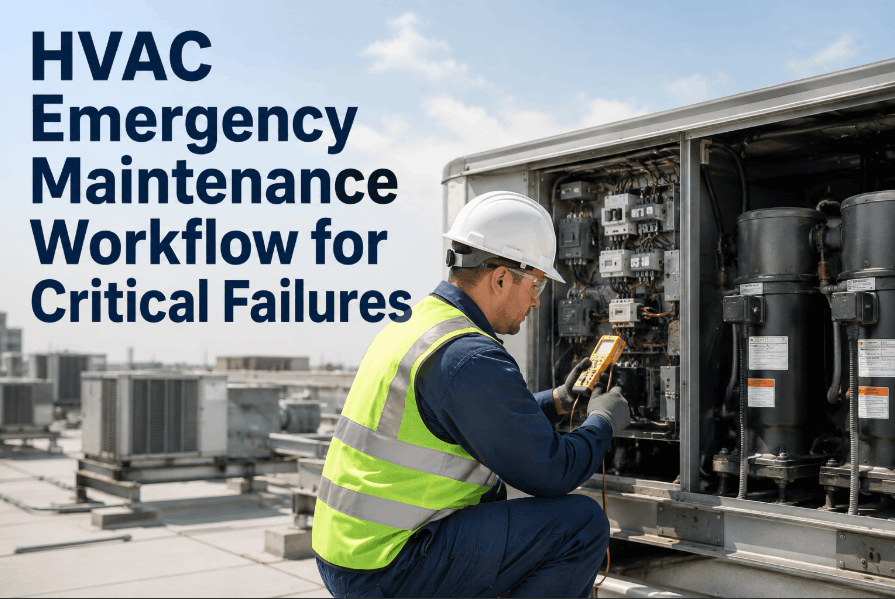
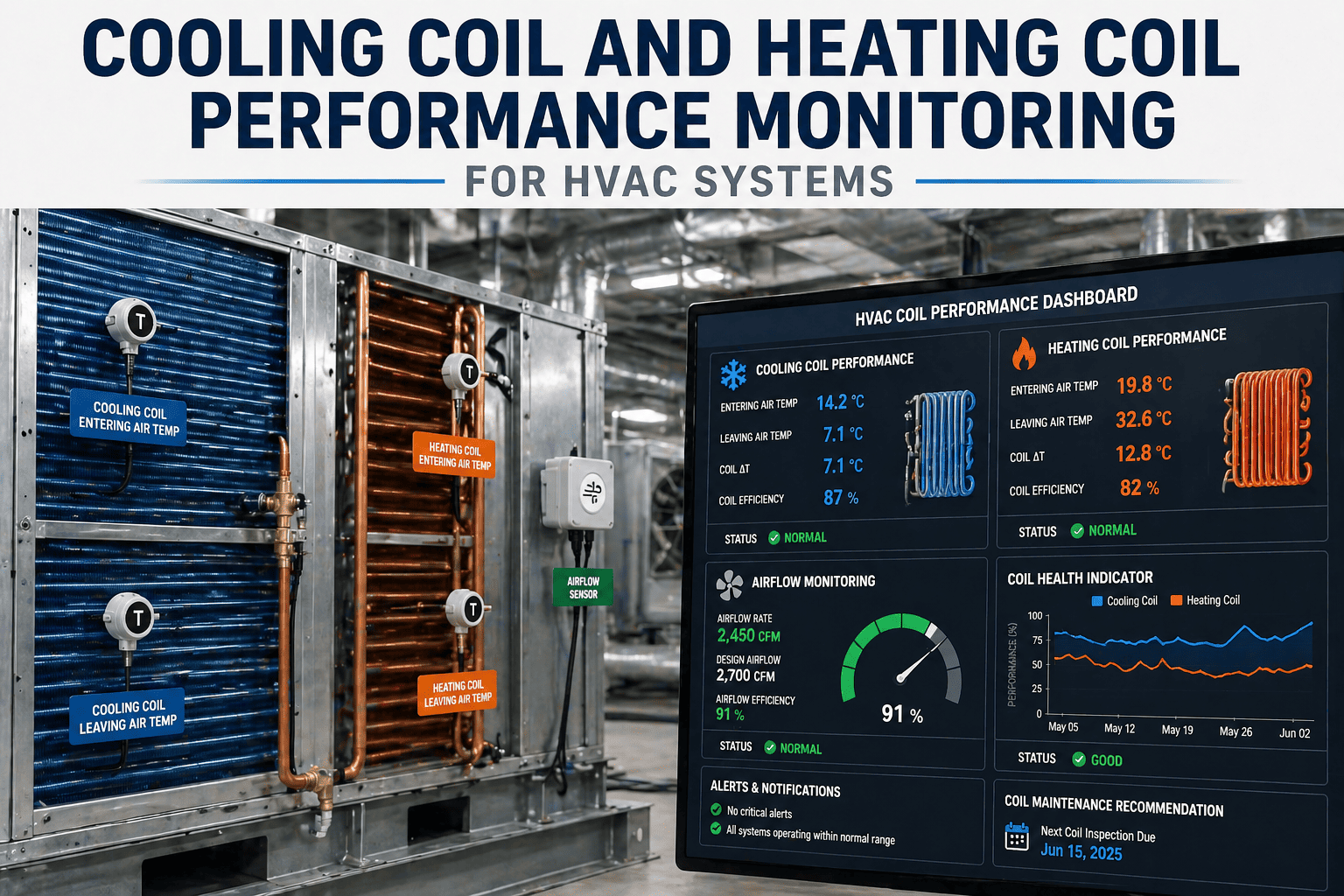
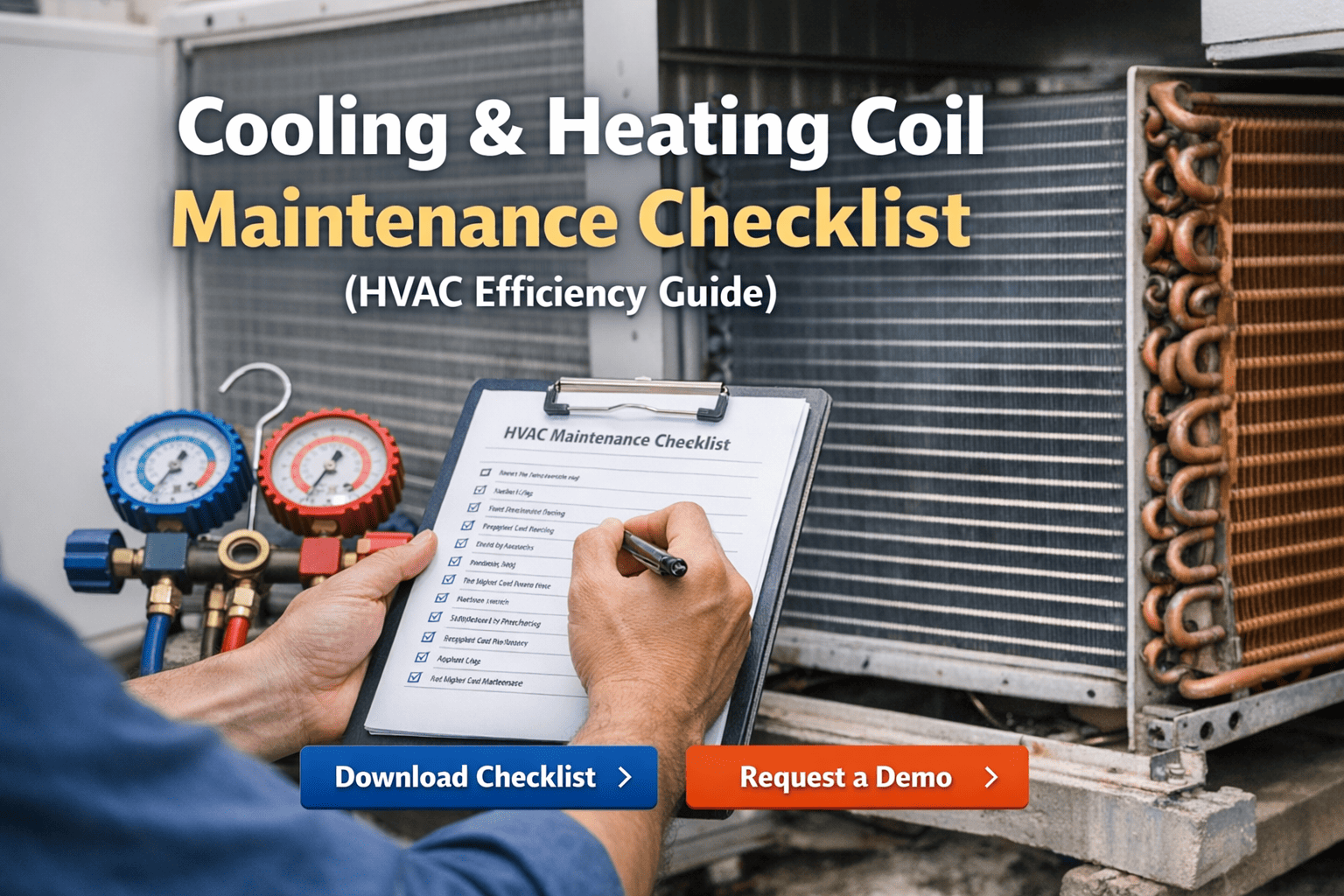
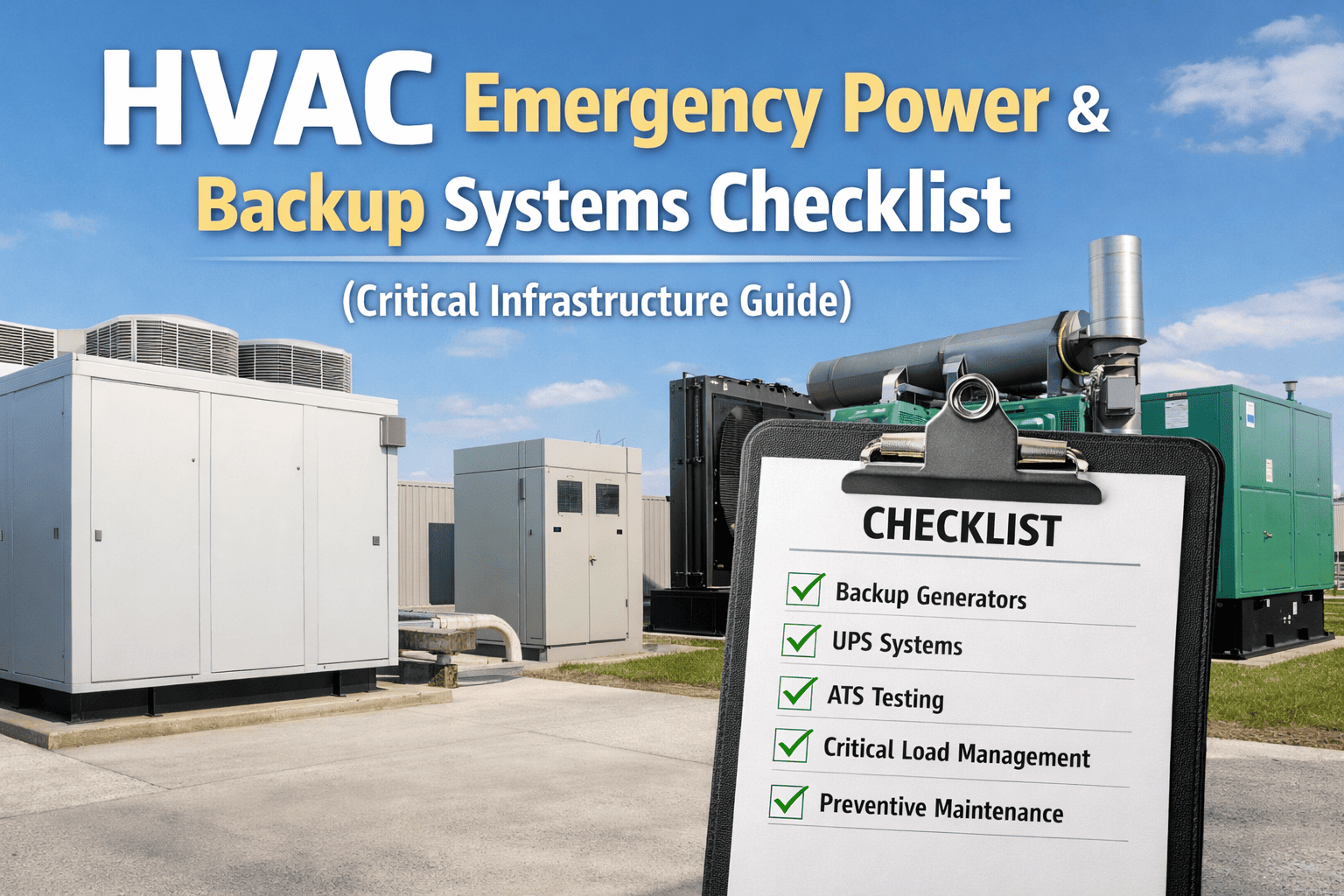
When HVAC systems fail in hospitals, data centers, or laboratories, response time is the difference between a managed incident and a catastrophic loss. This emergency response checklist covers every critical step — from initial detection and rapid diagnosis to proper escalation, temporary cooling measures, and fully documented recovery procedures. Sign up free or book a demo to manage every HVAC emergency with OxMaint.
Emergency HVAC Response Checklist:
Handling Critical System Failures
When cooling fails in a hospital, data center, or lab — every minute counts. Use these structured protocols to diagnose fast, escalate right, and recover with full documentation.
In a critical environment, guessing costs time. A structured first-response checklist cuts diagnostic time by up to 60% — getting the right technician to the right fix, faster.
Most HVAC emergencies turn into disasters not because of the failure itself, but because the wrong person was called, or no one was called at all. Pre-defined escalation trees eliminate this gap entirely.
Portable cooling units, load redistribution, and manual overrides can bridge the gap between failure and full repair — but only if technicians know the protocol before the alarm sounds.
Initial Detection and Situation Assessment
The first five minutes of an HVAC emergency determine whether you contain the situation or escalate into full system shutdown. Every technician on call must know these steps cold — before the alarm sounds. OxMaint Safety Module delivers real-time alerts and auto-assigns response tasks the moment a fault is logged — sign up free or book a demo.
Critical Environment Risk Thresholds
Different facilities have different tolerance windows. Know yours before a failure happens.
Rapid Fault Isolation Checklist
Misdiagnosis wastes the most valuable time in any HVAC emergency. This checklist covers the most common failure modes in critical-environment HVAC systems — power, refrigerant, airflow, controls, and water. OxMaint Work Order Management logs every finding in real time, creating a traceable diagnostic record from the first check to final repair — sign up free or book a demo.
Escalation Decision Checklist
Escalation delay is the single most preventable cause of critical-environment HVAC damage. Use this decision tree every time — not just when it feels serious. OxMaint auto-escalates unresolved emergency work orders based on configurable time and severity thresholds — sign up free or book a demo.
Temporary Cooling and Contingency Checklist
Temporary measures buy the time needed for proper repair without losing the space. Every facility should have pre-sourced rental contacts and staged equipment. OxMaint Safety Module tracks contingency actions as documented work order steps — not informal workarounds — sign up free or book a demo.
Stop Managing HVAC Emergencies with Phone Calls and Paper
OxMaint digitizes your entire emergency response protocol — real-time alerts, auto-assigned work orders, escalation triggers, and full recovery documentation. Used by 500+ facilities teams across hospitals, data centers, and commercial properties.
System Recovery and Documentation Checklist
Recovery is not complete when the unit turns back on. Documented commissioning of the repaired system — with verified temperatures, pressures, and controls — is what separates a resolved incident from a recurring one. OxMaint generates compliance-ready incident reports automatically from work order data — sign up free or book a demo.
Common HVAC Emergency Failure Modes at a Glance
Know what you are looking for before you open the panel. These are the most frequent root causes in critical-facility HVAC emergencies.
Signs: frost on suction line, oil staining, rising suction pressure, reduced cooling capacity. Requires licensed technician to repair and recharge.
Signs: unit runs but no cooling, high discharge temperature, abnormal compressor amps. Often preceded by weeks of elevated vibration or noise.
Signs: unit not responding to thermostat demand, incorrect BAS readings, erratic cycling. Check BAS fault log before opening any mechanical components.
Signs: no airflow from supply diffusers, overheated motor housing, tripped thermal overload. Condenser fan failure causes high head pressure and compressor trip.
Signs: supply air temperature elevated despite unit running normally, flow meter shows low GPM. Check valve actuator stroke and pump operation before calling a refrigerant tech.
Signs: unit completely non-responsive, tripped breaker, blown fuse, or phase loss. Always the first thing to check — before any mechanical diagnosis.
Emergency Response Time Targets by Facility Type
Pre-define these time targets in your emergency response plan before a failure occurs — not during one.
Frequently Asked Questions
Every HVAC Emergency, Documented and Resolved Faster
From first alert to final report — OxMaint keeps your emergency response on protocol, on record, and audit-ready. Trusted by facilities teams in hospitals, data centers, and commercial properties.