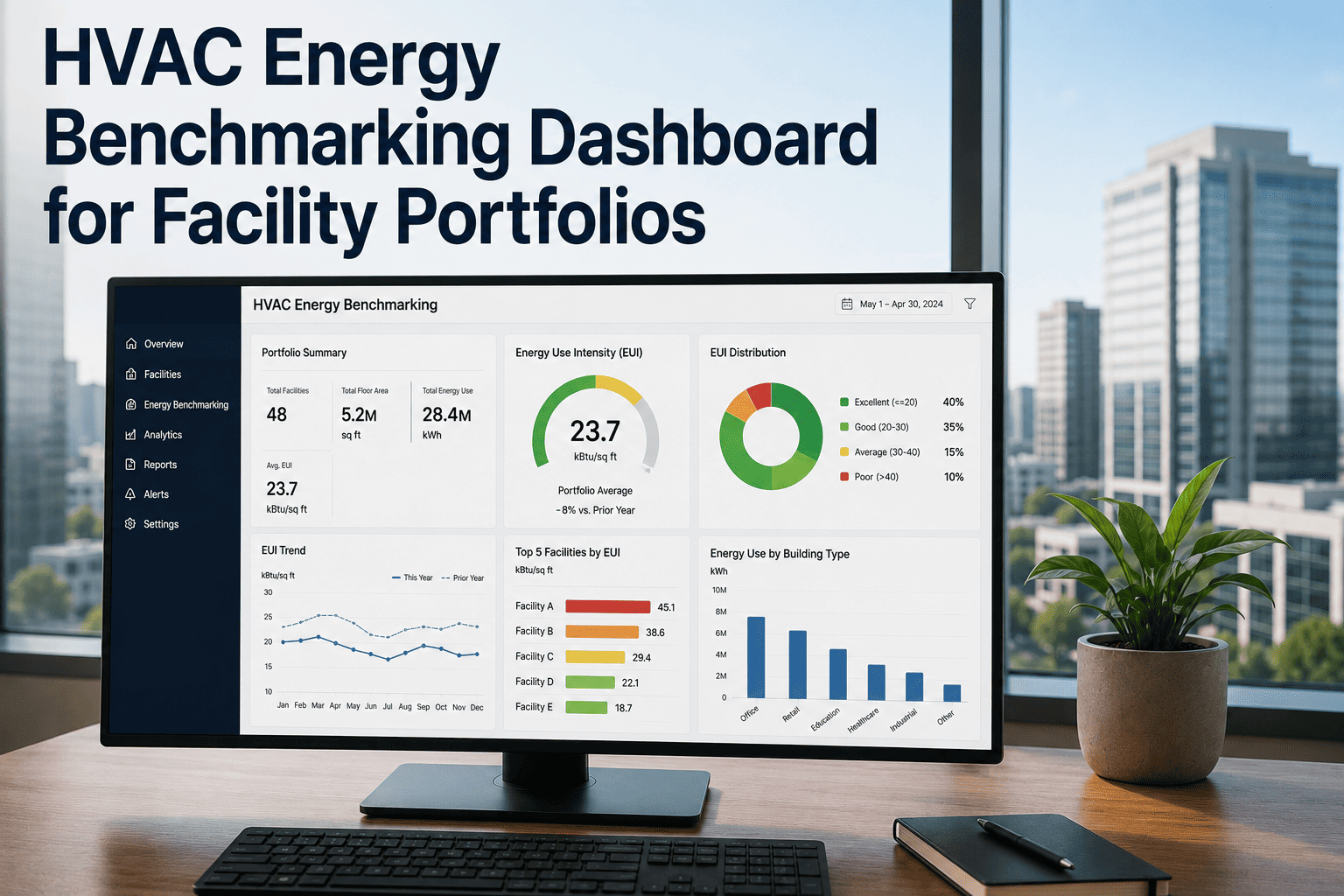
HVAC energy baseline methodology determines whether portfolio energy reporting reflects real performance improvement or just weather variation — without a defensible baseline, facility teams cannot prove that equipment upgrades, controls changes, or operational improvements actually reduced energy consumption. Facilities using Sign Up Free with Oxmaint connect HVAC maintenance records to energy performance tracking — linking PM completion, equipment condition, and operational changes to the energy data that portfolio teams report upward. A baseline that ignores occupancy shifts, equipment replacements, or weather normalization produces portfolio comparisons that mislead rather than inform. Book a Demo to see how Oxmaint supports HVAC asset management and maintenance data collection that underpins energy baseline integrity. Portfolio reporting that shows energy savings requires more than utility bill comparisons — it requires documented operational context that explains what changed and why the numbers moved. Sign Up Free and use Oxmaint to record HVAC equipment changes, setpoint adjustments, and control system upgrades against asset records so energy baseline adjustments are supported by maintenance history, not assumptions. When energy managers can link a kWh reduction to a specific maintenance action or equipment upgrade, portfolio reporting gains credibility with finance, sustainability, and executive stakeholders. Book a Demo to explore how Oxmaint's CMMS provides the maintenance context layer that makes HVAC energy baseline models defensible.
HVAC · ENERGY BASELINE · PORTFOLIO REPORTING · M&V · 2026
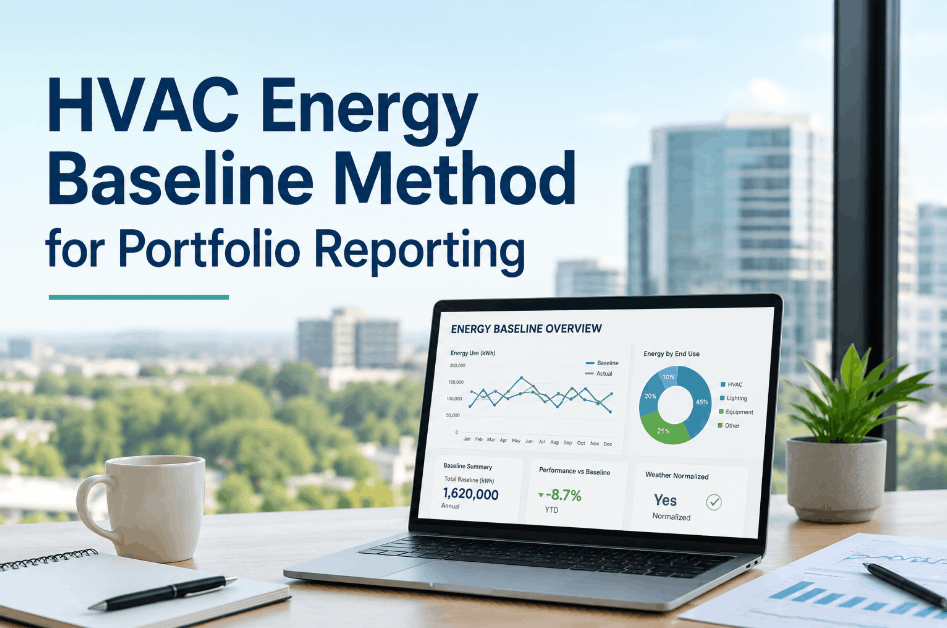
HVAC Energy Baseline Method for Portfolio Reporting
Compare buildings fairly, track performance changes over time, and prove which HVAC actions actually saved energy — with a structured baseline methodology and maintenance data that makes portfolio reports defensible.
40%Of commercial building energy is consumed by HVAC systems — making baseline accuracy critical for portfolio reporting
IPMVPInternational Performance Measurement and Verification Protocol — the standard framework for energy baseline M&V
12–24Months of baseline data required to capture seasonal HVAC demand cycles for accurate normalization
3×Credibility improvement when energy savings are linked to documented HVAC maintenance and operational changes
HVAC Energy Baseline Challenges That Undermine Portfolio Reporting
The most common energy baseline failures in HVAC-heavy portfolios are not calculation errors — they are context gaps. A baseline built on 12 months of utility data that ignores a mid-year chiller replacement, a controls upgrade that changed overnight setpoints, or a tenant expansion that added 20% floor area will produce savings figures that no engineer can defend in a board review. Oxmaint's CMMS provides the maintenance and asset change record that energy managers need to annotate baselines correctly — connecting equipment replacements, PM completion rates, and operational adjustments to the energy timeline so portfolio comparisons reflect real conditions. Sign Up Free to start building the maintenance data foundation that supports energy baseline integrity.
Weather Normalization
Heating and Cooling Degree Days
Adjust baseline energy consumption using heating degree days (HDD) and cooling degree days (CDD) to remove weather-driven variation. Without normalization, a mild summer appears as an HVAC improvement and a hot year looks like program failure.
Occupancy and Hours Adjustment
Operating Hour Normalization
Changes in building occupancy schedules, tenant density, or operating hours shift HVAC energy demand independently of system performance. Baseline models must document and adjust for occupancy changes to isolate equipment performance improvements.
Equipment Replacement Baseline Resets
Asset Change Documentation
Replacing a chiller, AHU, or controls system creates a new performance baseline for that asset. Oxmaint's asset replacement records provide the date and specification data energy managers need to set accurate post-upgrade baselines.
Setpoint and Schedule Optimization Tracking
Operational Change Records
Supply air temperature resets, chilled water setpoint optimization, and nighttime setback changes reduce HVAC energy without capital investment. These operational changes must be documented to explain energy reductions in portfolio reports.
Maintenance Condition as Energy Variable
PM Completion Rate Impact
Fouled coils, dirty filters, and refrigerant undercharge are maintenance failures that inflate energy baselines. High PM completion rates documented in Oxmaint demonstrate that baseline energy reflects maintained, not degraded, equipment condition.
Portfolio EUI Normalization
Energy Use Intensity Comparison
Energy Use Intensity (EUI — kBtu/sq ft/yr) normalizes buildings of different sizes and uses for fair portfolio comparison. HVAC-specific EUI tracking isolates mechanical system performance from plug load and lighting changes.
HVAC Energy Baseline Development — 5-Stage Methodology
1
Baseline Period Selection and Data Collection
Select a 12–24 month baseline period that represents normal operations — no major equipment changes, unusual occupancy, or construction activity. Collect utility interval data, HDD/CDD records, and operating hours. Document the baseline period selection rationale for audit trail purposes.
2
Maintenance Record Review and Baseline Annotation
Review Oxmaint's work order history for the baseline period to identify any equipment failures, deferred PM, or condition issues that affected HVAC energy during the baseline period. Annotate baseline data points that are not representative of normal maintained condition.
3
Regression Model Development and Variable Selection
Build a regression model that relates HVAC energy consumption to independent variables — typically outdoor air temperature (or HDD/CDD), occupancy, and operating hours. R² greater than 0.75 indicates the model explains most energy variation and is suitable for portfolio comparison.
4
Baseline Adjustment for Non-Routine Events
Document and adjust for non-routine changes that occurred during the baseline or reporting period — equipment replacements, tenant changes, HVAC system additions, or major operational changes. Oxmaint's asset change history provides the documentation needed to justify baseline adjustments.
5
Portfolio Reporting and Savings Verification
Compare reporting period actual energy against the weather-normalized baseline to calculate avoided energy use. Link savings to specific HVAC actions — equipment upgrades, operational changes, or PM improvements — documented in Oxmaint to give portfolio savings claims a defensible evidence base.
HVAC Energy Baseline Methods — Portfolio Application Comparison
| Baseline Method |
Best Application |
Data Required |
IPMVP Option |
| Simple comparison (pre/post) |
Single low-complexity building, stable conditions |
12 months pre and post utility data |
Option A/B |
| Weather-normalized regression |
Portfolio comparison across climate zones |
Interval energy data + HDD/CDD |
Option B |
| Calibrated energy simulation |
New construction or major system replacement |
Building model + utility data |
Option D |
| Stipulated savings (deemed) |
Lighting and simple equipment retrofits |
Equipment specification data only |
Option A |
Connect HVAC Maintenance History to Your Energy Baseline
Oxmaint's CMMS stores equipment changes, PM completion records, and operational adjustments against every HVAC asset — giving energy managers the maintenance context that makes portfolio energy baselines defensible and savings claims credible.
Frequently Asked Questions — HVAC Energy Baseline for Portfolio Reporting
What is an HVAC energy baseline and why does it matter for portfolio reporting?
An energy baseline is the predicted energy consumption under normal conditions, used as a reference point to measure whether improvements actually reduced energy use. Without it, portfolio energy comparisons reflect weather and occupancy, not performance.
How does HVAC maintenance history affect energy baseline accuracy?
Equipment failures, deferred PM, and degraded components inflate baseline energy consumption. Documenting maintenance events in Oxmaint lets energy managers identify and adjust for non-representative baseline periods caused by equipment condition issues.
What is IPMVP and should we follow it for portfolio energy reporting?
IPMVP (International Performance Measurement and Verification Protocol) is the global standard for measuring energy savings. Following it makes portfolio savings claims credible to auditors, investors, and sustainability reporting frameworks like GRESB or ENERGY STAR.
How many months of data are needed to build a reliable HVAC energy baseline?
Twelve months minimum to capture seasonal HVAC demand cycles. Twenty-four months is preferred for portfolios with climate variation or buildings where occupancy and operations fluctuate significantly between seasons.
Can Oxmaint help track HVAC operational changes that affect energy baselines?
Yes. Oxmaint records equipment replacements, setpoint changes, and operational modifications against asset history — providing the documented evidence energy managers need to justify baseline adjustments in portfolio reporting.
Energy Savings Claims Need a Maintenance Evidence Base.
Oxmaint connects HVAC asset records, PM history, and operational changes to the energy data that drives portfolio reporting — so your baseline tells the real story of how maintenance and upgrades improved building performance.