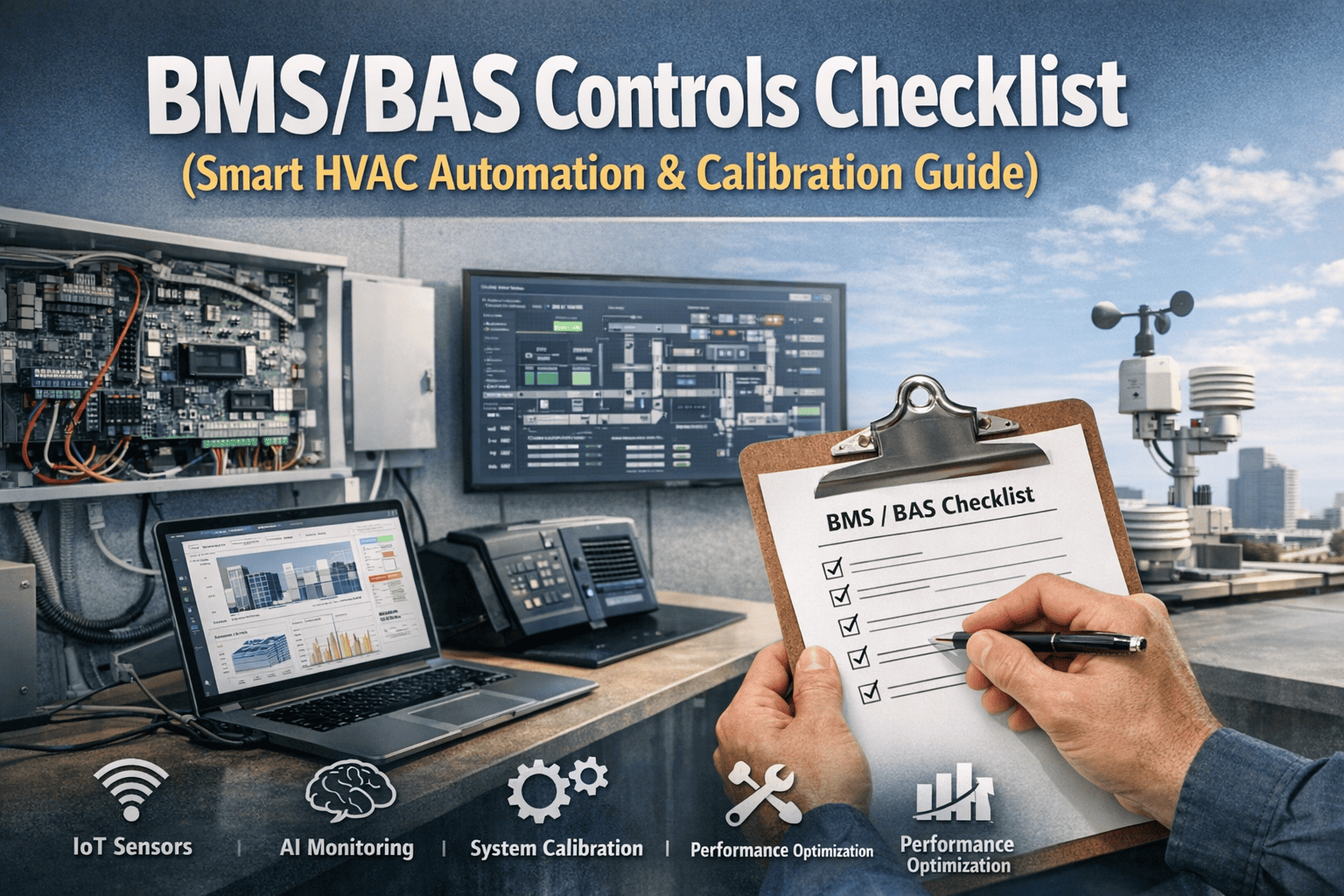
Variable air volume box commissioning is where HVAC project delivery succeeds or fails — a VAV terminal unit that passes a quick visual check but fails to deliver correct airflow response under load creates occupant complaints, energy waste, and warranty callbacks for contractors. Facilities and contractors using Sign Up Free with Oxmaint document commissioning checklists digitally, capturing damper travel readings, airflow measurements, and control sequence verification against each VAV box asset record. Structured commissioning workflows ensure that every terminal unit is verified at design airflow, minimum airflow, and heating setpoint before turnover. Book a Demo to see how Oxmaint supports HVAC commissioning documentation and project closeout for contractors. Incomplete VAV box commissioning documentation creates liability at project handover and makes troubleshooting difficult during the warranty period. Sign Up Free and build structured VAV commissioning checklists in Oxmaint so every box has a verified, time-stamped record before the building owner signs off. Linking commissioning data to the asset record gives facility teams a baseline for future TAB verification and preventive maintenance planning. Book a Demo to explore how Oxmaint's mobile CMMS enables field commissioning teams to document VAV box verification in real time.
VAV · COMMISSIONING · HVAC CONTRACTORS · AIRFLOW · 2026
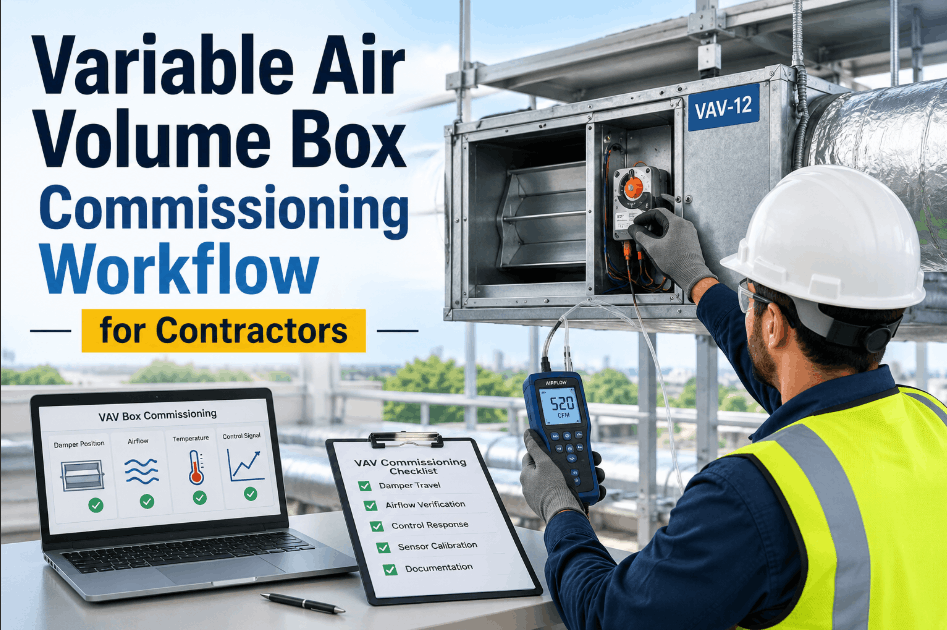
Variable Air Volume Box Commissioning Workflow for Contractors
Verify damper travel, airflow response, and control sequence behavior in every VAV terminal unit with a structured commissioning workflow — documented in your CMMS for clean project closeout.
15–25%Energy waste from improperly commissioned VAV boxes running at incorrect minimum airflow setpoints
3×More warranty callbacks from projects without structured VAV commissioning documentation at turnover
100%Of TAB reports require VAV box airflow verification data — digital records eliminate re-measurement
4 hrsTypical time to commission 20 VAV boxes with a mobile checklist versus paper-based documentation
VAV Box Commissioning Failure Modes That Structured Workflows Prevent
Most VAV box commissioning failures aren't hardware failures — they're verification gaps. Damper actuators that travel but don't reach full open, airflow stations that read correctly in test mode but drift under load, and control sequences that pass functional testing but fail during occupied hours all require field verification against design intent. Oxmaint's inspection checklist module lets commissioning teams build VAV-specific verification workflows that capture measured values, pass/fail status, and corrective actions for every terminal unit — creating a complete commissioning record without paper forms. Sign Up Free to configure VAV commissioning checklists in Oxmaint.
Damper Travel Verification
Mechanical Check
Verify full open and full closed damper positions match actuator stroke specifications. Failed travel indicates actuator miscalibration, linkage binding, or incorrect control signal scaling — all correctable before occupancy.
Design Airflow Verification
Maximum CFM at Full Open
Measure actual delivered CFM at maximum damper position against design schedule. Deviations greater than 10% require duct balancing or controller setpoint adjustment before TAB sign-off.
Minimum Airflow Setpoint
Ventilation Compliance
Minimum airflow setpoints must meet ASHRAE 62.1 ventilation requirements for each zone. Verify controller minimum stop matches design and that the VAV box holds setpoint under varying duct static pressure.
Control Sequence Verification
BAS Integration Check
Step through cooling, deadband, and heating sequences with thermostat signals. Confirm damper response, reheat activation, and BAS point mapping match the sequence of operations before project closeout.
Reheat Coil Verification
Heating Stage Performance
For reheat VAV boxes, verify hot water valve or electric heat element activates at the correct heating setpoint and delivers design heating capacity. Measure supply air temperature rise to confirm coil performance.
Pressure Independence Check
Performance Under Varying Static
Pressure-independent VAV controllers must maintain setpoint CFM across the operating static pressure range. Test at minimum and maximum system duct static pressure to verify pressure-independent control accuracy.
VAV Box Commissioning Workflow — 5-Stage Field Sequence
1
Pre-Commissioning Inspection and Controls Setup
Confirm VAV box installation is complete — duct connections tight, actuator mounted, flow station installed, and controller wired. Verify BAS point list is loaded and controller firmware matches project specification before functional testing begins.
2
Actuator Calibration and Damper Travel Check
Command damper to full open and full closed from the BAS or controller local display. Record actual travel percentage and compare to actuator specification. Recalibrate or replace actuator if travel is less than 95% of rated stroke.
3
Airflow Measurement at Maximum and Minimum Setpoints
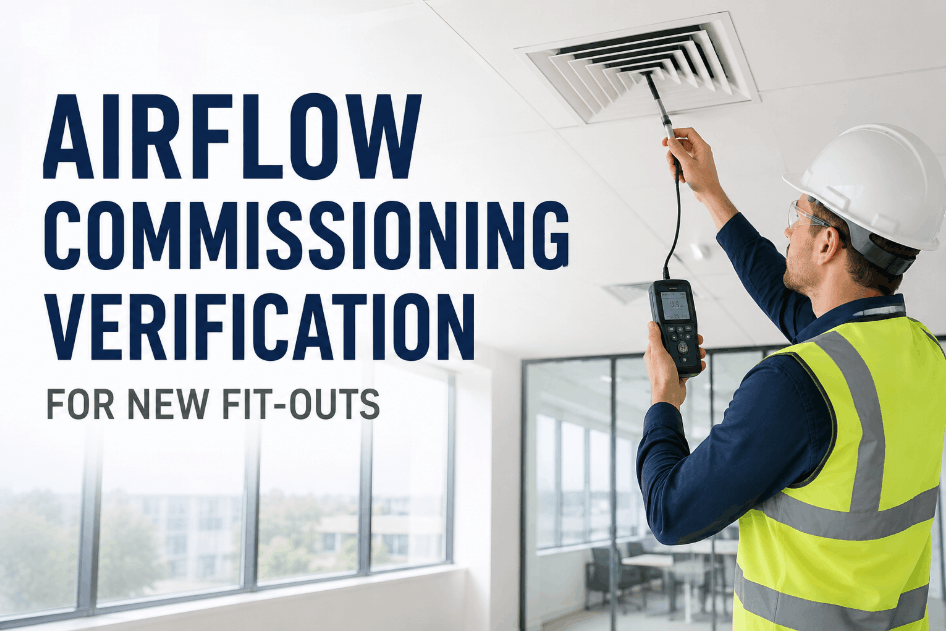
Using a calibrated flow hood or velocity traverse, measure CFM at maximum damper position (design cooling CFM) and minimum stop (minimum ventilation CFM). Document measured versus design values for the TAB report and CMMS asset record.
4
Control Sequence Functional Test
Step through the zone's full control sequence — cooling, deadband, minimum ventilation, and heating. Verify damper and reheat responses match the sequence of operations document. Record pass/fail for each mode in Oxmaint's checklist.
5
Documentation and Asset Record Closeout
Submit completed commissioning checklist, measured airflow data, and functional test results against each VAV box asset in Oxmaint. Digital records with technician signature and timestamp create the audit trail required for project closeout and warranty support.
VAV Commissioning Verification Reference — Key Checkpoints
| Commissioning Checkpoint |
Acceptance Criterion |
Corrective Action if Failed |
| Damper travel — full open |
≥ 95% of rated actuator stroke |
Recalibrate actuator or check linkage binding |
| Maximum airflow (CFM) |
Within ±10% of design schedule |
Adjust controller setpoint or rebalance duct branch |
| Minimum airflow (CFM) |
Within ±10% of design ventilation minimum |
Adjust minimum stop parameter in controller |
| Cooling sequence response |
Damper opens to design CFM within 60s |
Check control signal wiring and PID tuning |
| Reheat activation |
Valve/element activates at correct heating setpoint |
Verify control sequence programming and BAS point mapping |
Digital VAV Commissioning Records — From Field Measurement to Closeout
Oxmaint's mobile inspection module lets HVAC commissioning teams document VAV box verification in the field — capturing airflow readings, control test results, and corrective actions against each asset for clean project turnover.
Frequently Asked Questions — VAV Box Commissioning
What is the standard acceptance tolerance for VAV box airflow during commissioning?
ASHRAE Guideline 0 and most project specifications accept ±10% of design airflow at maximum and minimum setpoints. Deviations beyond this require adjustment before TAB report submission.
How does Oxmaint support VAV box commissioning documentation?
Oxmaint's inspection checklist module lets contractors create VAV-specific commissioning forms with measured value fields, pass/fail criteria, and photo capture — stored against each terminal unit asset record with timestamp and technician signature.
What causes VAV boxes to fail airflow verification during commissioning?
Common failures include incorrect controller setpoints, actuator miscalibration, duct imbalance upstream of the box, and pressure-dependent controllers losing setpoint under varying static pressure conditions.
Is VAV box commissioning required after controls upgrades or BAS replacements?
Yes. Any control system change that affects sequence of operations, setpoints, or point mapping requires functional re-verification of affected VAV boxes to confirm performance matches the new control sequence design.
How does digital commissioning documentation benefit facility teams after project handover?
Digital commissioning records in Oxmaint provide baseline airflow and control data for future TAB re-verification, troubleshooting reference during warranty callbacks, and preventive maintenance scheduling for reheat coils and actuators.
Commission Every VAV Box Right. Document Every Measurement.
Oxmaint gives HVAC contractors a mobile commissioning platform to verify, document, and close out VAV terminal units — creating a permanent asset record that supports TAB reporting, warranty response, and facility handover.