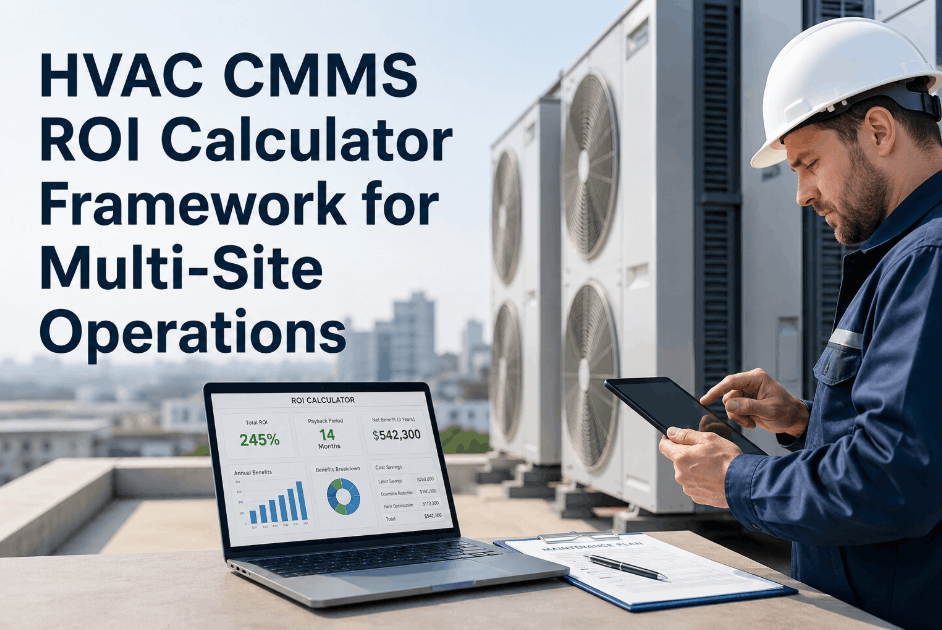
Preventive task prioritization separates high-performance multi-site HVAC programs from those perpetually behind schedule — treating every asset and every PM task as equally urgent is a strategy guaranteed to exhaust technician capacity on low-impact work while critical equipment deteriorates. Facilities using Sign Up Free with Oxmaint rank preventive tasks by asset criticality, failure consequence, and business impact — ensuring that limited maintenance resources flow to the assets and activities with the highest return on reliability. A rooftop unit serving a storage corridor does not demand the same PM frequency as the central chiller cooling a data center or surgical suite. Book a Demo to see how Oxmaint's CMMS enables risk-based PM prioritization across multi-site HVAC portfolios. Multi-site HVAC programs struggle with prioritization when PM schedules are built on manufacturer intervals alone — without adjustment for asset criticality, local failure history, or site-specific risk context. Sign Up Free and configure criticality-weighted PM schedules in Oxmaint so high-risk assets receive more frequent attention and low-criticality equipment is maintained cost-effectively without over-servicing. When PM task frequency reflects actual risk rather than calendar convenience, multi-site programs deliver more reliability per maintenance dollar. Book a Demo to explore how Oxmaint structures preventive maintenance prioritization for HVAC fleets across distributed portfolios.
HVAC · PREVENTIVE MAINTENANCE · MULTI-SITE · TASK PRIORITIZATION · 2026
Preventive Task Prioritization for Multi-Site HVAC Programs
Rank HVAC preventive tasks by asset criticality, failure impact, and business risk — so limited maintenance resources flow to the assets that matter most across your entire portfolio.
25–40%Of PM tasks in typical HVAC programs are performed on low-criticality assets at unnecessary frequency
3×Higher cost of reactive repair versus planned preventive maintenance on critical HVAC equipment
80/20Rule applies: 20% of HVAC assets typically drive 80% of failure risk and maintenance cost in any portfolio
15%Average PM labor cost reduction when task frequency is calibrated to asset criticality rather than equal treatment
PM Prioritization Frameworks for Multi-Site HVAC Programs
Risk-based preventive maintenance prioritization uses a structured framework to rank HVAC assets and tasks by the combination of failure probability and failure consequence. The most common approach combines criticality classification (what happens when this asset fails?) with RCM analysis (what failure modes does this PM task address?) to set task frequencies that reflect real risk rather than manufacturer calendar defaults. Oxmaint's asset module supports criticality scoring at the asset level — so PM schedules across a multi-site portfolio automatically reflect each asset's risk classification, not a single default interval applied to every rooftop unit and chiller equally. Sign Up Free to build criticality-weighted PM programs in Oxmaint.
Asset Criticality Classification
Tier 1 / 2 / 3 Ranking
Classify each HVAC asset by failure consequence — Tier 1 (mission-critical: data centers, operating rooms, 24/7 processes), Tier 2 (important: occupied commercial spaces), Tier 3 (low-impact: storage, unoccupied areas). PM frequency scales with tier.
Failure Mode Impact Analysis
RCM-Based Task Selection
Evaluate each PM task by the failure mode it prevents and the consequence of that failure mode occurring. Tasks that prevent failures with high safety, regulatory, or operational impact rank higher than tasks addressing easily detectable, low-consequence faults.
PM Task Frequency Optimization
Interval Calibration by Risk
High-criticality assets receive shorter PM intervals than manufacturer defaults. Low-criticality assets can be safely extended beyond defaults when failure history and condition monitoring support it — reducing technician task load without increasing risk.
Site-Specific Risk Context
Location and Use Adjustment
The same model of rooftop unit carries different criticality ratings at different sites. Oxmaint's asset criticality field allows site-specific risk classification so multi-site PM schedules reflect the actual consequence of failure at each location.
Backlog and Overdue Task Management
Priority-Ordered Execution
When PM backlog builds — as it does in every multi-site program — Oxmaint's criticality weighting ensures technicians clear high-priority asset tasks first. Overdue PM on Tier 1 assets triggers escalation; overdue Tier 3 tasks queue for next available resource.
Condition-Based PM Deferral
Data-Driven Interval Extension
For assets with vibration, temperature, or runtime monitoring, PM tasks can be deferred when condition data shows no degradation — extending asset life between interventions and reducing unnecessary disassembly that introduces infant mortality failures.
Multi-Site PM Prioritization — 5-Stage Implementation
1
Asset Inventory and Criticality Scoring
Complete an asset inventory across all sites in Oxmaint, assigning a criticality tier to each HVAC asset based on failure consequence — operational impact, safety risk, regulatory exposure, and redundancy availability. Criticality scores drive all downstream PM frequency decisions.
2
PM Task Library Review and RCM Alignment
Review the existing PM task library against failure mode data and criticality classifications. Eliminate tasks that address failure modes with negligible consequences, consolidate tasks that can be efficiently combined, and increase frequencies for tasks that prevent high-consequence failures on Tier 1 assets.
3
Schedule Configuration by Criticality Tier in Oxmaint
Configure PM schedules in Oxmaint with different frequencies by asset criticality tier. Tier 1 critical HVAC — monthly or quarterly. Tier 2 important assets — quarterly or semi-annual. Tier 3 low-impact equipment — annual or condition-based. Assign priority levels so schedulers and technicians see task urgency clearly.
4
Resource Capacity Planning Against PM Schedule
Model the technician hours required to execute the prioritized PM schedule across all sites. Oxmaint's reporting shows scheduled PM hours by site and by period — allowing operations managers to identify resourcing gaps and adjust contractor support before schedule conflicts create critical asset backlogs.
5
Program Review and Interval Adjustment Cycle
Review PM completion rates, reactive work order counts, and asset failure history quarterly. Oxmaint's asset history shows whether PM intervals are appropriate — high reactive rates on maintained assets signal insufficient PM frequency; zero issues across extended intervals may allow safe deferral.
PM Frequency Matrix by HVAC Asset Criticality — Multi-Site Reference
| Asset Type |
Tier 1 Critical |
Tier 2 Important |
Tier 3 Low-Impact |
| Centrifugal / Screw Chiller |
Monthly + quarterly full service |
Quarterly + annual overhaul |
Semi-annual + annual |
| Air Handling Unit (AHU) |
Monthly filters + quarterly belt/coil |
Quarterly filters + semi-annual full |
Semi-annual full service |
| Cooling Tower |
Monthly inspection + semi-annual clean |
Quarterly + annual clean |
Semi-annual + annual |
| Packaged Rooftop Unit (RTU) |
Quarterly full service |
Semi-annual service |
Annual service |
| Variable Frequency Drive (VFD) |
Monthly monitoring + quarterly inspection |
Semi-annual inspection |
Annual inspection |
Stop Treating Every HVAC Asset the Same. Start Prioritizing by Risk.
Oxmaint's CMMS supports criticality-weighted PM scheduling across multi-site HVAC portfolios — so your maintenance resources focus on assets where reliability matters most and costs are justified.
Frequently Asked Questions — Preventive Task Prioritization for Multi-Site HVAC
What is risk-based preventive maintenance prioritization in HVAC programs?
Risk-based PM prioritization ranks maintenance tasks by the combination of failure probability and failure consequence — focusing technician resources on assets where failure has the greatest operational, safety, or financial impact.
How does Oxmaint support multi-site HVAC PM prioritization?
Oxmaint allows criticality scoring at the asset level, configurable PM schedules by priority tier, and overdue task escalation — ensuring that high-risk assets are serviced first when technician capacity is constrained across a multi-site portfolio.
Should low-criticality HVAC assets still receive preventive maintenance?
Yes, but at reduced frequency. Low-criticality assets can be safely maintained on annual or condition-based intervals rather than quarterly — freeing technician capacity for Tier 1 critical assets without increasing failure risk for low-impact equipment.
How do we determine the right PM interval for critical HVAC equipment?
Start with manufacturer recommendations and adjust based on failure history, local operating conditions, and condition monitoring data. Oxmaint's asset work order history shows whether current PM intervals are preventing failures or allowing avoidable reactive work to occur.
What is the biggest mistake multi-site HVAC programs make with PM scheduling?
Applying a single default PM frequency to all assets regardless of criticality. This creates over-servicing of low-risk equipment while under-resourcing critical assets — the reverse of what reliability-focused operations require.
Multi-Site HVAC Reliability Starts With Smarter Prioritization.
Oxmaint gives portfolio operations teams the CMMS tools to classify asset criticality, configure risk-weighted PM schedules, and manage multi-site preventive maintenance programs — so every maintenance dollar is spent where it delivers the most reliability.