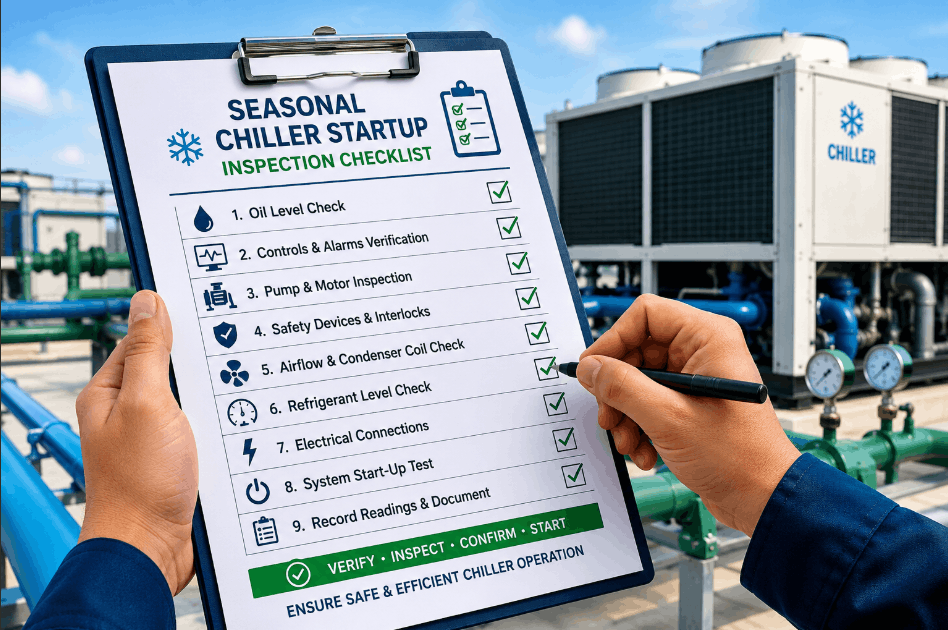
A summer peak chiller start-up that runs through a visual inspection and moves on misses the failure points that only reveal themselves under full cooling load. Inadequate flow confirmation, unverified safety setpoints, and unvalidated controls leave facility engineers exposed to compressor trips, flooded suctions, and capacity shortfalls precisely when occupant demand is highest. Oxmaint's Sign up free platform gives facility engineering teams a structured mobile environment to execute pre-season chiller start-up verification, capture baseline performance readings, and generate audit-ready commissioning records before peak load arrives. Whether you manage centrifugal, screw, or scroll chiller plants serving office towers, hospitals, data centers, or campuses, unverified summer readiness creates energy risk and reliability exposure across every cooling circuit. Book a demo to see how Oxmaint helps engineering teams standardize chiller start-up procedures and close out seasonal commissioning work orders with defensible field records. Use this checklist before peak load season to confirm chiller plant readiness across safeties, pumps, controls, and flow.
1. Safety System Verification
Chiller safeties protect compressors, refrigerant circuits, and water systems from conditions that cause immediate equipment damage. Verifying setpoints and trip functions before seasonal load prevents first-heat-wave failures that are both costly and difficult to schedule emergency service around.
2. Chilled Water and Condenser Pump Verification
Pump readiness is the foundation of chiller plant performance. Flow faults that go undetected before peak season produce low-delta-T syndrome, uneven coil loading, and compressor cycling that degrades efficiency and reliability under maximum summer demand.
3. Controls and Sequence of Operations Review
Controls verification before peak season ensures the chiller plant responds correctly to load changes, staging signals, and setpoint resets. Unverified control logic produces inefficient staging, short-cycling, and demand spikes that raise energy cost and reduce equipment life during summer peak billing periods.
4. Flow Balance and Distribution Verification
Hydronic balance across the chilled water distribution system determines whether design cooling capacity reaches air handling units and terminal equipment. System-level flow deficiencies invisible at the chiller become apparent as hot complaints and comfort failures during peak summer occupancy.
5. Pre-Load Performance Baseline Capture
Running a chiller plant into summer peak without capturing a pre-load baseline eliminates your ability to detect gradual performance degradation, defend maintenance decisions, or identify the earliest signs of developing faults before they become emergency failures during peak demand.