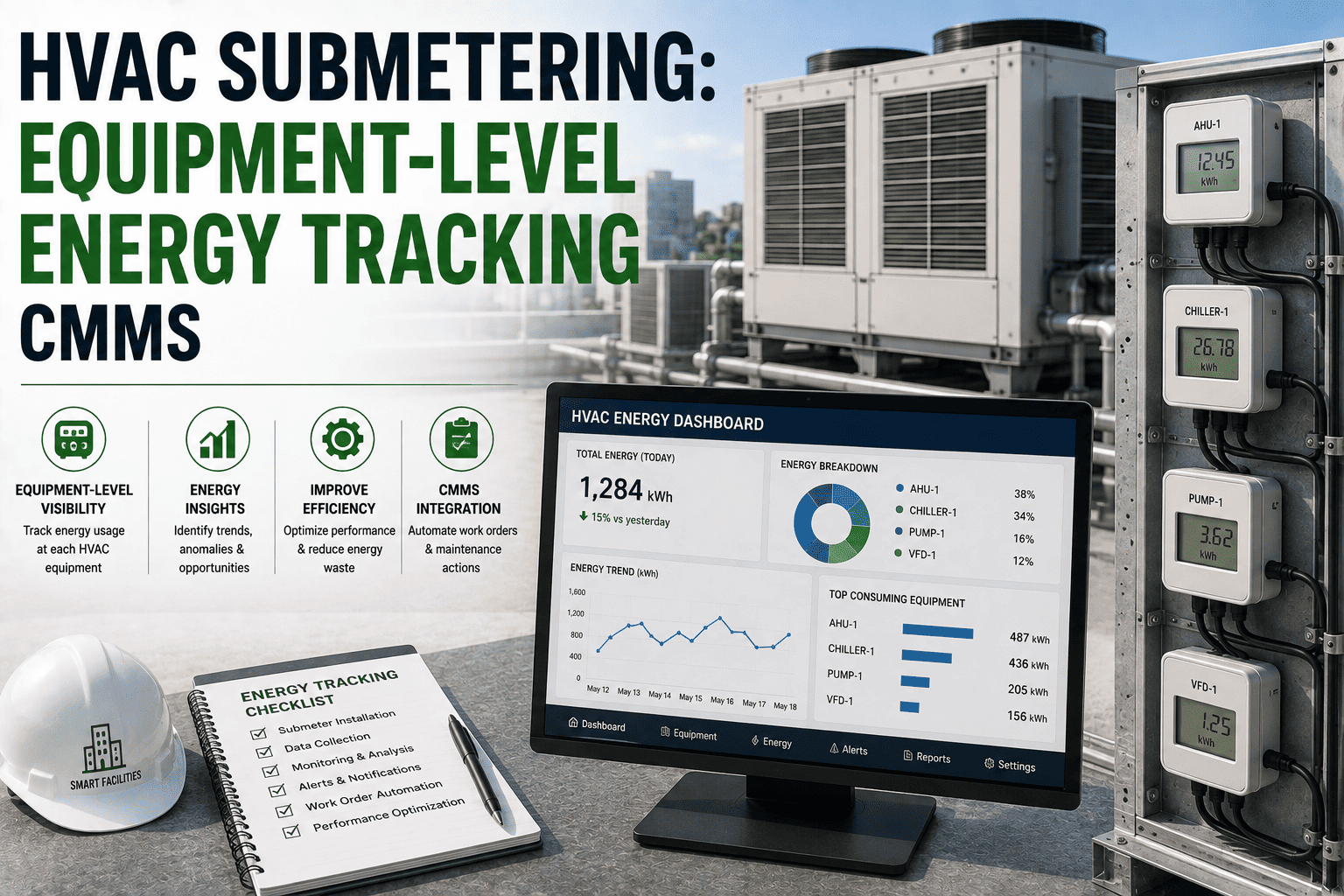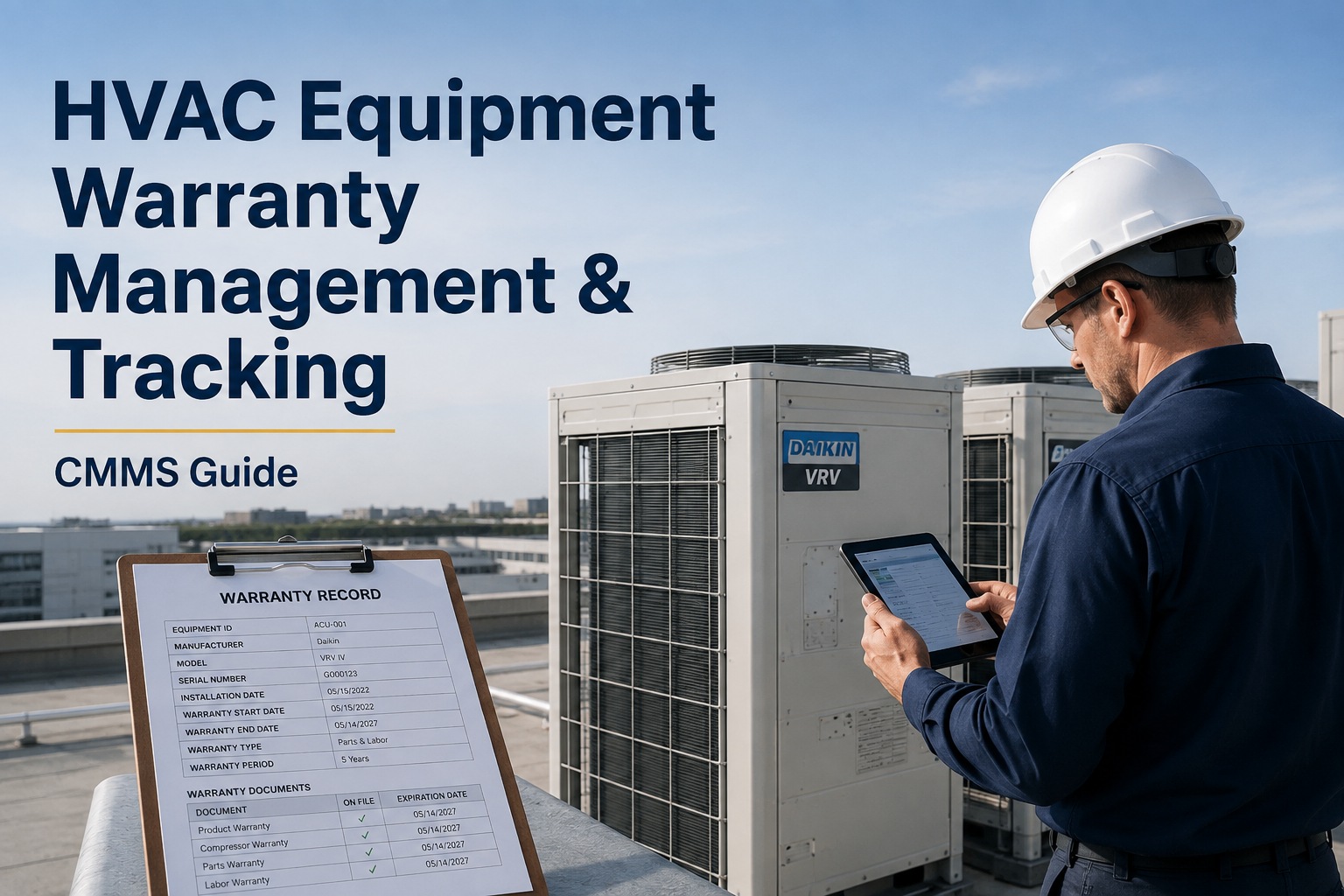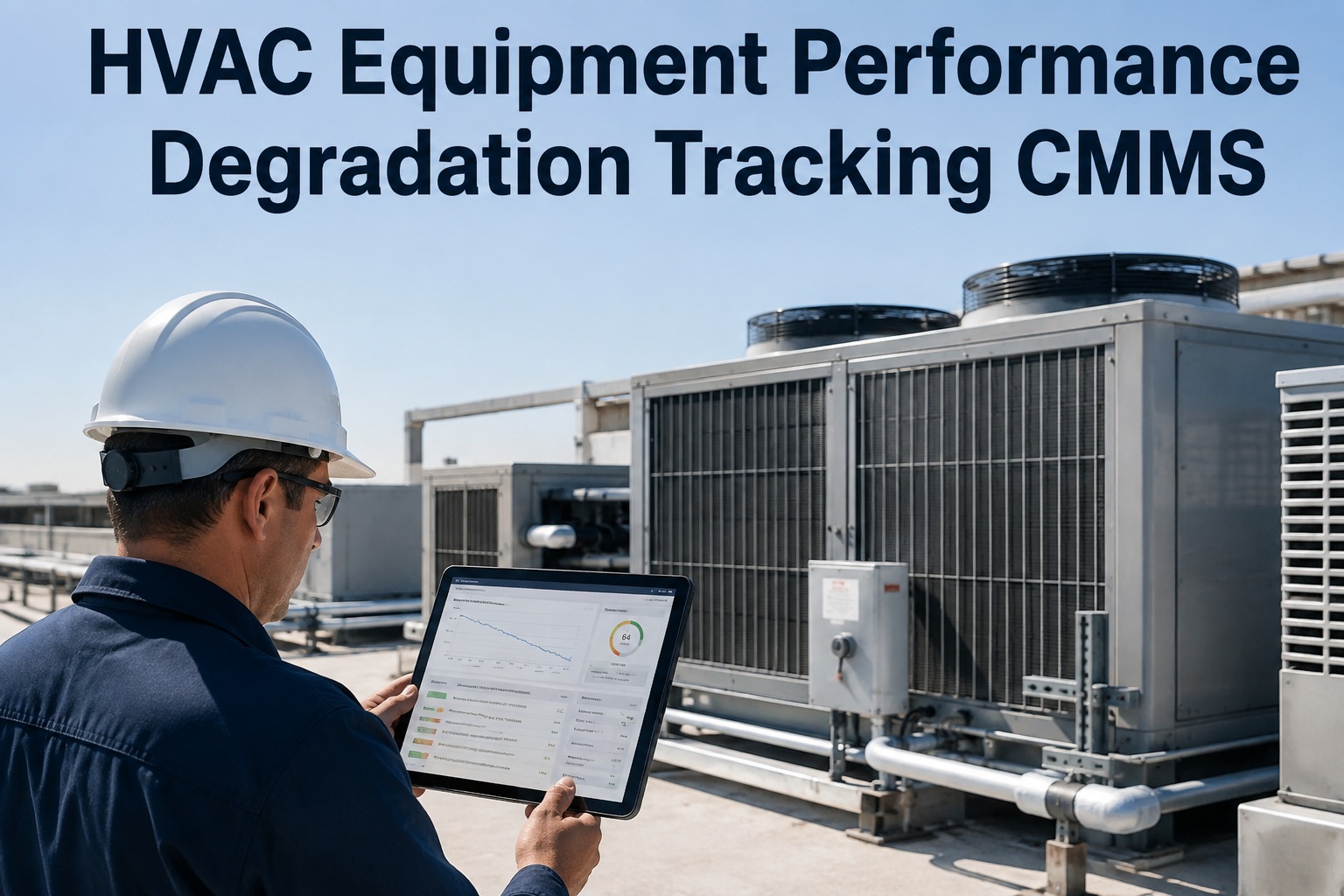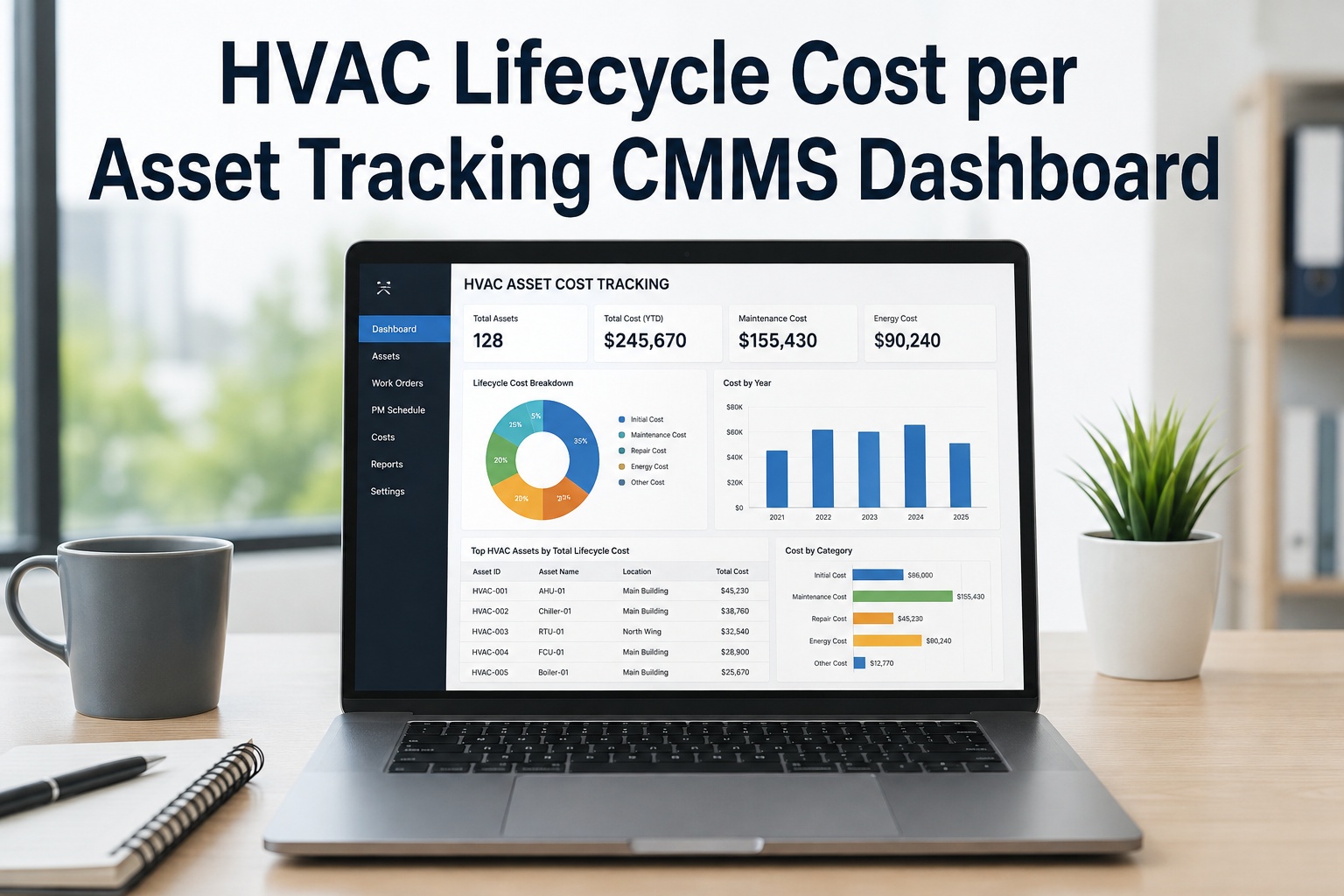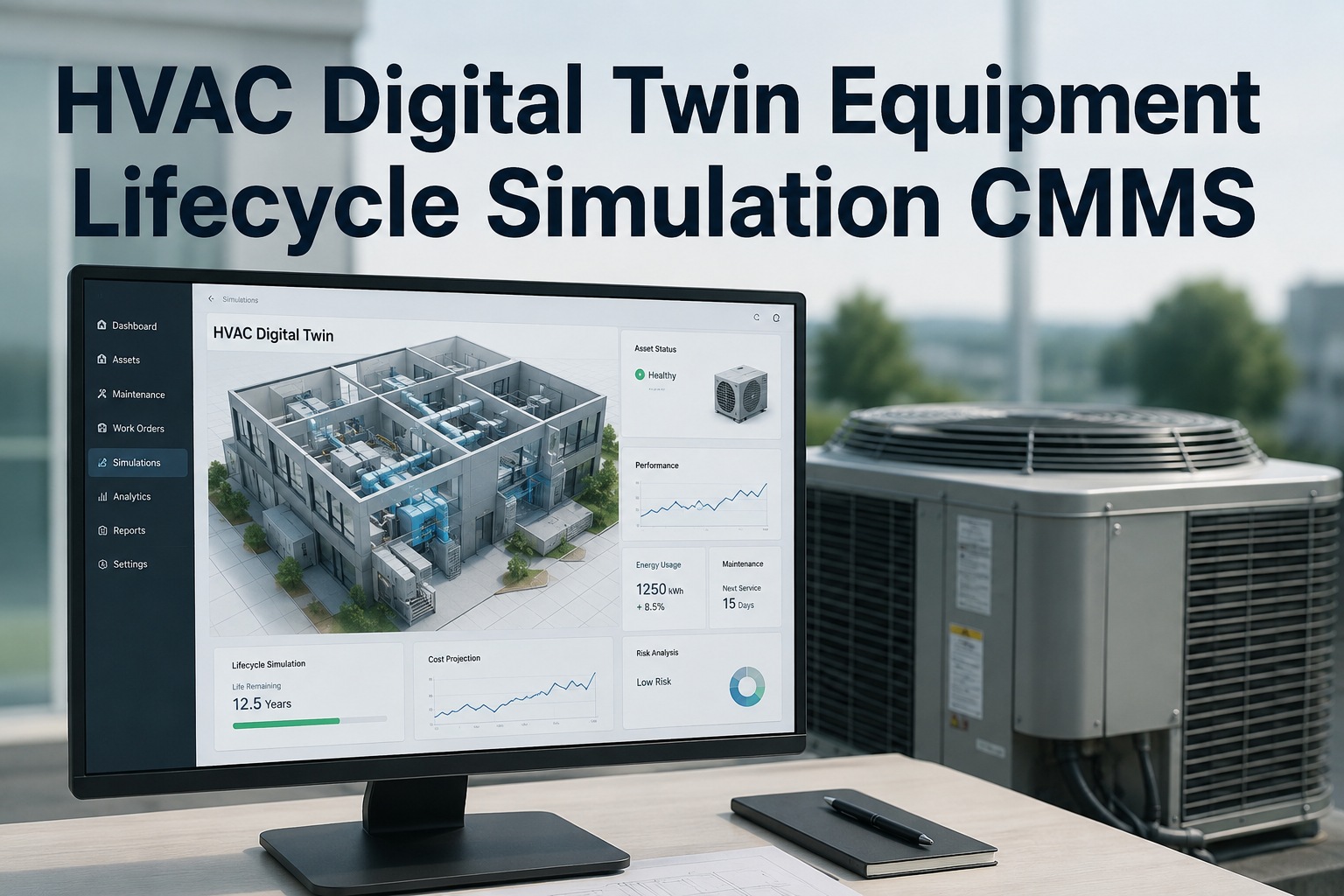
HVAC total cost of ownership (TCO) analysis goes far beyond the initial purchase price of a chiller, boiler, or rooftop unit — it aggregates acquisition, maintenance, energy, and disposal costs across the equipment's entire lifecycle to reveal the true financial impact of your procurement decisions. When facility and reliability teams rely solely on upfront vendor quotes, they routinely underestimate lifecycle expenses by 30 to 50 percent, locking themselves into years of excessive energy bills and unplanned downtime. This HVAC TCO guide breaks down how to calculate and track total ownership cost using a CMMS, ensuring your 2026 procurement strategy is backed by defensible data rather than guesswork. By centralizing maintenance analytics and asset history, an AI-powered platform like OxMaint transforms reactive, spreadsheet-driven cost tracking into a proactive, profit-saving engine — you can Start Free Trial today to see your real-time equipment costs instantly.
Are You Tracking the True Cost of Your HVAC Equipment?
Most facilities only see the tip of the iceberg. Acquisition costs represent less than 15% of total ownership cost HVAC analysis. The remaining 85% — energy consumption, reactive maintenance, and downtime — quietly drains your maintenance budget year over year. A CMMS-based TCO tracking framework exposes these hidden expenses before they capsize your 2026 procurement strategy.
The 4 Core Components of HVAC Total Cost of Ownership
A complete TCO analysis HVAC model aggregates four distinct cost streams. Ignoring any single category leads to skewed procurement decisions and bloated operational budgets.
Acquisition & Procurement
The visible tip of the iceberg. Includes equipment purchase price, freight, installation labor, commissioning, and initial compliance permitting. For a standard 100-ton commercial chiller, this typically runs $45K–$65K, yet it represents the smallest fraction of the asset's lifetime financial burden.
Energy Consumption
The silent budget killer. HVAC systems account for roughly 40% of total commercial building energy use. A poorly maintained compressor or scaling condenser coil can spike energy draw by 20–30%. Tracking kWh against asset degradation is critical for an accurate HVAC TCO 2026 calculation.
Maintenance & Repair
Includes planned preventive maintenance (filters, belts, oil), reactive labor, replacement parts, and contractor dispatch fees. Relying on reactive maintenance instead of predictive workflows drives this cost 3x higher than necessary, directly inflating total ownership cost HVAC metrics.
Disposal & Downtime
End-of-life decommissioning, refrigerant recovery, and hazardous disposal fees. Crucially, this category must also include the cost of facility downtime during major failures — often exceeding $10K per hour in manufacturing and data center environments.
A CMMS tracks variables in real-time, replacing static spreadsheet estimates with dynamic, auditable data per asset.
Worked Example: 180-Asset Plant Procurement Decision TCO
Consider a 180-asset manufacturing plant evaluating two 75-ton rooftop units (RTUs) for a facility expansion. Unit A costs $40K; Unit B costs $52K. A procurement decision TCO analysis reveals a starkly different reality over a 10-year lifecycle.
| Cost Category (10-Year Lifecycle) | Unit A (Low Initial Cost) | Unit B (High Efficiency) |
|---|---|---|
| Acquisition & Installation | $42,000 | $54,000 |
| Energy Consumption (kWh @ $0.12) | $185,000 | $128,000 |
| Maintenance & Repair (Reactive Heavy) | $48,000 | $31,000 |
| Downtime & Disposal | $22,000 | $9,000 |
| Total Cost of Ownership | $297,000 | $222,000 |
Unit B costs $12,000 more upfront, but saves the plant $75,000 in total ownership cost HVAC over a decade. Without CMMS cost analysis tracking historical energy and maintenance data, the plant manager would have likely chosen Unit A, blindly absorbing $7,500 in unnecessary annual expenses.
CMMS Cost Analysis: Track HVAC TCO in Real-Time
OxMaint eliminates the blind spots in HVAC procurement TCO by automatically aggregating work order costs, spare parts inventory, and asset energy metrics into a single, AI-driven dashboard.
Automated Cost Aggregation
Every spare part, labor hour, and contractor invoice logged against an asset is automatically rolled into its real-time TCO profile. No more manual spreadsheet reconciliation.
AI Predictive Maintenance
OxMaint's AI analyzes vibration, temperature, and run-time data to predict HVAC compressor failures before they happen, shifting maintenance from reactive to predictive.
Lifecycle Energy Tracking
Monitor asset degradation against energy consumption. OxMaint flags when a aging RTU's kWh draw spikes, signaling that replacement yields a better TCO than continued repair.
Audit-Ready Compliance
Maintain ISO 55000 and internal audit compliance with immutable digital records of every maintenance action, cost, and asset state change across the equipment lifecycle.
Stop Guessing. Start Tracking Your True HVAC Costs.
See exactly how OxMaint centralizes your work orders, predictive maintenance, and asset cost analytics into one platform. Book a 30-minute demo to map your HVAC TCO strategy for 2026.
Reactive vs. Preventive: The True Cost of Delayed Maintenance
Maintenance strategy dictates your final TCO. A facility relying on reactive run-to-failure maintenance pays up to 4x more in total ownership costs than one using a CMMS-driven preventive and predictive approach.
- Unplanned downtime costs averaging $10K–$50K per HVAC failure event
- Rush-order parts carry a 25–40% premium over standard inventory pricing
- Energy consumption spikes 20–30% due to clogged coils and degraded belts
- Asset lifespan shortened by 4–7 years, accelerating disposal and replacement costs
- Automated PM scheduling reduces emergency breakdowns by 70%
- Spare parts inventory optimized, eliminating rush freight and stockouts
- Energy efficiency maintained within 2% of original factory specifications
- Asset lifecycle extended by 5–10 years, drastically lowering annualized TCO
Frequently Asked Questions
What is HVAC total cost of ownership (TCO)?
HVAC TCO is the comprehensive lifetime cost of an asset, combining acquisition, energy consumption, maintenance, and disposal. It typically reveals that the initial purchase price is only 10–15% of the total financial burden, with energy and reactive maintenance making up the bulk of the expense over a 10 to 15-year lifecycle.
How does a CMMS help with TCO analysis for HVAC equipment?
A CMMS like OxMaint automatically logs every labor hour, spare part, and downtime event against a specific asset, replacing static spreadsheets with real-time data. This allows facility managers to generate defensible HVAC TCO 2026 reports, track energy degradation, and prove when replacing an asset is cheaper than repairing it. You can Start Free Trial to test this instantly.
Why is procurement decision TCO important for HVAC?
Basing procurement decisions solely on the lowest initial bid often leads to higher long-term costs due to poor energy efficiency and high maintenance demands. A TCO analysis ensures you select equipment that minimizes total expenditure over its lifespan, frequently justifying a higher upfront purchase price with documented energy and repair savings.
How often should HVAC TCO analysis be updated?
TCO should be tracked continuously through a CMMS, not recalculated manually each year. As assets age, energy consumption rises and maintenance frequency increases — real-time CMMS cost analysis flags these shifts immediately, allowing you to trigger replacement planning before a major failure occurs. Book a Demo to see live TCO dashboards.
What is the difference between preventive and predictive maintenance in TCO?
Preventive maintenance schedules tasks based on calendar time or runtime hours (e.g., change filters every 90 days), while predictive maintenance uses IoT sensors and AI to trigger maintenance based on actual asset condition. Predictive maintenance, powered by OxMaint, yields the lowest TCO by eliminating unnecessary maintenance and preventing catastrophic failures before they happen.
Take Control of Your HVAC Lifecycle Costs Today
Join the maintenance and reliability teams using OxMaint to cut downtime, centralize work orders, and track true asset TCO with AI-driven precision.