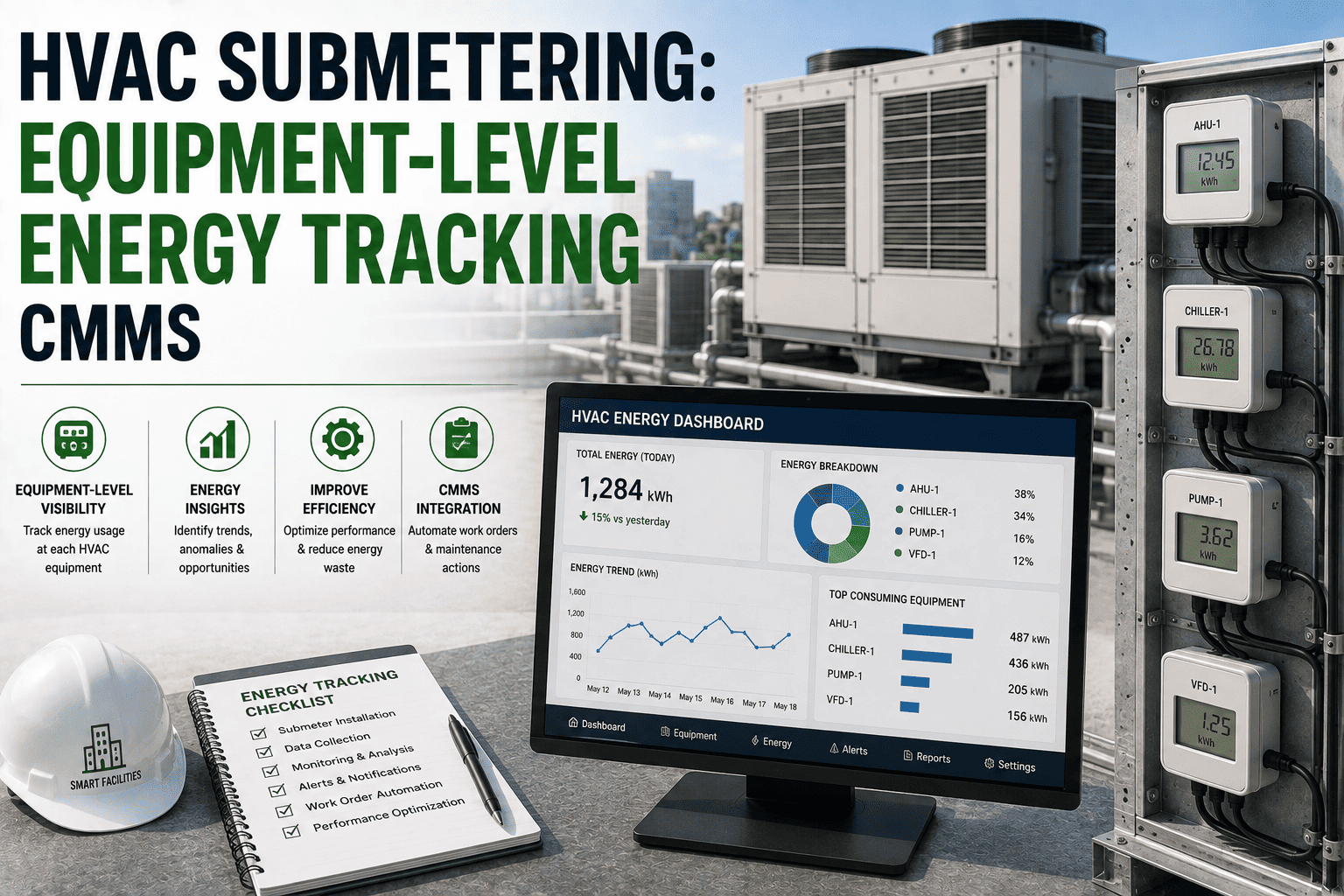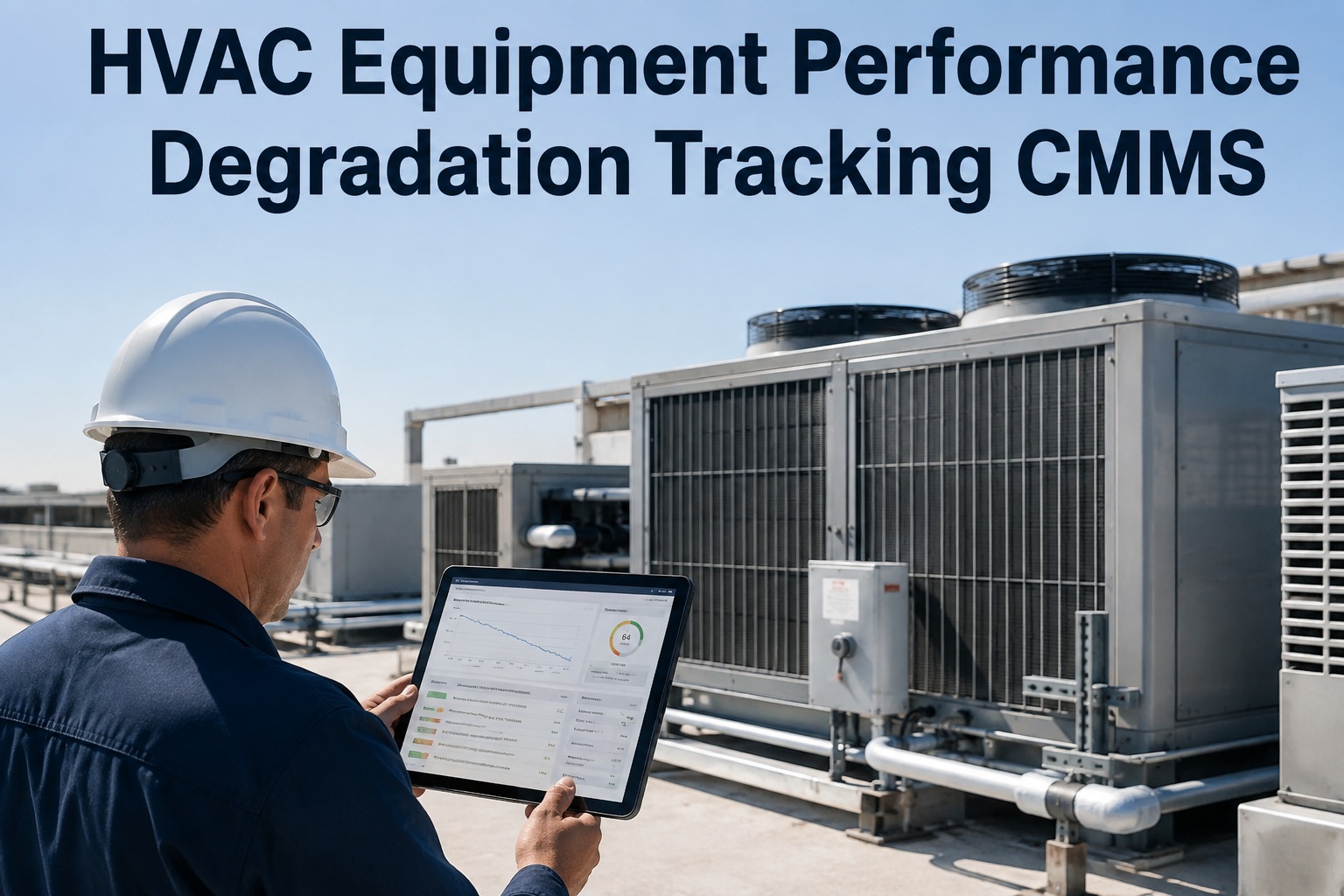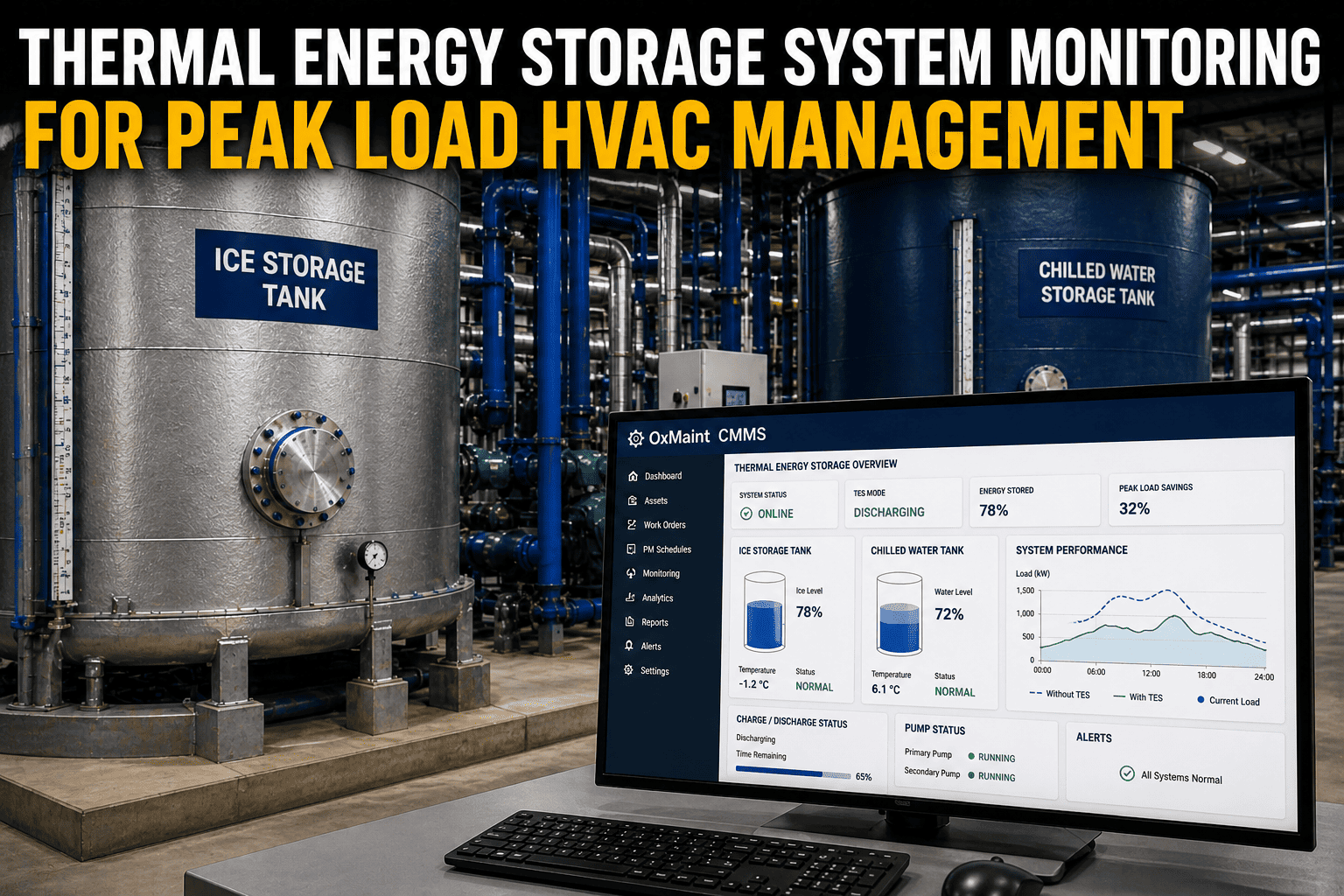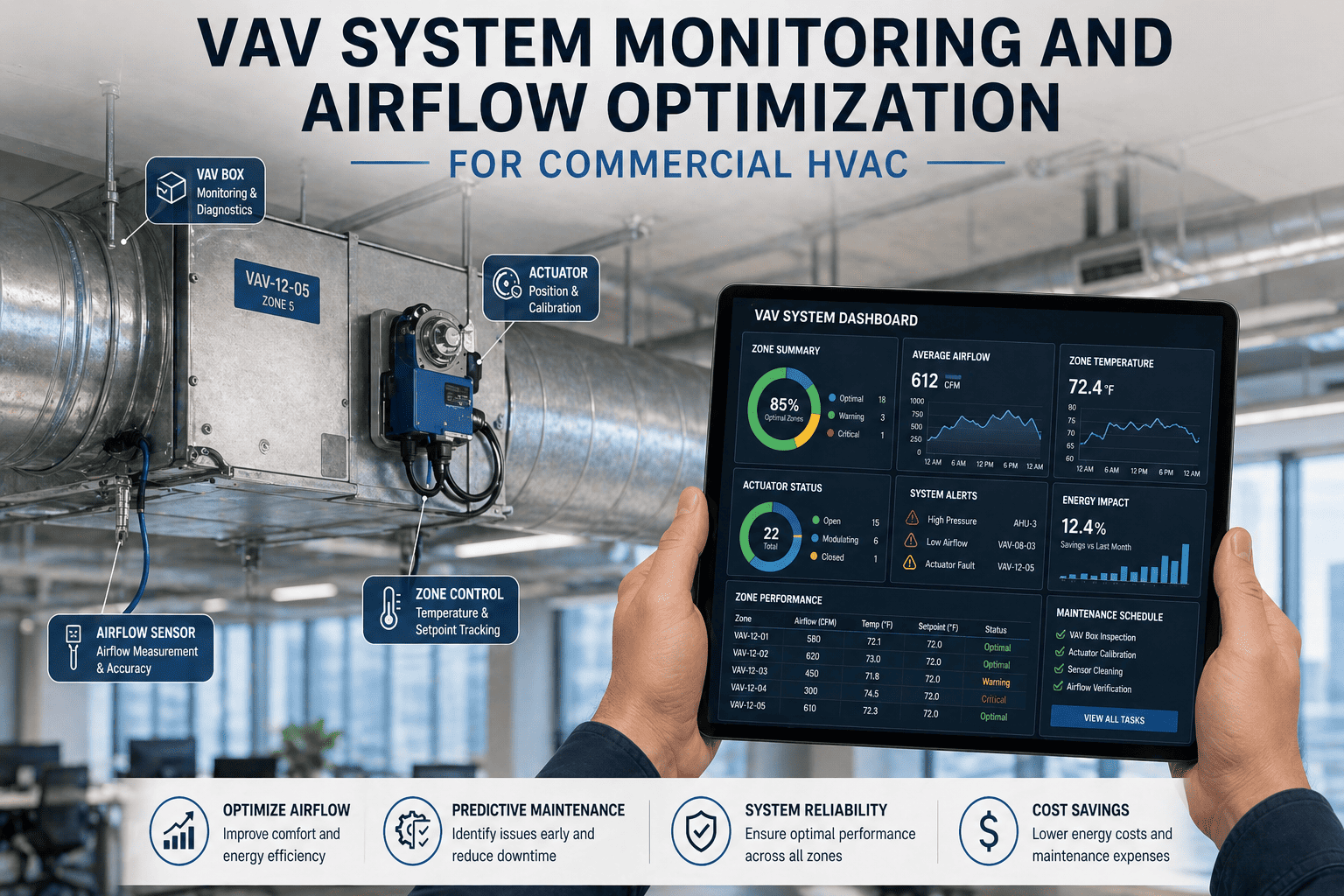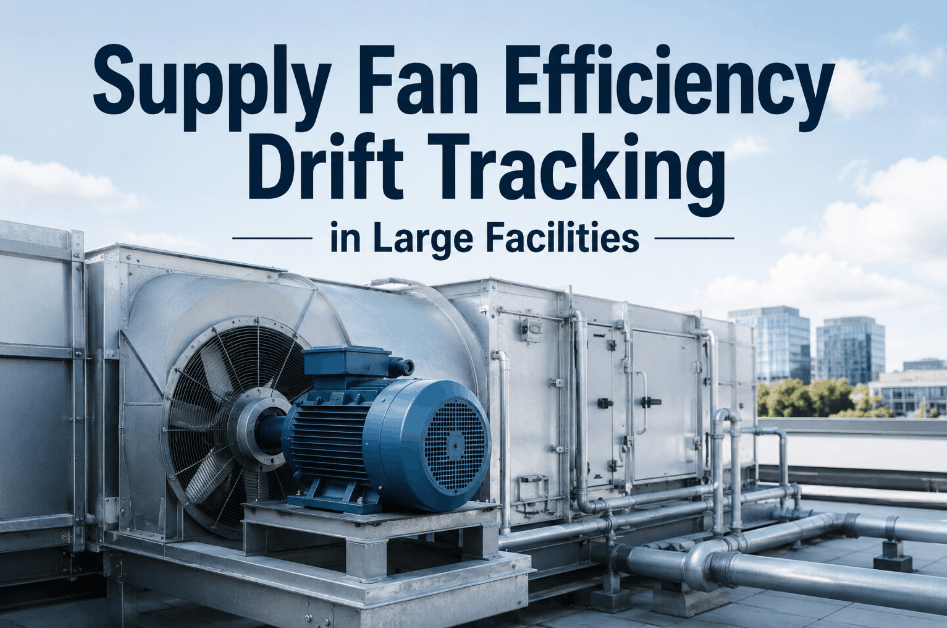
Supply fan efficiency drift is one of the costliest and least-detected performance losses in large facility HVAC systems — because the degradation is gradual, rarely triggers alarms, and becomes visible only when energy bills or comfort complaints accumulate beyond the point of easy correction. When amperage trends go unlogged, airflow measurements are never compared against design, and static pressure behavior across seasons is never correlated with fan performance data, efficiency drift compounds silently until a motor failure or belt replacement forces the investigation that structured monitoring would have completed months earlier. Maintenance teams using Sign Up Free on OxMaint can build the structured performance records, inspection history, and work order linkage that supply fan efficiency drift tracking requires across large commercial buildings, campuses, and industrial facilities.
Why Supply Fan Efficiency Drift Goes Undetected in Large Facilities
Large facilities operate dozens of air handling units across zones with different load profiles, occupancy schedules, and duct configurations — and without structured performance trending at the asset level, efficiency drift in any individual fan unit goes undetected until it manifests as comfort failure or excessive energy spend. Book a Demo to see how OxMaint's inspection and work order structure captures the amperage, airflow, and static pressure data your facility operations team needs to identify supply fan efficiency drift early across the full AHU inventory.
Six Performance Signals That Enable Supply Fan Efficiency Drift Detection
Supply fan efficiency drift tracking requires consistent capture of multiple performance signals on each inspection and PM cycle. OxMaint's inspection work order structure records all six signals in a format that enables trending queries across service intervals and AHU fleet comparisons. Sign Up Free to configure OxMaint's inspection templates for supply fan efficiency drift monitoring across your large facility asset inventory.
Motor Amperage vs. Design Load
Recording motor amperage on each PM cycle in OxMaint and comparing it against the nameplate full-load amperage and historical baseline identifies both overcurrent conditions from increased resistance and undercurrent from airflow restriction — both of which indicate fan system efficiency degradation.
Supply Airflow Measurement at Design Static
OxMaint inspection work orders capture total supply airflow measured at the AHU outlet and compared against the design CFM value — identifying wheel fouling, belt slip, or damper restriction that reduces delivered airflow while motor amperage may remain within normal range.
Static Pressure Differential Across Fan Section
Logging fan section static pressure rise in OxMaint — the pressure difference between fan inlet and outlet — against the design static pressure for the recorded operating point identifies blade wear, wheel imbalance, and scroll erosion that reduce the fan's pressure-generating capacity.
Belt Tension, Condition, and Sheave Alignment
OxMaint PM work orders record belt tension measurements, wear condition ratings, and sheave alignment observations — capturing the mechanical efficiency losses from belt slip and misalignment that reduce effective power transmission to the fan wheel before motor amperage reflects the problem.
Fan Wheel and Inlet Cone Fouling Observations
Recording wheel and inlet cone fouling condition in OxMaint inspection work orders captures the airfoil degradation from dirt accumulation that increases fan power demand while reducing airflow output — the efficiency drift pattern most commonly seen in facilities without structured filter management.
VFD Frequency vs. Airflow Correlation
OxMaint work orders capture VFD operating frequency alongside measured airflow for variable-speed fan systems — identifying when the fan requires a higher frequency than design to deliver the same airflow, indicating system resistance increase or fan mechanical efficiency loss.
Supply Fan Efficiency Drift Patterns by Cause Category
Book a Demo to see how OxMaint structures AHU asset records and inspection work orders to support supply fan efficiency drift detection and cause classification across large facility HVAC fleets.
| Drift Cause | Primary Signal | Secondary Indicator | Detection Method | OxMaint Data Required |
|---|---|---|---|---|
| Fan Wheel Fouling | Airflow below design at normal amperage | Increased VFD frequency for same CFM | Airflow vs. baseline comparison | CFM readings + wheel condition notes |
| Belt Slip or Wear | Airflow loss with normal motor amperage | Belt temperature rise, visual glazing | Belt tension and condition inspection | Tension measurement + condition rating |
| Motor Winding Degradation | Amperage increase at same operating point | Motor temperature above nameplate | Amperage trend vs. baseline | Amperage log + motor temperature |
| Duct System Resistance Rise | Static pressure increase with airflow loss | Differential across filter bank rising | Static pressure differential trend | Inlet/outlet static + filter DP log |
| Sheave or Bearing Wear | Vibration increase, noise anomaly | Amperage fluctuation at steady load | Vibration observation + amperage log | Vibration note + amperage history |
Four Outcomes Structured Fan Efficiency Tracking Delivers
Sign Up Free to build the structured supply fan performance history in OxMaint that makes all four outcomes achievable across your large facility AHU fleet.
Building a Supply Fan Efficiency Drift Tracking Program with OxMaint
Register AHUs with Design Performance Baselines
Create individual OxMaint asset records for each AHU and supply fan with design CFM, design static pressure, motor nameplate amperage, and VFD design frequency. Design baseline data stored at the asset record level enables every subsequent inspection reading to be compared against the original performance specification.
Configure Inspection Templates with Performance Measurement Fields
Build OxMaint PM and inspection work order templates with dedicated fields for motor amperage, supply CFM, fan static pressure rise, belt tension, wheel condition rating, and VFD frequency — replacing technician narrative notes with structured performance data on every service cycle.
Link Fan Assets to Zone and System Parent Records
Map each supply fan to its served zone, floor, and building system parent assets in OxMaint's asset hierarchy — enabling correlation queries that connect fan performance drift with zone temperature complaints, filter replacement history, and BAS control change records.
Establish Seasonal Performance Comparison Cycles
Configure OxMaint PM schedules to capture supply fan performance data at consistent seasonal operating points — enabling year-over-year airflow, amperage, and static pressure comparisons at equivalent outdoor air conditions that reveal efficiency drift independent of load variation.
Query Performance Trends and Generate Fleet Efficiency Reports
OxMaint's reporting dashboards enable performance trend queries filtered by AHU, zone, floor, and time period — producing the fleet efficiency outputs that facility engineers and energy managers use to prioritize corrective maintenance, justify capital replacements, and validate PM program effectiveness.
Frequently Asked Questions: Supply Fan Efficiency Drift in Large Facilities
What causes supply fan efficiency drift in large facilities?
The most common causes are fan wheel fouling from particulate buildup, belt wear and slip reducing power transmission, motor winding degradation increasing resistance losses, and rising duct system static pressure from filter loading, damper wear, or duct leakage accumulation over time.
How do I detect supply fan efficiency drift before it causes comfort failure?
Comparing measured airflow and motor amperage against design baselines on each PM cycle reveals drift before zone temperatures are affected. A fan delivering below-design CFM at normal or elevated amperage is drifting in efficiency — detectable months before comfort complaints begin.
How often should supply fan performance be measured in large facilities?
Quarterly amperage checks and semi-annual airflow and static pressure measurements are recommended for large facility AHUs. High-particulate environments or facilities with tight temperature control requirements benefit from monthly amperage trending to catch degradation earlier.
How does OxMaint support supply fan efficiency drift tracking?
OxMaint provides structured PM templates with performance measurement fields, asset-level baseline storage, AHU fleet comparison reporting, and corrective work order linkage — giving facility teams the data architecture that makes fan efficiency drift detectable and actionable across the full building HVAC inventory.
Can supply fan efficiency drift cause HVAC system pressure imbalance?
Yes. A supply fan delivering less than design airflow reduces positive pressure in served zones, disrupting return air balance, increasing outdoor air infiltration in negative-pressure spaces, and forcing other system fans to compensate — creating cascade efficiency losses across the building air distribution system.