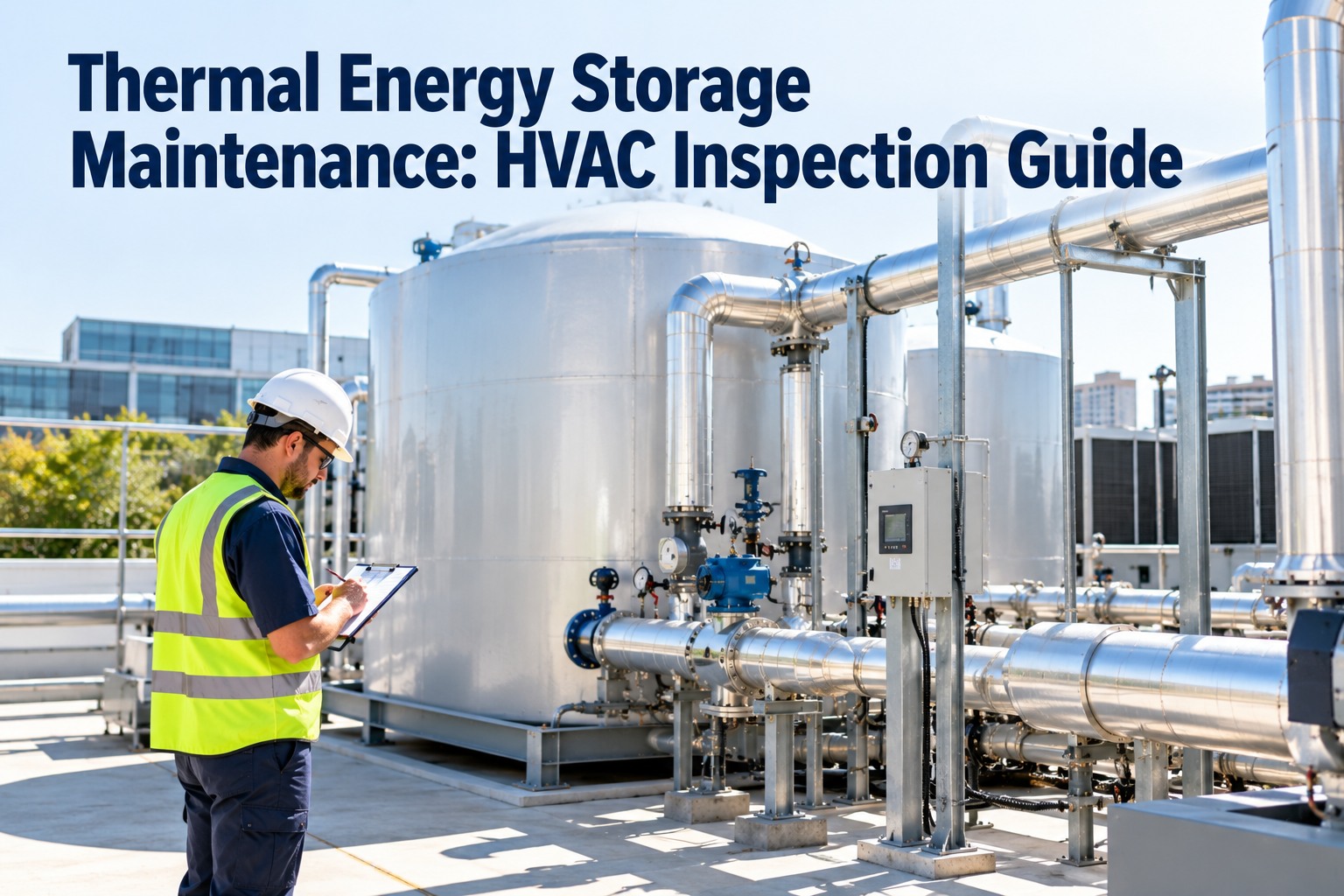
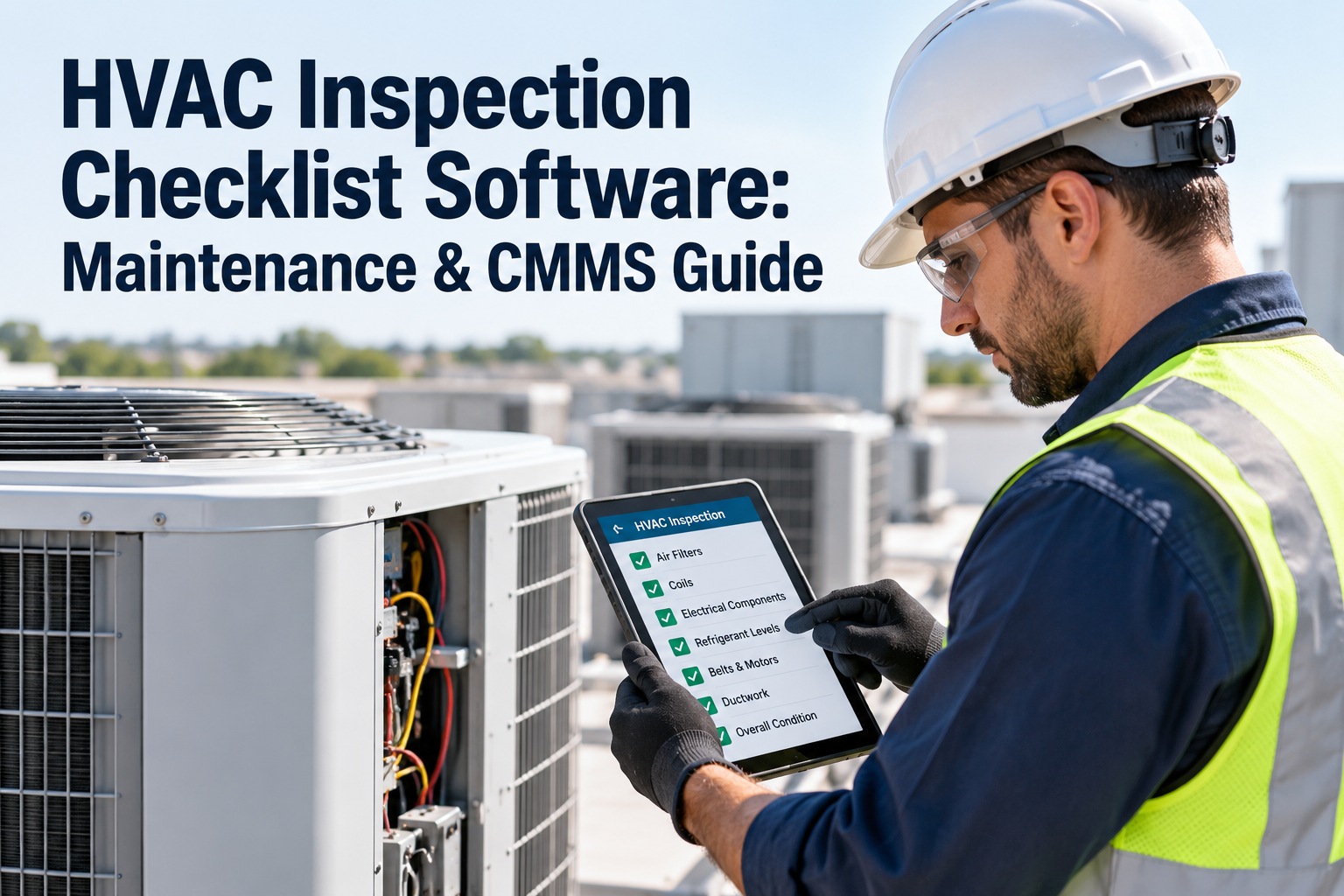
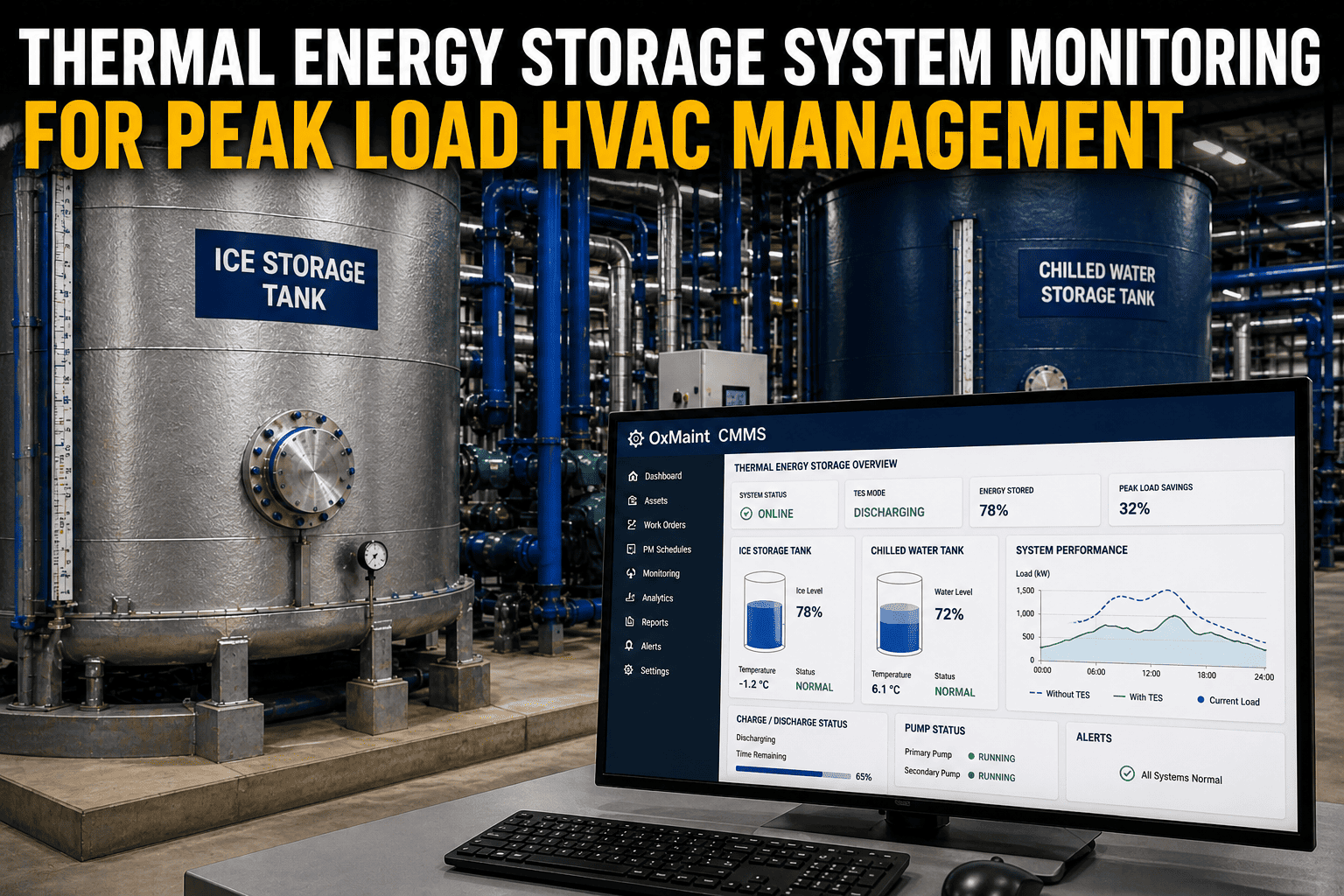
Thermal energy storage earns its keep on a clock: it makes cold at night when power is cheap, stores it, and spends it during the afternoon peak when power is expensive and the grid is strained. Every dollar the system saves depends on that charge-and-discharge cycle working cleanly — and the cycle quietly degrades when a tank loses stratification, insulation gets wet, or a control valve drifts. Maintenance here is not just about keeping the plant running; it is about protecting the energy savings the system exists to deliver. This guide walks the inspection of a chilled-water or ice storage system and how to run it in OXMAINT AI, or book a demo of TES maintenance.
THERMAL ENERGY STORAGE · HVAC INSPECTION GUIDE · 2027
Thermal Energy Storage Maintenance: HVAC Inspection Guide
A TES system runs a daily cycle — charge off-peak, discharge on-peak — and the savings live or die on that cycle staying clean. OXMAINT AI puts the tank, piping, insulation and controls on inspection, and turns a drifting thermocline or a wet jacket into a work order before the energy saving slips.
CHARGE
Off-peak / night
Chiller makes cold, cheap power
→ store →
DISCHARGE
On-peak / afternoon
Stored cold cools the building
Maintenance Protects the Savings, Not Just Uptime
Most HVAC maintenance protects comfort and uptime. TES maintenance protects something extra — the economic reason the system was built. A tank that no longer holds its full charge, or discharges warmer than it should, still "works," but it quietly stops shifting load off-peak, and the energy bill climbs while nothing looks broken. That is why the inspection watches performance, not just function. Start free and put your TES system on inspection in OXMAINT AI.
Lost Capacity
A tank that no longer stores its full charge shifts less load off-peak, eroding the savings silently.
Warm Discharge
If the supply temperature drifts up, the system cannot meet the peak it was sized to carry.
Insulation & Heat Gain
Wet or damaged insulation lets stored cold leak away, so the charge is smaller by morning.
Control Drift
A mistimed charge or discharge spends power at the wrong hour, defeating the whole purpose.
Two Systems, Two Inspection Focuses
Most TES falls into two families, and each puts the inspection emphasis in a different place. Know which you have before you build the plan.
Chilled-Water Storage
A large insulated tank holds cold water, separated from warm return by a stable thermocline. The whole performance rests on keeping that layer sharp — low-velocity diffusers, no mixing, tight temperature bands.
Watch: thermocline sharpness, diffuser condition, tank temperature profile, insulation.
Ice Storage
Ice is built on coils at night and melted during the day for cooling. The focus is the charge and melt cycle, the glycol loop, coil and tank integrity, and the controls that manage the build.
Watch: full build and melt, glycol concentration, coil and tank integrity, charge controls.
What the Inspection Covers
Across both types, the inspection breaks into a handful of component areas — each scheduled by interval and tracked per asset.
Tank & Structure
Shell and liner integrity, corrosion, leaks, water level and quality, and the internal diffusers or coils.
Temperature Profile
The stratification or ice inventory — sensor readings top to bottom that show the charge is holding.
Insulation & Vapor Barrier
Dry, intact insulation and vapor barrier — the single biggest defence against parasitic heat gain.
Piping, Valves & Pumps
The charge and discharge loop — valves sealing, pumps healthy, no leaks or air in the circuit.
Glycol / Water Chemistry
Glycol concentration on ice systems, water treatment on chilled-water — chemistry that protects the metal.
Controls & Scheduling
Charge and discharge timing, setpoints and sensor calibration that keep the cycle on the right hours.
The Performance Check
Stratification Is the Whole Game for Chilled-Water TES
In a chilled-water tank, cold water sits below warm return separated only by a thin transition layer — the thermocline. Keep it sharp and the tank delivers its full rated capacity at the right temperature; let it blur through turbulence, a damaged diffuser or short-cycling and usable capacity falls even though the tank is "full." The thermocline is the number that tells you whether the system still earns its savings.
1
Read the profile — temperature sensors top to bottom show how sharp the thermocline is.
2
Protect the diffusers — low-velocity inlet diffusers keep the layers from mixing; inspect them.
3
Watch the flow — too-high charge or discharge rates stir the tank and blur the layer.
4
Track usable capacity — a blurring thermocline shows up as lost capacity before anything fails.
When to Check What
TES inspection layers daily performance watching over periodic physical checks, with the deep work timed before the cooling season when the system matters most.
Daily / Continuous
Monitor the temperature profile, charge and discharge timing and usable capacity against expected.
Monthly
Check insulation and vapor barrier, pumps and valves, glycol or water chemistry, sensor readings.
Pre-Season
Full physical inspection and a test charge-discharge before the peak cooling season.
Annual / Major
Tank internal inspection, diffuser or coil condition, insulation repair, control re-commissioning.
The Numbers That Prove It Is Paying
A TES system is judged on energy and money as much as on uptime. These are the measures that show the maintenance is protecting the savings.
Usable Capacity
Stored cooling actually available on discharge against the tank's rating — the headline number.
Charge / Discharge Temps
Supply and return temperatures across the cycle, trended against the design band.
On-Peak Load Shifted
Cooling moved off the afternoon peak — the economic reason the system exists.
Standby Heat Gain
Charge lost overnight to the surroundings, the signal that insulation is failing.
Thermocline / Ice Inventory
Stratification sharpness or ice built, the direct read on storage health.
PM Completion
Scheduled TES maintenance done on time, so performance does not drift unwatched.
Why TES Performance Drifts Unnoticed
The danger with TES is that it degrades quietly — it keeps cooling the building while the savings leak away. These are the gaps that let that happen.
×
Function Watched, Not Performance
The building stays cool, so nobody notices the tank stopped shifting load off-peak.
×
Insulation Let Go
Wet or damaged jacketing left unrepaired, bleeding stored cold away every night.
×
Thermocline Ignored
No one tracks stratification, so blurred layers and lost capacity go unseen.
×
Controls Never Re-Tuned
Charge and discharge timing drifts off the utility rate windows it was set to.
×
Chemistry Neglected
Glycol or water chemistry left to drift, inviting corrosion inside the tank and loop.
×
No Baseline
No record of how the system performed when new, so drift has nothing to be measured against.
A TES Tank Can Cool Perfectly and Still Lose Money.
The failure mode that matters here is invisible — the building stays comfortable while the energy saving quietly erodes. OXMAINT AI watches the performance numbers, not just the equipment, and turns a drifting thermocline or a rising heat gain into a work order before the saving is gone.
1Baseline the performance
→
2Watch the cycle daily
→
3Drift becomes a work order
→
4Savings protected
How OXMAINT AI Runs TES Maintenance
OXMAINT AI is the AI-powered CMMS that holds the tank, loop and controls as assets, schedules the inspections, and trends the performance numbers that tell you the savings are holding. Start free and bring your thermal storage system onto OXMAINT AI.
TES Asset Register
Tank, diffusers or coils, piping, pumps, valves and controls logged with history and documents.
Performance Baselines
Usable capacity, charge/discharge temps and heat gain trended against the system when new.
Scheduled Inspections
Daily, monthly, pre-season and annual checks triggered automatically, so none is missed.
Drift Alerts to Work Orders
A blurring thermocline or rising heat gain raises a work order before the saving is lost.
Pre-Season Planning
The peak-season readiness check planned as a project with job plans and parts staged.
Energy & Savings View
On-peak load shifted and capacity trended, so the system's value stays visible to the budget.
EXPERT REVIEW
Written for building energy, facilities and HVAC maintenance teams running thermal energy storage. The system types, inspection areas, intervals and metrics here are a general framework — your actual inspection scope, performance targets, glycol and water-chemistry limits and control schedules come from the system designer, the equipment manufacturer and your utility rate structure. Confined-space entry for tank internals, glycol handling and work around pressurised and chilled systems carry hazards governed by your site's procedures. OXMAINT AI is a maintenance management platform that registers assets, schedules inspections and trends performance; it does not replace a licensed HVAC or controls professional, a commissioning authority, or your facility's engineering judgement.
Frequently Asked Questions
What is thermal energy storage in an HVAC system?
It is a system that makes cooling when it is cheap to do so — usually at night, off-peak — stores it as cold water or ice, and uses it to cool the building during the expensive afternoon peak. By shifting the cooling load off-peak, it cuts energy cost and demand charges and eases the strain on the chiller plant and the grid. Because the savings depend entirely on that daily charge-and-discharge cycle, maintaining the system is really about protecting its economic performance.
Start free and set up TES maintenance in OXMAINT AI.
Why does TES maintenance matter if the building is still cool?
Because a TES system can keep the building perfectly comfortable while quietly losing the savings it was built for. If the tank no longer holds its full charge, discharges warmer than designed, or leaks stored cold through wet insulation, the chiller simply runs more during peak hours to make up the difference — the comfort is fine but the energy bill climbs. That is why TES inspection watches performance numbers, not just whether it is cooling.
Book a demo of performance tracking in OXMAINT AI.
What is stratification and why does it matter?
In a chilled-water storage tank, cold water sits below warmer return water, separated by a thin transition layer called the thermocline. Keeping that layer sharp is what lets the tank deliver its full rated capacity at the right temperature. If turbulence, a damaged diffuser or too-high flow rates blur the layer, cold and warm water mix and usable capacity drops even though the tank reads full — so tracking stratification is the single best read on a chilled-water system's health.
Book a demo of stratification monitoring in OXMAINT AI.
How often should a thermal storage system be inspected?
On layered intervals: continuous or daily monitoring of the temperature profile and the charge-discharge cycle; monthly checks of insulation, pumps, valves and glycol or water chemistry; a full physical inspection and test cycle before the peak cooling season; and an annual deep inspection of the tank internals, diffusers or coils, and controls. The daily watching catches performance drift early, while the physical checks catch the slow problems before the season when the system is needed most.
Book a demo of TES inspection scheduling in OXMAINT AI.
Can a CMMS manage thermal energy storage maintenance?
Yes — a CMMS registers the tank, loop and controls as assets, schedules the layered inspections, and trends the performance baselines that reveal when savings are slipping. Crucially, it can turn a drifting thermocline or a rising overnight heat gain into a tracked work order, so a quiet performance problem gets fixed instead of going unnoticed. Keeping both the maintenance and the energy numbers in one place is what lets a facilities team defend the system's value.
Start free and run TES maintenance in OXMAINT AI.
Keep the Cold You Paid For Overnight.
Run thermal energy storage on OXMAINT AI: the tank, loop and controls registered and inspected, the charge-discharge cycle and thermocline watched daily, drift turned into a work order, and the on-peak load shifted tracked — so the system keeps cooling and keeps saving.