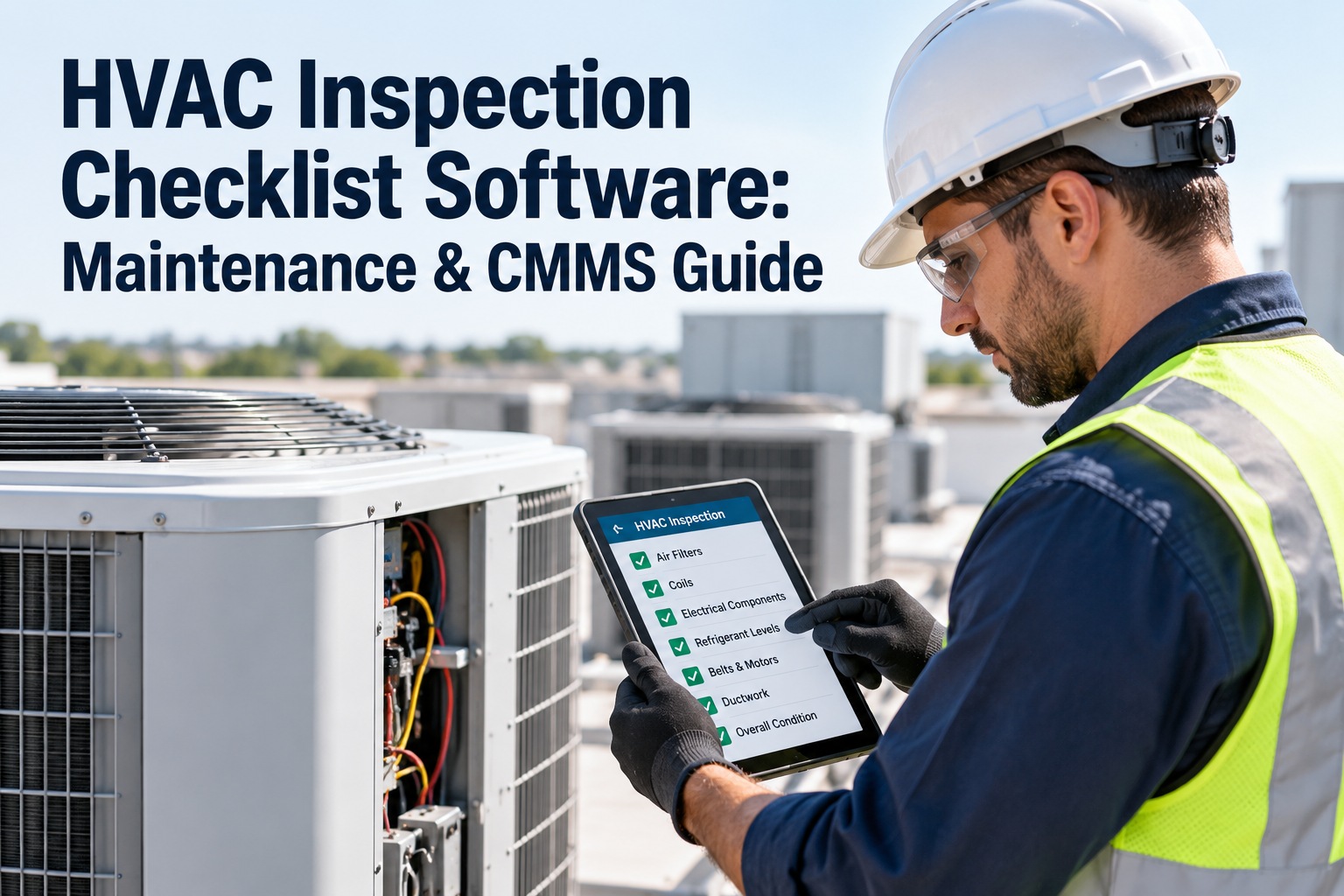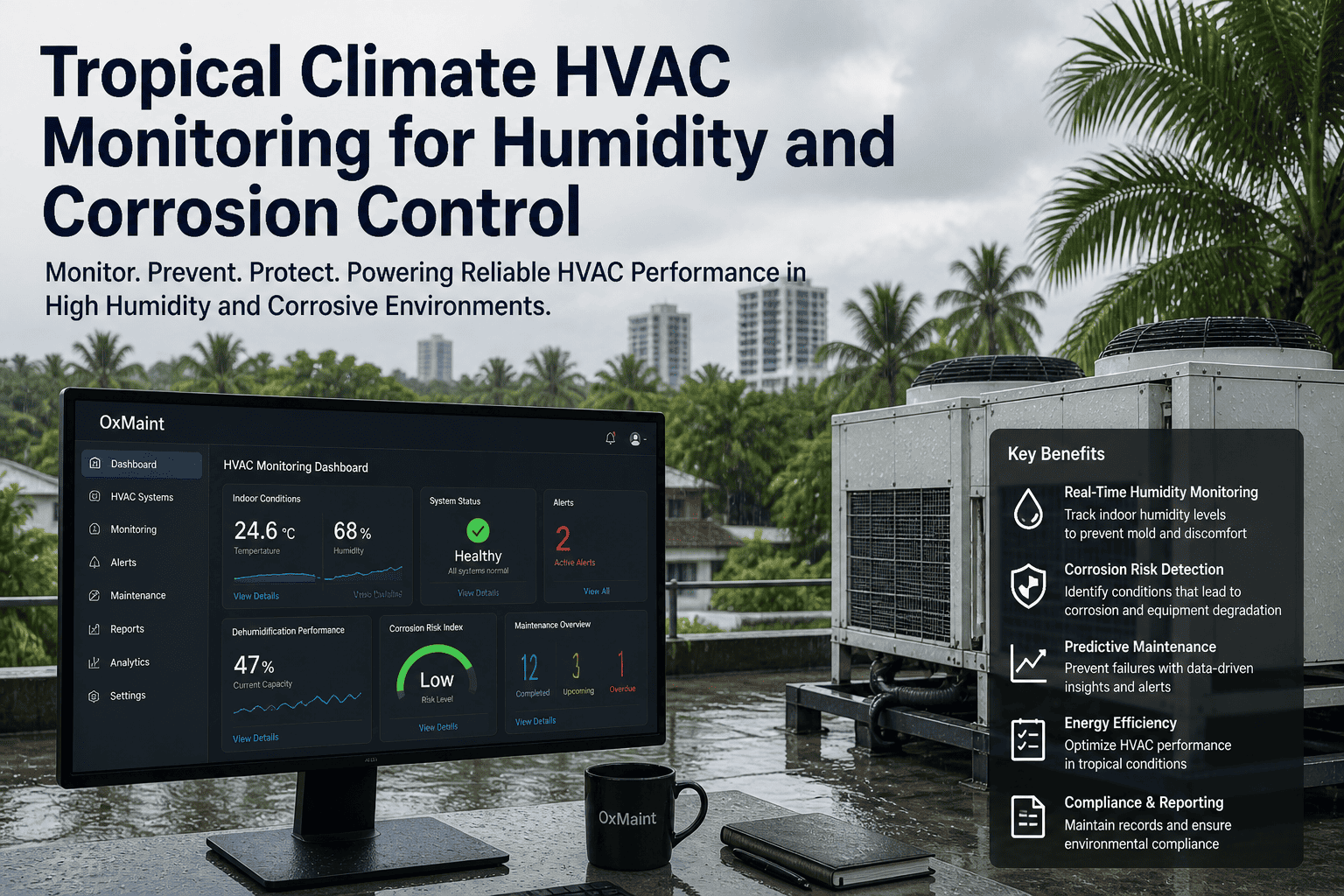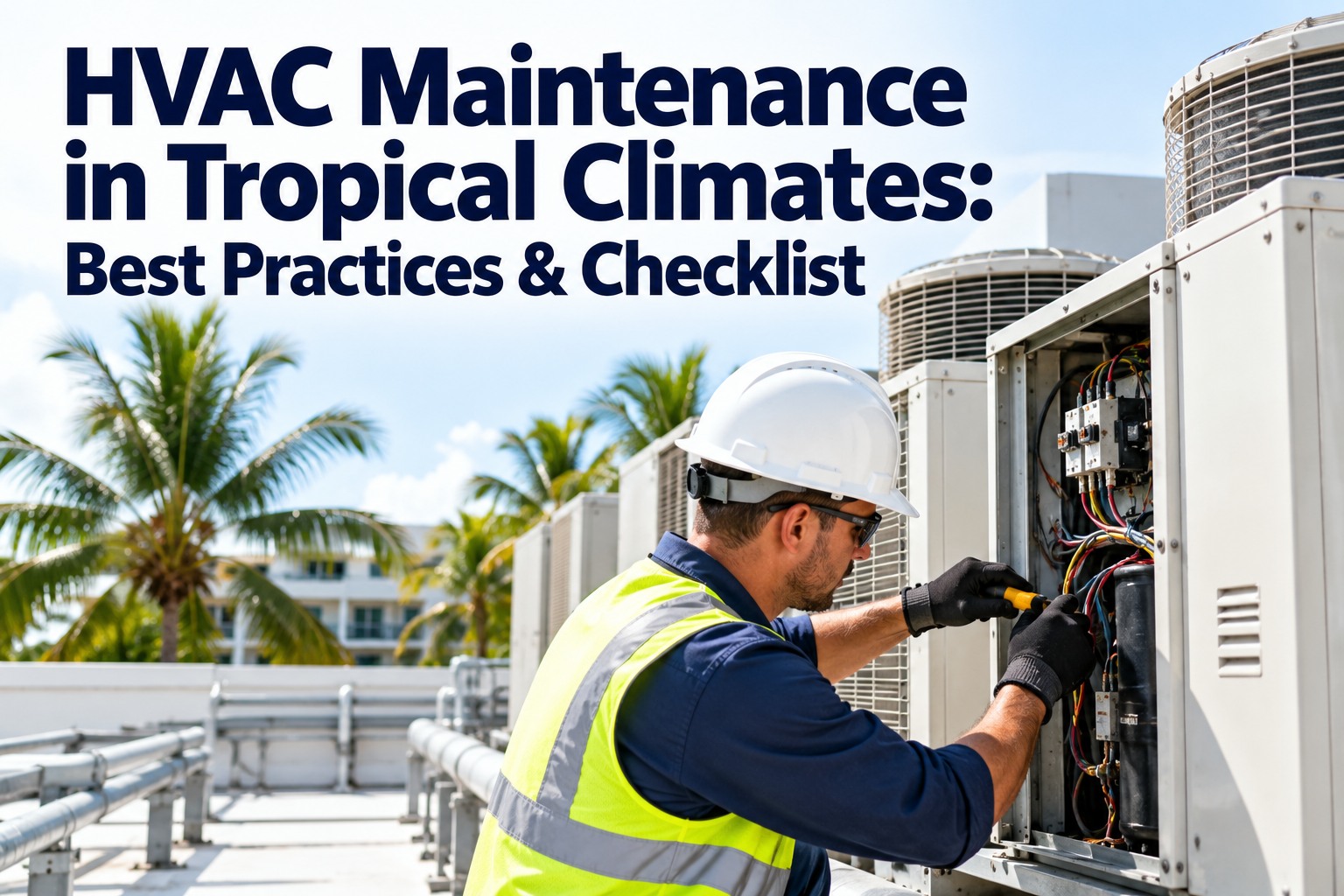
HVAC built for a temperate climate gets a seasonal rest. In the tropics it gets none the equipment runs hard every day of the year against heat, saturating humidity, salt-laden air and relentless biological growth. The same unit that would last fifteen years inland can corrode, foul and flood its condensate pan in a fraction of that time if it's maintained on a mainland schedule. This guide lays out what changes in the tropics, the best practice against each stress, and a climate-specific PM checklist. OXMAINT AI — the AI-powered maintenance management software — holds the tighter intervals these conditions demand and schedules them around equipment that never gets to stop.
HVAC Maintenance in Tropical Climates
Heat, humidity, salt and biological growth attack tropical HVAC year-round — so the maintenance has to be tighter, and scheduled around equipment that never shuts down. The OXMAINT AI maintenance management software keeps those shorter intervals on plan across every unit.
The Four Stresses That Punish Tropical HVAC
Tropical conditions don't add one problem — they add four, each attacking a different part of the system at once. A maintenance strategy that ignores any one of them leaves a gap the climate will find; book a demo to see tropical HVAC managed in OXMAINT AI.
Best Practices for Each Stress
Each stress has a maintenance answer — and in the tropics it's less about doing different tasks than doing the familiar ones more often and more thoroughly. Here's the strategy, stress by stress; start free and put these practices on a plan in OXMAINT AI.
In the tropics, moisture is half the load. Size equipment so it runs long enough to dehumidify — an oversized unit short-cycles, hits the thermostat fast and leaves the air cold and clammy. Hold indoor humidity in a sensible band, keep coils clean so they strip moisture properly, and use dedicated dehumidification where spaces need it. Damp air isn't just unpleasant; it's what feeds the mold and corrosion behind every other problem here.
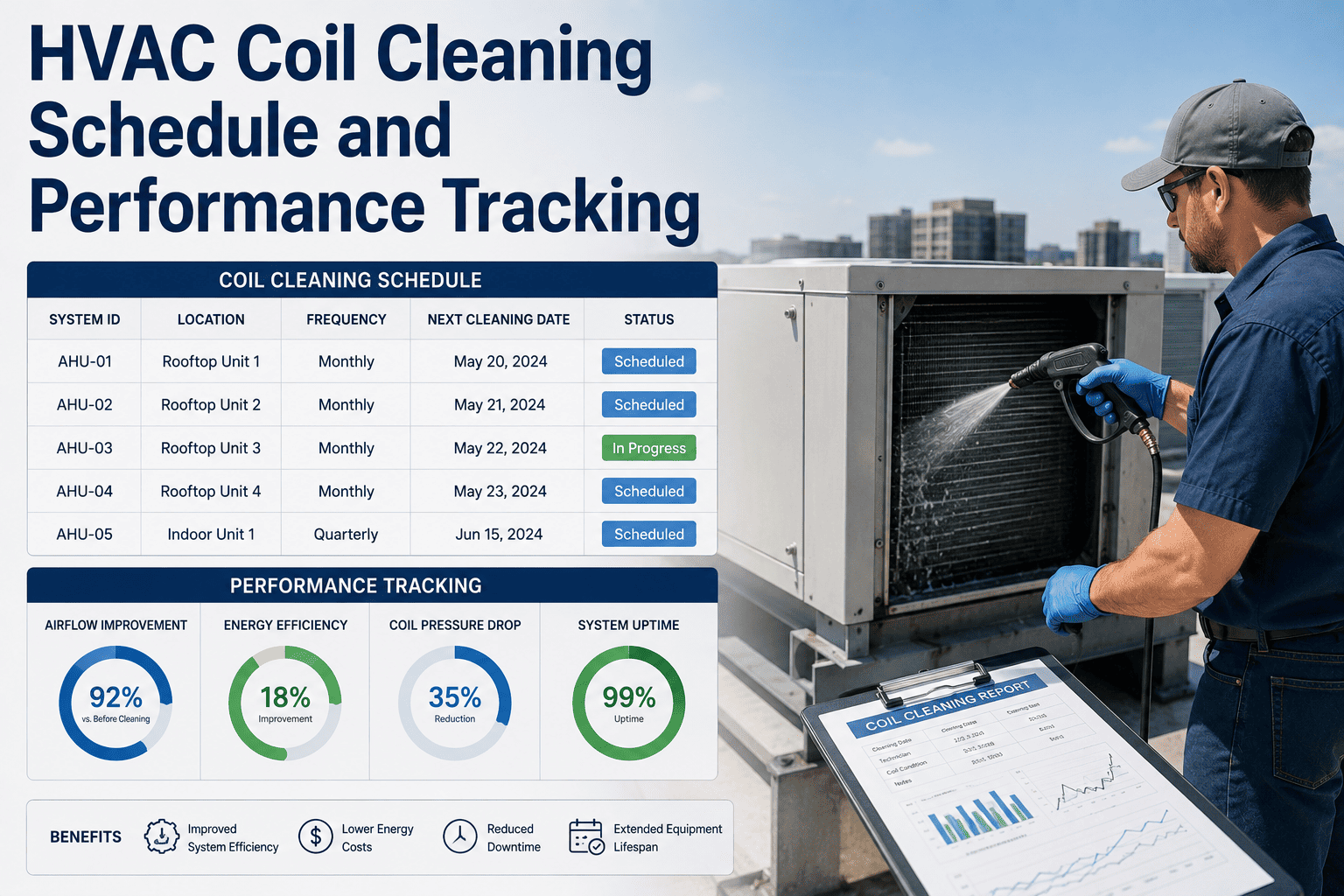
Continuous running and biological growth foul coils fast, and the condensate load is enormous — pans and lines that stay wet all year grow algae and back up. Shorten coil-cleaning intervals, treat and clean drain pans on a tight cadence, flush condensate lines before they block, and confirm overflow protection works. What's an annual job in a dry climate is often quarterly or tighter here, and skipping it is how a ceiling gets flooded.
Salt air is merciless on coastal equipment. Specify coil coatings and corrosion-resistant hardware where you can, rinse condenser coils of salt buildup on a schedule, and inspect cabinets, fasteners and refrigerant lines for the first rust before it spreads. Keep an eye on galvanic points where dissimilar metals meet. Corrosion is slow and silent, so it only stays ahead of you if the inspection is on the calendar, not left to chance.
There's no winter shutdown to do the deep work, so maintenance has to fit around live, loaded equipment. Plan tasks for lower-load windows, lean on redundancy so one unit can come offline while another carries the space, and keep critical spares on hand because a failure in peak heat can't wait on a part. A tropical PM plan is as much about timing and logistics as it is about the tasks themselves.
A Mainland Schedule Is a Slow Failure in the Tropics.
Intervals that work in a dry, four-season climate let fouling and corrosion run ahead of you here. The OXMAINT AI maintenance management software lets you set the tighter, climate-right cadence per asset and holds it — so tropical equipment is maintained for the conditions it actually runs in.
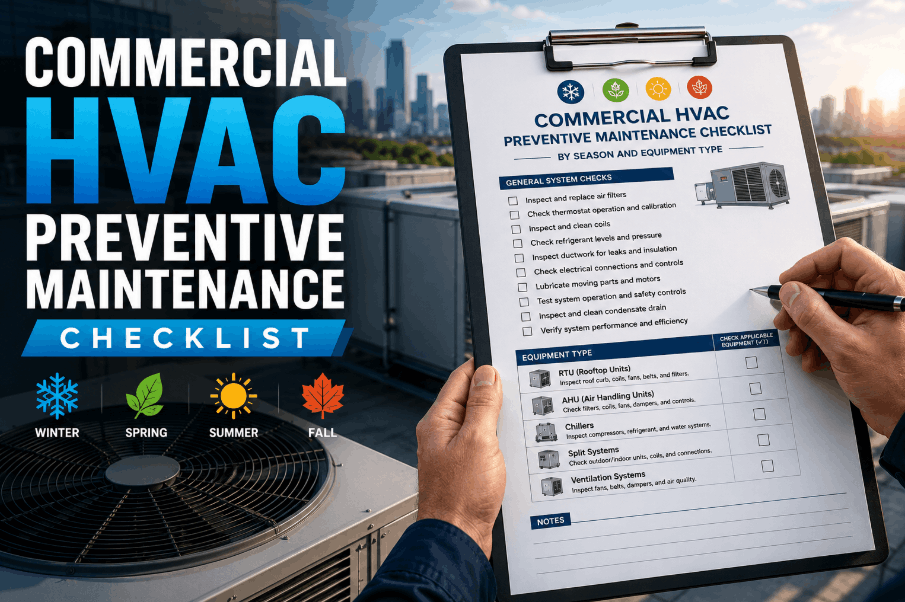
Tropical HVAC Maintenance Checklist
The practices above come down to a tighter set of recurring tasks. Here's the climate-specific checklist — tick it per asset on a cadence shorter than you'd use inland; book a demo to put this checklist on a schedule in OXMAINT AI.
How OXMAINT AI Runs Tropical HVAC Maintenance
The whole tropical strategy depends on tighter intervals actually holding and the right logistics being in place. Here's what the OXMAINT AI maintenance management software brings to it; start free and run your tropical HVAC on a plan in OXMAINT AI.
We ran our coastal sites on the same PM intervals as our inland ones, and it showed — condenser coils rotting out, drain pans overflowing in the wet season, units failing years early. Once we set tropical-specific cadences and started rinsing salt off the coils on a schedule, the picture turned around. Coils last, the condensate stays managed, and we plan the deep work around our redundancy instead of waiting for something to fail in peak heat.
Frequently Asked Questions
Maintain for the Climate You're In — Not the One the Manual Assumed.
Run tropical HVAC on a strategy built for heat, humidity, salt and growth with the OXMAINT AI maintenance management software — climate-right intervals, mobile checklists, corrosion tracking, automatic work orders and spares on hand. Stop losing equipment years early to a schedule that was never meant for the tropics.