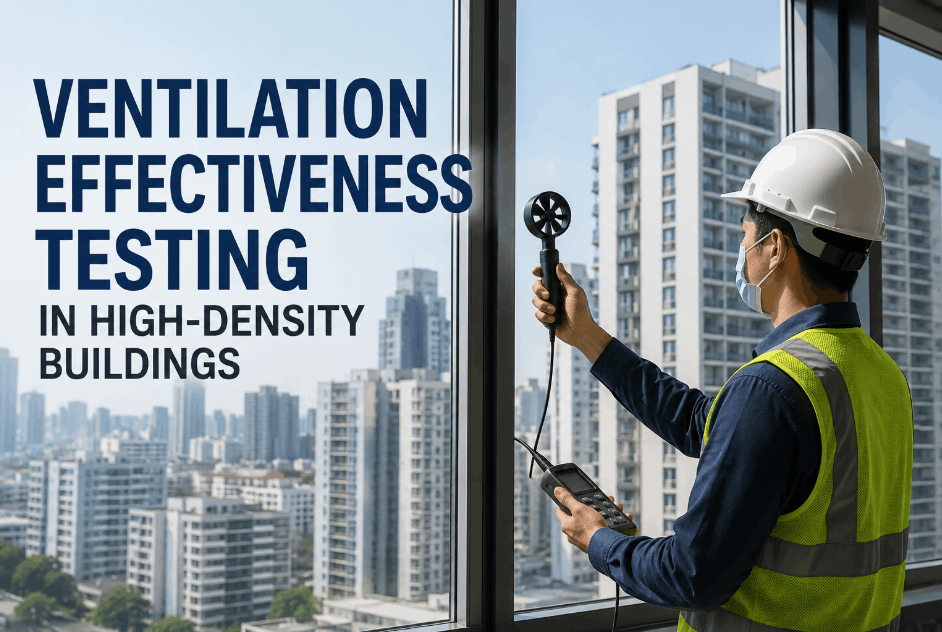
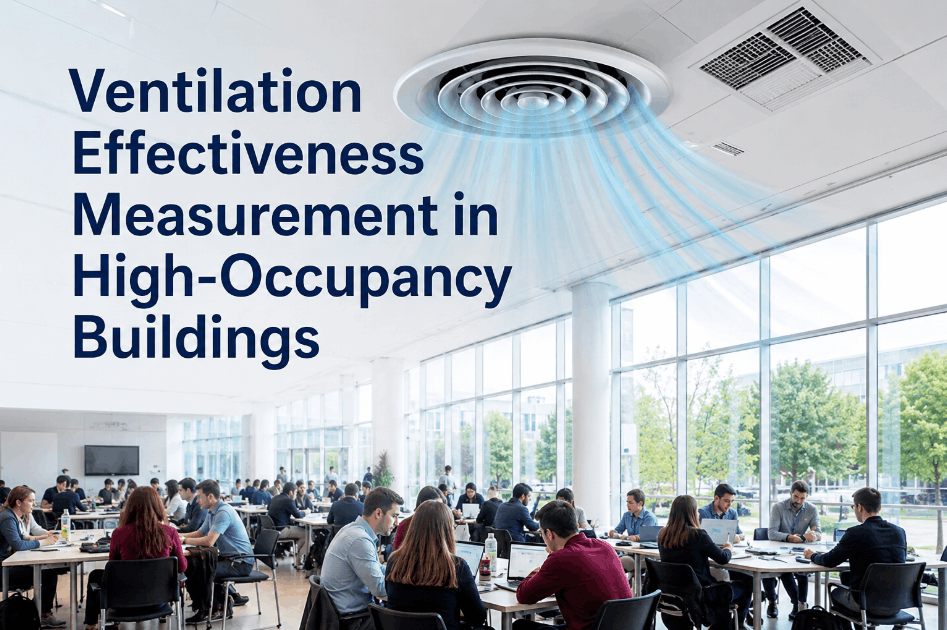
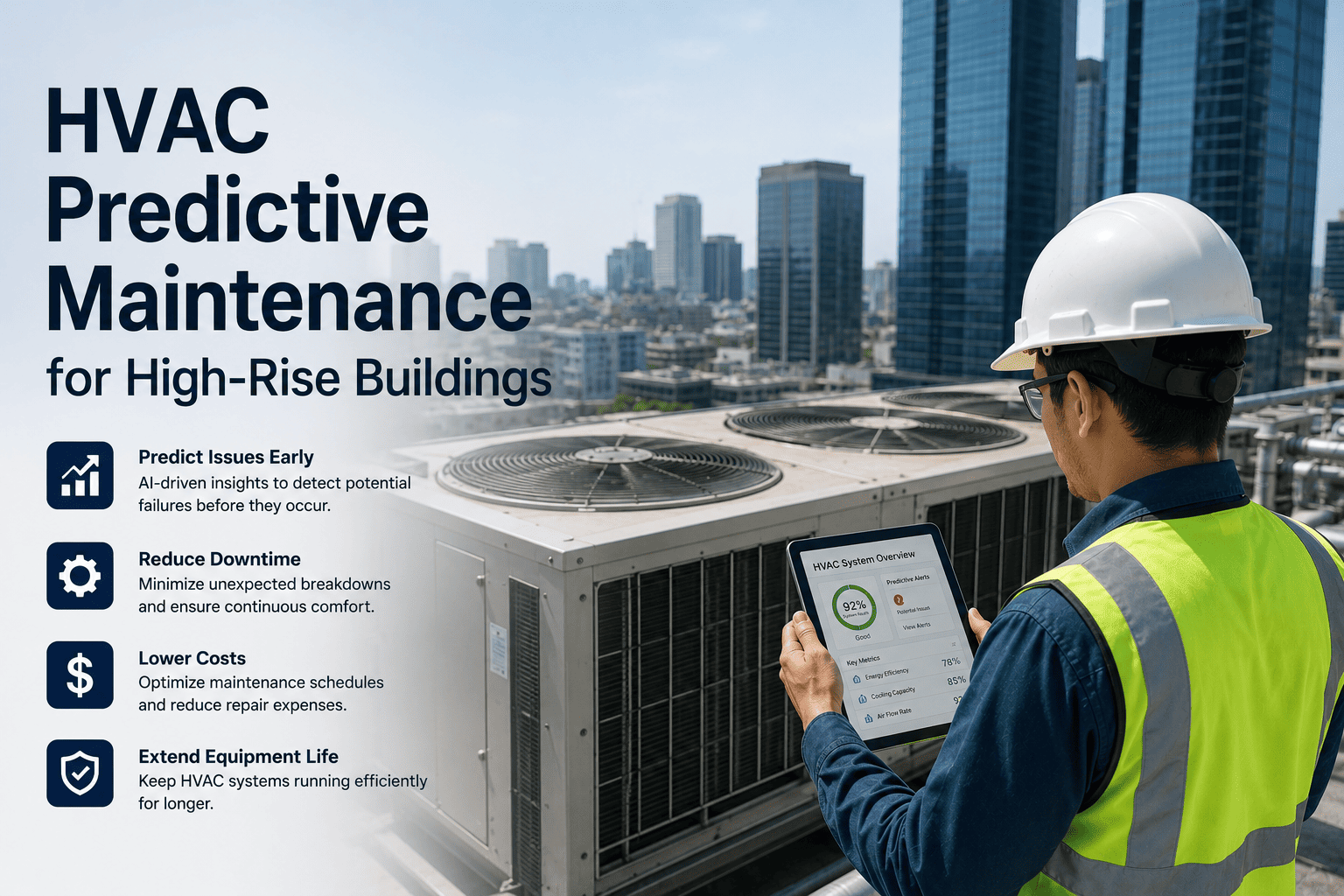
Design airflow rates printed on an HVAC drawing tell you what a system was built to deliver, not what it actually delivers once a high-density building fills with people, partitions, and furniture. Air can short-circuit from supply to return before mixing with room air, leaving pockets of stale air in a space that still measures normal at the diffuser. Ventilation effectiveness testing checks what air does after it leaves the duct, not just how much of it leaves. Sign Up Free to log and track ventilation effectiveness results across every zone — or Book a Demo to see how Oxmaint structures testing programs for high-density buildings.
Ventilation Testing · High-Density Buildings · Air Delivery
Design Airflow Numbers Don't Tell You What Air Actually Does in the Room
Oxmaint helps facility teams schedule, log, and trend ventilation effectiveness testing results across high-occupancy zones — not just rely on commissioning-day numbers.
Testing Methods
Four Ways Facility Teams Measure Ventilation Effectiveness
Tracer Gas Decay
A tracer gas is released and its decay rate measured to calculate actual air change effectiveness in a zone, independent of supply diffuser readings.
CO2 Decay Testing
Occupant-generated or injected CO2 decay rate is tracked after ventilation resumes, giving a practical proxy for air change effectiveness without specialized gas.
Air Change Rate Verification
Measured supply and exhaust volumes are compared against design air changes per hour to confirm delivered ventilation matches the original specification.
Airflow Pattern Mapping
Smoke or anemometer-based mapping identifies short-circuiting paths and dead zones where supply air bypasses the breathing zone entirely.
Why It Matters in Dense Spaces
High Occupancy Density Changes How Air Actually Moves
A zone designed for 40 people behaves differently at 70% occupancy than at full capacity — furniture layout, partition height, and body heat all change air mixing patterns that a single commissioning test never captures. Ongoing effectiveness testing catches drift that design-stage modeling cannot predict. Sign Up Free to build a recurring testing schedule for your highest-density zones, or Book a Demo to see how testing data feeds into ongoing IAQ tracking.
| Test Type | Best Used For | Typical Frequency |
|---|
| Tracer Gas Decay | High-occupancy meeting and assembly spaces | Annual or post-renovation |
| CO2 Decay Testing | Open-plan offices, classrooms | Quarterly spot checks |
| Air Change Rate Verification | Critical and compliance-driven spaces | Annual or per code cycle |
| Airflow Pattern Mapping | Spaces with recurring stuffy-air complaints | As-needed, complaint-triggered |
Zone-Level
Test results are logged per zone, not building-wide, so dead spots are visible instead of averaged away.
Trend-Based
Repeated testing over time shows whether ventilation effectiveness is improving, stable, or degrading per zone.
Action-Linked
Failed tests can trigger a corrective work order directly, closing the loop between testing and remediation.
Testing That Drives Action
Turn Ventilation Testing Results Into Tracked Corrective Work
Oxmaint logs ventilation effectiveness results by zone and links failed tests directly to corrective maintenance work orders.
FAQs
Frequently Asked Questions
How is ventilation effectiveness different from airflow rate?
Airflow rate measures volume delivered at the diffuser, while effectiveness measures how well that air actually mixes and reaches the breathing zone.
How often should high-density zones be retested?
High-occupancy zones are commonly retested quarterly to annually, with additional testing after layout changes, renovations, or persistent complaints.
Can Oxmaint link a failed ventilation test to a work order?
Yes. A failed or below-threshold test result can trigger a corrective maintenance work order automatically, keeping testing and remediation connected.
Does ventilation testing require specialized equipment?
Some methods, such as tracer gas testing, require specialized equipment, while CO2 decay testing can often use existing sensor infrastructure.
Know What Air Does, Not Just What It Delivers
Build a Ventilation Effectiveness Testing Program That Tracks Itself
Oxmaint helps high-density buildings schedule, log, and act on ventilation effectiveness testing across every critical zone.