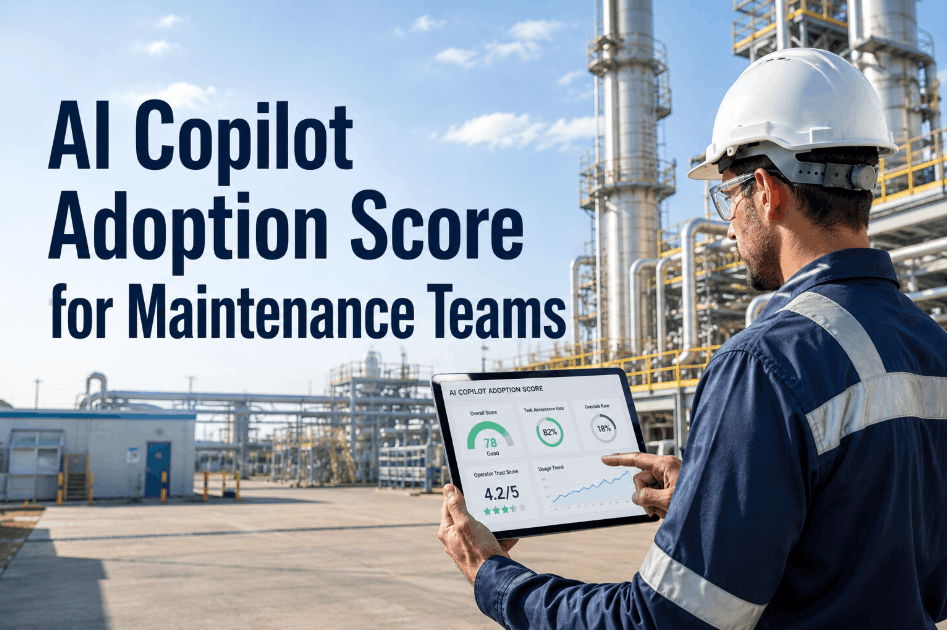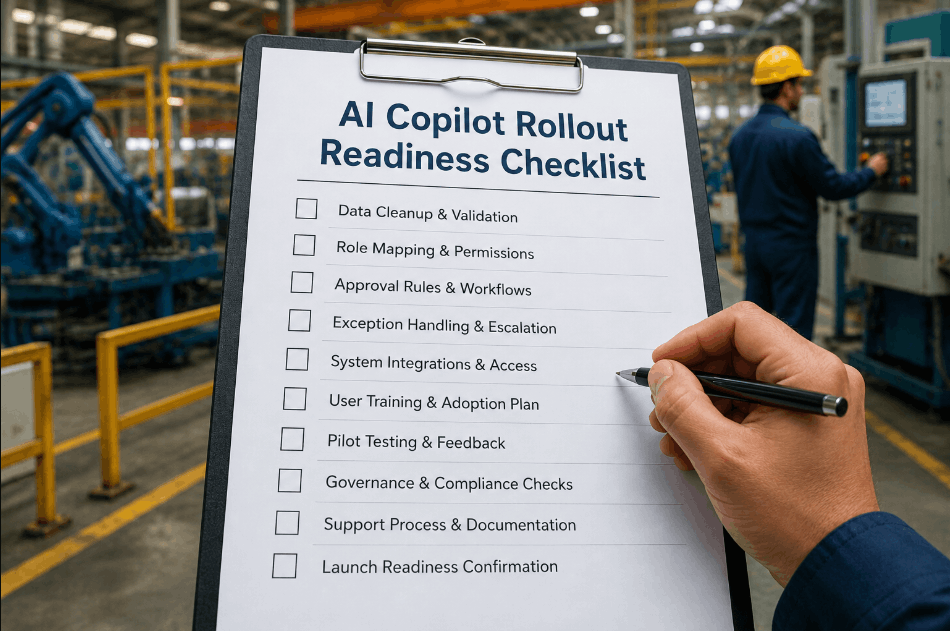
Deploying an AI copilot on the maintenance floor without structured readiness checks introduces more risk than the tool is designed to eliminate. Incomplete asset records produce hallucinated recommendations, undefined role permissions expose approval workflows to unintended bypass, and exception handling gaps leave technicians without a fallback when the model returns low-confidence outputs. The pattern across early rollouts is consistent: teams rush past data cleanup, skip governance mapping, and discover mid-pilot that the AI copilot is surfacing recommendations the maintenance program cannot yet act on. Sign Up Free on Oxmaint to give your launch team a single platform for structuring asset data, configuring role-based approval rules, and tracking AI copilot adoption against actual work order outcomes — before and after go-live. Book a Demo to see how Oxmaint supports AI copilot readiness by connecting clean asset records, configurable workflow controls, and exception escalation paths into the same system technicians already use for daily work. Use this checklist before your pilot launch date or pre-production sign-off review.
1. Asset Data Cleanup & Record Integrity
An AI copilot recommendation is only as reliable as the asset data it reasons over. Confirm records are complete, deduplicated, and linked to actual equipment before the model is given access to production data.
2. Role Mapping & Permission Configuration
Role boundaries define what the AI copilot can suggest and what it can trigger without human approval. Confirm every user role has explicitly defined boundaries before the copilot is given access to work order generation or PM scheduling.
3. Approval Rules & Workflow Controls
Approval rules are what separate a governed AI copilot rollout from an uncontrolled one. Confirm every recommendation category has a defined approval path before the pilot goes live on the maintenance floor.
4. Exception Handling & Fallback Process
Exception handling is what keeps the maintenance floor running when the copilot returns a low-confidence output, an unexpected result, or no recommendation at all. Confirm every exception scenario has a defined fallback before go-live.
5. User Adoption & Change Management Readiness
Adoption readiness determines whether the AI copilot delivers on its productivity claims or becomes shelf technology. Confirm training, support contacts, and feedback loops are active before the pilot launch date.