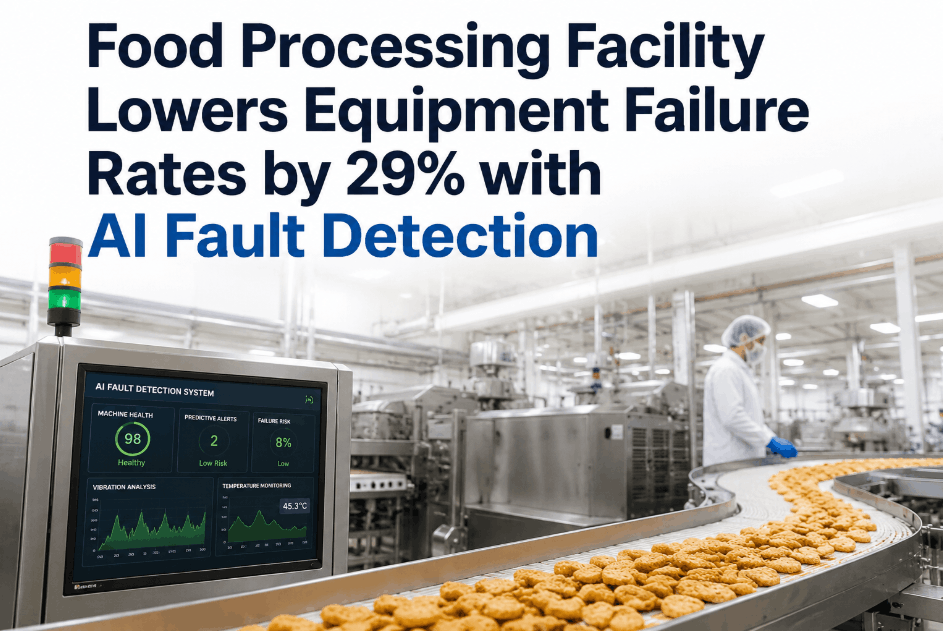
Production asset failures don't announce themselves—they develop through weeks or months of deteriorating condition signals that traditional threshold-based monitoring misses until it's too late for anything other than emergency response. An AI failure forecast matrix changes that by combining machine learning pattern recognition, multi-signal telemetry, and equipment history to map where each production asset sits on its failure probability curve—before the curve reaches its endpoint. Sign Up Free with Oxmaint to connect your equipment telemetry and maintenance history into a unified platform where AI-driven failure forecasting supports earlier intervention and lower unplanned downtime. This guide gives reliability engineers, plant directors, and maintenance managers the framework for implementing and acting on an AI failure forecast matrix across production assets.
How AI Failure Forecasting Differs From Traditional Condition Monitoring
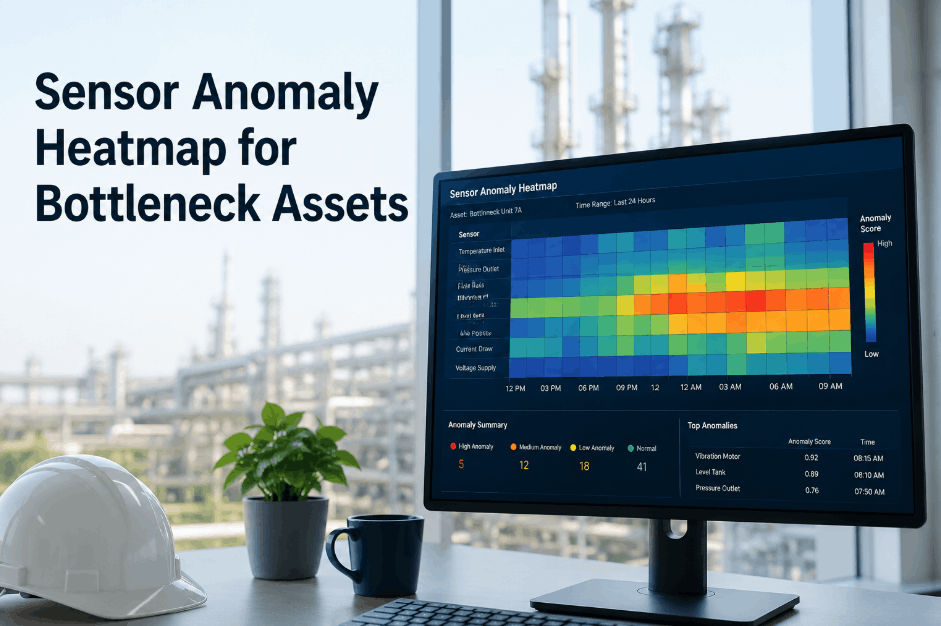
Traditional condition monitoring detects equipment degradation by comparing current sensor readings against fixed alarm thresholds. When a vibration reading crosses its set point, an alarm fires. This approach works for obvious, rapid deterioration—but misses the gradual, multi-signal degradation patterns that precede most production asset failures by weeks or months. AI failure forecasting addresses this limitation by learning the normal operating signature of each asset and detecting when combined signal patterns begin diverging from expected behavior—even when every individual signal remains within its traditional alarm band. Book a Demo to see how Oxmaint structures equipment telemetry and maintenance history for AI-assisted failure probability scoring across your production asset fleet. The result is failure probability estimates that provide actionable lead time—the window between early pattern detection and actual failure that determines whether a team can respond with planned maintenance or is forced into emergency repair.
AI Failure Forecast Matrix Structure: Four Axes That Define Asset Risk Position
A failure forecast matrix positions each production asset across multiple risk dimensions simultaneously—not just current condition, but failure probability trajectory, production impact of failure, and intervention lead time remaining. Sign Up Free to build asset health profiles in Oxmaint that support multi-dimensional failure risk positioning for your production equipment fleet.
The core AI output—a 0–100 score representing the model's estimate of failure probability within a defined horizon (typically 30, 60, and 90 days). Scores combine vibration trends, temperature profiles, operational loading history, and maintenance interval data weighted by failure mode relevance for the specific asset type.
Production impact if the asset fails unplanned—quantified by throughput loss, secondary damage risk, safety consequence, and redundancy availability. High-consequence assets with rising failure probability scores generate the highest urgency matrix positions and earliest intervention triggers.
AI-modeled estimate of time remaining before failure probability exceeds acceptable threshold, given current degradation trajectory. RUL estimates define the intervention planning window—the time available to schedule, resource, and execute maintenance before unplanned failure becomes likely.
How much historical training data, signal quality, and pattern match consistency support the current failure probability estimate. Low-confidence forecasts for assets with sparse history or noisy signals require human expert review before triggering maintenance interventions to avoid false dispatches.
AI Failure Forecast Matrix: Asset Positioning and Intervention Logic
The matrix maps each production asset by failure probability score against consequence severity—creating four action quadrants that drive distinct maintenance response strategies. Plant reliability teams that implement quadrant-based intervention logic convert failure forecast data into structured work planning rather than ad hoc responses to individual alerts. Book a Demo to see how Oxmaint's equipment health platform integrates with predictive analytics tools to support failure matrix-driven maintenance planning.
| Matrix Quadrant | Failure Probability | Consequence Severity | Recommended Action | Oxmaint Response |
|---|---|---|---|---|
| Q1: Critical Priority | High (score 70–100) | High (major production impact) | Immediate intervention planning; engineering review within 24 hours | Auto-generate priority work order with full signal context and RUL estimate |
| Q2: Urgent Watch | High (score 70–100) | Low (limited production impact) | Schedule corrective maintenance within next planned window; increase monitoring frequency | Create scheduled work order; escalate monitoring interval in condition monitoring system |
| Q3: Monitor Closely | Low-Medium (score 30–69) | High (major production impact) | Increase inspection frequency; prepare contingency parts and resources | Update PM frequency; create parts reservation and standby resource plan in Oxmaint |
| Q4: Routine Monitoring | Low (score 0–29) | Low (limited production impact) | Continue standard PM schedule; review at next reliability meeting | Confirm PM schedule compliance; no expedited action required |
Implementing an AI Failure Forecast Matrix Using CMMS and Predictive Analytics
Failure forecast matrix value depends entirely on the quality of data feeding the AI models—sensor coverage, maintenance history completeness, and failure event records all directly influence model accuracy and confidence scores. Facilities that invest in structured data capture through CMMS before deploying AI analytics see significantly faster model maturation and more reliable forecast outputs. Sign Up Free to build the structured equipment data foundation in Oxmaint that AI failure forecasting models require to generate reliable production asset risk scores.
- Register all production assets in Oxmaint with complete equipment hierarchy, criticality rating, and failure mode documentation
- Standardize maintenance record capture to include failure codes, component findings, and corrective action results
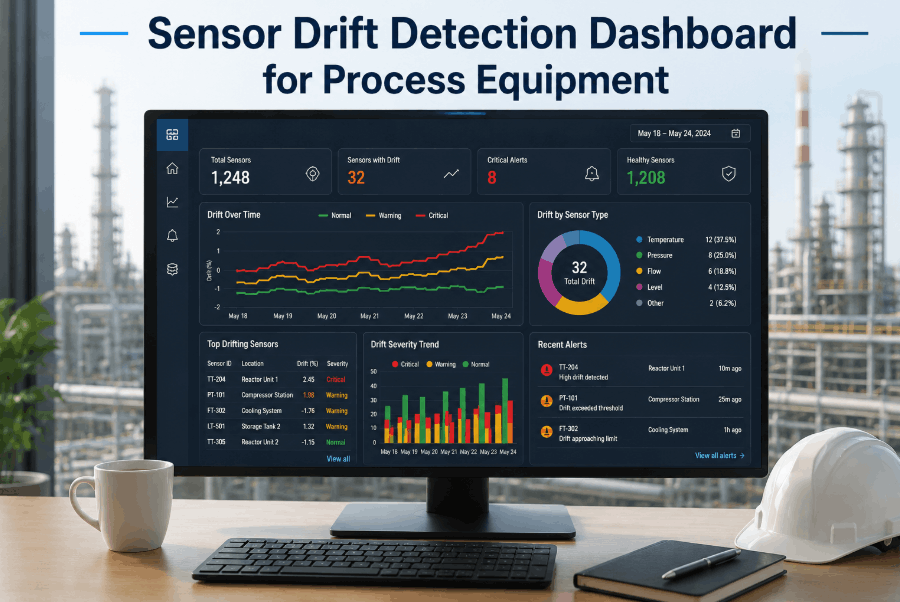
- Ensure sensor data streams are linked to specific asset records rather than generic location or system tags
- Set Q1 intervention triggers based on asset criticality and maintenance resource lead times, not generic thresholds
- Define consequence severity classifications aligned with production throughput impact and safety risk profiles
- Configure model confidence minimum thresholds below which human expert review is required before work order generation
- Configure Oxmaint to auto-generate work orders when Q1 failure probability thresholds are crossed
- Attach RUL estimate, signal trend charts, and maintenance history to every forecast-triggered work order
- Route Q3 Monitor assets to parts procurement and resource planning workflows ahead of projected intervention dates
- Compare actual failure events against prior forecast scores to measure model accuracy and calibration quality
- Feed confirmed failure findings back to the model as labeled training events to improve future pattern recognition
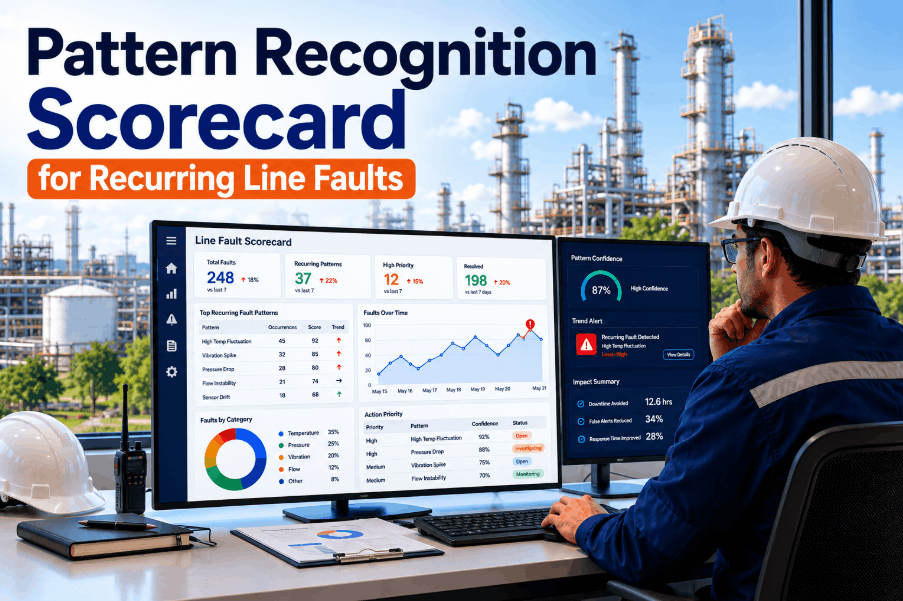
- Track false positive and false negative rates separately by asset class and failure mode to identify model gaps
Common AI Failure Forecasting Challenges and How to Resolve Them
AI Failure Forecast Matrix KPIs for Production Asset Reliability
Measuring the performance of an AI failure forecasting program requires tracking both model quality metrics and business outcome indicators that connect forecast accuracy to actual production protection results. Book a Demo to explore how Oxmaint's reliability reporting platform tracks predictive maintenance program performance across multi-asset production facilities.
Percentage of Q1 failure probability scores followed by confirmed equipment degradation findings within the forecast horizon. Measures whether high-probability forecasts actually predict genuine developing failures.
Percentage of production asset interventions executed as planned maintenance versus emergency response. Rising planned ratios confirm the AI forecast program is providing actionable lead time for maintenance scheduling.
Average time between AI forecast crossing intervention threshold and actual maintenance execution. Longer lead times indicate the model is detecting failure patterns early enough to support optimal scheduling and parts procurement.
Production failures that occurred without prior Q1 or Q2 forecast warning. Each miss represents a model gap or data quality issue requiring investigation to improve future detection coverage.
Percentage of Q1 dispatches that found no genuine deterioration. High false positive rates by specific asset class identify model training gaps requiring additional failure event data or feature engineering review.
Emergency repair spend as a share of total maintenance budget. Declining emergency cost percentage is the primary financial validation that AI failure forecasting is converting reactive spend into planned, cost-efficient interventions.