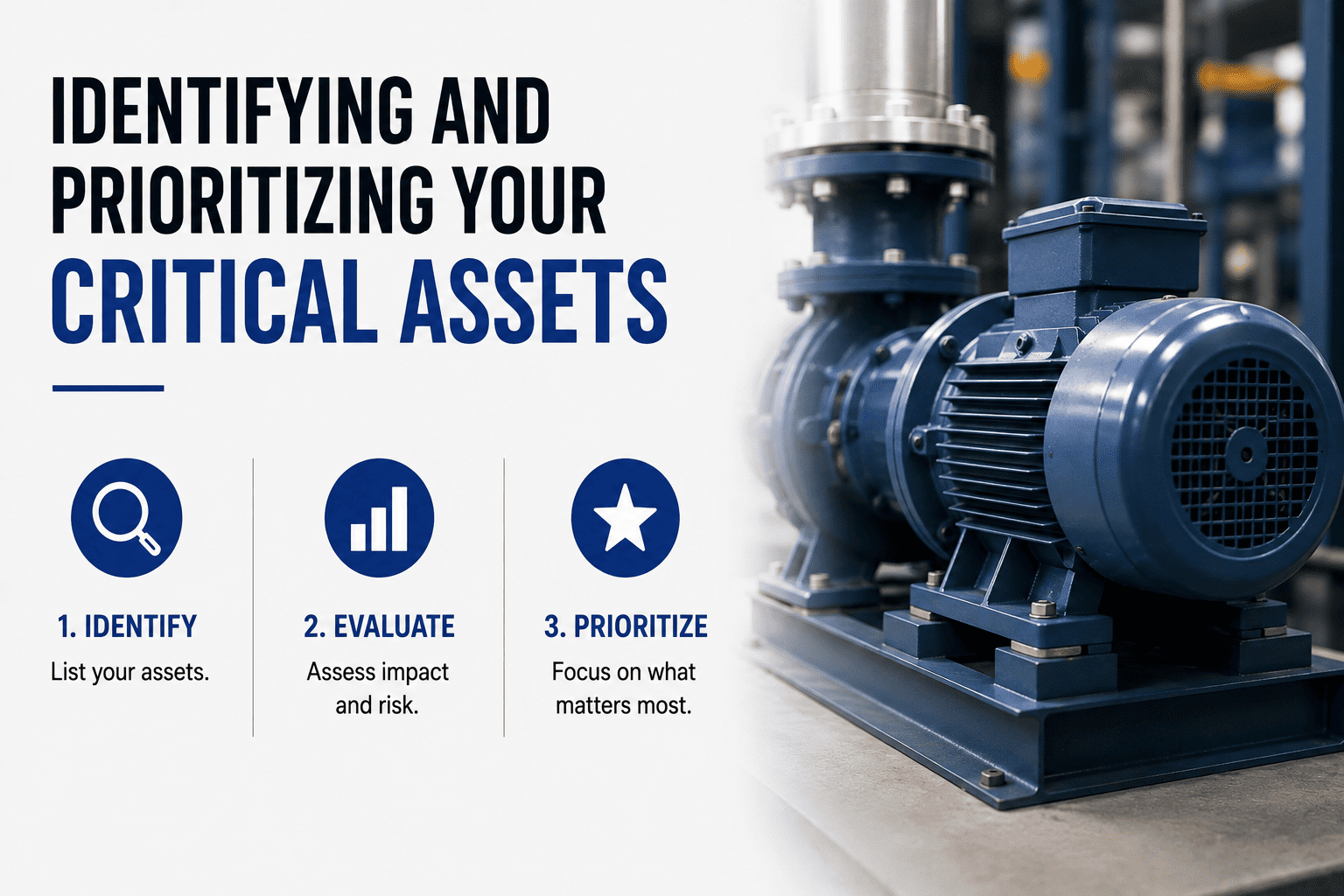
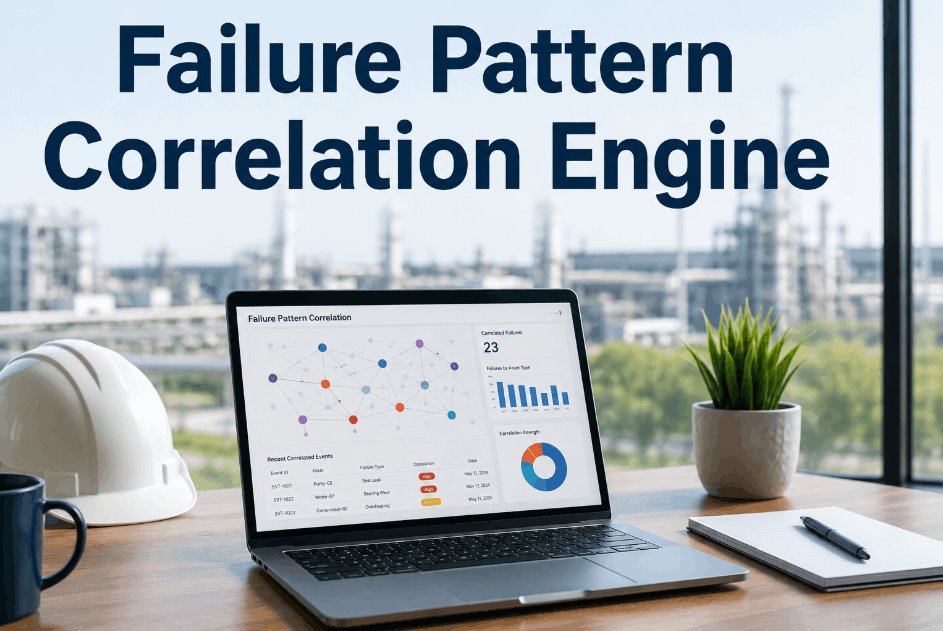
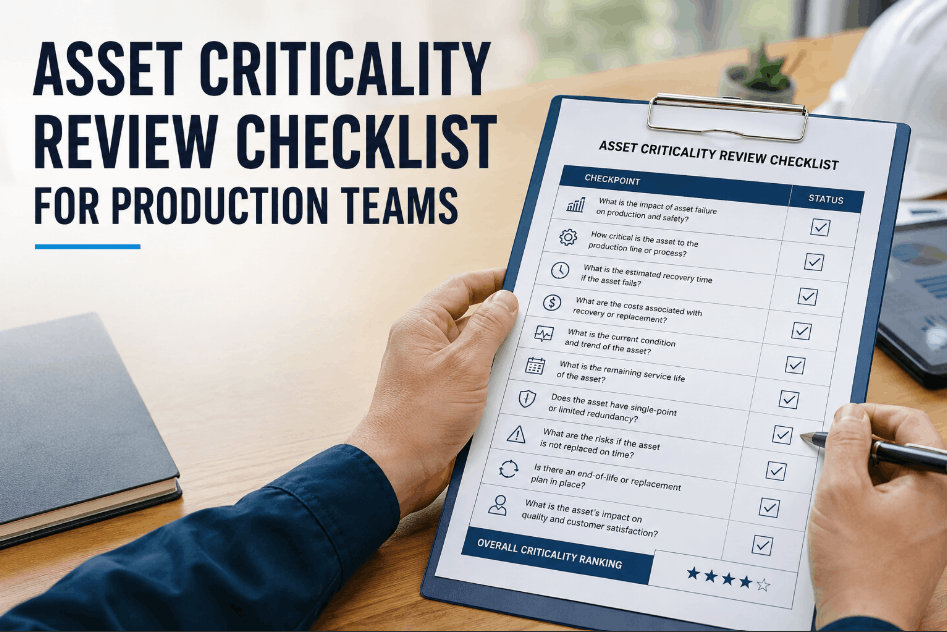
Asset criticality ranking is the foundation of every effective maintenance program — and the single most common gap in facilities that wonder why their maintenance budget never feels adequate. When every asset is treated as equally important, critical equipment gets the same attention as low-consequence support gear, and resource allocation becomes guesswork rather than strategy. A structured criticality model assigns priority scores based on failure consequence, operational dependency, and recovery difficulty so your team directs time, parts inventory, and maintenance spend where business impact is highest. OxMaint gives maintenance and reliability teams the asset register infrastructure to Sign Up Free and build a criticality model that scales across your facility. If your current approach to asset ranking is gut feel or job title seniority, Book a Demo to see how a structured model changes maintenance decision quality across the plant.
OxMaint's asset register supports criticality scoring, risk matrix integration, and strategy assignment — so maintenance priorities are documented, defensible, and driving real decisions.
What Makes an Asset Critical?
Criticality is not a fixed property of an asset — it is a product of what happens when that asset fails. Four dimensions drive the criticality calculation for any piece of equipment in your facility.
Does failure create risk of injury, fatality, or hazardous release? Safety consequences automatically elevate criticality rank regardless of production impact.
Does failure halt or degrade a production line, service, or revenue stream? Single-point-of-failure assets with no redundancy carry higher criticality than those with backup capacity.
How long does repair or replacement take? Long lead time parts, specialized technician requirements, and complex reinstallation procedures amplify the criticality of any failure event.
Is the asset subject to mandatory inspection, environmental permit, or compliance requirement? Regulatory exposure adds a criticality layer independent of operational consequence.
Building Your Criticality Scoring Model
A defensible criticality model scores each asset numerically across defined criteria, producing a ranked list that drives maintenance strategy, parts stocking, and inspection frequency decisions. Here is the methodology structure OxMaint supports.
Select 4–6 criteria relevant to your operation — safety, production dependency, mean time to repair, environmental exposure, regulatory requirement, redundancy availability. Weight each criterion by importance to your business context.
Rate each asset on a consistent scale (1–5 or 1–10) for every criterion. Use historical failure data, operational dependency maps, and engineer input to ensure scores reflect actual conditions, not assumptions.
Multiply each criterion score by its weight and sum the result. The composite score ranks assets from highest to lowest criticality — producing the priority list that drives resource allocation across your maintenance program.
Group assets into tiers — Critical, Major, Standard, Low — based on composite score ranges. Each tier maps to a maintenance strategy, inspection frequency, and parts stocking level. OxMaint tags assets by tier in the asset register.
Criticality Tiers and Maintenance Response
How OxMaint Operationalizes Criticality Rankings
A criticality model documented in a spreadsheet improves the discussion — but it does not change daily maintenance behavior. OxMaint embeds criticality rankings into work order prioritization, PM scheduling, and resource allocation so the model drives action, not just analysis.
Record criticality tier, composite score, and scoring rationale directly on each asset in OxMaint. Scores are visible to planners, technicians, and managers — ensuring ranking decisions reach the people who act on them.
Work orders on Critical-tier assets surface at the top of the queue automatically. Planners can see which open work orders affect high-priority equipment and sequence labor accordingly across shifts.
Map inspection intervals to criticality tier in OxMaint's PM schedule builder. Critical assets get tighter cycles; low-tier assets get longer intervals — all automated and tracked without manual calendar management.
See the breakdown of your asset base by criticality tier, track unplanned failure rates per tier, and identify whether Critical assets are generating disproportionate reactive work — a signal that strategy or scoring needs revision.
Link parts and spares to asset criticality tier. Critical-tier assets with long-lead-time components get flagged for on-site stocking; low-tier assets use standard reorder-point management without tying up capital in unnecessary inventory.
Asset criticality changes when operations change. OxMaint supports scheduled criticality review cycles — prompting engineers to re-evaluate scores when assets are modified, production lines change, or failure history warrants reassessment.
OxMaint connects criticality rankings to work order prioritization, PM scheduling, and parts stocking — so your model changes maintenance behavior, not just the spreadsheet. Sign Up Free or Book a Demo to walk through criticality setup for your asset base.
Frequently Asked Questions
OxMaint gives your team the asset register, scoring tools, and operational integrations to make criticality rankings actionable — not just documented. Start building your model today.