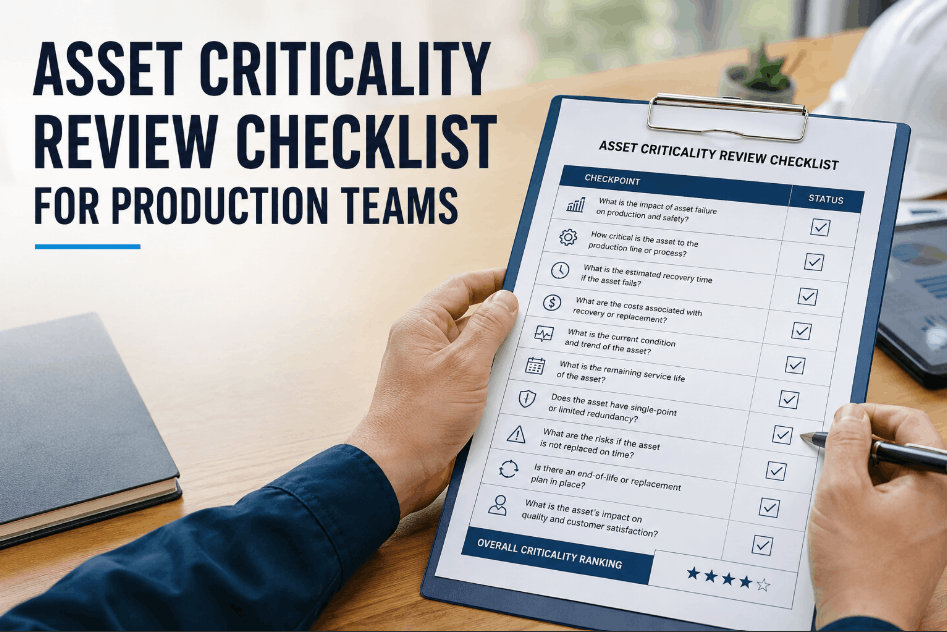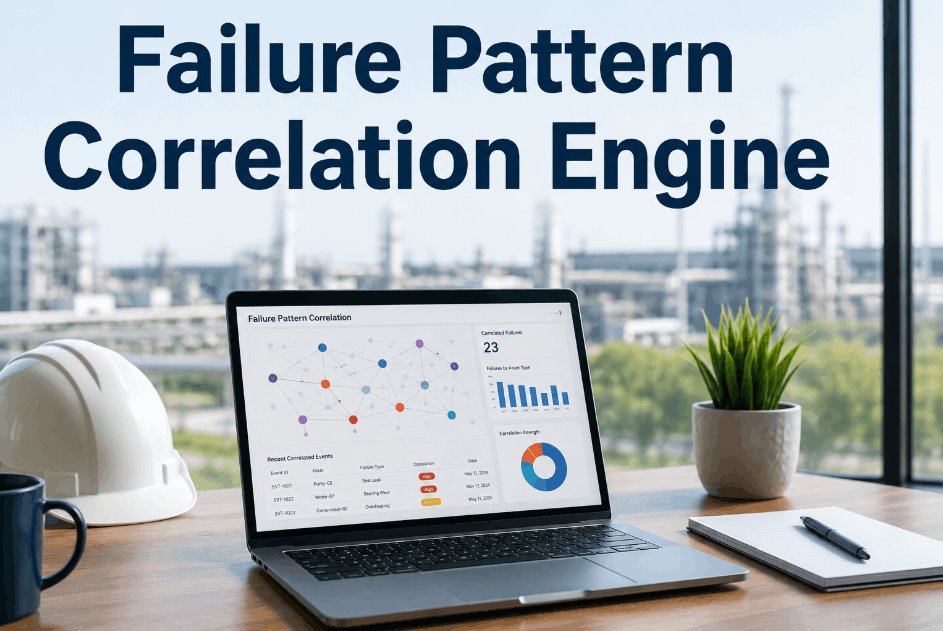
Operational risk heatmaps for critical assets give maintenance and reliability teams the visual prioritization structure to rank mitigation work before exposure accumulates into unplanned stoppage, safety incidents, or reactive responses that erode production capacity. Without a structured approach to visualizing risk across the asset inventory, high-consequence equipment silently approaches failure thresholds while maintenance resources concentrate on high-frequency low-criticality tasks. Maintenance teams using Sign Up Free on OxMaint can build the asset criticality records, inspection findings, and work order histories that populate a meaningful risk heatmap — connecting asset condition data to risk scoring and mitigation planning in a single operational system.
Why Critical Asset Risk Requires a Heatmap — Not a Spreadsheet
Risk ranking in a spreadsheet treats all asset risk as static — capturing the severity and likelihood scores at a point in time without reflecting how maintenance backlog, inspection findings, or environmental changes are shifting risk exposure in real time. An operational risk heatmap built on live CMMS data from OxMaint updates risk positioning as work orders close, inspections surface new findings, and asset conditions change with production load. Book a Demo to see how OxMaint's asset records and inspection data provide the dynamic foundation that a maintenance-connected risk heatmap requires.
Five Dimensions of an Operational Risk Heatmap for Critical Assets
A meaningful operational risk heatmap integrates five data dimensions — each requiring structured inputs from the CMMS to produce scores that reflect real asset risk rather than assumed criticality. OxMaint captures all five dimensions through asset records, inspection work orders, and maintenance history. Sign Up Free to configure the asset criticality and condition scoring fields in OxMaint that feed a live operational risk heatmap for your facility's critical equipment.
Asset Criticality Classification
Criticality classification assigns each asset a consequence score based on its production impact, safety significance, environmental exposure, and redundancy availability. OxMaint's asset records store criticality classifications that determine the baseline risk tier for every asset on the heatmap before condition data modifies the score.
Current Asset Condition from Inspection Findings
Inspection work orders in OxMaint generate condition ratings — normal, degraded, alert, critical — that shift an asset's risk position on the heatmap in real time. Assets with deteriorating condition scores move toward the high-risk zone regardless of historical failure frequency, triggering prioritized mitigation work orders.
Maintenance Backlog Depth on Critical Assets
Open work order backlog on a critical asset represents deferred risk accumulation — each pending corrective or preventive task that has not been executed adds to the probability that the asset will fail before mitigation occurs. OxMaint's backlog reporting surfaces critical asset overdue work orders for heatmap risk scoring integration.
Failure History and Time Since Last Event
OxMaint's failure history records provide the time-since-last-failure and mean-time-between-failure data that calibrate probability scores in the risk heatmap. Assets approaching their historical failure interval with open backlog and degraded condition scores receive elevated risk rankings that trigger escalated mitigation priority.
Existing Control Measure Effectiveness
Risk heatmap scoring must account for the effectiveness of existing controls — whether PMs are being executed on schedule, whether monitoring is active, and whether spare parts are available for rapid response. OxMaint PM compliance tracking and inventory records provide the control effectiveness data that prevents heatmap scores from overstating residual risk.
Operational Risk Heatmap Zones and Maintenance Response Requirements
Heatmap zones define required maintenance response intensity — translating risk scores into specific work order priorities, escalation thresholds, and review frequencies. OxMaint's work order priority settings and PM scheduling align with heatmap zone definitions to ensure that risk ranking produces actual maintenance action, not just a visualization artifact. Book a Demo to see how OxMaint's work order priority and inspection scheduling tools support heatmap-driven maintenance response across all five risk zones.
| Risk Zone | Score Range | Typical Asset State | Required Response | OxMaint Action |
|---|---|---|---|---|
| Critical | 16–25 | Degraded condition, high criticality, open backlog | Immediate mitigation, management escalation | Emergency work order + escalation flag |
| High | 10–15 | Alert condition or high backlog on critical asset | Priority scheduling within 48–72 hours | Priority corrective work order + inspection trigger |
| Medium | 6–9 | Normal condition, moderate criticality, some backlog | Scheduled mitigation in current PM cycle | Standard PM work order + condition monitoring |
| Low | 3–5 | Good condition, low criticality, minimal backlog | Routine PM compliance, periodic review | Routine PM scheduling + annual criticality review |
| Acceptable | 1–2 | Good condition, redundant, non-critical | Monitor, run-to-failure may be appropriate | Inspection-only PM + heatmap retention |
Four Risk Heatmap Outcomes That Justify Maintenance Investment
An operational risk heatmap delivers four categories of maintenance value that connect risk visualization to operational and financial outcomes — making the heatmap a governance tool rather than a planning artifact. Sign Up Free to build the asset condition and criticality data in OxMaint that transforms your risk heatmap from a static document into a live maintenance prioritization tool.
Building an Operational Risk Heatmap Program with OxMaint
Classify Asset Criticality Across the Inventory
Assign production impact, safety consequence, environmental significance, and redundancy scores to each asset in OxMaint. Criticality classification creates the consequence dimension of the risk heatmap and determines which assets receive the highest inspection frequency and tightest PM compliance targets.
Schedule Condition Inspection Work Orders by Criticality Tier
Configure OxMaint inspection work orders at frequencies matched to criticality tier — critical assets inspected monthly or more frequently, medium-criticality assets quarterly. Inspection findings feed the condition score that determines each asset's current heatmap position.
Monitor Backlog Depth on Critical Assets
OxMaint's work order reporting surfaces open backlog by asset, filtered by criticality classification. Critical assets with growing backlog receive elevated risk scores in the heatmap review — triggering escalation before deferred maintenance converts to failure probability.
Run Monthly Risk Heatmap Reviews with OxMaint Data
Combine OxMaint asset condition ratings, backlog reports, and failure history into monthly risk heatmap update sessions. Assets that have moved into higher risk zones since the prior review generate the prioritized mitigation work order queue for the coming period.
Report Risk Mitigation Progress to Operations and Management
OxMaint's reporting dashboards track how many assets have moved out of critical and high risk zones as a result of mitigation work order execution — providing the governance reporting that connects maintenance activity to operational risk reduction outcomes that leadership can evaluate.
Frequently Asked Questions: Operational Risk Heatmap for Critical Assets
What is an operational risk heatmap for critical assets?
An operational risk heatmap visualizes the combined consequence and probability scores of each asset on a risk matrix, allowing maintenance teams to rank mitigation priorities visually and allocate resources to the highest-exposure equipment before failures occur.
How does asset condition affect heatmap risk positioning?
Asset condition from inspection findings updates the probability dimension of the risk score — degraded or alert condition ratings move an asset toward higher heatmap zones regardless of historical failure frequency, triggering prioritized mitigation response.
How does OxMaint support operational risk heatmap programs?
OxMaint provides asset criticality classification storage, condition inspection scheduling, backlog monitoring, failure history records, and risk mitigation progress reporting — the data inputs required to populate and maintain a live operational risk heatmap.
How often should a critical asset risk heatmap be updated?
Monthly updates are recommended for most facilities, triggered by new inspection findings, backlog changes, and failure events. High-consequence environments may warrant weekly review cycles for assets in the critical or high risk zones.
Can a risk heatmap be used to justify capital replacement decisions?
Assets that persistently occupy critical or high risk zones despite active mitigation provide documented justification for replacement or overhaul proposals — connecting operational risk scores to capital planning decisions that governance stakeholders can evaluate on objective criteria.