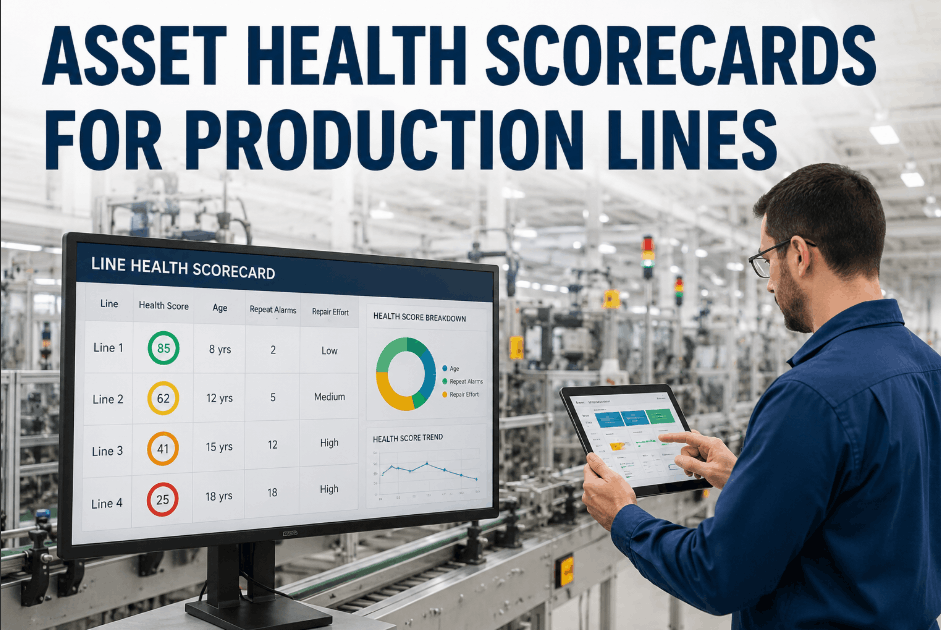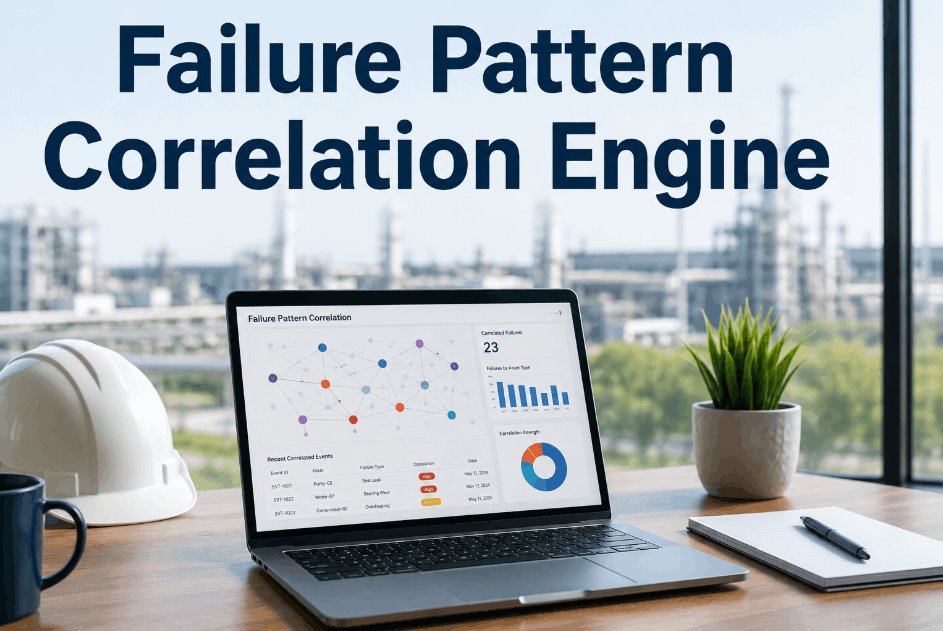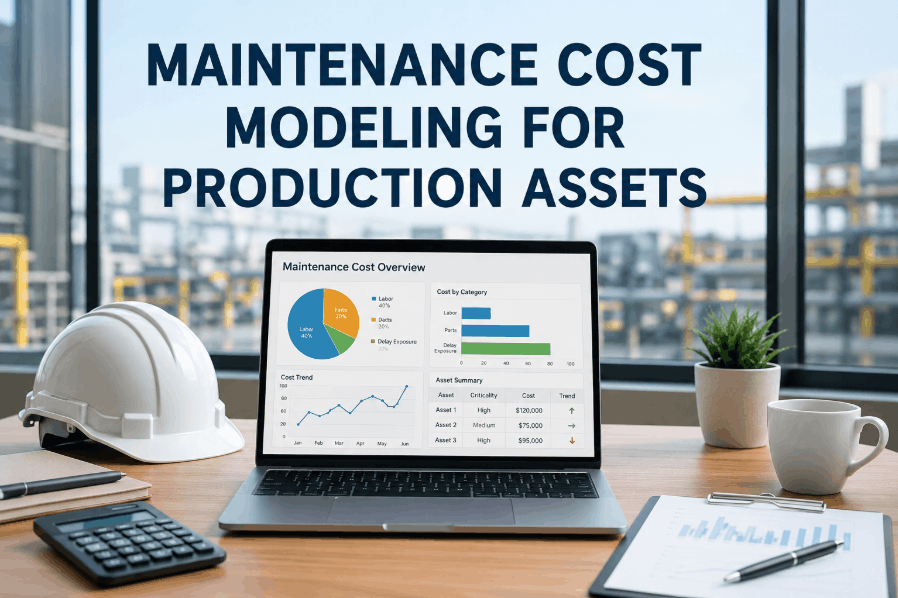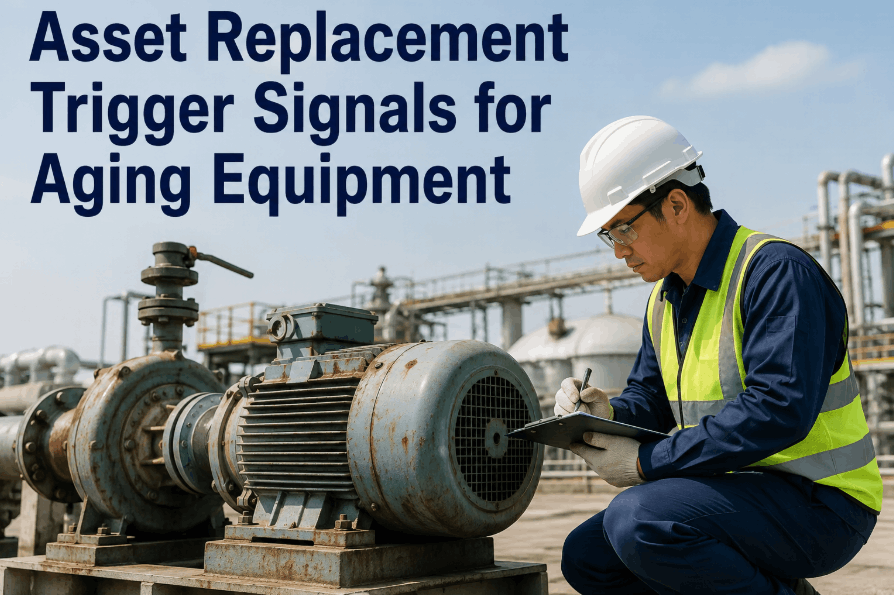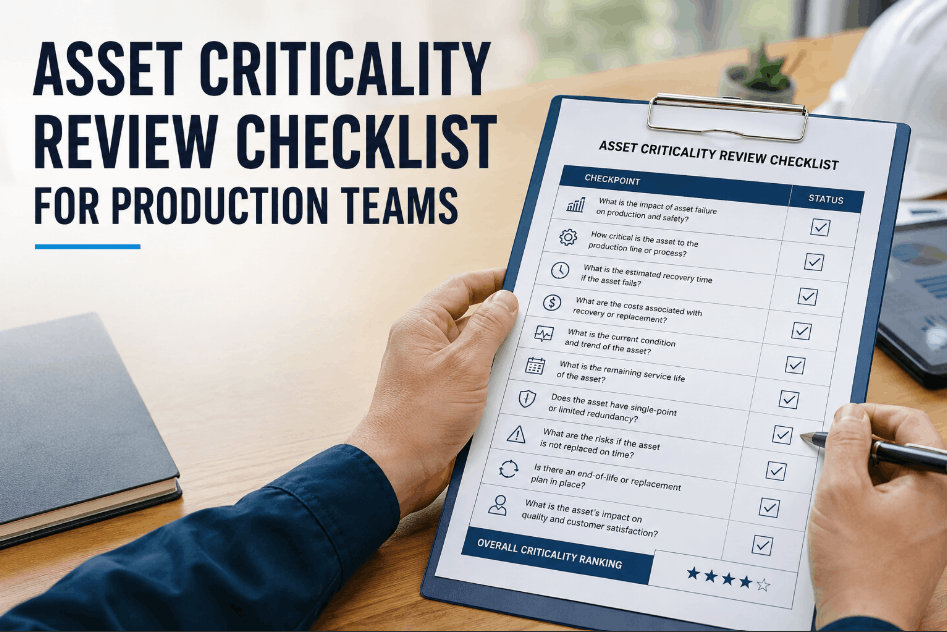
An asset criticality review checklist is the foundational planning tool production teams and maintenance managers use to ensure that capital investment, maintenance effort, and reliability resources are concentrated on the equipment that matters most to plant output, safety, and financial performance. Without a structured criticality review process, maintenance organizations treat all assets equally — spreading limited craft capacity, PM budget, and parts inventory across low-impact equipment while critical line assets receive insufficient attention. This asset criticality review checklist 2026 covers every essential evaluation dimension — production impact, line dependency, recovery cost, wear trend, replacement timing, and lifecycle cost — giving production teams and reliability engineers a repeatable framework for risk-ranked asset management decisions. Sign Up Free to digitize your asset criticality rankings and automate PM prioritization, health scoring, and capital planning workflows in Oxmaint's AI-powered enterprise asset management platform. Book a Demo to see how Oxmaint maps asset criticality directly to work order priority, predictive maintenance intervals, and renewal trigger thresholds across your entire production fleet.
Your Most Critical Assets Deserve More Than Equal Treatment — Prioritize What Matters.
Oxmaint gives production teams AI health scoring, risk-ranked asset dashboards, condition-based PM scheduling, and lifecycle cost tracking — built for manufacturers who need to protect their highest-impact equipment first.
Production Impact and Line Dependency Assessment
Production impact is the primary axis of any valid asset criticality ranking. An asset's criticality is not defined by its replacement cost or age — it is defined by what stops when it fails. Assets that trigger immediate line shutdown, cascade failures across dependent equipment, or disable safety systems require a fundamentally different maintenance strategy than assets with available redundancy or manageable production workarounds. Structuring the criticality review around production impact and line dependency ensures that risk-ranking decisions reflect operational reality, not procurement records. Sign Up Free to assign production impact scores to every asset in Oxmaint and automatically route maintenance resources, PM intervals, and inventory reserves based on criticality tier across your plant.
Recovery Cost and Mean Time to Repair (MTTR) Evaluation
Recovery cost is the second critical dimension of asset criticality that separates reactive maintenance exposure from managed reliability risk. Assets with high failure recovery costs — long lead-time parts, specialized contractor requirements, or extended MTTR — demand higher PM frequency, condition monitoring investment, and spare parts pre-positioning than their production impact score alone might indicate. Combining recovery cost with production impact gives production teams a complete financial risk profile for each asset in the criticality matrix. Book a Demo to see how Oxmaint captures parts cost, labor hours, and contractor spend at the work order level to calculate true recovery cost per asset and inform criticality ranking decisions.
Wear Trend and Condition-Based Criticality Review
A criticality rating assigned to an asset in its new or recently overhauled condition does not remain valid as the asset ages, accumulates wear, and approaches end-of-life. Production teams that fail to update criticality rankings as asset condition deteriorates continue applying maintenance strategies calibrated for healthy equipment to degraded assets — systematically underinvesting in protection exactly when protection demand is highest. Integrating condition data and wear trend analysis into the criticality review cycle keeps risk rankings current and failure prevention efforts accurately targeted. Sign Up Free to connect Oxmaint's predictive maintenance and AI health scoring to your asset criticality matrix — automatically escalating criticality tier as condition trends downward toward failure risk thresholds.
Service Life, Replacement Timing, and Renewal Trigger Review
End-of-life asset management is one of the highest-leverage opportunities available to production teams conducting a criticality review. Assets operating beyond their design service life with deteriorating condition trends carry exponentially increasing failure probability and recovery cost — yet capital replacement decisions are often deferred without a structured renewal trigger framework. Embedding replacement timing and renewal trigger evaluation into the criticality review cycle converts capital planning from reactive budget requests into proactive, data-supported investment decisions. Book a Demo to see how Oxmaint's enterprise asset management tracks service life, depreciation, maintenance cost trends, and renewal trigger thresholds to support capital planning decisions for your highest-criticality equipment.
Asset Criticality Matrix Validation and Risk Ranking Update
A criticality matrix that is never updated becomes a liability. Production configurations change, equipment is added or decommissioned, process flows are redesigned, and previously redundant assets become single points of failure without formal re-evaluation. The final phase of every asset criticality review cycle is validating the full criticality matrix, updating risk rankings based on current operational data, and communicating changes to maintenance planning, PM scheduling, and capital budgeting teams so that downstream resource allocation decisions reflect current plant reality. Sign Up Free to maintain a live, versioned asset criticality matrix in Oxmaint that automatically feeds PM frequency, work order priority, inventory reserve targets, and predictive alert thresholds across your entire asset portfolio.
Asset Criticality Review Dimensions and Management Reference by Category
| Review Dimension | Key Evaluation Criteria | Review Frequency | Oxmaint Feature |
|---|---|---|---|
| Production Impact | Line stop, cascade failure path, redundancy status | Quarterly / On Change | Enterprise Asset Management |
| Recovery Cost | Repair cost history, MTTR, parts lead time | Quarterly | Analytics and Reporting |
| Line Dependency | Upstream/downstream failure cascade mapping | Quarterly / On Change | Asset Management |
| Wear Trend | Health score, sensor anomalies, inspection findings | Monthly / Continuous | Predictive Maintenance |
| Service Life | Age vs. OEM design life, operating hours | Quarterly | Enterprise Asset Management |
| Renewal Trigger | Repair-to-replace ratio, condition threshold | Quarterly | Asset Performance Management |
| Lifecycle Cost | Total maintenance spend, depreciation, replacement cost | Quarterly | Analytics and Reporting |
| Risk Ranking Update | Matrix version control, planning team communication | Quarterly | Enterprise Asset Management |
Your Equipment Is Telling You It's About to Fail — Are You Listening?
Oxmaint gives production teams AI health scoring, risk-ranked asset dashboards, condition-based PM scheduling, and lifecycle cost tracking — built for manufacturers who need to protect their highest-impact equipment first.
Frequently Asked Questions — Asset Criticality Review Checklist
Your Equipment Is Telling You It's About to Fail — Are You Listening?
Oxmaint gives production teams AI health scoring, risk-ranked asset dashboards, condition-based PM scheduling, and lifecycle cost tracking — built for manufacturers who need to protect their highest-impact equipment first.