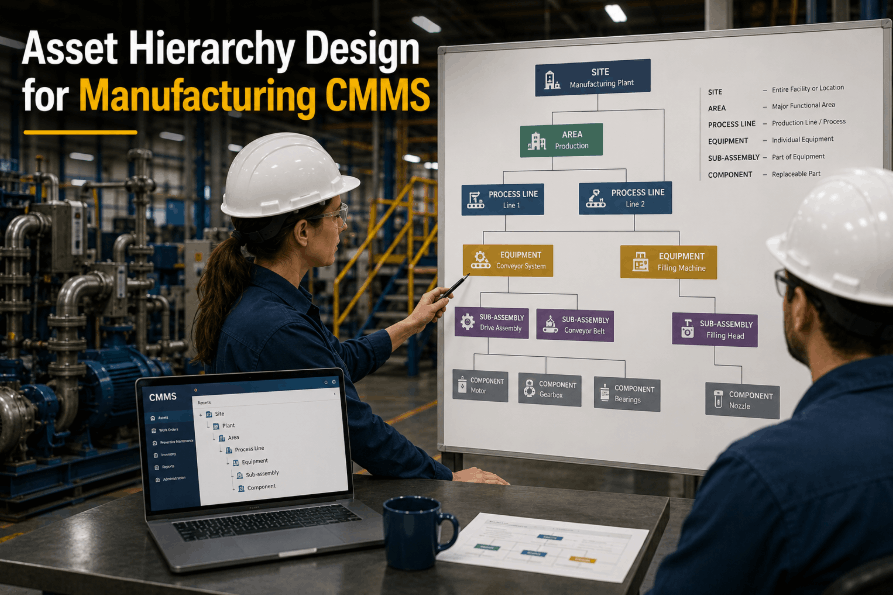
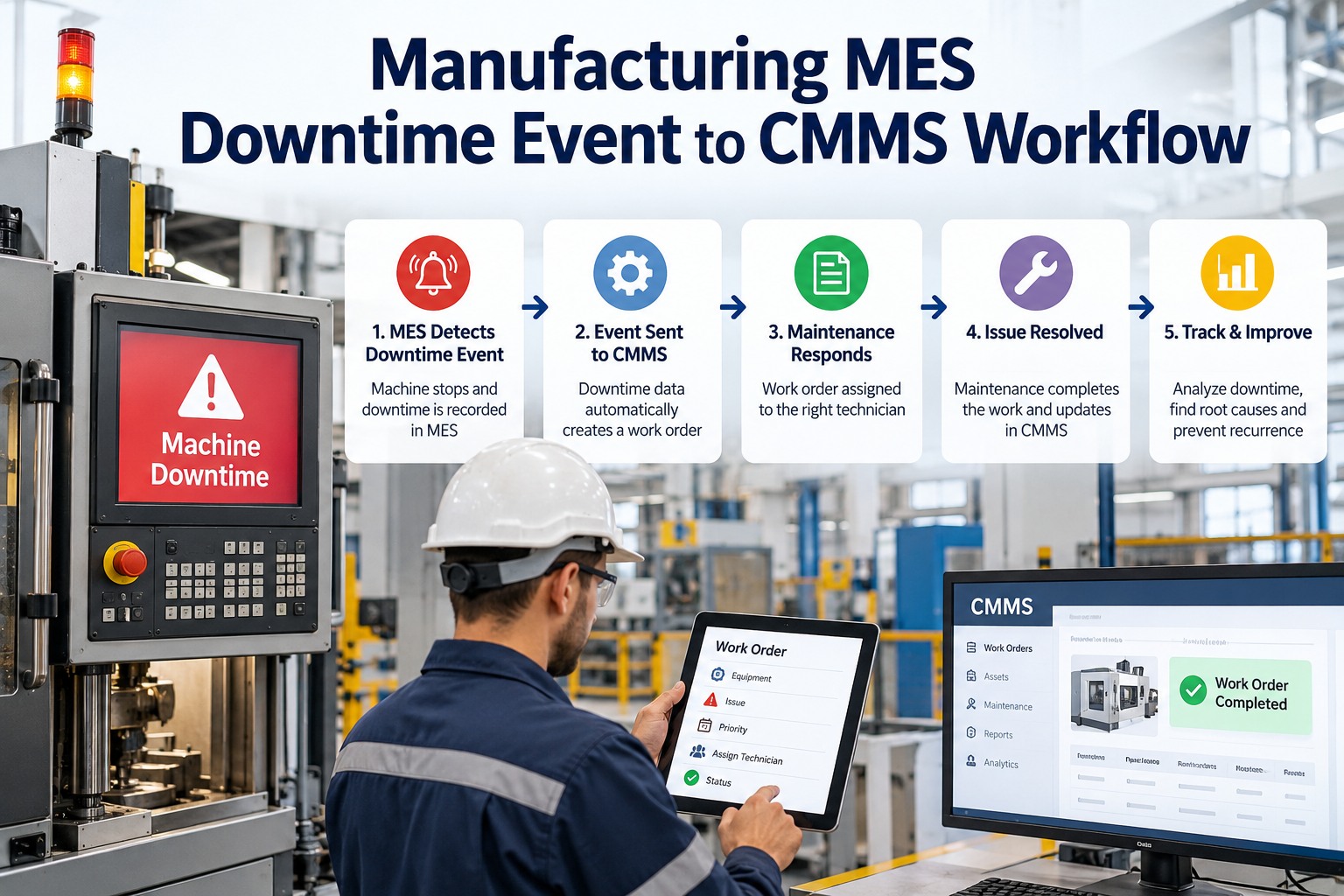
A manufacturing facility's CMMS is only as powerful as the data structure that underpins it. Without a deliberate asset hierarchy, work orders become siloed, maintenance histories fragment across spreadsheets, and reliability engineers cannot distinguish between a failed bearing on Packaging Line 3 and a failed bearing on the filler within that same line. Organizations with structured asset registers see 2.4× better CMMS adoption rates and 31% lower maintenance costs within 18 months of deployment. A proper hierarchy transforms a digital filing cabinet into a maintenance intelligence engine. Sign Up Free to start building your asset hierarchy correctly from day one.
Foundation-First Asset Management
Build Your Asset Hierarchy Once. Use It Forever.
OxMaint enforces a structured asset hierarchy from the first asset record—eliminating flat list errors, automating cost rollups, and ensuring every work order and failure code traces to the right equipment.
Why Asset Hierarchy Is the Foundation of CMMS Performance
From Flat Lists to Actionable Equipment Structures
A
Flat Asset Lists Destroy Data Integrity
When a critical drive motor fails on a packaging machine, a flat database forces technicians to log repair hours against the entire production line. Maintenance costs roll up into one massive bucket, and reliability engineers cannot calculate MTBF for that specific motor. Without parent-child relationships, recurring defects remain invisible.
B
Cost Allocation Becomes Guesswork
In a flat structure, labor and parts charged to an asset cannot roll up to its parent system, unit, or plant. The finance team sees maintenance spend aggregated across the entire facility without knowing which production line, system, or component is driving costs. Structured hierarchies make cost allocation accurate and auditable.
C
PM Programs Attach to the Wrong Equipment
Preventive maintenance schedules, inspection checklists, and lubrication routes are inherited from asset class in a structured hierarchy. When you add a new pump in a flat list, you must manually assign every PM task. Structured hierarchies automate PM inheritance, eliminating missed tasks.
D
Root Cause Analysis Requires Context
Knowing that a bearing failed is useless. Knowing that a bearing failed on the main feed pump of Bottling Line 3 is actionable. A proper hierarchy provides the context needed for reliability-centered maintenance, enabling teams to trace failures to specific assets and systems.
E
Regulatory Reporting Becomes a Project
Environmental inspections, insurance audits, and industry-specific reports need equipment records organized by unit and system. Without a structured hierarchy, producing these exports requires manual data assembly across spreadsheets. A well-built hierarchy makes compliance reporting a button click.
Book a Demo to see how OxMaint automates compliance exports.
F
Failure Trends Never Surface
When a pump belongs to a cooling water system which belongs to Unit 2, every pump failure rolls up automatically to system and unit level. Pareto charts build themselves, and reliability engineers can identify which subsystems are driving unplanned work. Flat lists offer no such visibility.
2.4×
better CMMS adoption with structured asset registers vs. flat lists
31%
lower maintenance costs within 18 months of structured hierarchy deployment
60%
of CMMS implementations fail or underdeliver due to poor asset data quality
The OxMaint Five-Level Asset Hierarchy Framework
Enterprise-Grade Structure Aligned with Industry Best Practices
OxMaint is built around a five-level asset hierarchy that mirrors how manufacturing organizations actually operate—from portfolio level down to individual component. This structure enforces data integrity at the point of entry, making it impossible to build a flat, unstructured asset list. Every asset is linked, coded, and analysis-ready from the first record. Assets cannot be created outside the hierarchy—eliminating flat list errors before they occur. Book a Demo to see how OxMaint enforces hierarchy at data entry.
1
Portfolio
The top level of the hierarchy. Multi-site operators use this level to benchmark plants against each other, consolidate capital spend across the portfolio, and view maintenance KPIs aggregated across all facilities. Portfolio-level dashboards roll everything up for executive reporting and capital planning.
↓
2
Property / Plant
Each physical facility occupies its own level in the hierarchy. Plant-level KPIs—availability, MTBF, maintenance cost per unit—aggregate from everything below this node. Properties have their own asset registries, PM schedules, and compliance calendars while reporting up to portfolio level.
↓
3
System
Functional groupings within a plant: HVAC, compressed air, cooling water, fuel gas, lubrication systems. System-level failure history reveals which subsystems are driving unplanned work—the highest-value insight for reliability engineers. Each system inherits maintenance schedules from its class.
↓
4
Asset / Equipment
The individual maintainable unit: pumps, motors, conveyors, kilns, packaging machines. Each asset record contains identity data, location data, condition data, financial data, and operational data. Assets maintain their own maintenance history, cost ledger, and PM schedule while rolling up to system level.
Sign Up Free to see how asset records are structured.
↓
5
Component
The smallest maintainable item: bearings, seals, drive belts, gears, sensors. Components maintain their own Bill of Materials, spare parts lists, and failure history. When a component fails, the work order attaches to the exact child asset, enabling precise MTBF calculation and TCO analysis.
Building Your Asset Hierarchy: Implementation Steps
A Practical Roadmap from Structure to Execution
A well-defined asset hierarchy allows accurate planning and assignment of work, better parts control, and allocation of maintenance costs to the right equipment at the correct level of detail. Here is how manufacturing facilities build hierarchies that last. Sign Up Free to start structuring your asset register correctly.
- Establish the five levels: Portfolio → Property → System → Asset → Component
- Document the hierarchy structure in a governance document
- Assign a gatekeeper who approves new assets added to the CMMS
- Changing hierarchy after data entry is expensive and error-prone
- Create systematic asset ID format before loading any data
- Example: PROP01-HVAC-AHU-001 (Property → System → Asset Type → Sequence)
- Adopt standard principles: tag numbers reflect equipment class, location, function
- Consistent coding enables filtering, reporting, and PM assignment at scale
- Classify every asset as Critical, Important, or Standard based on failure consequence
- Criticality criteria: Mission impact, safety, environment, single point failure, spares lead time
- Apply Failure Mode and Effects Analysis to 10–15% most critical assets
- Define re-review timeframe for updating criticality analysis
- Create components as child assets under parent equipment
- Attach Bill of Materials, spare parts lists, and SOPs to each component
- When you replace a motor, move the motor asset to "Scrap" or "Repair Shop" without losing its history
- Component-level tracking enables precise MTBF and TCO analysis
- System-level PM for functional groupings
- Asset-level PM for individual equipment
- Component-level PM for specific maintainable items
- OxMaint inherits PM schedules from asset class—add a new pump, it gets the right PM schedule automatically
- Emergency work orders route to technicians qualified on that asset class
- Routine PMs assign to the system's designated maintenance crew
- Component-level failures trigger automatic spare parts reservation
- Cost codes map to hierarchy levels for accurate accounting rollups
Operational Benefits of a Structured Asset Hierarchy
How Hierarchy Transforms Daily Maintenance Operations
Failure Trend Analysis Becomes Automatic
When a pump belongs to a cooling water system which belongs to Unit 2, every pump failure rolls up automatically to system and unit level. Pareto charts build themselves. Reliability engineers can identify which subsystems are driving 80% of unplanned work within minutes.
Cost Allocation Is Accurate, Not Estimated
Labor and parts charged to an asset flow up to its parent system and unit. The CFO can see maintenance cost by unit, by system, or by asset class—all from the same data source. Audit trails show exactly which component consumed which resources.
PM Programs Attach to the Right Equipment
Preventive maintenance schedules, inspection checklists, and lubrication routes are inherited from asset class. Add a new pump—it gets the right PM schedule automatically. No manual assignment, no missed tasks, no incomplete schedules.
Book a Demo to see PM inheritance in action.
Regulatory Reporting Requires No Rework
Environmental inspections, insurance audits, and compliance documentation need equipment records organized by unit and system. A structured hierarchy makes those exports a button click, not a project. Compliance documentation is always audit-ready.
From Flat Lists to Actionable Intelligence
Get Your Asset Hierarchy Right the First Time
OxMaint enforces structured asset hierarchy at data entry, preventing the flat list failures that undermine CMMS performance. Book a Demo to see how OxMaint builds asset trees aligned with industry standards.
Frequently Asked Questions: CMMS Asset Hierarchy Design
What are the recommended levels for a manufacturing asset hierarchy?
Most manufacturing facilities use 4–5 levels: Facility / Plant → Area or Department → System → Equipment → Component. OxMaint uses Portfolio → Property → System → Asset → Component for enterprise multi-site operations.
What standards apply to asset hierarchy design?
Industry standards provide guidelines for collecting reliability and maintenance data in a standard format, encouraging logical, hierarchical, and standardized tag structures so each piece of equipment can be tracked across its lifecycle.
How deep should my asset hierarchy go?
Structure should match operational reality. Shallower hierarchies produce less-useful rollups; deeper hierarchies produce administrative overhead. Most facilities stop at component level (bearings, seals, motors) for critical assets only.
How do I handle legacy assets with inconsistent naming conventions?
Establish a standardized naming convention before migrating data. Use bulk import tools to apply consistent asset IDs. OxMaint supports bulk import with validation rules that reject assets without proper hierarchy assignment.
Can I move assets between hierarchy levels after setup?
Yes, but changing hierarchy after data entry is expensive and error-prone. OxMaint allows asset relocation while preserving maintenance history, but best practice is to get the structure right before loading production data. Sign Up Free to start with a clean hierarchy.
How does asset hierarchy improve work order management?
Work orders attach to specific assets at their hierarchy level, enabling accurate cost tracking, failure analysis, and PM inheritance. Technicians can quickly locate assets by drilling down through the hierarchy tree rather than searching flat lists.
What is the difference between asset hierarchy and equipment hierarchy?
Asset hierarchy organizes assets from portfolio to component based on ownership and maintenance responsibility. Equipment hierarchy focuses on functional relationships within a production process. Many CMMSs combine both into a single nested structure.
How does OxMaint enforce hierarchy structure?
OxMaint enforces Portfolio → Property → System → Asset → Component hierarchy at the data entry level. Assets cannot be created outside the hierarchy—eliminating flat list errors before they occur. Book a Demo to see the enforcement in action.
Structured Data. Actionable Intelligence.
Start Building Your Asset Hierarchy Today
OxMaint provides the framework, enforcement, and reporting tools to build an asset hierarchy that powers every maintenance decision. Sign Up Free to structure your first 100 assets correctly.