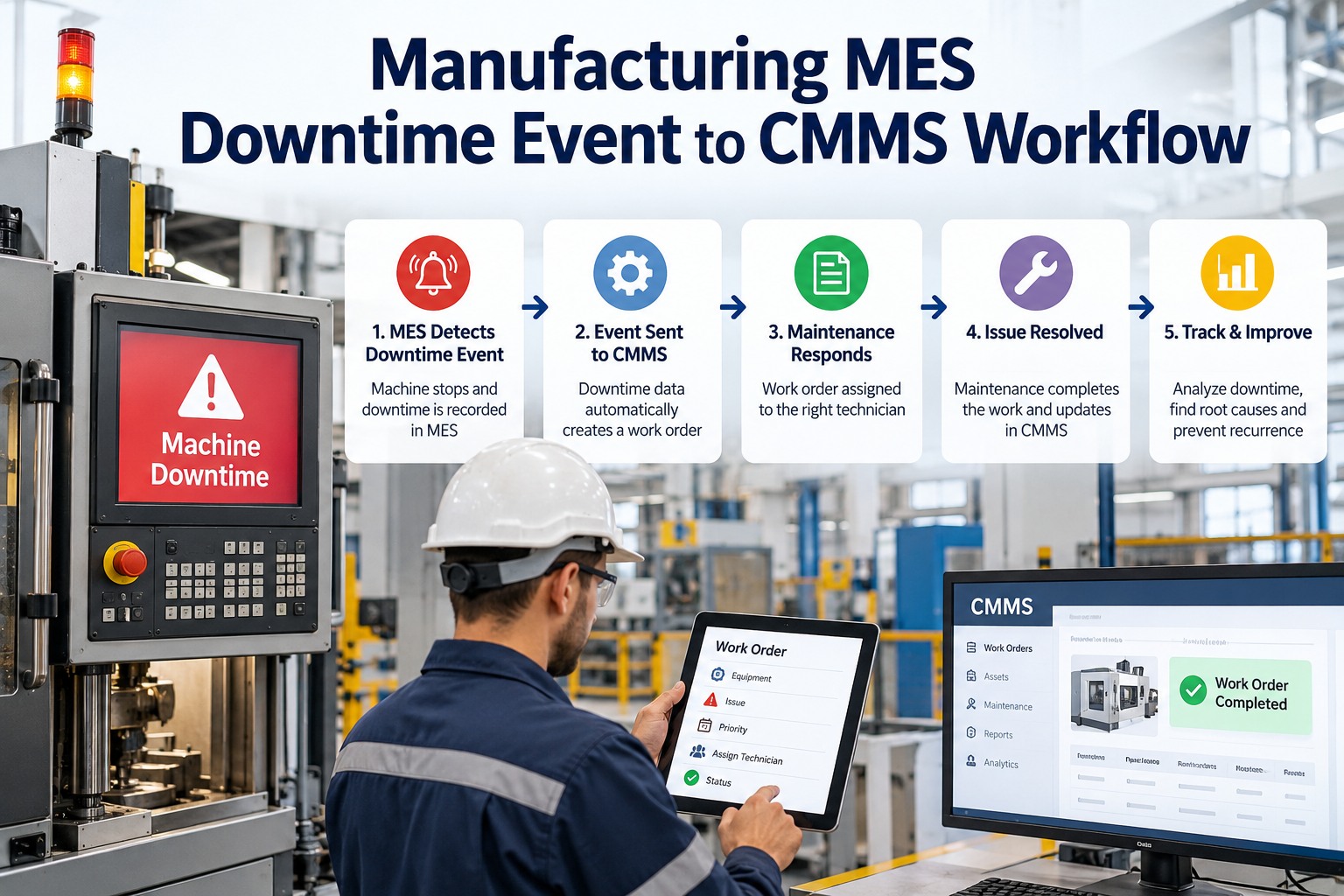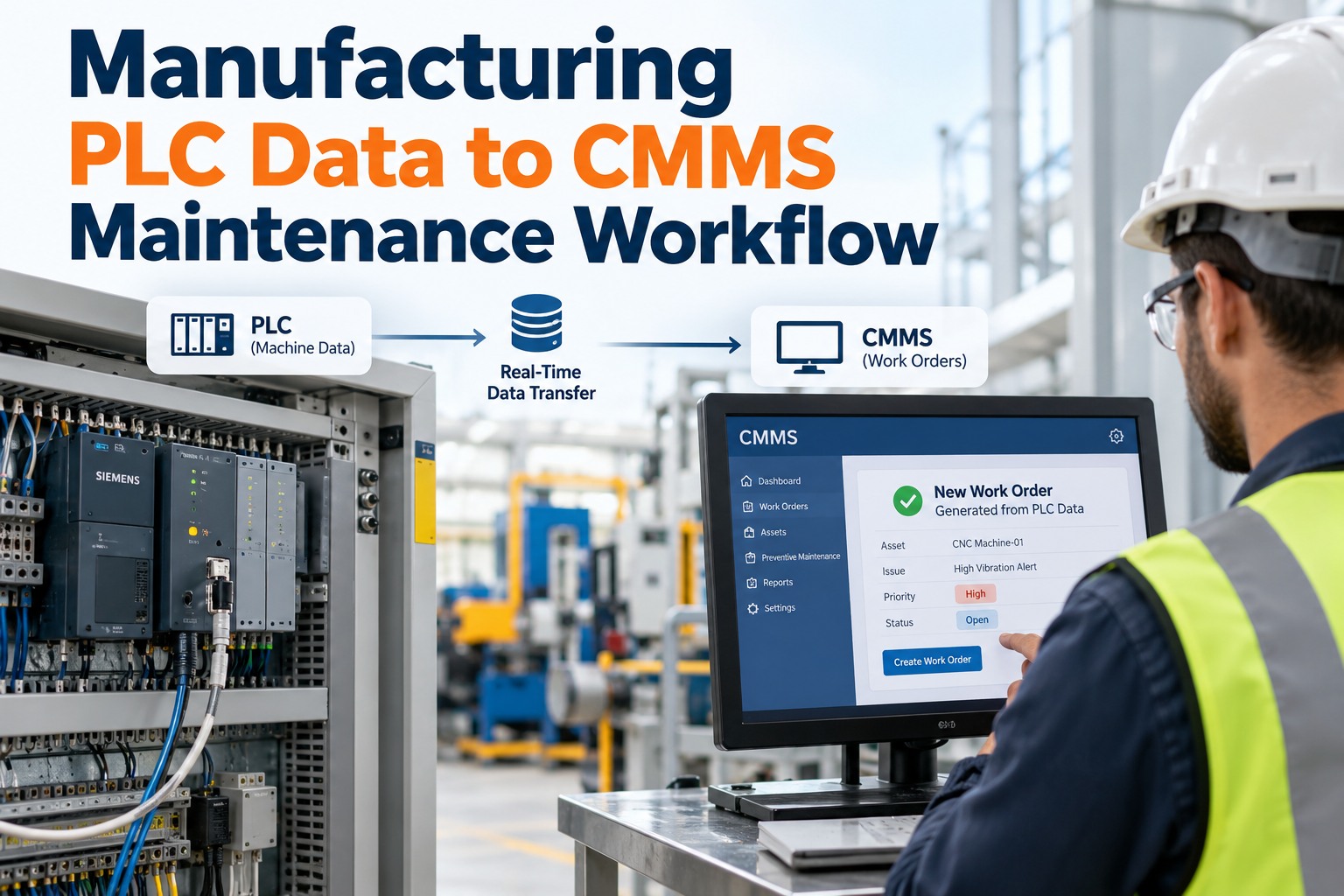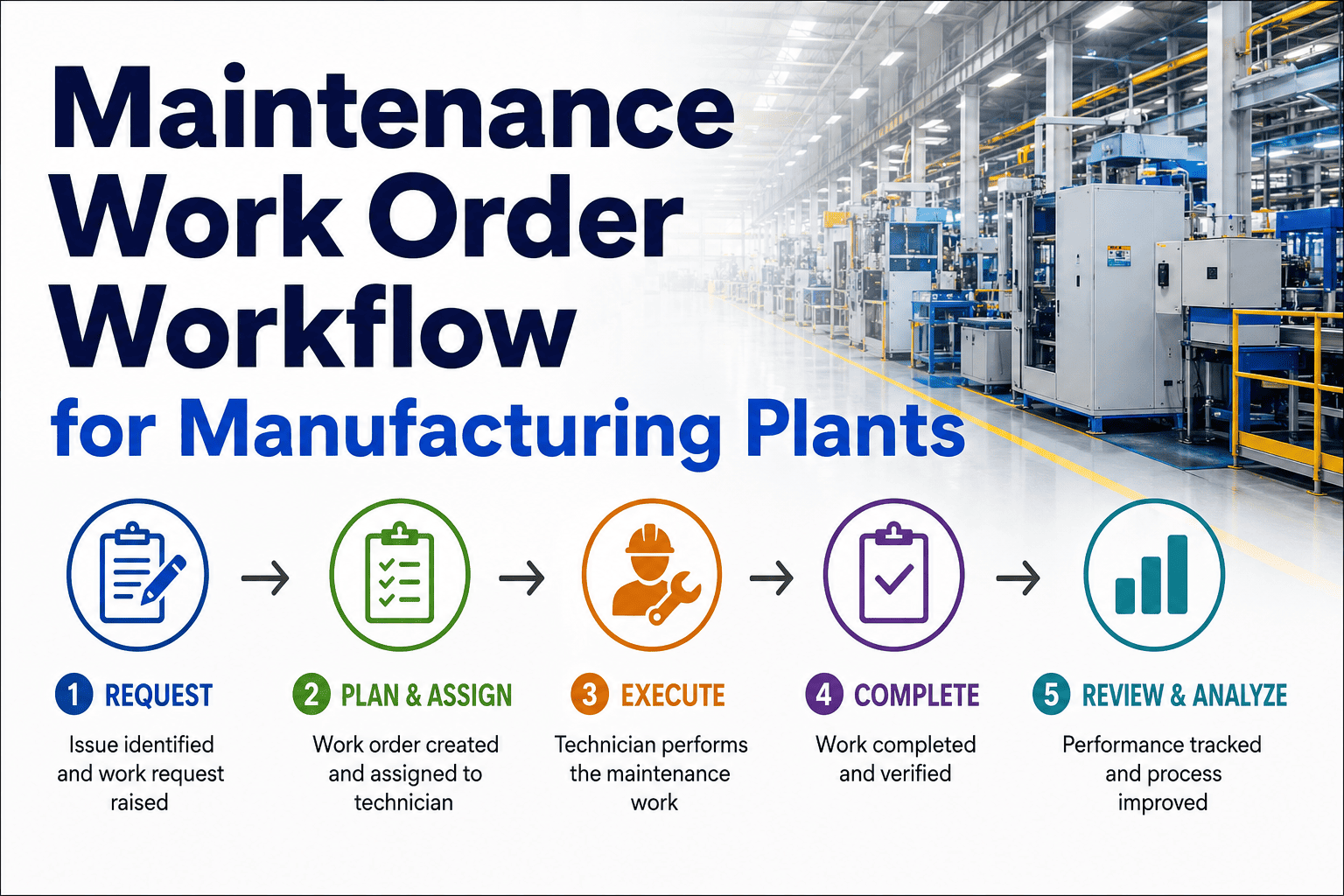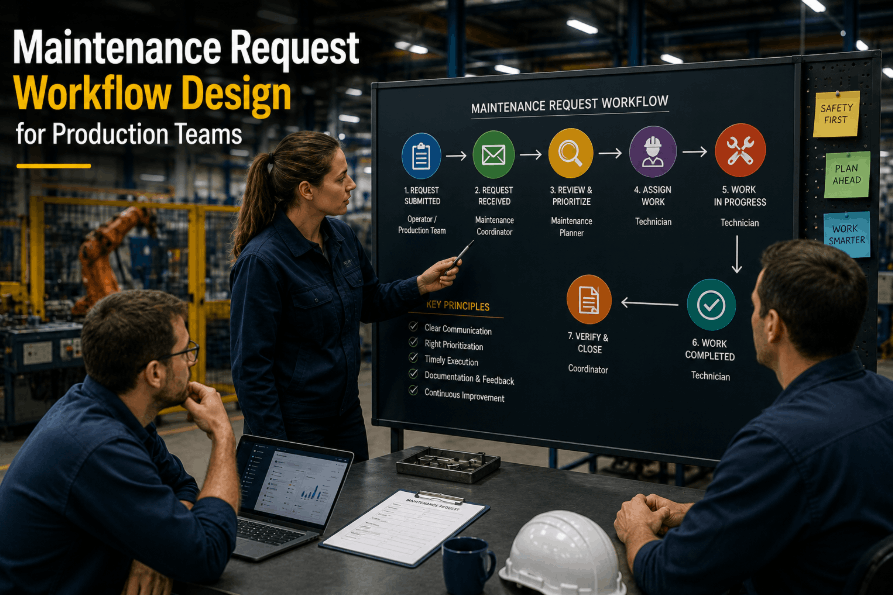
For production teams, every minute of unplanned equipment downtime begins with a maintenance request. Yet most manufacturing facilities still rely on verbal requests, paper forms, or generic email inboxes—creating workflow bottlenecks, lost information, and unpredictable response times. Sign Up Free to replace these fragmented intake methods with a structured maintenance request workflow inside Oxmaint—designed specifically for production-driven environments where speed, accuracy, and accountability determine operational uptime.
PRODUCTION TEAMS · MAINTENANCE REQUESTS · WORKFLOW DESIGN
Design a Production-Ready Maintenance Request Workflow
Move beyond emails and whiteboards. Create structured request intake, automated approvals, role-based prioritization, and real-time status tracking—all inside Oxmaint.
COMMON MAINTENANCE REQUEST FAILURES IN PRODUCTION ENVIRONMENTS
01
Unstructured Request Intake
Operators use hallway conversations, sticky notes, or personal texts to report issues. Requests are lost, duplicated, or lack critical detail—delaying diagnosis.
02
No Prioritization Logic
Every request is treated as equally urgent. Without asset criticality or production impact data, teams waste time on low-value issues while critical assets degrade.
03
Approvals Create Bottlenecks
Maintenance managers must approve every request manually. When approvers are unavailable, requests stall and production waits for authorization on minor repairs.
04
No Feedback Loop
Production teams never know request status—submitted, assigned, in progress, or complete. This lack of transparency erodes trust and drives duplicate requests.
05
Missing Diagnostic Data
Operators submit vague descriptions like “machine making noise.” Without structured fields for asset ID, fault category, or observed symptoms, triage is inefficient.
06
No Recurring Request Templates
Common issues—recurring jams, leaks, or sensor faults—are entered repeatedly. Each request requires manual re-entry instead of using pre-approved templates.
PRODUCTION-FOCUSED MAINTENANCE REQUEST WORKFLOW INSIDE OXMAINT
Workflow Stage
Production Team Action
Oxmaint Automation
Outcome
1. Request Creation
Operator scans asset QR code, selects fault type from dropdown, adds photo/video
Auto-populates asset ID, location, BOM data; timestamps request
Complete diagnostic data captured before first human touch
2. Prioritization Logic
Optional: flags as safety, quality, or production-blocking
System applies asset criticality score and urgency rules; escalates P1 requests
High-impact requests route immediately to on-call technicians
3. Approval Routing
Only requests above cost or scope threshold require approval
Conditional approval workflows skip managers for low-risk, low-cost requests
Approval bottlenecks reduced by 60–80%
4. Assignment & Scheduling
Production lead receives auto-notification of assignment
Routes to technician by skill set, shift, and current workload
Clear ownership with estimated response time communicated
5. Status Tracking
Operator views live status via mobile dashboard or request portal
Auto-updates status: received, reviewed, parts ordered, in-progress, QA, closed
No follow-up emails or status check calls
6. Closure & Feedback
Operator confirms repair and rates resolution speed/quality
Closure triggers parts deduction, asset history update, and satisfaction survey
Continuous improvement loop between production and maintenance
HOW OXMAINT TRANSFORMS MAINTENANCE REQUEST WORKFLOWS
01
Role-Based Request Portals
Production operators, shift leads, and plant managers each see a tailored request interface. Operators submit issues; managers approve high-cost repairs; maintenance planners analyze request trends.
02
Asset-Centric Request Intake
Every request is linked to a specific asset in the Oxmaint asset hierarchy. When an operator scans an asset QR code, the request form auto-fills asset ID, location, criticality, and maintenance history.
03
Conditional Approval Workflows
Define approval rules based on estimated cost, part requirement, or asset class. Low-cost, low-impact requests bypass manager approval and route directly to the maintenance queue. Book a Demo to see rule-based routing in action.
04
Dynamic Prioritization Engine
Combine asset criticality (A/B/C), production impact (blocking/restricted/normal), and safety flags to automatically assign priority levels. Emergency requests generate push notifications to on-call technicians.
05
Request Templates for Recurring Issues
Create reusable request templates for common problems—conveyor belt tracking, hydraulic leak, sensor calibration. Operators select the template instead of re-typing descriptions, reducing creation time by 70%.
06
Real-Time Production Dashboard
Production managers view open requests, aging by priority, technician assignments, and estimated completion times. Export request data by shift, line, or asset for weekly operational reviews.
OPERATIONAL OUTCOMES FROM STRUCTURED MAINTENANCE REQUEST WORKFLOWS
MTTR Reduction
18–27%
Structured requests include diagnostic data before technician dispatch—reducing first-visit diagnosis time and enabling parts staging before maintenance begins.
Request Leakage
< 2%
Lost or unactioned requests drop from industry average of 15% to near zero with digital intake, auto-assignment, and aging reports.
Approval Cycle Time
↓ 65%
Conditional approval workflows eliminate manager review for 70% of requests—only high-cost, high-scope items require approval.
Duplicate Requests
↓ 82%
Real-time status visibility eliminates re-reporting. Operators check request status before submitting a second issue report.
Production Trust Score
+41%
Surveyed plants report significantly higher production team satisfaction when request status is visible and response times are predictable.
Data-Driven RCA
3–5x faster
Structured request data—fault codes, asset IDs, timestamps—enables root cause analysis without manual log review or operator interviews.
MAINTENANCE REQUEST ROUTING RULES FOR PRODUCTION TEAMS
Request Type
Production Impact
Auto-Routing Rule in Oxmaint
Approval Required?
Safety Guard Missing
Immediate: production stop required
Routes to safety team + plant manager push notification
No—immediate dispatch
Production Line Down
Full line stop
Routes to on-call technician + maintenance manager SMS
No—critical rule override
Quality Defect—Minor
Reduced throughput, off-spec risk
Routes to assigned zone technician with standard SLA
No—below cost threshold
Preventive Maintenance Due
Scheduled downtime only
Auto-generated from PM schedule; routes to designated crew
No—approved by work plan
Capital Repair Request
Major component replacement
Routes to maintenance manager for estimate and parts review
Yes—manager + finance
WORKFLOW AUTOMATION · REQUEST MANAGEMENT · PRODUCTION CMMS
Stop Losing Maintenance Requests in Email and Hallway Conversations
Deploy a structured, production-tuned maintenance request workflow in Oxmaint. Reduce MTTR, eliminate request leakage, and give your production team real-time visibility into every issue they report. Sign Up Free to configure your first request portal today.
Frequently Asked Questions
Q1 What is a maintenance request workflow?
A structured process that captures, prioritizes, routes, and tracks issue reports from production teams—replacing verbal requests with auditable digital records linked to assets and work orders.
Q2 How does Oxmaint prioritize maintenance requests automatically?
Oxmaint combines asset criticality scores, production impact flags, and safety classifications to assign priority levels. Emergency requests trigger immediate notifications to on-call technicians.
Q3 Can production operators submit requests from the shop floor?
Yes. Operators use the Oxmaint mobile app to scan asset QR codes, select fault categories from dropdowns, attach photos, and submit requests without accessing maintenance planning screens.
Q4 What approval rules can I configure for maintenance requests?
Set approval conditions by estimated cost, required part value, asset class, or request type. Low-cost, low-risk requests bypass approvals entirely. Book a Demo to see conditional routing examples.
Q5 How does request status tracking reduce duplicate submissions?
Production teams view real-time request status—submitted, assigned, in progress, or closed—via dashboard or request portal. This visibility eliminates the need to re-report issues already being addressed.
Q6 Can maintenance request data improve preventive maintenance schedules?
Yes. Request data reveals fault patterns by asset, shift, or operator. Maintenance managers use this trend data to adjust PM frequencies, update inspection checklists, or add new condition monitoring tasks.
Q7 Is it difficult to get production teams to adopt a new request system?
Oxmaint's role-based portal design minimizes training. Operators see only request submission screens. QR code scanning and dropdown menus reduce clicks by 60% compared to generic email or form-based intake.
REQUEST MANAGEMENT · WORKFLOW AUTOMATION · PRODUCTION CMMS
Deploy a Production-Ready Maintenance Request Workflow in Days
Structured intake, conditional approvals, dynamic prioritization, and real-time status tracking—built for production teams who need fast, reliable maintenance response. Book a Demo to see a live production environment workflow.