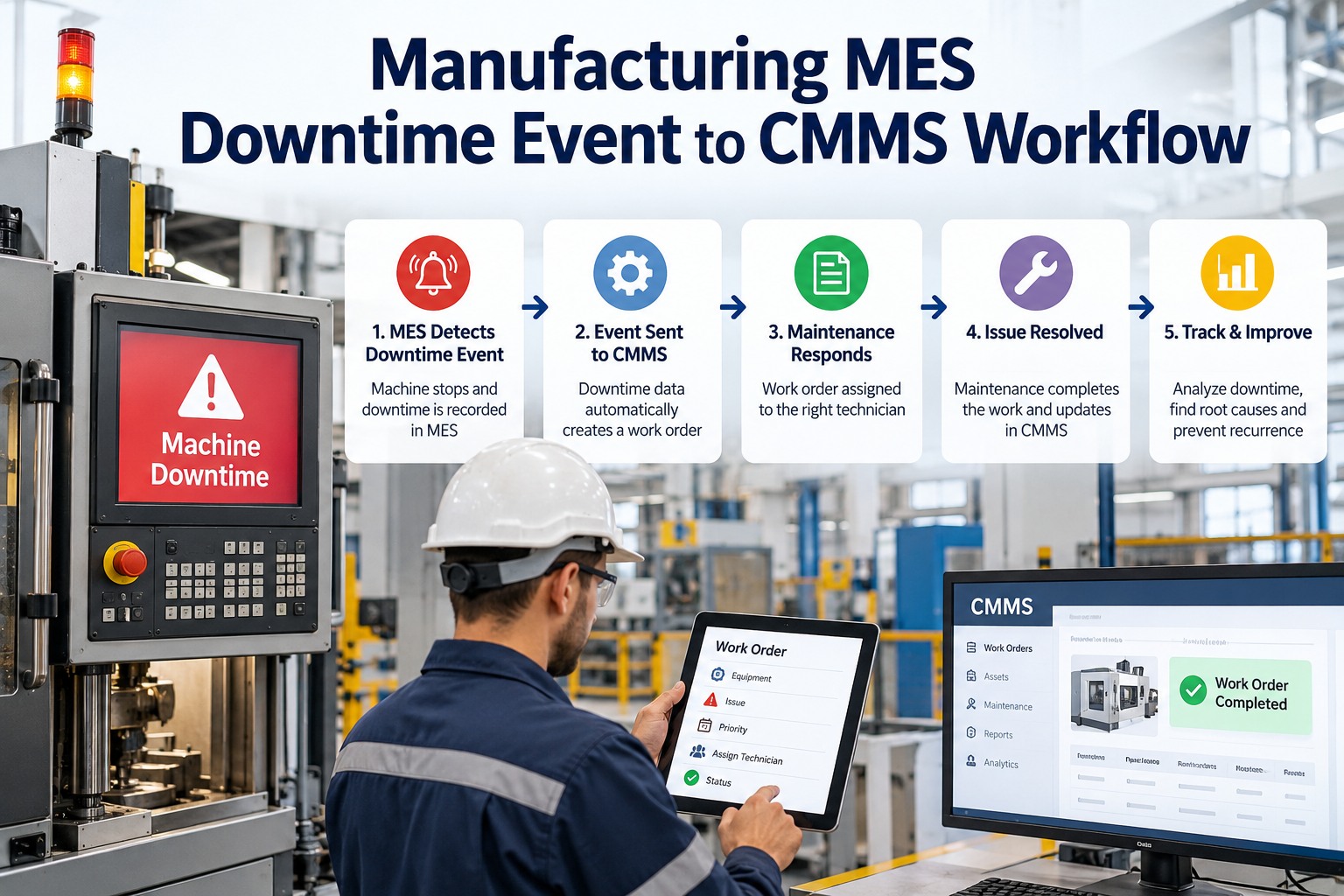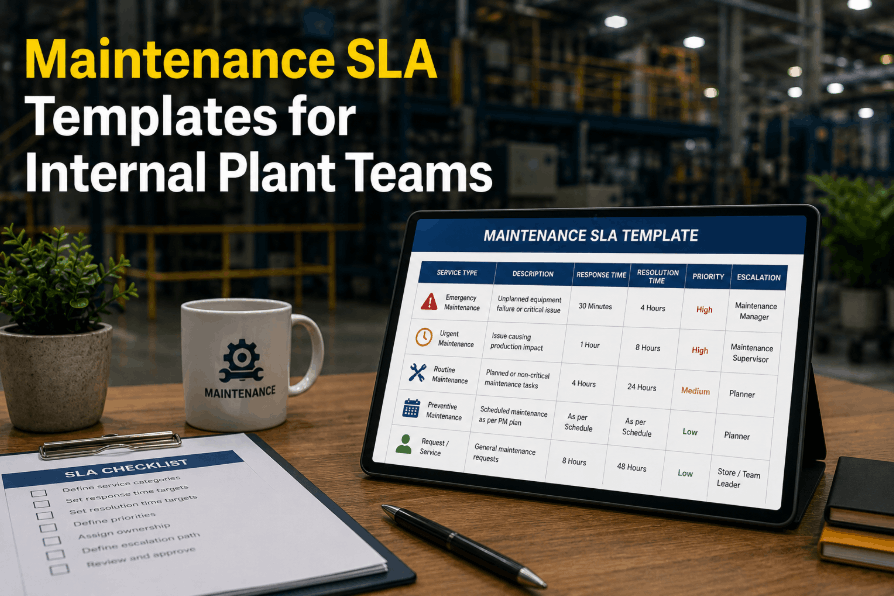
Most plant maintenance teams rely on handshake agreements rather than documented service levels. A production supervisor expects a 15-minute response to a line-down emergency. The maintenance manager thinks two hours is reasonable. Neither is wrong. Neither is documented. That gap between expectation and reality is where downtime compounds, blame cycles start, and maintenance credibility erodes shift after shift. Internal maintenance SLA templates transform unwritten expectations into measurable commitments: response windows, resolution targets, escalation paths, and performance metrics that both production and maintenance teams agree on before a breakdown happens. Plants that codify these agreements spend less time arguing about whose fault the delay was and more time preventing the next failure. Sign Up Free to see how OxMaint translates SLA commitments into automated work order priorities, real-time tracking, and compliance dashboards that hold every role accountable.
Document Your Maintenance Commitments Before the Next Breakdown
Define response times, resolution targets, and escalation paths that both production and maintenance teams agree on — tracked automatically in your CMMS.
The Cost of Undocumented Maintenance Expectations in Manufacturing
Manufacturing plants lose an average of 800 hours per year to unplanned downtime, and most of that loss traces back to one root cause: maintenance teams operating without clear, documented service level agreements. When production cannot articulate what response time they require, and maintenance cannot commit to what they can realistically deliver, every equipment failure becomes a coordination crisis. Reactive repairs consume 60% or more of labor hours in plants without structured maintenance KPIs, while teams with metrics-driven programs achieve planned maintenance percentages above 80%. Internal SLA templates close that gap by transforming vague expectations into specific, measurable targets that drive maintenance behavior. Book a Demo to see how OxMaint maps SLA response tiers directly to work order priority levels, ensuring critical failures never sit in a queue behind routine requests.
What Every Internal Maintenance SLA Template Must Define
An internal maintenance SLA is not a legal document — it is an operational agreement between production and maintenance that eliminates ambiguity during emergencies. Effective templates define four core components with enough specificity that a new technician could follow them without asking for clarification. Sign Up Free to access pre-built SLA templates that integrate directly with OxMaint's work order prioritization engine.
Priority Classification with Business Impact
Define P1 (Critical), P2 (High), P3 (Normal), and P4 (Low) categories with specific business impact criteria. A P1 event stops production entirely. A P4 request is a non-urgent lubrication task. Without this classification, every work order competes for attention based on who shouts loudest.
Response Time by Priority Tier
Specify maximum time from work order creation to technician acknowledgment. World-class benchmarks: P1 = 15 minutes, P2 = 2 hours, P3 = 8 hours, P4 = 48 hours. Documented response commitments eliminate the "I didn't know it was urgent" defense.
Resolution Time and Escalation Triggers
Define how long each priority tier should take to fully resolve. P1 critical failures require continuous work until resolution with escalation to maintenance manager at 2 hours and plant manager at 4 hours. Resolution targets hold teams accountable for outcomes, not just activity.
Service Exclusions and Blackout Periods
Specify what is not covered: planned shutdowns, capital projects, third-party equipment. Define whether SLA clocks pause during shift handovers or after hours. Clarity on exclusions prevents disputes about whether a given failure counts against performance metrics.
Performance Reporting and Review Cadence
Define which metrics are reported, to whom, and how often. Weekly SLA compliance dashboards for operations managers. Monthly reviews for plant leadership. Automated breach notifications sent immediately when resolution targets are missed.
Continuous Improvement Commitments
Specify how SLA targets evolve. If P1 response time is consistently met in under 10 minutes, does the target tighten to 10 minutes next quarter? Documented improvement paths prevent SLAs from becoming ceiling targets rather than floor commitments.
Maintenance Service Level Maturity: Where Does Your Plant Operate?
| Operational Dimension | Ad-Hoc (No SLA) | Emerging (Informal SLA) | World-Class (Documented SLA + CMMS) |
|---|---|---|---|
| Priority Assignment | Whoever shouts loudest | Verbal rules of thumb | Business-impact criteria auto-assigns priority based on asset criticality and failure impact |
| Response Tracking | Not measured | Supervisor memory, occasional spreadsheet logs | Automated timestamp capture from work order creation to technician acknowledgment |
| Resolution Compliance | Unknown until next production meeting | Tracked weekly, reported monthly | Live dashboard with real-time SLA compliance by priority tier, automatic breach notifications |
| Escalation Path | No defined escalation | Verbally escalate to supervisor after unspecified delay | Auto-escalation at threshold breaches — maintenance manager at 2hr, plant manager at 4hr, VP at 8hr |
| Performance Review | Blame cycle after major failure | Monthly spreadsheet reviews | Weekly SLA dashboards, quarterly target reviews, trend analysis by asset class and shift |
| Continuous Improvement | None | Occasional adjustments after complaints | Data-driven target tightening, root cause analysis of every breach, documented improvement cycle |
How to Deploy Internal Maintenance SLAs Across Your Plant
Define Asset Criticality Tiers with Production Leadership
Before SLA targets can be set, asset criticality must be agreed upon. Conduct a joint workshop with production and maintenance to classify every asset as Critical (P1), Important (P2), Standard (P3), or Low (P4) based on downtime cost, safety impact, and repair complexity. OxMaint's asset criticality analysis module documents these classifications and links them directly to SLA response defaults.
Set Baseline Response and Resolution Targets
Use historical work order data to establish realistic starting targets. If current average response to critical failures is 45 minutes, a 15-minute target is not credible. Set targets that stretch performance without guaranteeing failure. Document current MTBF, MTTR, and PM compliance rates as baseline metrics before implementing SLA tracking.
Map SLA Tiers to CMMS Priority and Automation Rules
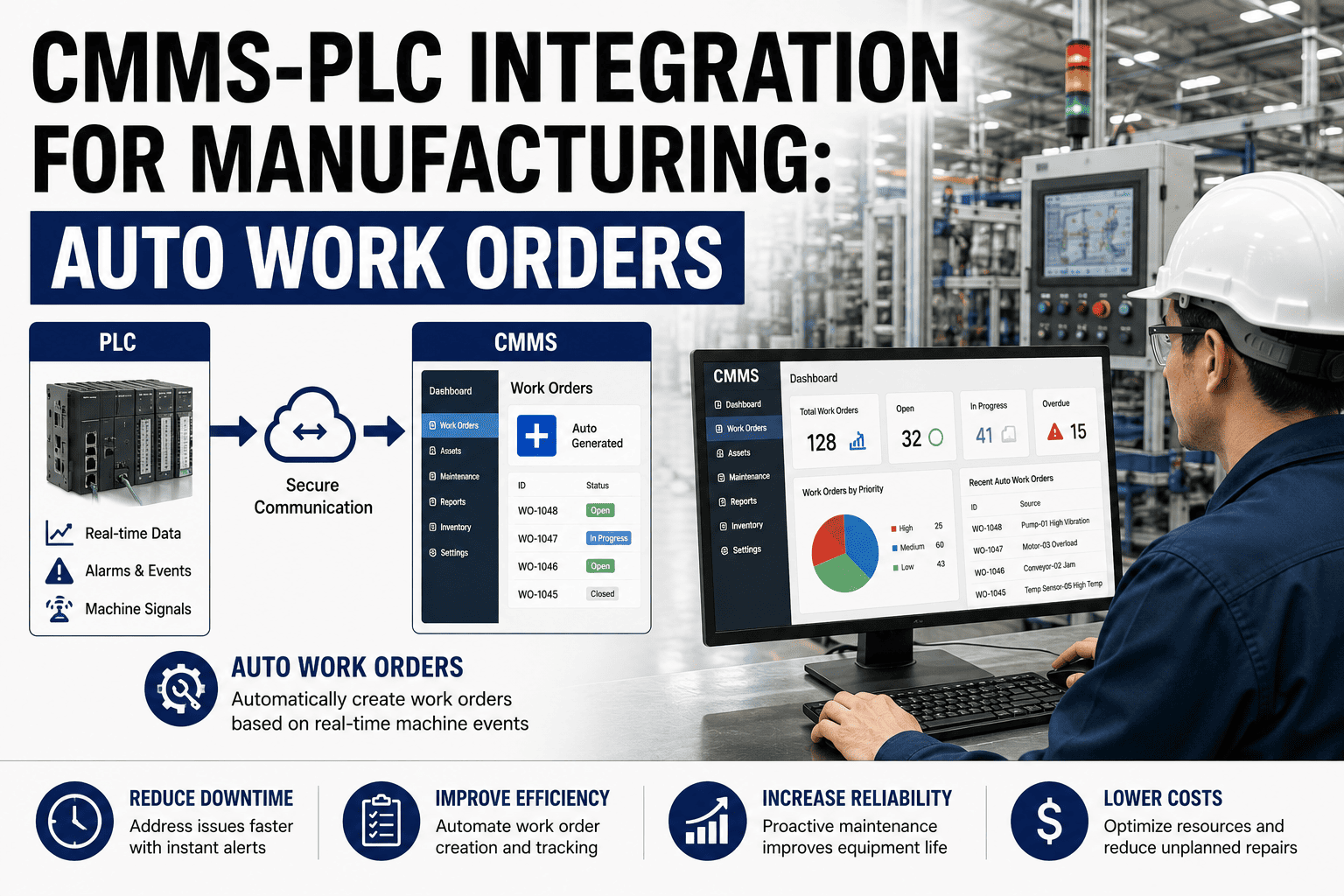
Configure your CMMS to auto-assign priority based on asset criticality and failure type. When a P1 asset fails, the work order must trigger immediate mobile notification to on-call technicians, bypass standard queue logic. OxMaint's priority engine routes the right alert to the right team member — not everyone simultaneously.
Build Live SLA Compliance Dashboards
Create role-specific dashboards that surface SLA performance by priority tier, asset class, shift, and technician. Operations managers need open work orders approaching breach thresholds. Plant leadership needs weekly compliance percentages. Live dashboards eliminate the reporting lag that keeps problems invisible until monthly reviews.
Establish Quarterly Target Review and Adjustment Cadence
SLA targets should tighten over time. Review compliance data quarterly to identify targets that have become too easy and those that remain chronically missed. A target missed 40% of the time indicates the SLA is unrealistic or resources are insufficient. A target met 98% of the time may be too loose to drive improvement. Book a Demo to see how OxMaint's analytics identify SLA targets that need adjustment based on actual performance trends.
What Documented SLA Templates Deliver for Manufacturing Plants
How OxMaint Translates SLA Templates into Automated Accountability
Priority-Based Work Order Routing
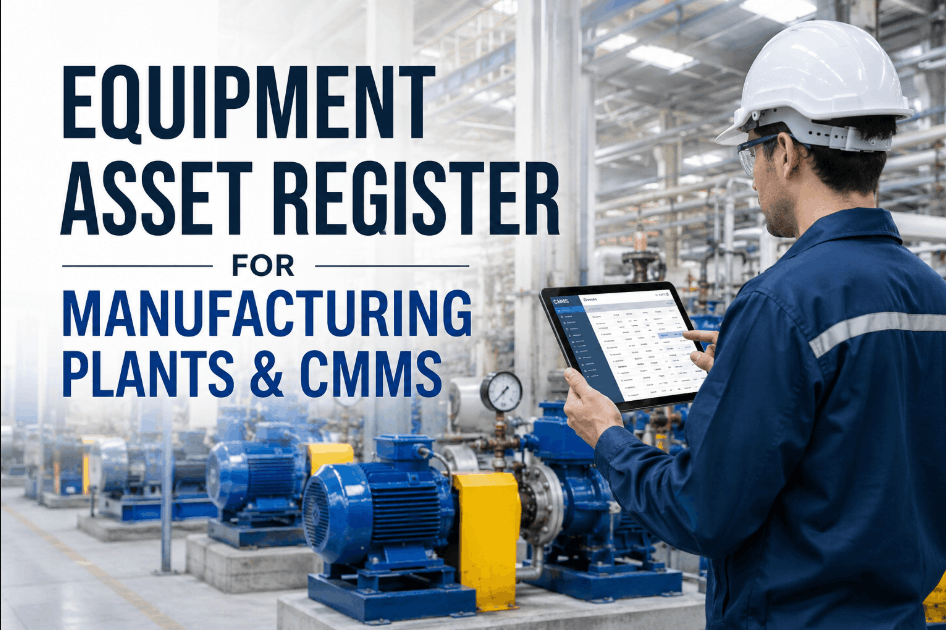
Asset criticality rankings stored in OxMaint's asset register auto-populate priority for every work order generated against that asset. A P1-ranked press brake failing mid-shift generates a work order with critical priority, immediate mobile dispatch to on-call technicians, and bypass of standard queue queuing.
Automated SLA Clock Start and Stop
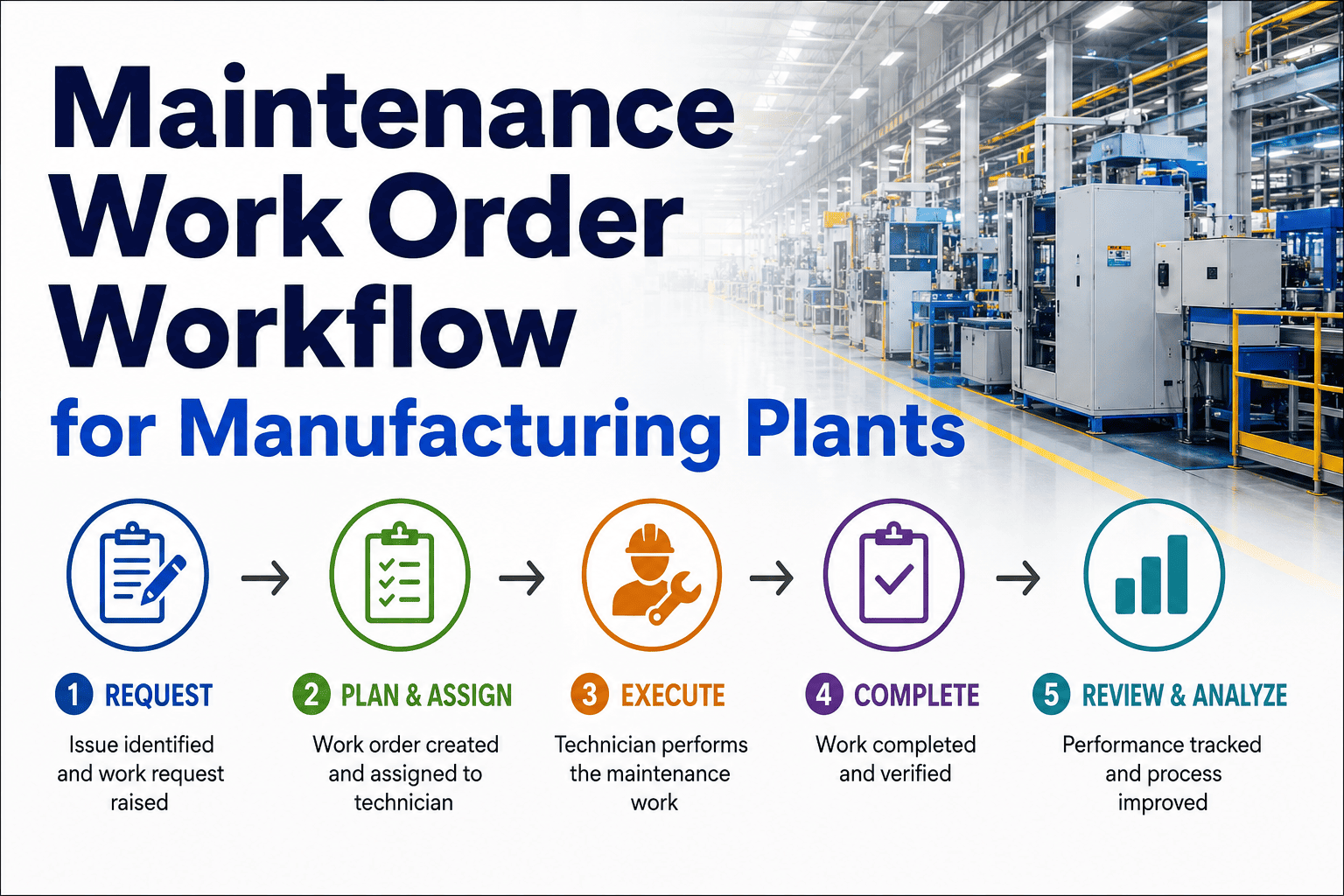
OxMaint timestamps every work order at creation, assignment, acknowledgment, and completion. SLA response clocks start at creation. Resolution clocks stop at completion. Automated tracking eliminates manual logging errors and the "I responded earlier" disputes that plague paper-based systems.
Breach Escalation Workflows
When a work order approaches its SLA response or resolution threshold, OxMaint triggers configurable escalation: maintenance supervisor notified at 80% of window, maintenance manager at 95%, plant manager at breach. Escalation paths are documented in the SLA template and executed automatically.
SLA Compliance Reporting by Tier and Asset Class
OxMaint's analytics dashboards report SLA compliance percentage, average response time, and average resolution time filtered by priority tier, asset class, facility, shift, and individual technician. These reports feed monthly SLA reviews and identify chronic problem areas before they cause major failures.
Stop Managing Maintenance Expectations with Verbal Agreements
OxMaint gives plant teams the documented SLA framework, automated priority routing, and live compliance dashboards to transform maintenance accountability from subjective dispute to measurable performance.
Internal Maintenance SLA Templates — Common Questions
Ready to Replace Handshake Agreements with Documented SLAs?
OxMaint gives your production and maintenance teams the framework to define, track, and improve service level commitments — transforming accountability from post-failure blame to pre-failure clarity.