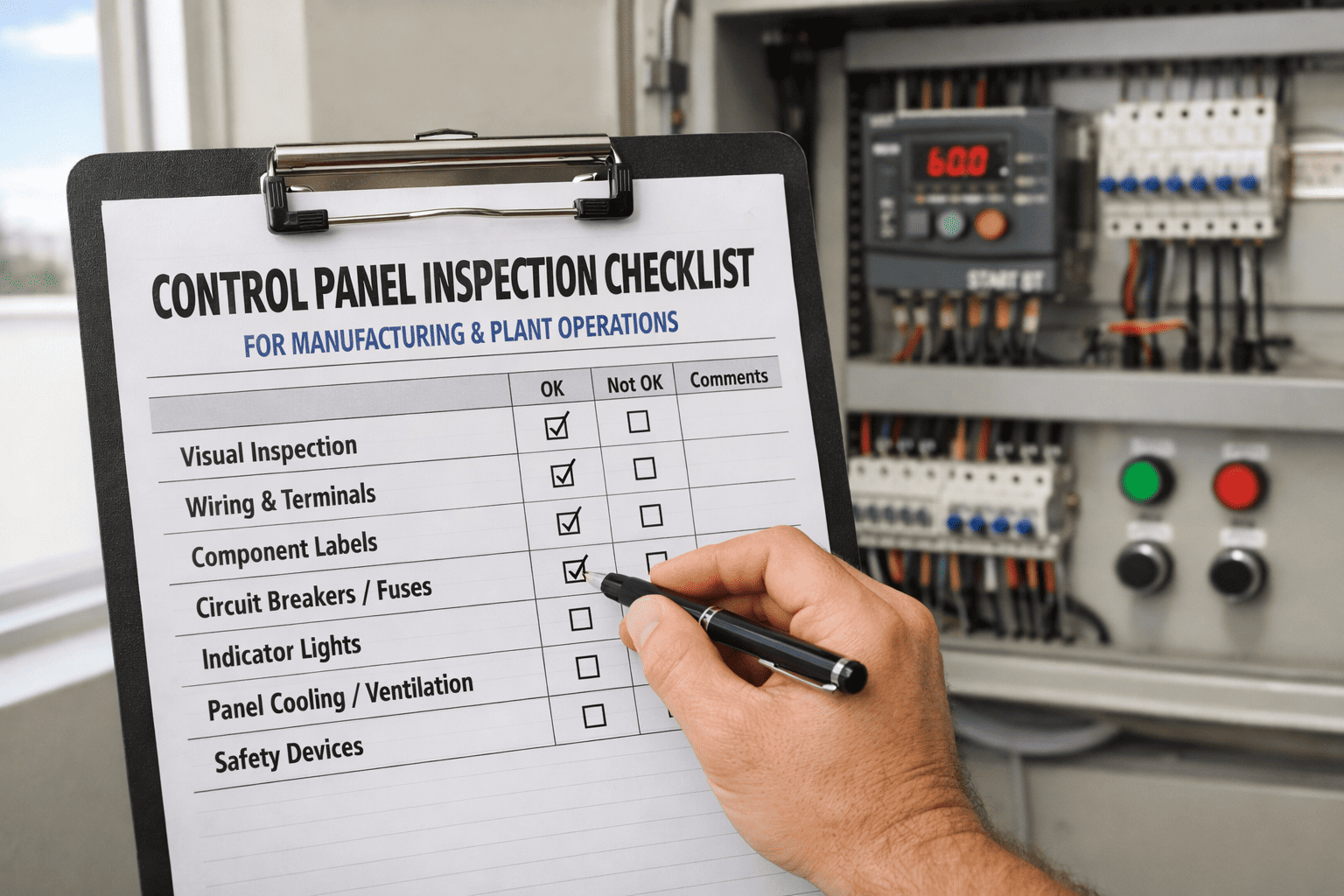
In industrial environments, the bearing is the heart of rotating equipment. A single undetected bearing failure can bring an entire production line to a standstill, costing thousands in lost revenue and emergency repairs. Traditional paper-based logs often fail to capture the subtle early warnings of fatigue, leading to reactive maintenance. A digital Bearing Inspection Report Template transforms maintenance from a guessing game into a precise science. Schedule a consultation to discover how digital inspection workflows eliminate unplanned downtime and extend asset life.
The Business Case for Standardized Bearing Inspections
The "Cost of Failure" for a $500 bearing often exceeds $50,000 when factoring in secondary damage to shafts, housings, and lost production capacity. Implementing a standardized digital inspection template ensures that technicians capture critical data points—vibration, temperature, and lubrication status—consistently across every asset in the plant.
Reduction in catastrophic equipment failures through predictive tracking.
Optimized consumption and eliminated waste via automated dosing schedules.
Extension of mean time between failures by catching race defects early.
Faster generation of root cause analysis through digital historical data.
The Bearing Health Inspection Workflow
A comprehensive inspection isn't just a "check-box" exercise. It is a systematic evaluation of environmental, mechanical, and thermal conditions that indicates the remaining useful life of the component.
Identify visible leaks, contamination, or unusual noise. Log observations directly with photo evidence.
Capture IR thermography. Systems compare readings against historical baselines automatically.
Input amplitude data to detect early pitting or race damage before heat becomes a factor.
Record grease type and quantity. Track "last lubed" dates to prevent over or under-lubrication.
Generate health scores and receive instant alerts for "Warning" or "Critical" states.
Integrated Bearing Condition Modules
Modern maintenance platforms like Oxmaint provide specialized modules that turn raw inspection numbers into actionable engineering intelligence.
Industry-Specific Bearing Challenges
Bearing requirements vary significantly by operational environment. A wash-down food plant requires different inspection protocols than a high-heat steel mill or a high-speed textile facility.
| Industry | Failure Risk | Inspection Frequency | Primary Health Metric |
|---|---|---|---|
| Food & Beverage | Wash-down contamination / Rust | Weekly (High Cycle) | Seal integrity & lubrication purity |
| Steel & Heavy Meta | Heat fatigue / Scale ingress | Shift-based (Critical) | Thermal trending & housing clearance |
| Mining & Aggregate | Dust ingress / Impact loading | Bi-Weekly (Harsh) | Ultrasonic noise & housing vibration |
| Paper & Pulp | Moisture / Chemical attack | Monthly (Continuous) | Oil analysis & vibration spectra |
| Wind Energy | Static fatigue / Slow rotation | Quarterly (Remote) | Acoustic emissions & bolt torque |
Manual Logs vs. Digital Inspection Intelligence
The gap between managing bearings via paper clipboards versus an integrated digital platform like Oxmaint is the difference between waiting for a failure and predicting it weeks in advance.