Control panels act as the central nervous system of your manufacturing operations, housing the critical electrical components that maintain production uptime around the clock. Without a standardized inspection protocol, minor issues like loose connections or dust accumulation can silently escalate into catastrophic failures, costing facilities an average of $50,000 per hour in unplanned downtime. By implementing a rigorous control panel inspection checklist, maintenance teams can ensure electrical safety compliance, extend asset lifecycles, and significantly reduce safety risks. To streamline this process and ensure no data is lost, you can Sign Up with Oxmaint today.
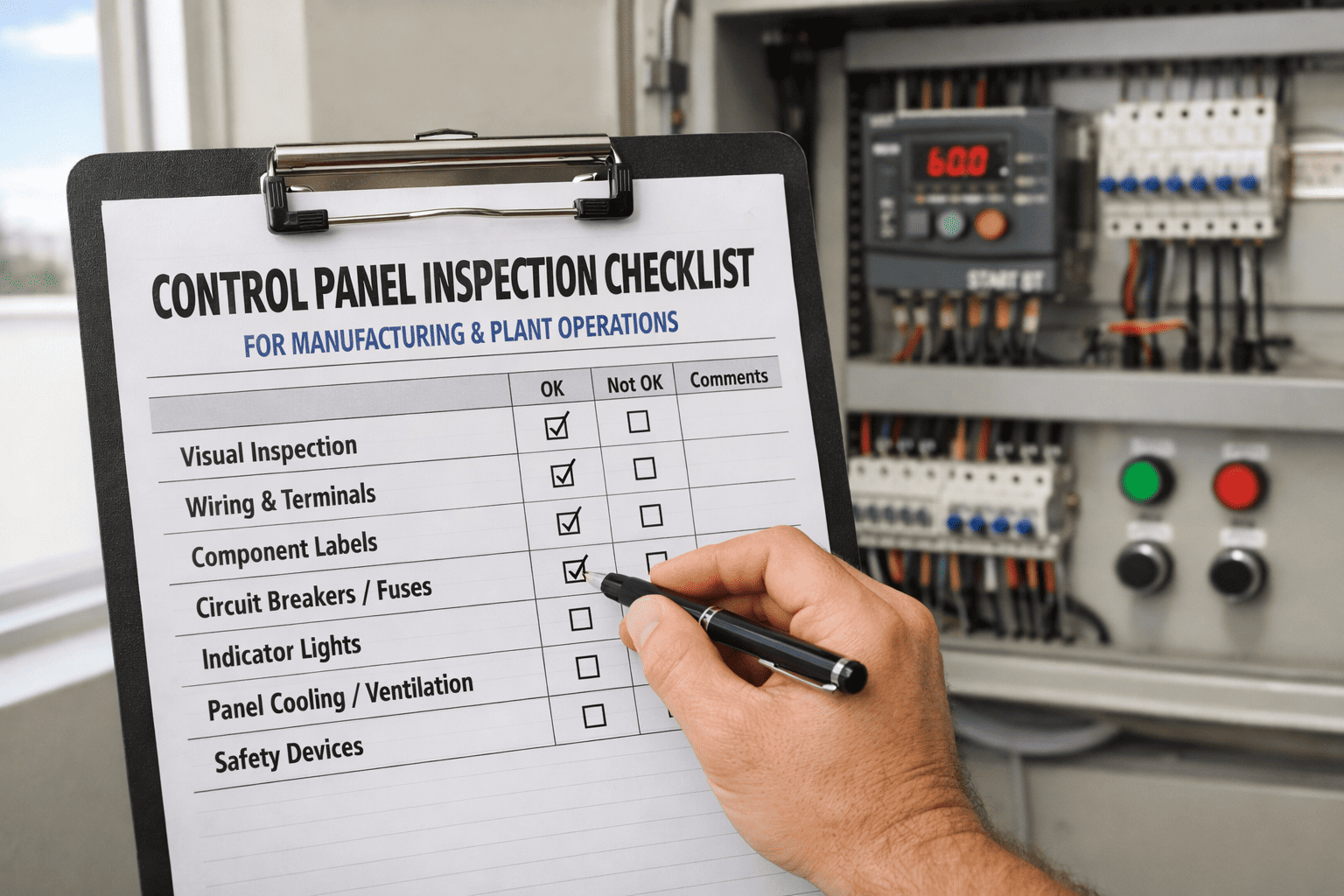
Comprehensive Control Panel Inspection Checklist
This master checklist is designed for electrical technicians and plant operators. It covers the critical physical, electrical, and environmental checkpoints necessary to maintain system integrity. Using a digital tool to track these points allows for historical trending and predictive maintenance analysis.
Move from reactive repairs to predictive reliability.
Automate these inspections and generate instant work orders when issues are found.
Why Standardized Inspections Matter
Control panel failures rarely happen instantly. They are usually the result of gradual degradation—loosening wires, failing fans, or dust buildup. Understanding the failure modes helps justify the need for a robust CMMS solution. If you are struggling with recurring electrical failures, it is time to Book a Demo to see how we can help.
01
Thermal Runaway
Loose connections increase resistance, generating heat that melts insulation. Routine thermal scanning catches this before a fire occurs.
02
Arc Flash Risk
Dust and moisture create conductive paths that can lead to arc faults. Regular cleaning reduces the risk of dangerous explosions.
03
Component Aging
Contactors and relays wear out over time. Visual checks for pitting allow for planned replacement rather than emergency shutdowns.
04
Regulatory Fines
Missing labels or blocked access violates OSHA and NFPA codes. Digital checklists ensure every compliance point is documented.
05
Moisture Ingress
Water intrusion through damaged seals accelerates corrosion and creates short-circuit risks. Regular gasket inspection prevents costly equipment damage.
06
Ventilation Failure
Blocked cooling fans cause internal temperatures to rise, reducing component lifespan by up to 50%. Preventive filter cleaning is essential.
Recommended Inspection Frequency
Not all panels require the same level of attention. Use this frequency guide to optimize your maintenance labor hours while ensuring critical assets are protected.
| Asset Criticality |
Visual Check |
Thermal Scan |
Full Service |
| High (Main Distribution) |
Weekly |
Monthly |
Annually |
| Medium (Production Motors) |
Monthly |
Quarterly |
Annually |
| Low (Auxiliary Lighting) |
Quarterly |
Annually |
Bi-Annually |
| Environment (Dusty/Hot) |
Weekly |
Monthly |
Semi-Annually |
*Adjust these frequencies based on historical failure data. To track this data automatically, Sign Up for Oxmaint.
Essential Tools for Inspection
Equipping your technicians with the right tools ensures inspections are accurate and safe. A digital tablet with Oxmaint allows inspectors to instantly upload photos of findings.
1
Personal Protective Equipment (PPE)
Arc-rated clothing, face shields, and voltage-rated gloves complying with NFPA 70E standards.
2
Infrared (IR) Camera
Essential for detecting hotspots on breakers and terminals that are invisible to the naked eye.
3
Torque Screwdriver
Calibrated tools to ensure terminations are tightened to manufacturer specifications, preventing cold flow.
4
Digital Multimeter
CAT III/IV rated meter for verifying zero energy and checking voltage levels during troubleshooting.
Ready to modernize your maintenance program?
Stop relying on paper checklists that get lost or ignored. Switch to Oxmaint to digitize your control panel inspections, automate work orders, and extend equipment life.
Frequently Asked Questions
Can we perform inspections while the panel is energized?
Visual inspections and infrared scanning are typically done while energized to detect load-related issues. However, physical work like tightening terminals requires de-energizing and Lockout/Tagout (LOTO) procedures. Always follow NFPA 70E guidelines.
How often should we torque terminals?
Terminals should be checked annually or if a thermal scan indicates a hotspot. Over-torquing can be just as damaging as under-torquing.
What is the best way to clean a control panel?
Never use compressed air, as it blows conductive dust into sensitive components. Use a vacuum with a non-conductive hose and brush attachment.
How does software help with inspections?
Software like Oxmaint ensures consistency, allows for photo documentation of defects, automatically schedules the next inspection, and creates instant reports for compliance audits.
Book a Demo to see it in action.

-inspection-checklist-for-industrial-facilities.png)