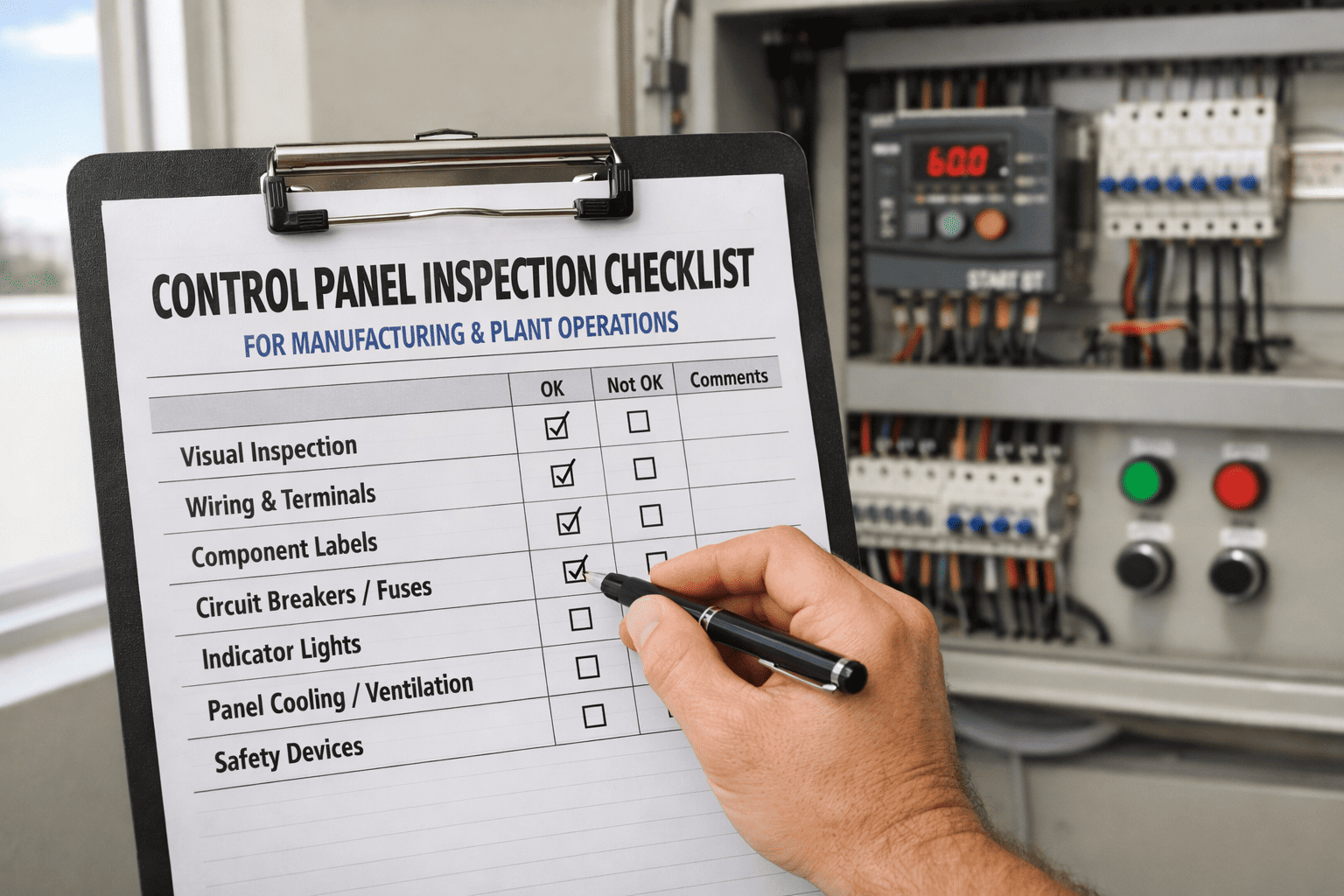
Control panels are the nerve centers of manufacturing operations, housing critical electrical components that control machinery, processes, and safety systems. Without systematic inspection and documentation, hidden issues like loose connections, overheating components, or degraded insulation can escalate into costly equipment failures, production shutdowns, or safety hazards. A structured control panel inspection report template ensures every inspection is thorough, consistent, and actionable. Schedule a consultation to discover how digital inspection reports can transform your maintenance documentation.
73%
Of electrical failures in manufacturing are preventable with regular panel inspections
$180K
Average cost of unplanned downtime from control panel failures per incident
45%
Reduction in electrical incidents when using standardized inspection templates
2.5x
Faster issue resolution with documented inspection history and trends
What is a Control Panel Inspection Report
A control panel inspection report is a structured document that captures the condition, functionality, and safety status of electrical control panels during routine or scheduled inspections. It serves as both a compliance record and a maintenance planning tool, documenting everything from visual observations to thermal readings and functional test results.
Effective inspection reports go beyond simple pass/fail checklists. They capture quantitative measurements, photographic evidence, trend data, and actionable recommendations that enable maintenance teams to prioritize repairs, schedule preventive work, and demonstrate regulatory compliance.
Ready to digitize your inspection documentation? Start capturing detailed control panel reports with photos, measurements, and automatic work order generation.
Sign Up
Key Components of Control Panel Inspection Reports
A comprehensive control panel inspection report template should capture critical information across multiple inspection categories. Each component serves a specific purpose in identifying current issues and predicting future failures.
01
Panel Identification
Unique panel ID, location, equipment served, voltage rating, and last inspection date. Proper identification ensures inspection history is traceable and regulatory audits are straightforward.
02
Visual Inspection Findings
Condition of enclosures, doors, seals, and labels. Documentation of corrosion, dust accumulation, moisture intrusion, damaged components, and missing covers or guards.
03
Thermal Analysis
Infrared thermography readings for all connections, breakers, and components. Temperature differentials exceeding thresholds indicate loose connections or overloaded circuits requiring immediate attention.
04
Electrical Testing Results
Insulation resistance, ground continuity, breaker trip testing, and voltage measurements. Quantitative data enables trend analysis and predictive maintenance scheduling.
05
Corrective Actions
Documented findings with severity ratings, recommended repairs, assigned responsibilities, and completion deadlines.
Sign up for Oxmaint to automatically generate work orders from inspection findings.
Common Control Panel Inspection Points
Thorough inspections cover multiple categories of potential issues. Understanding what to inspect and why helps maintenance teams prioritize their efforts and allocate resources effectively.
Regular inspection of all categories prevents cascading failures and ensures compliance with NFPA 70E and OSHA requirements.
Need a customizable inspection checklist? Our team can help configure templates specific to your panel types and compliance requirements.
Book a Demo
Paper vs. Digital Inspection Reports
The transition from paper-based inspection forms to digital reporting transforms maintenance operations from reactive documentation to proactive asset management.
Paper-Based Reports
- Manual data entry and transcription errors
- Difficult to search historical records
- No automatic trend analysis
- Photos stored separately from reports
- Delayed work order creation
3-5 days
typical delay from finding to repair
Digital Inspection Reports
- Mobile data capture with validation
- Instant search and retrieval
- Automatic trend visualization
- Embedded photos and thermal images
- One-click work order generation
Same day
finding to work order assignment
Benefits of Standardized Inspection Templates
Implementing consistent inspection report templates across your facility delivers measurable improvements in maintenance effectiveness, compliance readiness, and operational reliability.
Consistency Across Teams
Every technician captures the same data points regardless of experience level. Standardized templates eliminate gaps in documentation and ensure nothing is overlooked.
Faster Audits and Compliance
Organized digital records with timestamps, signatures, and photos satisfy OSHA, NFPA, and insurance requirements instantly without scrambling for paperwork.
Predictive Maintenance Insights
Historical inspection data reveals degradation patterns before failures occur. Trend analysis identifies panels requiring attention during planned shutdowns.
Reduced Downtime Costs
Early detection of thermal anomalies, loose connections, and worn components prevents unplanned outages that cost thousands per hour in lost production.
Standardized inspection reports transformed our electrical maintenance program. We went from reactive firefighting to predictive planning, and our unplanned electrical downtime dropped by 60% in the first year.
— Maintenance Manager, Automotive Manufacturing Plant
Implementing Digital Inspection Reports
Transitioning to digital inspection documentation requires thoughtful planning but delivers rapid returns. A phased approach ensures adoption success while maintaining operational continuity.
Week 1-2
Template Configuration
Audit existing paper forms
Define required data fields
Configure digital templates
Week 3-4
System Setup
Import panel asset data
Set inspection schedules
Configure notifications
Week 5-6
Team Training
Mobile app training
Report completion practice
Work order workflow
Week 7+
Full Deployment
Live inspection capture
Performance monitoring
Continuous improvement
Start your digital transformation today. Get personalized guidance on configuring inspection templates for your specific panel types.
Book a Demo
Integration with Maintenance Systems
Inspection reports deliver maximum value when connected to your broader maintenance ecosystem. Seamless integration eliminates duplicate data entry and accelerates corrective action.
Streamline Control Panel Inspections with Oxmaint
Stop managing inspections with paper forms and disconnected spreadsheets. Oxmaint provides mobile-friendly inspection templates, automatic work order generation, and complete inspection history for every control panel in your facility. Join manufacturing teams already using digital inspection reports to reduce electrical failures and maintain compliance.
Frequently Asked Questions
How often should control panels be inspected?
Inspection frequency depends on panel criticality and operating environment. Critical panels controlling essential processes should be inspected monthly with thermal imaging and quarterly comprehensive inspections. Standard panels typically require quarterly visual inspections and annual comprehensive reviews. Harsh environments with dust, moisture, or temperature extremes may require more frequent inspection schedules.
What qualifications are needed to perform control panel inspections?
Control panel inspections should be performed by qualified electrical personnel trained in electrical safety practices per NFPA 70E. For thermal imaging, technicians should hold Level I thermography certification at minimum. Basic visual inspections may be performed by trained maintenance technicians, but electrical testing requires licensed electricians in most jurisdictions.
Can inspection templates be customized for different panel types?
Yes, effective inspection systems allow template customization based on panel type, voltage class, and specific components present. Motor control centers, PLC panels, distribution panels, and VFD enclosures each have unique inspection requirements.
Sign up for Oxmaint to access configurable templates that adapt to your specific equipment.
How do digital reports improve compliance documentation?
Digital inspection reports provide timestamped records with electronic signatures, embedded photos, and complete audit trails that satisfy OSHA, NFPA 70B, and insurance documentation requirements. Reports are instantly searchable and retrievable during audits, eliminating the scramble to locate paper records and proving inspection program compliance.
What should be done when inspection findings indicate immediate hazards?
Immediate hazards such as evidence of arcing, severely overheated connections, or damaged insulation require lockout/tagout procedures and emergency work orders. Digital inspection systems can flag critical findings for immediate supervisor notification and prevent report completion until corrective actions are documented or the panel is isolated from service.