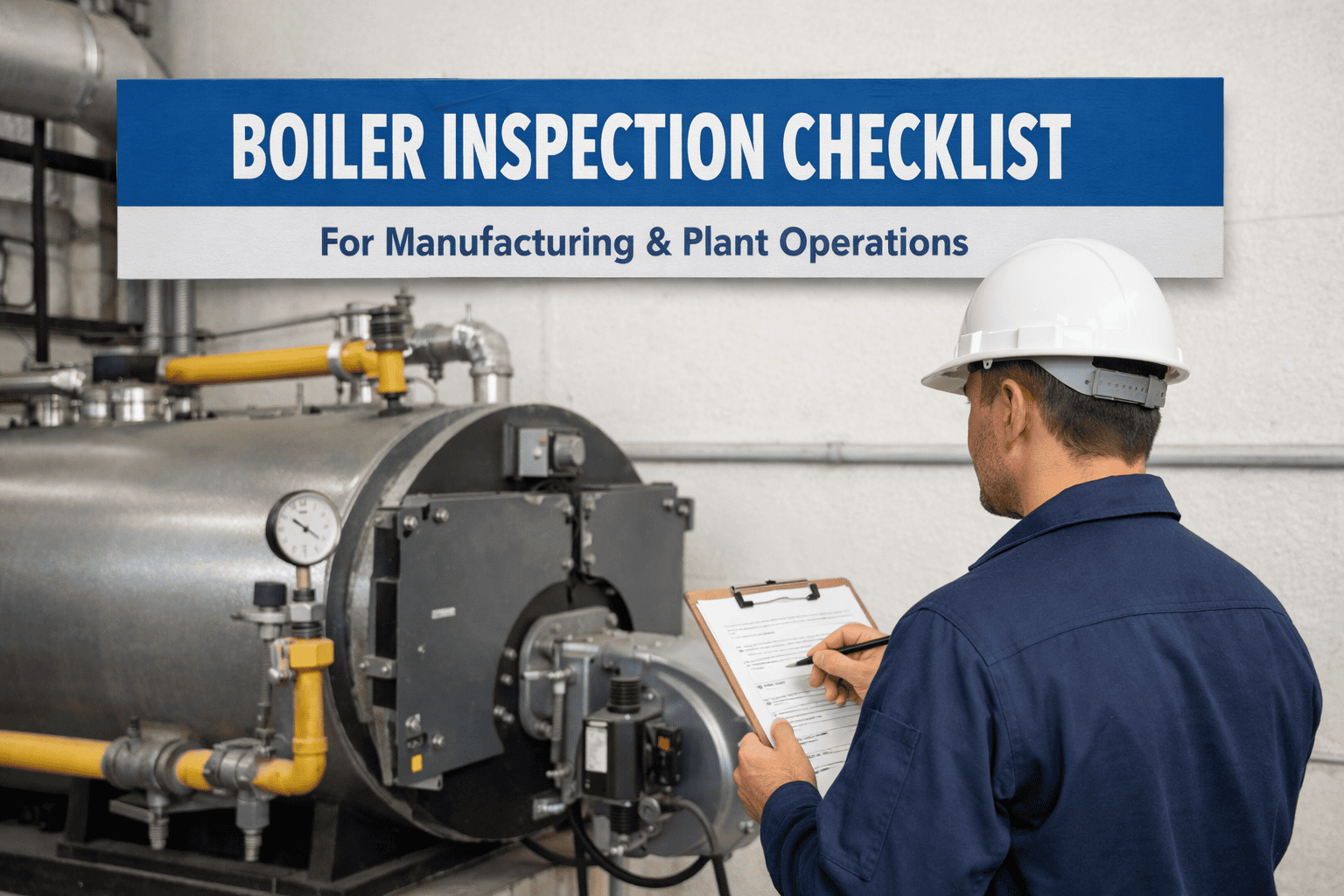
Boiler Inspection Checklist for Manufacturing & Plant Operations
By oxmaint on January 29, 2026
Industrial boilers are the workhorses of manufacturing operations, generating the steam and hot water essential for processing, heating, and power generation. Yet according to the National Board Incident Report, 79% of all reported boiler accidents stem from just two causes: low water cutoff failures and operator error combined with poor maintenance. A comprehensive boiler inspection checklist transforms these preventable incidents into systematic checkpoints, ensuring safe steam generation while meeting ASME and regulatory compliance requirements. Schedule a consultation to explore how digital inspection protocols can strengthen boiler safety at your facility.
Why Boiler Inspection is Critical for Manufacturing
Boilers operate under extreme conditions with high pressures and temperatures that demand rigorous safety protocols. Unlike other equipment failures that cause production delays, boiler incidents can result in catastrophic explosions, personnel injuries, and facility damage. Systematic inspection programs are not just best practice but a regulatory requirement under ASME codes and state jurisdictional mandates.
The Stakes of Boiler Safety in Manufacturing
79%
Of boiler accidents attributed to low water cutoff failures and operator error/poor maintenance
$500K+
Average cost of major boiler failure including repairs, downtime, and regulatory penalties
1,300+
Boiler accidents reported annually due to low water cutoff device failures alone
Annual
Minimum inspection frequency required by most jurisdictions for high-pressure boilers
Ready to strengthen boiler safety compliance? Join manufacturing teams using Oxmaint to digitize inspections and maintain audit-ready documentation.
A thorough boiler inspection program covers safety devices, water systems, combustion components, and pressure controls. This checklist addresses the critical inspection points that prevent the most common causes of boiler incidents and ensure continuous safe operation.
Daily Operational Checks
Water Level Verification
Check sight glass for proper water level at normal operating level (NOWL). Blow down water column and gauge glass to confirm accurate readings
Pressure Gauge Reading
Verify operating pressure is within manufacturer specifications. Check gauge needle for stable movement without sticking or erratic behavior
Low Water Cutoff Test
Perform blowdown test on LWCO devices to verify burner shutoff at low water condition. For high-pressure boilers above 15 psig, test daily
Flame Quality Inspection
Observe burner flame through sight port for proper color and stability. Look for signs of soot, incomplete combustion, or flame impingement
Leak Detection
Visual inspection of boiler and piping for water leaks, steam leaks, or fuel leaks. Check valve packings and flange connections
Weekly Safety Device Tests
Safety Valve Inspection
Visually inspect safety valves for leaks or debris. Test manually at approximately 75% of set pressure to verify free operation
Fuel Shutoff Valve Test
Verify automatic fuel shutoff valves close properly when safety limits are triggered. Check for fuel leakage past closed valves
Feedwater System Check
Inspect feedwater pump operation, check valves, and automatic feed controls. Verify proper response to water level changes
High Limit Control Test
Test pressure or temperature high-limit controls to confirm burner shutoff at setpoint. Verify manual reset requirement functions properly
Monthly Detailed Inspection
Water Chemistry Analysis
Sample and test boiler water for pH, alkalinity, dissolved solids, and treatment chemical levels. Compare to manufacturer specifications
Combustion Efficiency Test
Analyze flue gas for O2, CO, and stack temperature. Calculate combustion efficiency and adjust air-fuel ratio as needed
Control Piping Inspection
Clean plugs in control piping. Inspect and clean LWCO and water column connections to prevent sediment buildup
Slow Low Water Cutoff Test
Perform slow drain test by turning off feedwater pump and monitoring LWCO activation as water level gradually drops
Want to see digital boiler checklists in action? Book a demo and we'll show you automated safety device testing schedules.
Boiler safety devices are the last line of defense against catastrophic failures. Each device requires specific testing procedures and inspection criteria to ensure reliable operation when needed most.
Secondary protection against over-temperature or over-pressure conditions
Flame Safeguard
Daily flame quality checkWeekly scanner cleaningAnnual system calibration
Prevents fuel accumulation by detecting flame failure and shutting off fuel supply
ASME and Regulatory Compliance Requirements
Industrial boilers are subject to strict regulatory oversight under ASME Boiler and Pressure Vessel Code and state jurisdictional requirements. Understanding these requirements ensures both safety and legal compliance.
Boiler Inspection Frequency Requirements
Boiler Type
Internal Inspection
External Inspection
Safety Device Testing
High-Pressure Steam (>15 psig)
Annually minimum
Annually
Daily LWCO, quarterly safety valve
Low-Pressure Steam (≤15 psig)
Every 2-3 years
Annually
Weekly LWCO, quarterly safety valve
High-Temperature Hot Water
Annually
Annually
Monthly aquastat test, quarterly relief valve
Cast Iron Sectional
Every 2-3 years
Annually
Weekly LWCO test, annual relief valve
Inspection frequencies may vary by jurisdiction. Always verify requirements with your state boiler inspector and insurance carrier.
Common Boiler Failure Causes and Prevention
Understanding the root causes of boiler failures enables targeted inspection focus areas. Most failures are preventable through systematic maintenance and proper operator training.
36%
Low Water Condition
Water level drops below safe operating level, exposing tubes or heating surfaces to overheating and potential rupture
Prevention: Daily LWCO testing, feedwater system maintenance, operator vigilance on water level
24%
Poor Water Treatment
Scale buildup, corrosion, and oxygen pitting from inadequate water chemistry control leading to tube failures
Prevention: Monthly water analysis, proper chemical treatment, regular blowdown procedures
19%
Operator Error
Improper startup/shutdown procedures, bypassed safety devices, or failure to respond to alarm conditions
Improper air-fuel ratio, delayed ignition, or flame impingement causing furnace damage or explosions
Prevention: Regular combustion analysis, burner maintenance, flame safeguard testing. Sign up for Oxmaint to schedule automated combustion checks.
Reactive vs. Preventive Boiler Maintenance
Reactive Approach
Repairs only when failures occur
Safety device testing only during annual inspection
Water treatment adjusted after problems appear
Paper logs difficult to audit
Regulatory violations and penalties
CMMS-Driven Prevention
Scheduled inspections prevent failures
Automated safety device testing reminders
Proactive water chemistry monitoring
Digital audit trails for compliance
Insurance and regulatory compliance assured
Ensure Safe Steam Generation with Digital Inspections
Oxmaint helps manufacturing teams implement systematic boiler inspection programs that meet ASME requirements, prevent catastrophic failures, and maintain audit-ready compliance documentation. Move from paper checklists to mobile-enabled inspections with automated scheduling and real-time safety alerts.
How often should low water cutoff devices be tested?
For high-pressure steam boilers operating above 15 psig, LWCO devices should be tested daily through blowdown procedures. Low-pressure boilers should be tested at least weekly. Additionally, perform a slow drain test monthly to verify proper response to gradually declining water levels. Sign up for Oxmaint to automate LWCO testing schedules.
What are the signs that a boiler needs immediate attention?
Immediate shutdown and inspection is required if you observe water out of sight in the gauge glass, unusual noises such as banging or rumbling, visible steam leaks from the pressure vessel, discolored or warped metal indicating overheating, or any safety device that fails to respond during testing.
What documentation is required for boiler compliance?
Maintain records of all daily operational logs, safety device test results, water treatment records, maintenance performed, and annual inspection reports from certified inspectors. Most jurisdictions require keeping these records for 2-5 years minimum. Book a demo to see how Oxmaint provides audit-ready documentation.
How do I prepare a boiler for annual inspection?
Follow the manufacturer's cool-down procedure, drain and rinse the boiler to prevent sludge deposits, remove all handhole and manhole covers for internal access, ensure adequate lighting and ventilation, and have all maintenance records and previous inspection reports available for the inspector.
Can safety devices ever be bypassed for maintenance?
Safety devices should never be bypassed during normal operation. For testing purposes only, temporary bypassing may be necessary but must be done under controlled conditions with a qualified operator in constant attendance. All bypasses must be documented and immediately restored after testing.