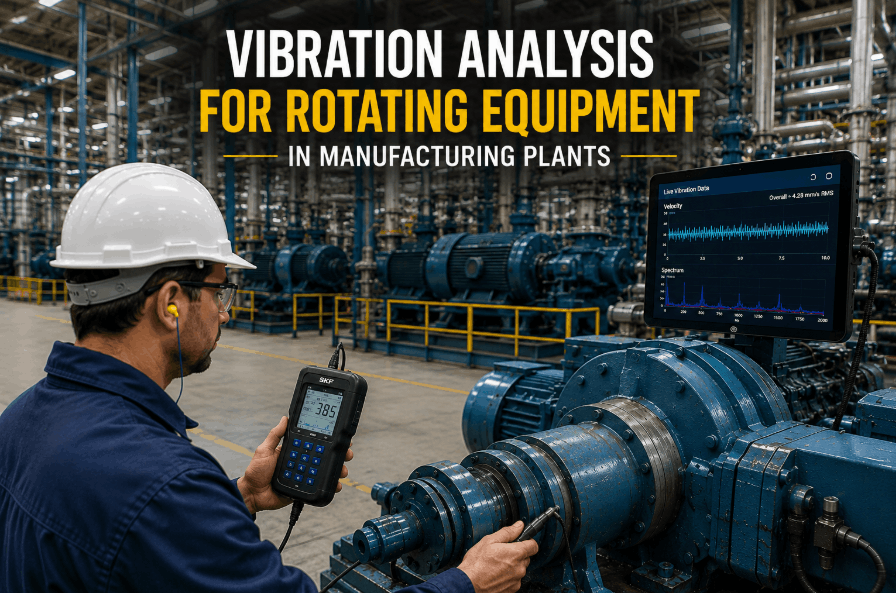
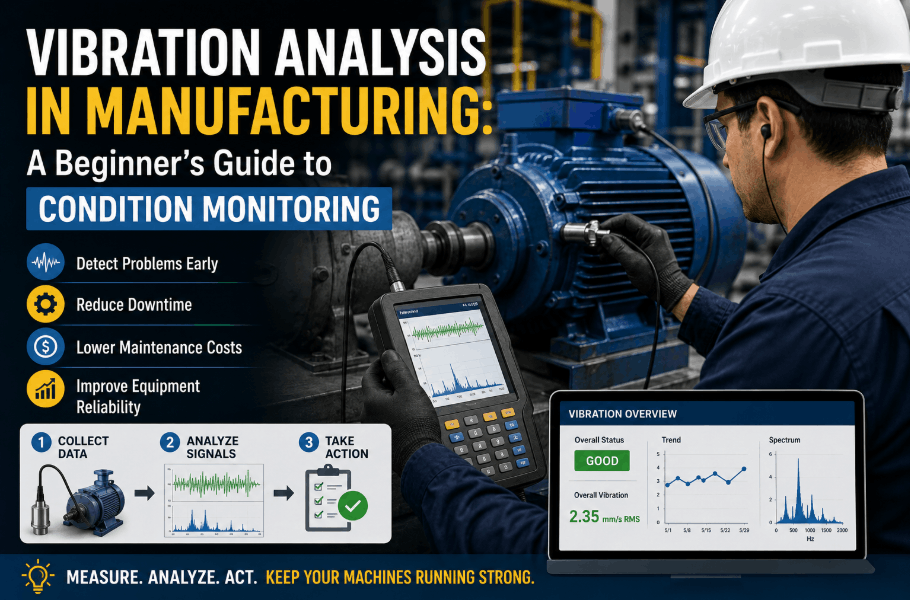
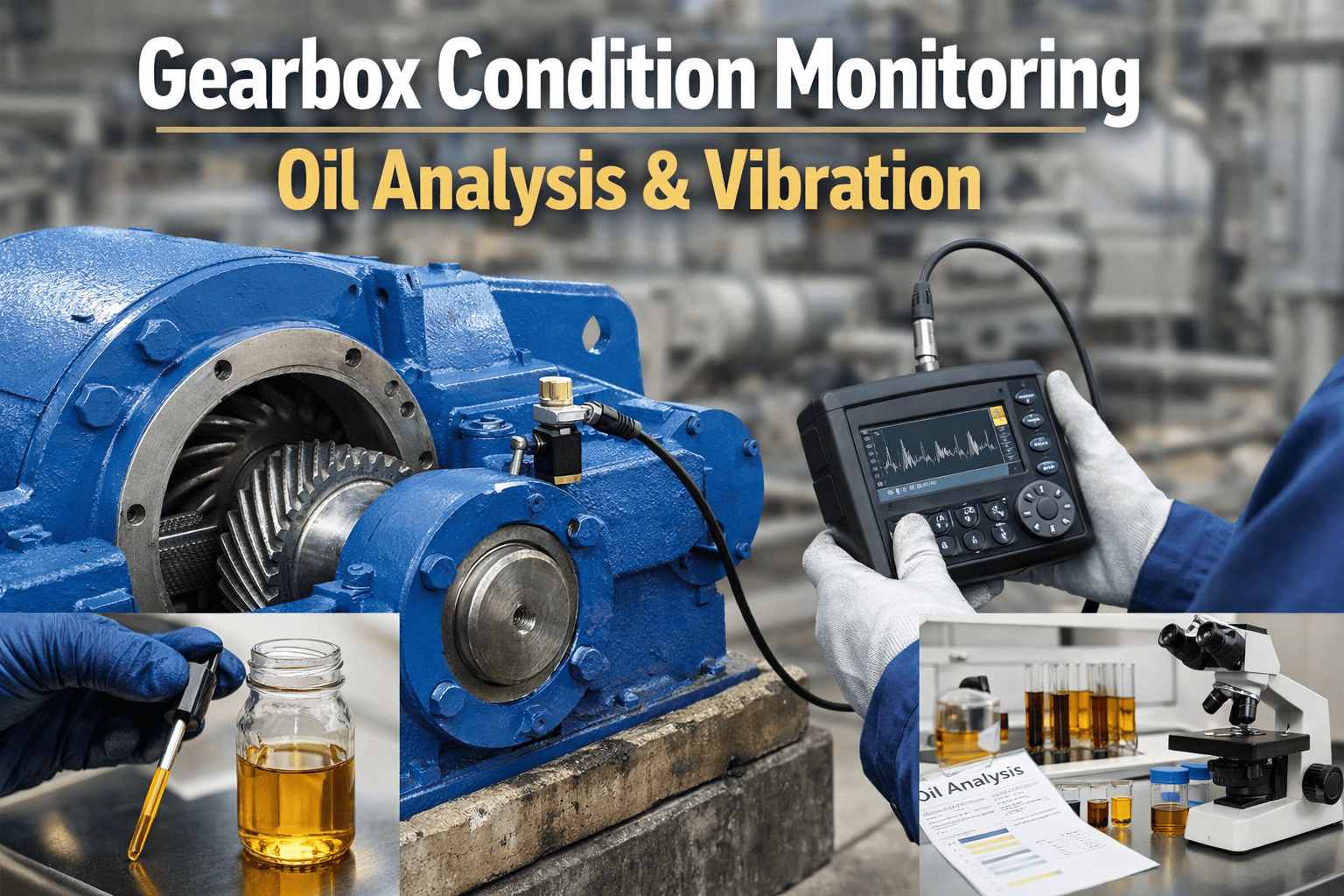
A $2.3 million unplanned outage at a Tennessee automotive plant—traced to a single bearing failure that went undetected for 72 hours. The maintenance manager later discovered that slight vibration spikes had appeared three weeks earlier, invisible to manual inspections but easily caught by modern sensors. Industry data shows that 82% of equipment failures give early warning signals, yet most manufacturers still rely on time-based maintenance schedules that either waste resources or miss critical issues entirely. This comprehensive guide examines five proven predictive maintenance technologies that are transforming how factories prevent breakdowns, comparing their strengths, applications, and real-world ROI to help you choose the right solution for your operation. Ready to eliminate surprise failures? Start monitoring your assets intelligently with automated condition tracking that alerts you before problems escalate.
70%
Downtime Reduction
vs. reactive maintenance
25-30%
Cost Savings
on maintenance budgets
3-5x
Equipment Life
extended operational years
12-18mo
Payback Period
typical ROI timeline
Five Core Predictive Maintenance Technologies
Detects mechanical imbalances, misalignment, bearing wear, and looseness in rotating equipment through frequency pattern analysis.
Best For:
Motors, pumps, compressors, gearboxes, turbines, fans, conveyors
Detection Range
2-8 weeks advance notice
Investment
$800-$3,500 per sensor
Identifies hotspots, electrical faults, insulation breakdown, and thermal inefficiencies using infrared cameras.
Best For:
Electrical panels, switchgear, transformers, steam systems, furnaces, bearings
Detection Range
1-4 weeks advance notice
Investment
$2,000-$15,000 per camera
Reveals internal wear particles, contamination, viscosity changes, and chemical degradation through fluid sampling.
Best For:
Hydraulic systems, engines, gearboxes, turbines, large compressors
Detection Range
3-12 weeks advance notice
Investment
$30-$150 per sample
Detects air leaks, steam traps, electrical arcing, bearing lubrication issues, and valve leaks using high-frequency sound.
Best For:
Compressed air systems, steam traps, electrical cabinets, valves, bearings
Detection Range
1-6 weeks advance notice
Investment
$1,500-$8,000 per device
Combines sensor data, operational patterns, and machine learning to predict failures across entire asset portfolios.
Best For:
Production lines, critical assets, fleet monitoring, complex machinery, plant-wide optimization
Detection Range
4-16 weeks advance notice
Investment
$5,000-$50,000+ setup
Real-World Implementation Strategy
Phase 1
Baseline Assessment
Identify critical assets, failure modes, and current maintenance costs. Prioritize equipment with highest downtime impact and establish baseline performance metrics.
Duration: 2-3 weeks
Phase 2
Technology Pilot
Deploy chosen technology on 3-5 critical assets. Collect data, validate alert thresholds, and document early wins to build organizational buy-in.
Duration: 4-8 weeks
Phase 3
Scaled Rollout
Expand coverage to all targeted equipment classes. Integrate alerts with work order system and train maintenance teams on response protocols.
Duration: 12-20 weeks
Phase 4
Continuous Optimization
Refine thresholds based on actual failure data, add complementary technologies, and measure ROI against baseline performance.
Duration: Ongoing
Deploy Predictive Monitoring in Days, Not Months
Join 500+ manufacturers using automated condition monitoring to prevent failures before they happen
Cost-Benefit Analysis Framework
ROI Reality Check: Mid-size manufacturers typically achieve 3:1 to 6:1 return on predictive maintenance investments within 18 months. The key is starting with high-impact assets rather than attempting plant-wide deployment immediately. Want to model your specific ROI?
Book a consultation for a customized cost-benefit analysis.
Common Implementation Pitfalls
Alert Fatigue
Setting thresholds too sensitive creates dozens of false alarms, causing teams to ignore legitimate warnings.
Solution: Start with conservative limits and tighten based on actual failure correlation data over 3-6 months.
Data Silos
Sensor data disconnected from work orders prevents tracking whether predictions translated to prevented failures.
Solution: Ensure bidirectional integration between PdM platform and CMMS from day one.
Skill Gaps
Technicians lack training to interpret vibration spectra or thermal patterns, leading to misdiagnosis.
Solution: Invest in certification programs or partner with vendors offering interpretation services.
Incomplete Coverage
Monitoring only obvious assets while ignoring support equipment that causes production bottlenecks when failing.
Solution: Use failure mode analysis to identify hidden critical assets before sensor placement.
Frequently Asked Questions
Which predictive technology delivers the fastest ROI for small manufacturers?
Thermal imaging typically provides the quickest returns because it requires minimal installation, identifies electrical issues that cause fires or outages, and can survey hundreds of components in hours. Most plants see payback within 6 months from prevented electrical failures alone.
Can we implement predictive maintenance without replacing our existing CMMS?
Yes, modern PdM platforms integrate with virtually any CMMS through APIs or manual workflows. The key is ensuring condition alerts automatically generate work orders in your existing system.
Many solutions offer pre-built connectors for popular CMMS platforms.
How much historical data is needed before AI platforms become effective?
Most AI-powered systems require 3-6 months of baseline operation to establish normal patterns, then another 3-6 months to validate predictions against actual failures. Platforms with pre-trained models for common equipment types can reduce this learning period significantly.
What prevents predictive technologies from working in harsh environments?
Extreme temperatures, moisture, dust, and vibration can damage sensors or corrupt data. Industrial-grade sensors rated for your specific conditions solve most issues, though they cost 30-50% more than standard models. Wireless sensors eliminate cabling vulnerabilities in difficult locations.
Should we hire a vibration analyst or use automated software?
Start with automated software that flags anomalies, then consult specialists for complex diagnostics. This hybrid approach costs 60% less than full-time analysts while still catching 85-90% of developing issues. Reserve expert analysis for critical assets or ambiguous patterns.
Stop Reacting to Failures—Start Preventing Them
Get intelligent condition monitoring running on your critical assets in under two weeks