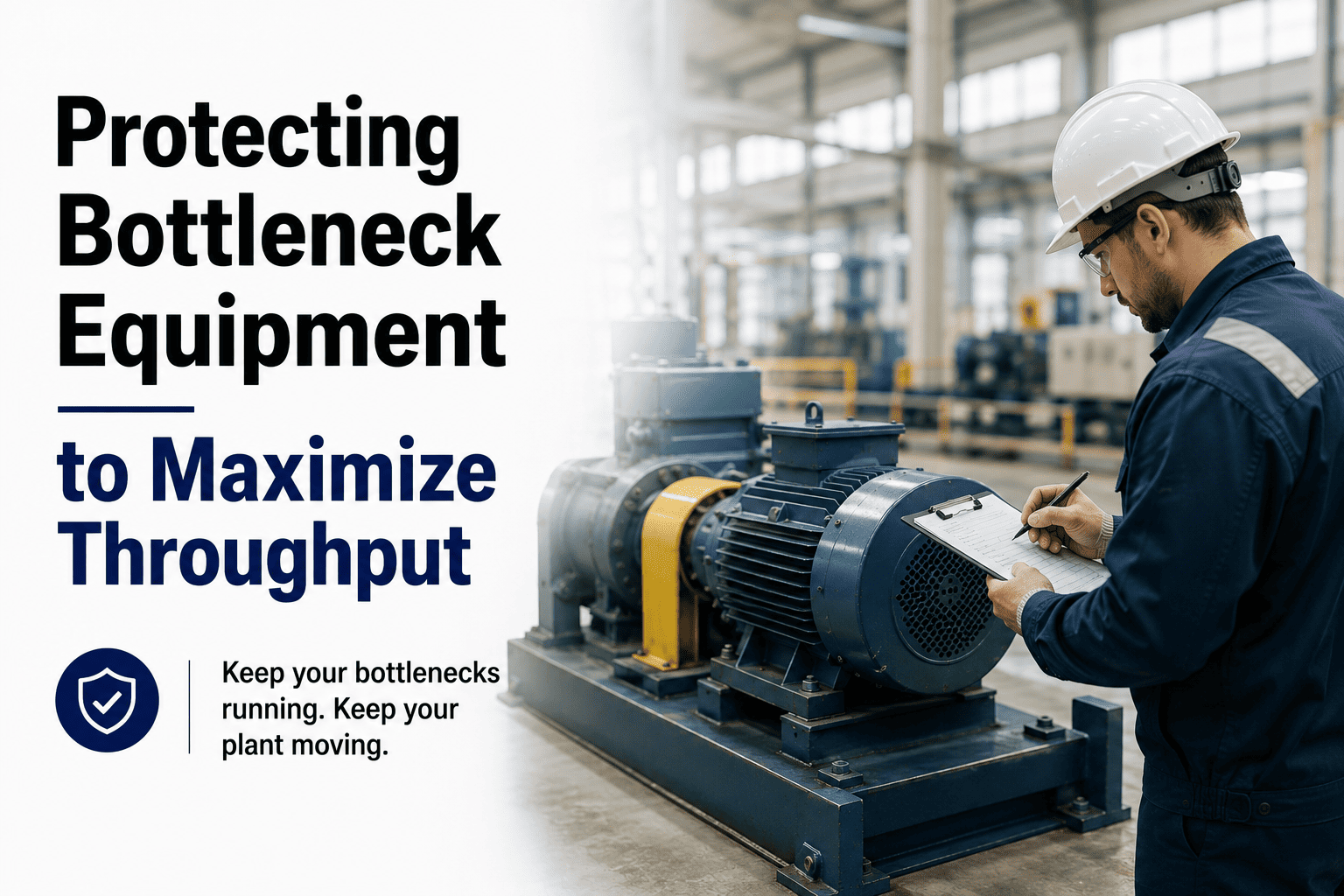
Bottleneck equipment governs the maximum throughput of any manufacturing line, meaning a single unexpected failure on that constraint machine effectively stops the entire plant's output. Applying the theory of constraints to maintenance strategy dictates that every minute of downtime on a bottleneck asset is a minute of lost production that can never be recovered. To maximize manufacturing throughput, reliability teams must shift from uniform maintenance schedules to a targeted approach that identifies, protects, and prioritizes the constraint. By implementing bottleneck protection strategies—such as buffer sizing, criticality-based spare parts, and aggressive preventive maintenance—plants can drastically increase overall equipment effectiveness (OEE). Discover how OxMaint helps you eliminate throughput bottlenecks and Start Free Trial to put your constraint-based maintenance plan into action today.
THEORY OF CONSTRAINTS APPLIED TO RELIABILITY
Is an Unreliable Bottleneck Machine Quietly Draining Your Plant's Throughput?
A failure on your constraint doesn't just stop one machine—it stops your entire revenue stream. Protecting bottleneck equipment is the highest-ROI maintenance strategy you can execute. Shift your focus to the assets that actually govern throughput.
If the bottleneck goes down for 1 hour, the whole line loses 1 hour of production—regardless of how well every other asset performs.
BOTTLENECK IDENTIFICATION
How to Identify Bottleneck Equipment in a Manufacturing Line
Before you can protect your constraint, you must accurately identify it. In modern manufacturing, bottleneck analysis is rarely as simple as spotting the slowest machine. Utilization rates, queue lengths, and downstream starvation are better indicators. A true bottleneck machine operates at or near 100% utilization constantly, while upstream assets build WIP (work-in-process) inventory and downstream assets sit idle waiting for parts. Reliability teams should map the production flow and calculate the Takt time versus actual cycle times at each station to find the limiting factor.
Utilization Tracking
The asset with the highest sustained utilization (often 95-100%) with a constant backlog of WIP is your primary throughput bottleneck. OxMaint tracks runtime and idle time automatically.
Queue & Starvation Analysis
Look for large queues before a machine and frequent starvation (waiting states) at downstream stations. This asymmetry confirms a production constraint.
Cycle Time vs. Takt Time
When an asset's cycle time exceeds the demanded Takt time, it mathematically restricts line throughput. Prioritize this machine for critical machine reliability programs.
CONSTRAINT MAINTENANCE MATH
The Cost of Downtime: Why Bottleneck Protection Pays for Itself
Not all downtime is created equal. Understanding the financial impact of a throughput bottleneck is critical for justifying increased maintenance spend. When a non-bottleneck machine fails for an hour, you lose the cost of the repair. When a bottleneck machine fails for an hour, you lose the total operational expense of the entire plant for that hour plus the gross margin of the unmade product. Use this simple formula to calculate the true cost of constraint downtime and justify your reliability investments.
Bottleneck Downtime Cost Formula
Total Lost Value = (Plant Operational Cost / Hour) + (Units Per Hour × Gross Margin Per Unit)
A 180-Asset Food Processing Plant
Consider a mid-sized packaging line where the rotary filler is the constraint. The plant runs at an operational cost of $4,500/hour and produces 8,000 units/hour at a gross margin of $0.85/unit. A single 3-hour unplanned failure on the bottleneck costs the plant ($4,500 × 3) + (8,000 × $0.85 × 3) = $33,900. By investing just $12,000/year in predictive sensors and critical spares for that single machine, the plant pays for its entire CMMS investment by preventing just one multi-hour event.
BOTTLENECK PROTECTION STRATEGY
How to Protect Bottleneck Equipment and Maximize Throughput
Once the constraint is identified, the entire maintenance strategy must pivot to bottleneck protection. This means treating the constraint machine with a higher standard of care than non-critical assets. You must implement specialized protection PM, build strategic buffers, and hoard critical spare parts specifically for that machine. The goal of constraint maintenance is zero unplanned downtime—if the bottleneck isn't running, throughput is actively bleeding.
Aggressive Protection PM
- Shorten preventive maintenance intervals by 30-50% compared to non-critical assets.
- Lubrication routes and inspection checklists executed daily, not weekly.
- Dedicated reliability technician assigned specifically to the constraint.
Strategic Buffer Sizing
- Maintain a time-buffer before the constraint to absorb upstream variation.
- Size buffers to cover the MTTR (Mean Time To Repair) of the bottleneck.
- Monitor buffer levels as an early warning system for upstream failures.
Criticality-Based Spare Parts
- Stock spare parts exclusively for the bottleneck, even if carrying costs are high.
- Keep critical components (belts, bearings, sensors) on hand to slash MTTR.
- Vendor-managed inventory (VMI) agreements for high-wear constraint parts.
SOLUTION
How OxMaint Helps Eliminate Throughput Bottlenecks
OxMaint is engineered to prioritize maintenance based on production impact, not just asset age. By tagging your constraint machines in our AI-powered CMMS, you automatically escalate their maintenance priority, ensuring that work orders, spare parts, and predictive analytics are all aligned to keep the bottleneck running at maximum throughput. Here is how OxMaint directly targets and resolves your constraint maintenance challenges:
Predict Failures Before They Stop the Line
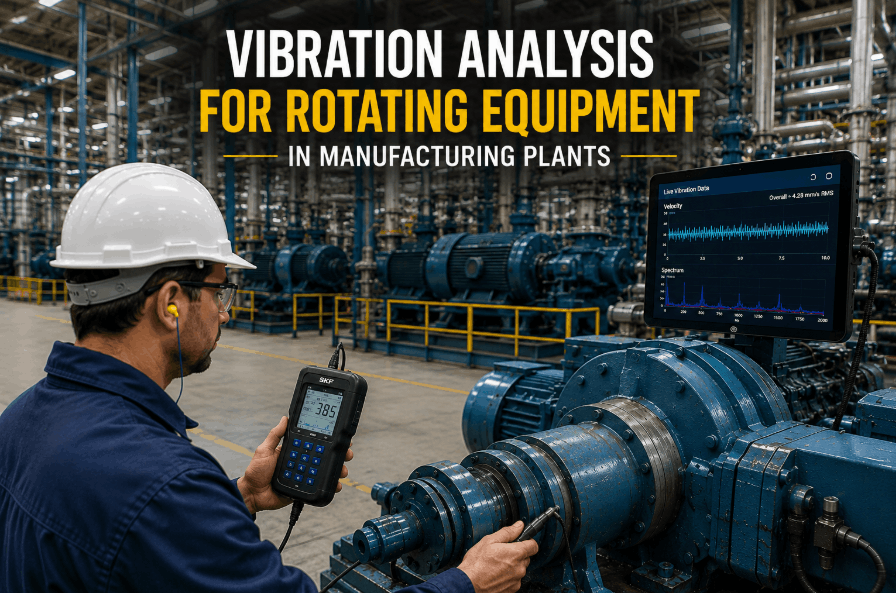
OxMaint's predictive maintenance engine analyzes vibration and temperature data in real-time. Outcome: Predict failures up to 14 days in advance and cut unplanned bottleneck downtime by 30-50%.
Automated Protection PM Scheduling
Trigger automated, conditional-based work orders specifically for constraint assets. Outcome: Ensure zero missed PMs on critical machines and eliminate the reactive maintenance trap.
Critical Spare Parts Hoarding
Link specific inventory directly to bottleneck asset profiles with automatic reorder points. Outcome: Slash Mean Time To Repair (MTTR) by 60% by guaranteeing parts are always on the shelf.
Impact-Driven Work Order Prioritization
Tag assets as "Constraint" to automatically float their work orders to the top of the technician queue. Outcome: Direct your best technicians to the highest-ROI maintenance tasks instantly.
| Maintenance Metric | Non-Bottleneck Asset | Bottleneck Asset (Protected by OxMaint) |
|---|---|---|
| PM Frequency | Standard (e.g., 90 days) | Accelerated (e.g., 30 days) + Condition-based |
| Spare Parts Strategy | Min/Max optimized for cost | Critical hoarding; always in stock regardless of carrying cost |
| Failure Response (MTTR) | 4-8 hours (standard dispatch) | <1 hour (auto-prioritized dispatch & pre-staged parts) |
| Maintenance Approach | Preventive / Run-to-Failure | Predictive & Prescriptive (AI-driven) |
Stop Letting One Machine Govern Your Entire Plant Output
See how OxMaint identifies and protects your highest-impact assets. Book a 30-minute demo and let us map your constraint maintenance strategy.
FREQUENTLY ASKED QUESTIONS
Bottleneck Equipment & Constraint Maintenance FAQs
Protect Your Bottleneck, Maximize Your Throughput
Deploy OxMaint's AI-driven CMMS to predict failures, automate protection PMs, and guarantee spare parts for your most critical assets.
Free 14-day trial · No credit card required