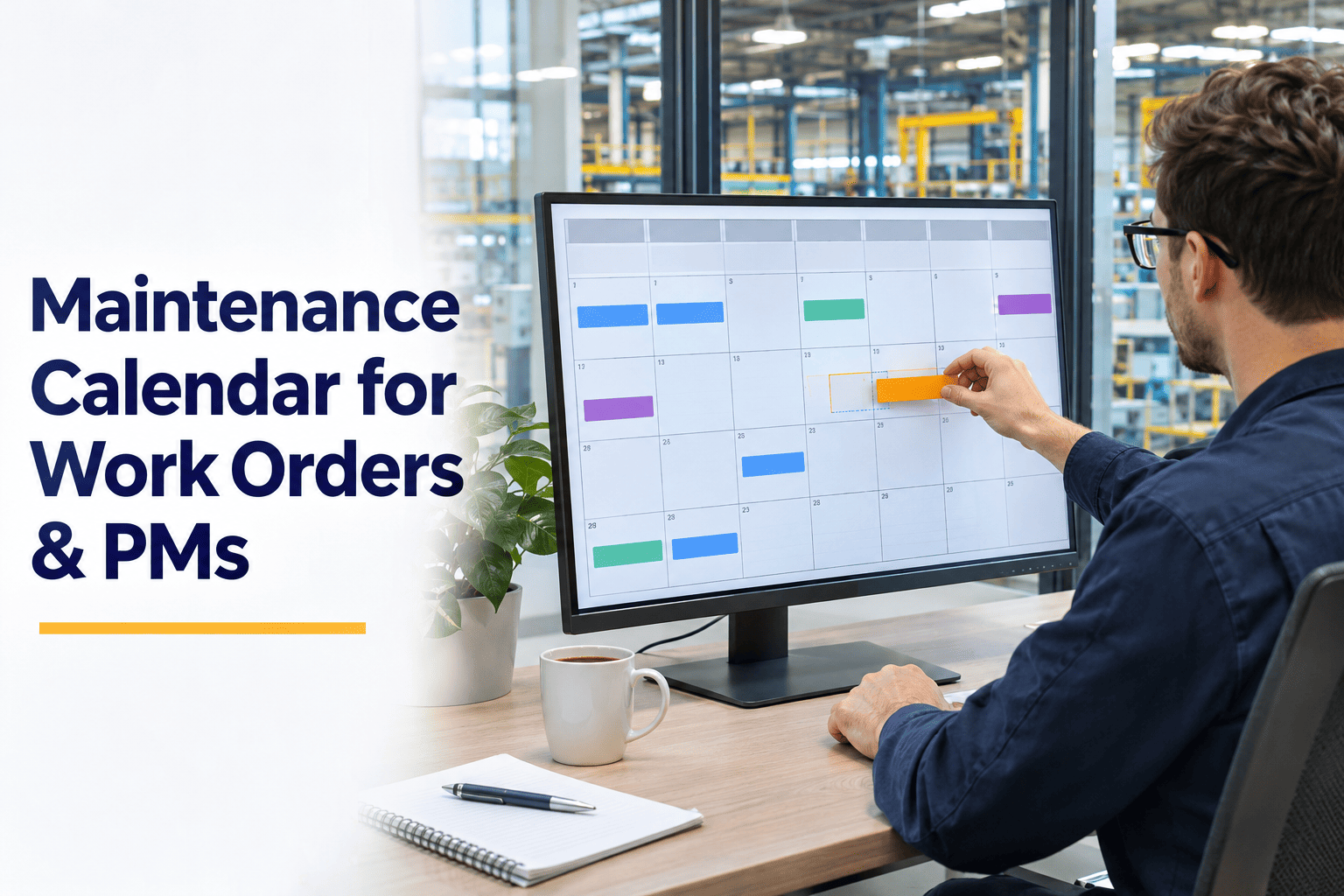
Every preventive maintenance schedule needs a rule for when it comes due. A calendar PM comes due on a date, whether or not the machine ran. A meter-based PM comes due when the hour meter reaches an interval, which suits equipment that runs a different number of hours each week. Oxmaint can set a schedule on either rule, or on both, due on whichever is reached first. Sign up to compare the rules on a sample PM register with 55 schedules.
Calendar vs Meter-Based Preventive Maintenance
Dates, hours or both, and how to choose per machine rather than for the whole plant. Sign up and see each rule at work.
The Two Rules Side by Side
| Calendar-based | Meter-based | |
|---|---|---|
| Comes due | On a date: every week, month or year | At an hour-meter reading: every so many run hours |
| Follows | Time passing, whether the machine ran or not | How much the machine actually ran |
| Suits | Inspections set by date, ageing parts, statutory checks | Wear that follows use: compressors, spindles, forklifts |
| Needs | Nothing beyond the date | Hour readings logged on the asset |
| Risk if used alone | Work done too early on a quiet machine, or too late on a busy one | A machine that barely runs is not looked at for a long time |
Whichever Comes First
A schedule on both rules is due on the hours or the date, whichever is reached first. When the job is raised, the date and the hours both roll on, so the schedule is not instantly due again on the side that was not reached. Sign up to open one.
Sample plant records from the Oxmaint portal's PM Schedules, captured 26 Nov 2026: 55 schedules, 10 of them meter based.
Compare the Rules on Real Schedules
Open sample PMs on dates, on hours and on both, and see when each comes due. Sign up to the micro app and look.
Which Rule for Which Machine
Sample plant records from the Oxmaint portal's PM Schedules and PM Forecast, captured 26 Nov 2026.
How the Forecast Reads Hours
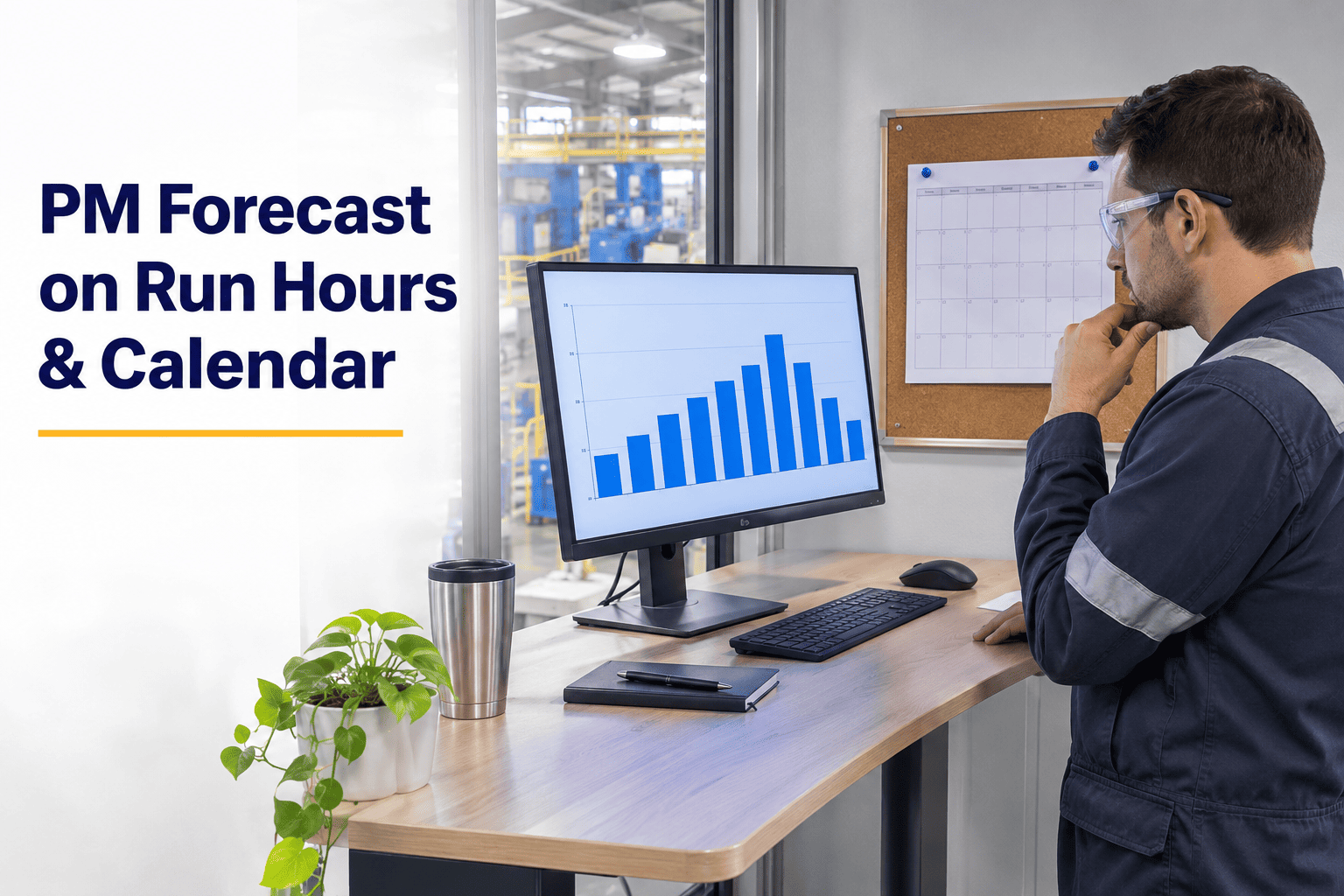
A date-based PM sits on its date. An hours-based PM is placed where the machine's own running rate says it will reach the interval.
Sample plant records from the PM Forecast, captured 26 Nov 2026: the sample plant has 14 hours-led schedules in the forecast.

An hours rule is only as good as the last reading. Log the hour meter at pre-start checks or with Log reading on the asset, and the forecast stays honest.
Do not pick one rule for the whole plant. Put wear items on hours with a date back-stop, statutory and ageing checks on the calendar, and review a machine's schedule whenever its running pattern changes, such as a new shift or a line moving to a new product. Editorial guidance, not a quote from a named person.
Frequently Asked Questions
Choose the Right PM Rule, Machine by Machine
Calendar, run hours or both, with a forecast that reads each. Sign up and explore the micro app.