2:47 PM. Your ISO auditor pulls calibration records for the pick-and-place machine that's been running production for three weeks. Last calibration: 94 days ago. Due date: 90 days. For four days, you've been shipping PCBs assembled with an out-of-calibration machine. The auditor flags a major nonconformance. You now face a complete production hold, customer notifications for 847 shipped units, potential recalls, and recalibration costs exceeding $43,000. All because a calendar reminder was missed.
Manual calibration tracking fails in high-mix electronics environments where 40+ instruments require different schedules, environmental conditions matter, and one missed deadline can invalidate weeks of production. Start your free Oxmaint CMMS trial to automate calibration scheduling with risk-based metrology management.
$47K
Average cost of single out-of-calibration incident in electronics
ISO 17025
Calibration accreditation standard compliance automated
85%
Reduction in calibration scheduling errors
100%
Traceability to NIST standards maintained
Modernize Manufacturing & Plants Efficiency via Digital Work Orders
Electronics assembly demands precision that manual calibration tracking can't guarantee. A reflow oven running 2°C hot produces cold solder joints. An oscilloscope with 5% drift passes failing boards. A torque driver 10% low creates unreliable connections. These aren't theoretical risks—they're daily realities when calibration schedules slip through spreadsheet cracks.
Spreadsheet reminders ignored during production rush
No visibility when equipment approaches calibration due date
Certificate PDFs scattered across network drives
No risk assessment tying criticality to schedule frequency
Audit trails reconstructed manually from paper records
30-day advance alerts → Calibration scheduled before expiration
Equipment auto-locked when calibration expires → Zero violations
Certificates attached to asset records → Instant auditor access
Risk matrix determines frequency → Critical tools prioritized
Complete digital trail → ISO 17025 compliance automated
Reflow Oven #2
BTU Pyramax 150N
10-Zone Convection | Asset #ME-2947
OVERDUE: 4 Days
Last Cal: 94 Days Ago
PRODUCTION HOLD | Calibration Vendor Scheduled Tomorrow
Digital Multimeter #7
Fluke 289 True RMS
Precision Bench Unit | Asset #ME-1823
Due in 18 Days
Certificate Expires: Dec 27
Auto Work Order Created | Sent to Metrology Lab
Pick & Place Machine #3
Yamaha YSM20R
High-Speed Mounter | Asset #ME-3104
Calibrated: Nov 15, 2025
Valid for 143 Days
Next Calibration: May 8, 2026 (Auto-Scheduled)
Automate Your Calibration Scheduling Today
Stop missing calibration deadlines. Eliminate audit findings. Protect your production with AI-powered metrology management.
Aligning Teams and Vendors — A Manufacturing & Plants Lifecycle with Analytics
Calibration isn't a standalone activity—it's part of a complex workflow involving production schedulers, quality engineers, metrology labs, and external vendors. Digital work order automation connects these stakeholders, eliminates communication gaps, and ensures nothing falls through scheduling cracks.
Automated Calibration Workflow: Risk-Based Scheduling
1
Risk Assessment Matrix
System assigns criticality score based on: process impact, measurement tolerance, regulatory requirements, and failure consequences. High-risk equipment gets shorter intervals.
→
2
Auto Work Order Creation
30 days before expiration, system creates calibration work order, checks vendor availability, and reserves equipment downtime slot in production schedule.
→
3
Certificate & Audit Trail
Digital certificate attached to asset record. Equipment unlocked for production. Next calibration auto-scheduled. Complete audit trail maintained.
CRITICAL RISK
Calibration: Every 30 Days
Equipment Examples:
- Reflow oven temperature profiling (±1°C tolerance)
- X-ray inspection systems (measurement accuracy critical)
- Automated optical inspection (AOI) calibration standards
- Solder paste inspection (SPI) height measurement
Why Critical: Direct impact on solder joint quality. Out-of-spec results in field failures, customer returns, safety incidents.
HIGH RISK
Calibration: Every 90 Days
Equipment Examples:
- Pick-and-place vision systems (placement accuracy)
- In-circuit test (ICT) fixtures and probes
- Environmental test chambers (temperature/humidity)
- Torque drivers for assembly (5% tolerance)
Why High: Affects quality but caught by downstream inspection. Drift causes increasing defect rates before failure.
MEDIUM RISK
Calibration: Every 6 Months
Equipment Examples:
- General-purpose bench multimeters (standard measurements)
- Power supplies (non-critical testing)
- Soldering iron tip temperature (manual stations)
- ESD measurement devices (workstation verification)
Why Medium: Used for verification/troubleshooting. Drift detected through cross-checks with other instruments.
LOW RISK
Calibration: Annually
Equipment Examples:
- Calipers and micrometers (mechanical dimensions)
- Scales for component counting (non-critical)
- Basic oscilloscopes (general troubleshooting)
- Humidity meters (environmental monitoring)
Why Low: Supporting measurements. Not directly tied to product quality specifications or safety requirements.
Manufacturing & Plants CMMS Best Practices for Calibration Management
01
Implement Risk-Based Calibration Intervals
Replace one-size-fits-all annual calibrations with risk assessment matrix. Critical equipment affecting product safety gets monthly calibration. Low-risk support equipment extends to annual cycles. Use AI analytics to optimize intervals based on historical drift patterns.
02
Automate Work Order Creation with Multi-Site Rollouts
Configure automated work orders triggered 30 days before expiration. System checks vendor capacity, production schedules, and creates coordinated calibration batches across multiple facilities. Standardize processes for consistent compliance across all locations.
03
Integrate IoT Sensors for Condition Monitoring
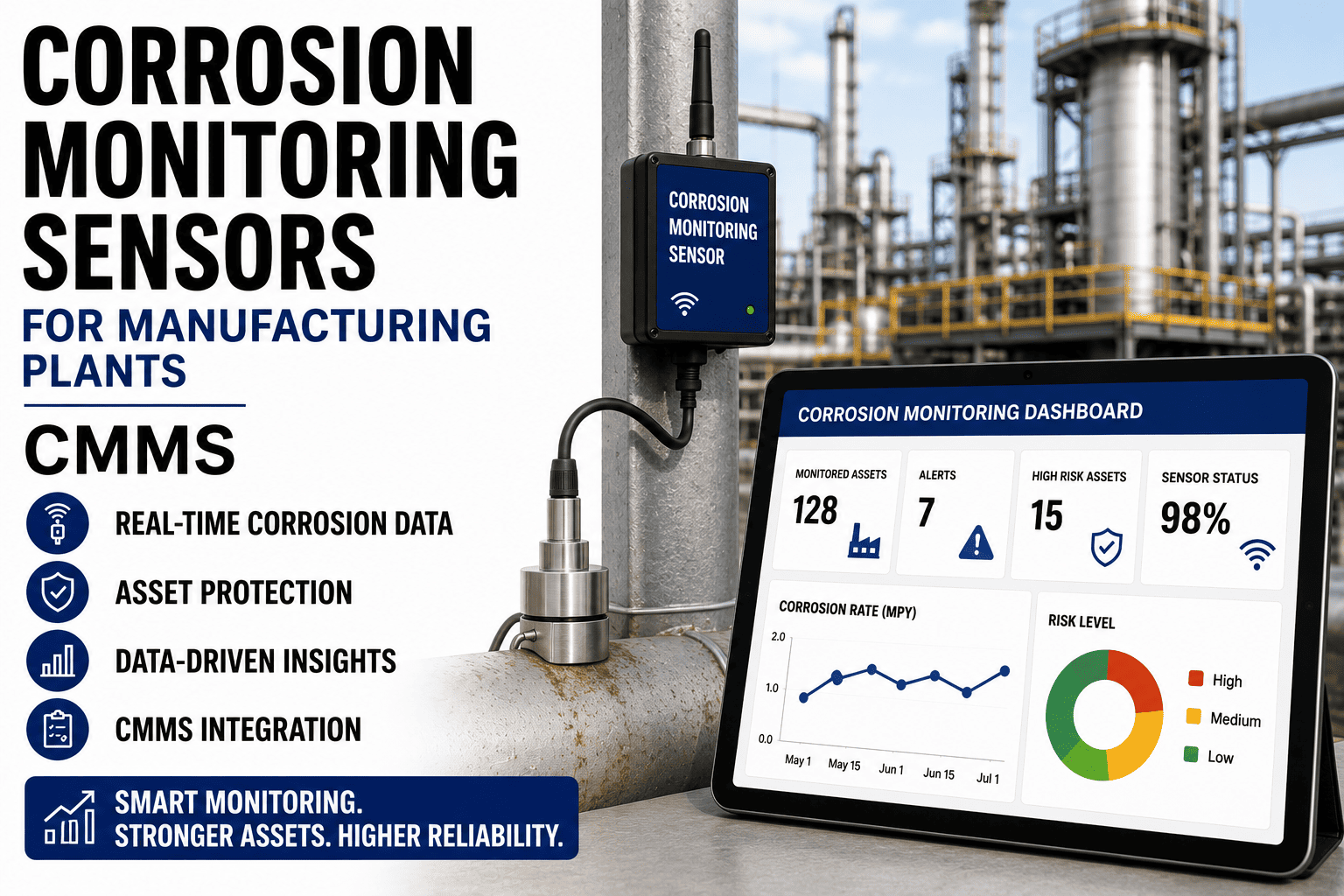
Install temperature and vibration sensors on critical metrology equipment. Detect drift patterns between scheduled calibrations. Environmental changes, transportation shocks, or wear patterns trigger interim verification checks before equipment produces out-of-spec measurements.
04
Maintain Complete Digital Audit Trails
Store calibration certificates, chain of custody records, NIST traceability documentation, and measurement uncertainty data digitally. Link records to specific production lots. During audits or customer inquiries, retrieve complete calibration history in seconds, not hours.
05
Use Asset Tracking Manufacturing & Plants with SLA Reporting
Track calibration vendor performance: turnaround time, on-time delivery, certificate accuracy. Use SLA reporting to identify vendors missing deadlines or providing questionable results. Switch vendors based on data, not assumptions, to minimize production interruptions.
ISO 17025 Accreditation
Automatic verification that all calibration vendors hold valid ISO 17025 accreditation. System flags non-accredited labs and prevents work orders from proceeding.
100% Verified
NIST Traceability Chain
Complete chain of custody from working standards to national standards. Digital certificates show traceability path for every measurement device.
Fully Documented
Measurement Uncertainty
Track measurement uncertainty for each instrument. Compare against process tolerance requirements. Flag equipment where uncertainty approaches tolerance limits.
Within Limits
Environmental Conditions
Monitor temperature and humidity during calibration. Log environmental data to certificate. Ensure calibration performed within manufacturer specifications.
Monitored 24/7
Before Automated Calibration Management
7
Missed calibrations per quarter
18hrs
Avg time to find calibration records during audits
3
Production holds due to expired calibrations
$67K
Annual cost of calibration incidents
After 6 Months with Oxmaint CMMS
0
Missed calibrations per quarter
3min
Avg time to find calibration records during audits
0
Production holds due to expired calibrations
$4K
Annual cost of calibration incidents
100% calibration compliance
94% reduction in incident costs
Zero audit findings in 2 cycles
Excel in Maintenance & Troubleshooting
Digital work orders + guided diagnostics — reduce downtime and speed first-time fixes.
"We had three major audit findings in 18 months—all calibration-related. Spreadsheets weren't working. We'd miss reminders during production pushes, then scramble to find certificates when auditors asked. After implementing Oxmaint, the system sends alerts 30 days out, auto-creates work orders, and locks equipment if calibration expires. We've gone through two full ISO audits with zero calibration findings. Our quality manager can pull any certificate in under 30 seconds. The system paid for itself the first time we avoided a production hold."
David Chen
Quality Director, Apex Electronics Manufacturing — Austin, TX (240 employees, ISO 9001/ISO 13485 certified)
How does risk-based calibration scheduling differ from fixed annual schedules?
Fixed schedules calibrate everything annually regardless of criticality. Risk-based scheduling analyzes: measurement impact on quality, regulatory requirements, historical drift patterns, and process tolerances. Critical reflow ovens affecting solder joints get 30-day cycles. Low-risk calipers used for packaging dimensions get annual cycles. This optimizes cost while maximizing quality assurance.
See risk assessment tools.
Can the system prevent using out-of-calibration equipment in production?
Yes. When calibration expires, Oxmaint automatically flags equipment status as "OUT OF CALIBRATION." Work orders requiring that equipment are blocked. Production scheduling systems receive alerts. Equipment physically locked via QR code scanning at use point. Only after new certificate is uploaded and verified does equipment return to "CALIBRATED" status. This prevents accidental use.
Request equipment lockout demo.
How does multi-site rollouts work for companies with multiple facilities?
Multi-site rollouts centralize calibration management across all locations. Headquarters sets standard risk assessment matrices, calibration intervals, and vendor requirements. Each site maintains local schedules while corporate dashboard shows company-wide compliance. Standardized processes ensure consistent audit readiness regardless of location. Vendors can be shared or site-specific based on geographic requirements.
Discuss multi-site implementation.
What happens if a calibration reveals equipment is out of tolerance?
Oxmaint triggers "As Found Out of Tolerance" workflow: (1) Equipment immediately quarantined, (2) All production lots since last calibration flagged for review, (3) Automated notification to quality and engineering, (4) Root cause analysis work order created, (5) Customer notification templates prepared if needed. The system links affected production to calibration records, enabling precise lot traceability and targeted remediation instead of blanket recalls.
See tolerance deviation handling.



.png)


