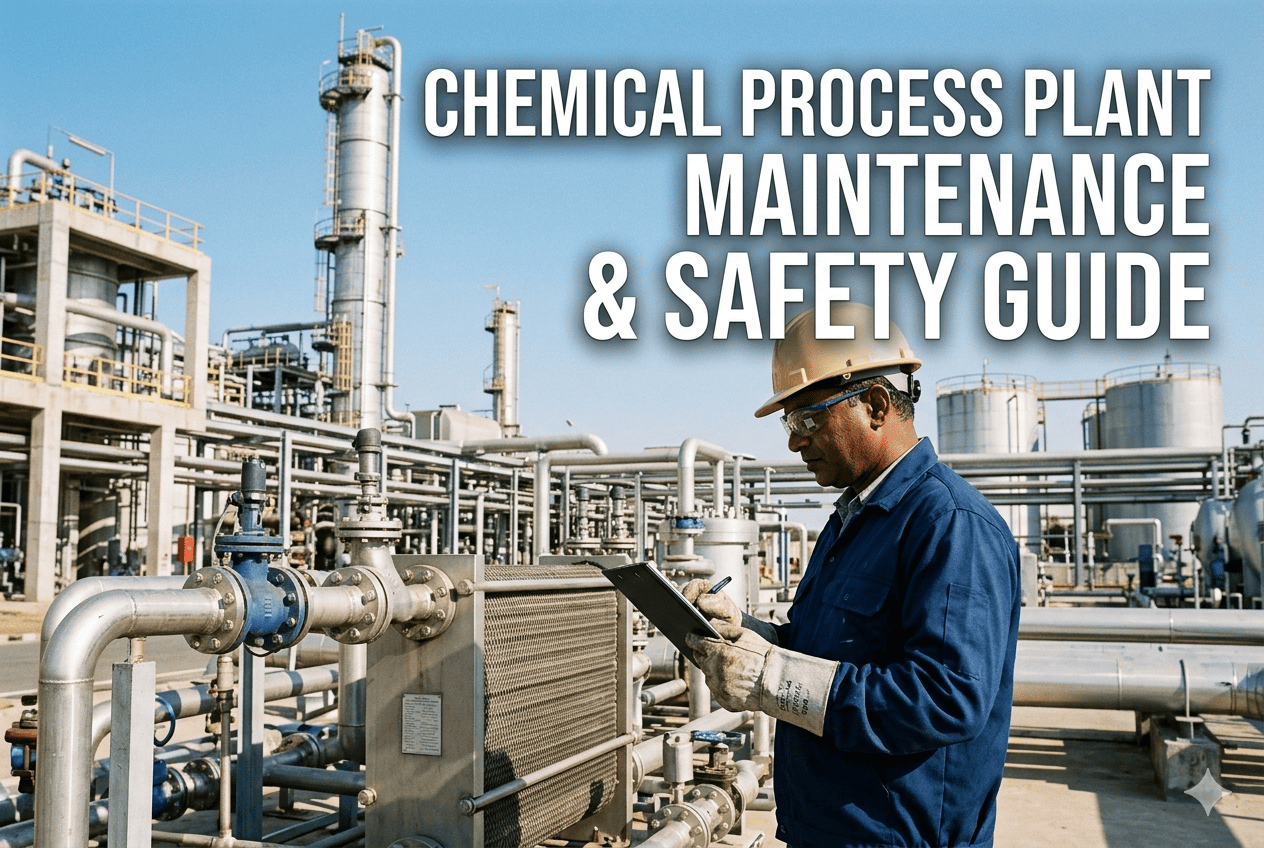
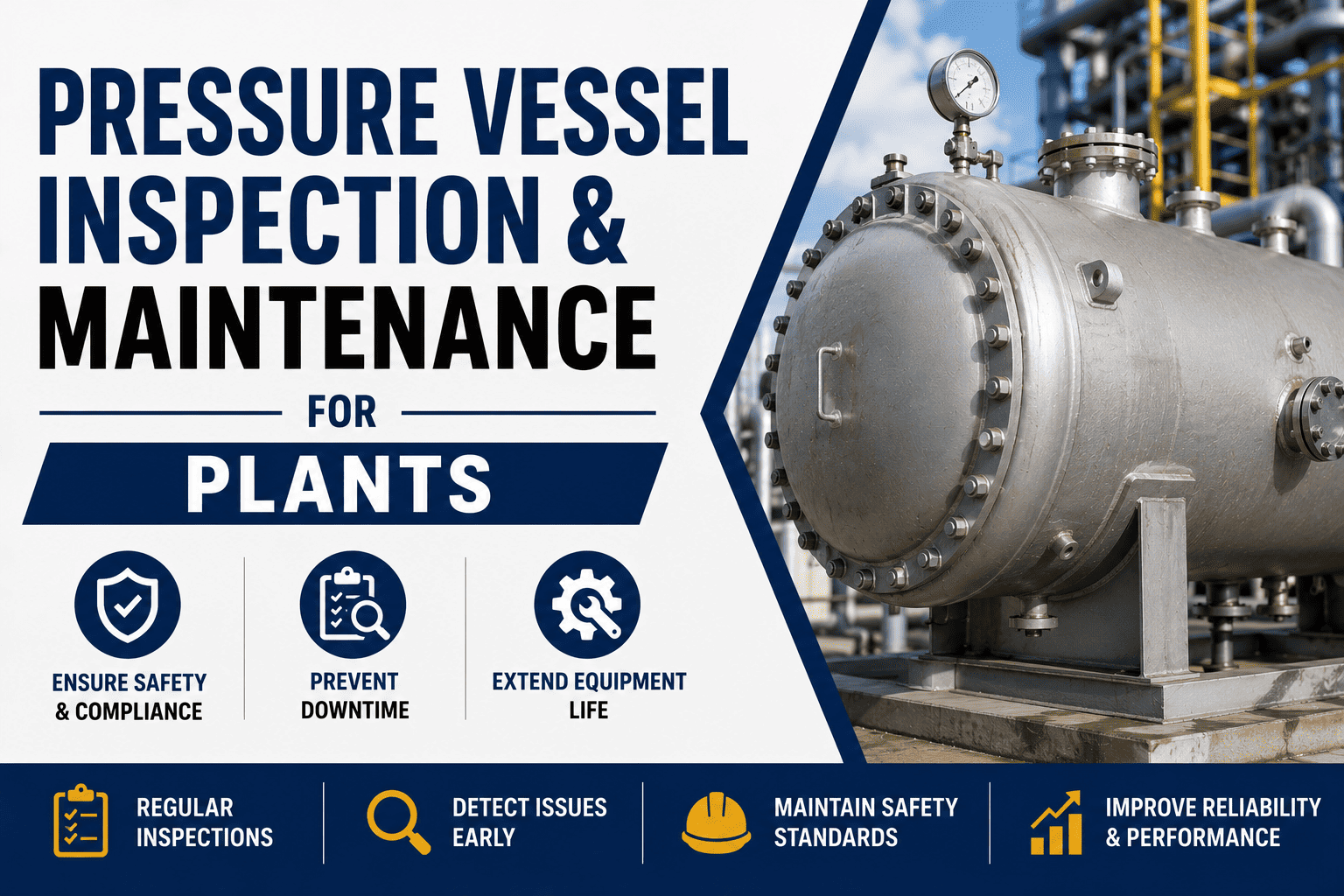
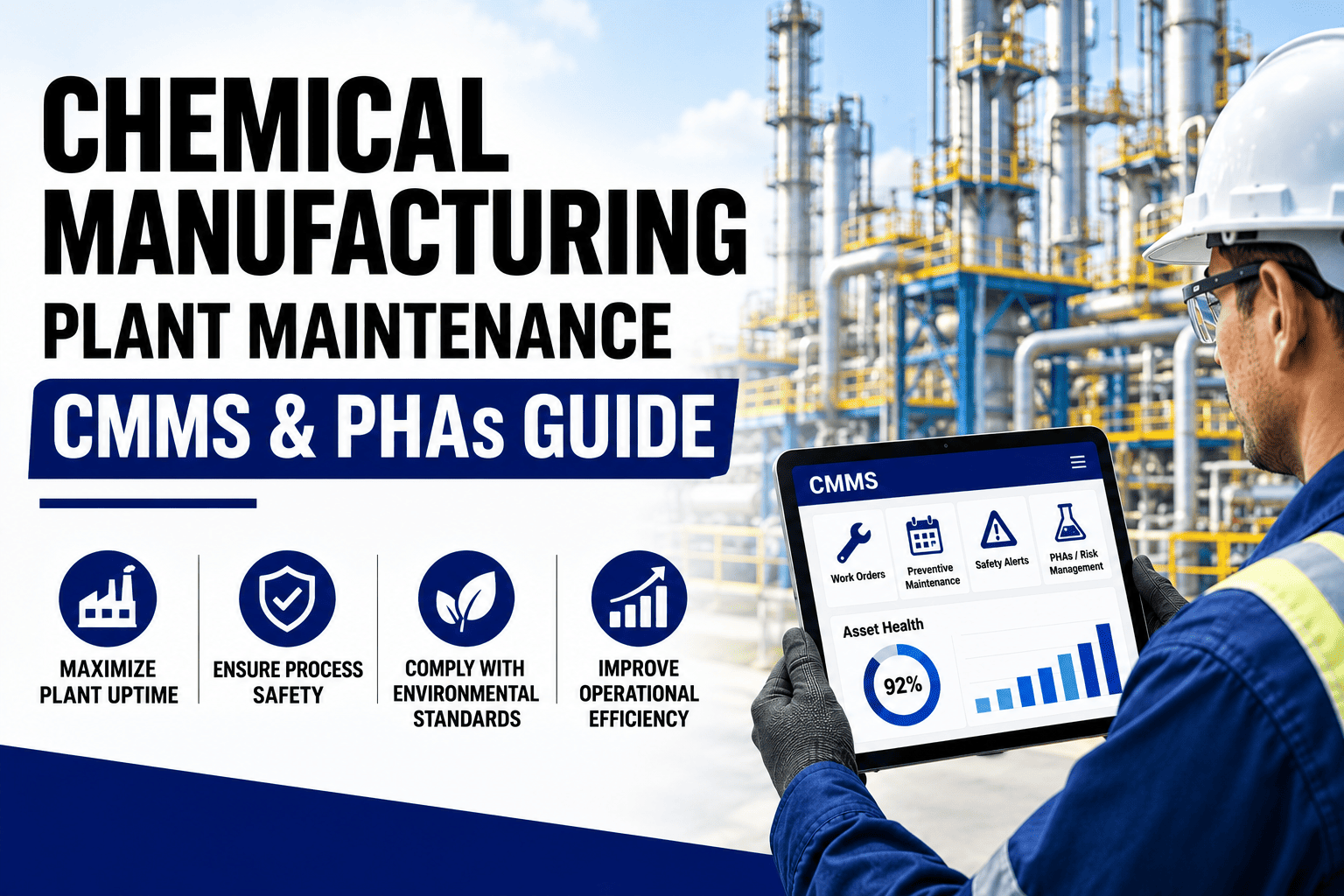
A single ruptured pressure vessel. A cracked weld on a corroded ammonia line. A missed inspection interval on a heat exchanger handling 450°C hydrocarbons. Chemical process plants do not fail gently — they fail catastrophically, and they fail fast. OSHA's 29 CFR 1910.119 Process Safety Management standard exists precisely because history has proven what happens when maintenance drifts, mechanical integrity slips, or management of change breaks down. Compliance with PSM, API 510 pressure vessel inspection, and hazardous area zoning is not a paperwork exercise — it is the difference between a routine shift and a community-scale disaster. Centralising mechanical integrity, corrosion monitoring, MOC, and permit-to-work inside a single system is how modern chemical plants stay ahead — start with OxMaint free or book a working session with our safety team.
The Cost of Getting It Wrong
Four Consequences Every Chemical Plant Manager Lives With
Chemical plant incidents are not distributed evenly. A single failure in mechanical integrity, a skipped API 510 interval, or an uncontrolled change can trigger all four categories simultaneously. The table below reflects what actually happens when PSM systems fail.
Severity 01
Loss of Containment
Toxic release, fire, explosion
Ruptured vessels, cracked flanges, corroded piping. A loss-of-containment event in a PSM-covered process can release hydrogen fluoride, chlorine, or ammonia into populated areas within minutes.
Severity 02
Regulatory Enforcement
OSHA NEP citations & penalties
OSHA's PSM Covered Chemical Facilities National Emphasis Program targets sites for inspection. Willful or repeat violations carry per-instance penalties and trigger EPA RMP coordination, criminal referral risk, and settlement agreements.
Severity 03
Unplanned Shutdown
Days to weeks of lost production
A failed internal inspection, a rejected fitness-for-service assessment, or a surprise CUI finding can pull a unit off-line. Every lost production day in ethylene, methanol, or specialty chemicals runs into millions.
Severity 04
Insurance & Reputation
Premium increases, capacity loss
Insurers now require demonstrable mechanical integrity programs, RBI evidence, and incident trend data. Plants without defensible digital records face premium hikes, coverage caps, or outright refusal to renew.
The 14 Elements of PSM — and Where Maintenance Owns the Outcome
OSHA 1910.119 defines 14 interlocking elements. Maintenance and reliability teams are directly accountable for at least seven of them, and every other element depends on maintenance data. The grid below shows how each PSM element maps to work your CMMS either supports or blocks.
Process Safety Information
Equipment specs, P&IDs, material datasheets, design codes, MAWP, and ventilation calculations must be complete, current, and instantly accessible.
Process Hazard Analysis
HAZOP and LOPA findings flow to maintenance as recommended actions with tracked resolution — every PHA finding becomes a traceable work item.
Operating Procedures
Startup, shutdown, normal, emergency, and temporary operations. Must be annually certified current and aligned with equipment condition.
Employee Participation
Maintenance and operations personnel consulted on PHA, MOC, and incident reviews — with documented participation records.
Training
Operators and maintenance technicians trained and refresher-certified every 3 years, with skill-to-task matrix enforced at work assignment.
Contractors
Contractor safety programs verified, orientation tracked, and covered-process work performance reviewed on every job.
Pre-Startup Safety Review
New and modified facilities checked for construction, PHA resolution, procedure completion, and training before hydrocarbons or chemicals are introduced.
Mechanical Integrity
Written procedures, inspection and testing, quality assurance, corrosion monitoring, equipment deficiencies — the heart of the maintenance organisation.
Hot Work Permit
Permits issued for welding, grinding, and spark-producing work. Gas testing, hazard assessment, and fire watch documented for every operation.
Management of Change
No chemical, technology, equipment, or procedure change moves forward without hazard review, approval chain, PSI update, and training refresh.
Incident Investigation
Every incident or near-miss involving HHC release investigated within 48 hours, with root cause, corrective actions, and resolution tracked.
Emergency Planning
Facility-wide emergency action plan covering small releases, evacuation, and HAZWOPER response integration with local first responders.
Compliance Audit
Every 3 years minimum. Auditors need to pull records by asset, by inspection type, by date range — instantly and without missing entries.
Trade Secrets
PSM information remains available to everyone compliance-relevant, with confidentiality protections for proprietary formulations and process details.
Hazardous Area Zones — And What Maintenance Can Touch Where
Every inch of a chemical plant sits in a classified zone. ATEX and IECEx define the zone; the zone defines what equipment can be installed, what tools technicians can carry, what permits are required, and what gas testing must happen before any work begins. Misreading a zone is how explosions start.
ZONE 0
Explosive Atmosphere Present Continuously
Inside process vessels, reactor headspaces, fuel tank interiors, solvent storage vapour spaces
Only Category 1G equipment — intrinsically safe (Ex ia). All maintenance requires vessel entry permits, inerting, and confined space protocols.
ZONE 1
Explosive Atmosphere Likely in Normal Operation
Around pumps, seals, valves, sample points, loading bays, and process line connections handling flammable liquids or gases
Category 2G — flameproof (Ex d), increased safety (Ex e), or intrinsically safe (Ex ib). Hot work prohibited without full permit and continuous gas monitoring.
ZONE 2
Explosive Atmosphere Unlikely, Short Duration Only
Areas adjacent to Zone 1, warehouses with sealed flammables, plant perimeters, well-ventilated process areas
Category 3G — non-sparking (Ex nA), restricted-breathing (Ex nR), or pressurised (Ex pz). Represents roughly 80% of classified industrial zones.
ZONE 20/21/22
Combustible Dust & Fibre Atmospheres
Powder handling, dryers, silos, bagging lines, pharma API processing, specialty chemical fine particulate areas
Mirrors gas zoning — Cat 1D / 2D / 3D equipment. Dust classification frequently missed during site surveys; a common audit finding.
Mechanical Integrity Backbone
Your PSM Auditor Does Not Care That You Did the Inspection — They Care That You Can Prove It
OxMaint holds every inspection record, every corrosion measurement, every MOC approval, every hot work permit, and every mechanical integrity deficiency in one audit-ready system. When the OSHA inspector asks for three years of external visual inspection records on vessel V-204, you pull them in ten seconds — not ten hours.
Corrosion Monitoring — The Silent Failure Mode
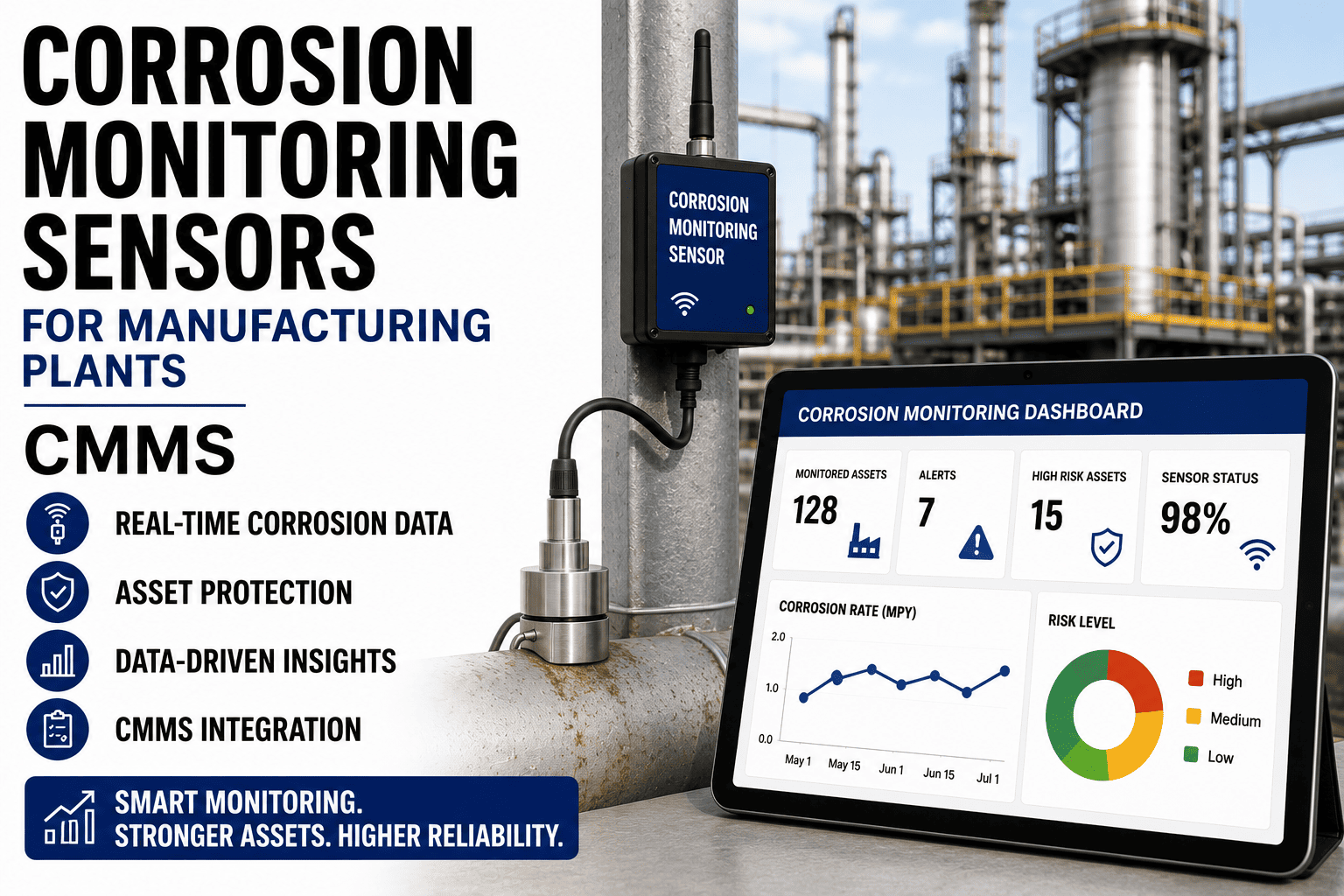
API 510, API 570, and API 653 exist because corrosion does not announce itself. Wall thinning, pitting, CUI, chloride stress corrosion cracking, and HIC develop over years at rates your visual walk-downs cannot detect. Condition monitoring locations — CMLs — are where you catch it, and the inspection plan determines whether you catch it in time.
| Damage Mechanism | Where It Attacks | Detection Method | Typical Interval |
| General Wall Thinning |
Piping, vessel shells, heat exchanger tubes |
Ultrasonic thickness at CMLs |
3–10 years based on corrosion rate |
| Localised Pitting |
Chloride service, crevices, weld heat-affected zones |
Pit gauging, phased-array UT, scanning |
Annual to 5-year depending on severity |
| Corrosion Under Insulation |
-12°C to 177°C carbon steel; 60–177°C stainless |
Pulsed eddy current, IR thermography, strip-and-look |
5-year max; risk-based intervals |
| Stress Corrosion Cracking |
Austenitic stainless in chlorides; carbon steel in amine / caustic |
Dye-penetrant, wet fluorescent MPI, PAUT |
At every internal inspection |
| HIC & SOHIC |
Wet H₂S service in carbon steel weldments |
TOFD, phased-array UT, AUT scanning |
5-year in sour service |
| High-Temperature Attack |
Creep, hydrogen attack, graphitisation above 400°C |
Replication, hardness testing, in-situ metallography |
Linked to operating hours, not calendar |
| Erosion-Corrosion |
Elbows, tees, reducers, control valve downstream |
Guided-wave UT, grid scans at known hot spots |
2–5 years; shorter where flow-induced |
CML count and placement is driven by API 510 Section 5 — more CMLs where consequence of leak is higher, corrosion rates are elevated, or localised corrosion is probable. Fewer CMLs where contents are benign and corrosion is uniform and slow. This judgement call is documented, defensible, and revisited every inspection cycle.
The Pressure Vessel Inspection Lifecycle Under API 510
Every vessel in PSM service follows the same lifecycle — but the quality of your data determines whether each stage strengthens your case for continued safe operation or exposes a mechanical integrity gap.
1
Baseline Thickness Survey
Established at commissioning or first internal. All subsequent corrosion rate calculations trace back to this reference.
2
External Visual Inspection
Every 5 years maximum. Looks for insulation damage, supports, nozzle welds, CUI indicators, coating failures.
3
On-Stream Inspection
UT thickness at CMLs, corrosion coupon retrieval, hydrogen probe readings — performed while vessel is in service.
4
Internal Inspection
At half remaining life or 10 years, whichever less. Visual, NDE of welds, CML remeasurement, deposit sampling.
5
Remaining Life Calculation
Minimum acceptable thickness, measured thickness, corrosion rate — projected forward to next inspection.
6
Fitness-for-Service / RBI
When damage exceeds conventional criteria, API 579 FFS assessment determines continued operation. API 580 RBI drives interval.
7
Repair or Rerating
Welding, re-pad, partial replacement, or MAWP reduction. All work tracked to qualified WPS, PQR, and welder certifications.
8
Records & Reporting
Authorized Pressure Vessel Inspector signs off. Records retained for vessel lifetime. PSI updated. Inspection cycle restarts.
Fragmented Maintenance vs. OxMaint-Centralised Operations
Most chemical plants accumulated their PSM systems through decades of audit findings, acquisitions, and bolt-on tools. The result is a patchwork that works until an inspector asks the right question. Here is what changes when mechanical integrity, MOC, permits, and corrosion monitoring all live in OxMaint.
| Workflow | Fragmented Stack | OxMaint Centralised |
| Audit record retrieval |
Hours across spreadsheets, PDFs, and paper logs |
Seconds — filter by asset, date, inspection type |
| MOC approval tracking |
Email chains; approvals lost when staff depart |
Digital routing with role-based sign-off history |
| Permit-to-work issuance |
Paper permits; gas test times not always logged |
Mobile permits with gas test timestamps attached |
| Corrosion rate calculation |
Manual spreadsheet per CML, re-entered each cycle |
Auto-calculated from UT entry with trend line |
| PHA recommendation closure |
Action tracker that no one updates |
Work orders linked to HAZOP item, closed in system |
| Inspection interval override |
Verbal approval, later reconstructed from memory |
RBI-driven with documented risk justification |
| Contractor qualification |
Binder in security office, frequently out of date |
Active qualification required before work assignment |
| Incident investigation closeout |
48-hour start met; corrective actions drift |
Tracked actions with owner, due date, and verification |
Frequently Asked Questions
Does OSHA's PSM standard apply to my chemical plant?
PSM (29 CFR 1910.119) applies if your facility handles an Appendix A highly hazardous chemical at or above its listed threshold quantity, or 10,000 pounds or more of any flammable liquid or gas in one location. Over 130 chemicals are listed with thresholds ranging from 50 to 15,000 pounds. If you are near a threshold, run a full inventory now rather than waiting for an inspector to make the call for you —
speak with our team if you need help scoping coverage.
How often must pressure vessels be inspected under API 510?
External visual inspection every 5 years maximum. Internal inspection at half the remaining corrosion life or 10 years, whichever is less. On-stream thickness monitoring at CMLs on a risk-based interval. Severe service or accelerated corrosion compresses these intervals significantly, and RBI programs under API 580 can extend or shorten intervals with defensible documentation.
What is corrosion under insulation and why does it keep surprising chemical plants?
CUI is corrosion that develops hidden beneath insulation on carbon steel between -12°C and 177°C, or on austenitic stainless between 60°C and 177°C. Water ingress through failed cladding, condensation under cyclical service, and chloride contamination drive it. Insulation often looks fine from outside while significant wall loss progresses underneath — which is why pulsed eddy current inspection and insulation stripping campaigns matter.
Who is qualified to perform pressure vessel inspections?
An Authorized Pressure Vessel Inspector certified under API's Individual Certification Program must validate the integrity of in-service vessels. Over 18,000 API 510 inspectors are currently certified worldwide. NDE technicians qualified under ASNT CP-189 or SNT-TC-1A assist but cannot evaluate results or sign off on continued service. The final responsibility rests with the certified inspector.
How does a CMMS like OxMaint support PSM mechanical integrity compliance?
OxMaint manages the full mechanical integrity workflow — written procedures, inspection and testing schedules, CML thickness histories, corrosion rate trending, deficiency tracking, and corrective action closure. It also handles MOC routing, permit-to-work issuance, contractor qualification, and compliance audit record retrieval. All of PSM Element 8, plus parts of Elements 1, 5, 6, 9, 10, and 13 —
try it free to see the audit trail in action.
Built For Chemical Plants That Cannot Afford to Get It Wrong
Move Your Mechanical Integrity Program Out of Spreadsheets and Into a System Built for PSM
OxMaint centralises every element of mechanical integrity, MOC, permit-to-work, corrosion monitoring, and compliance audit trails — so when your next OSHA inspection, insurance audit, or internal review comes, the records are ready, the trail is clean, and your plant demonstrates what a working PSM program actually looks like.