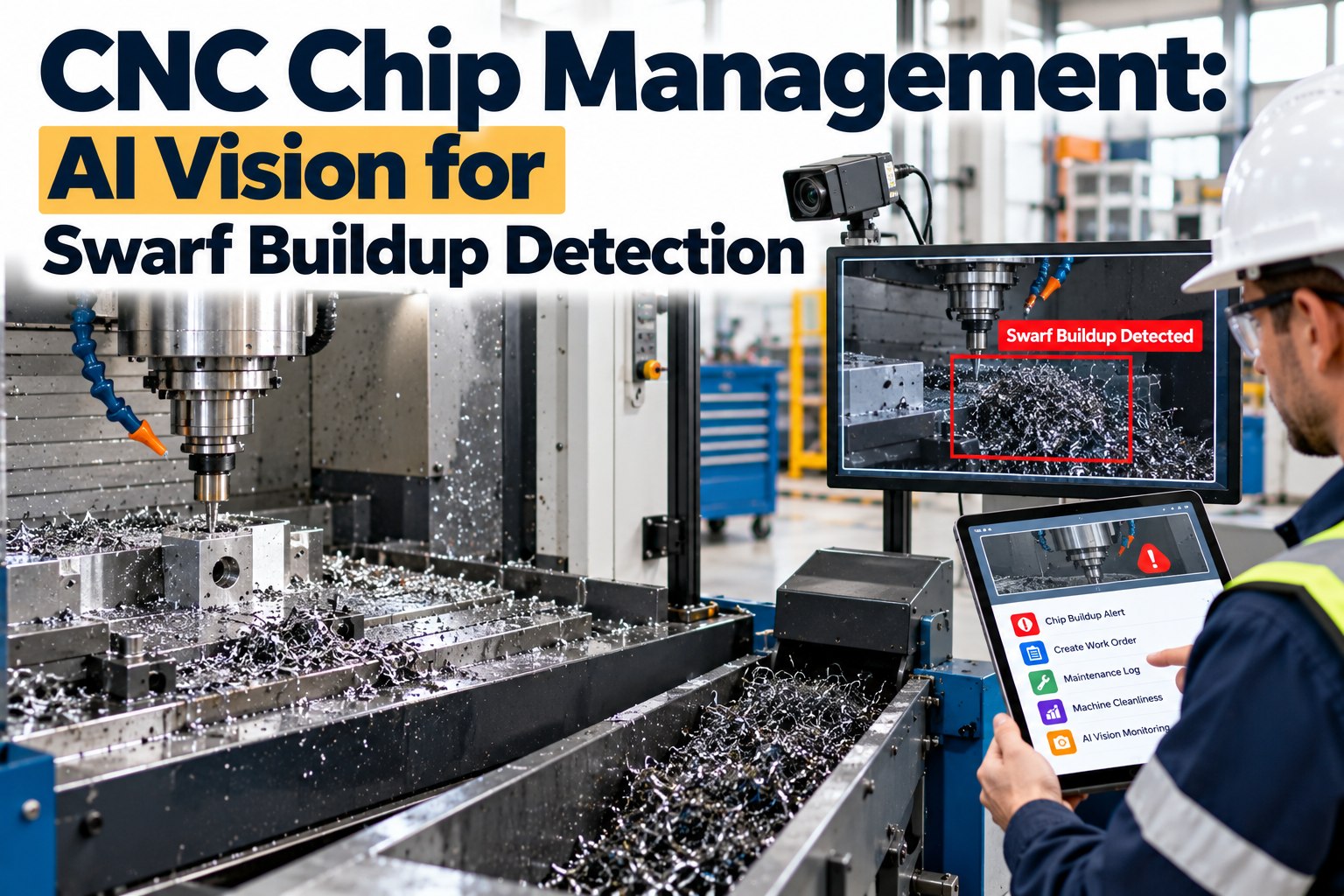
The first sign of a chip problem is rarely an alarm. It is a pile in the corner of the bed, a conveyor that coughs, a coolant tank gone thick with swarf. Chips that sit long enough dry out, jam and, with some metals, ignite. AI vision lets a camera watch for that buildup between rounds. OXMAINT AI is the AI-powered maintenance management software that turns each flagged buildup into a cleaning work order.
CNC Chip Management: AI Vision for Swarf Buildup Detection
Chips are cheap to clear and costly to ignore. Cameras can spot swarf building on beds, conveyors and coolant tanks, and OXMAINT AI, the AI-powered maintenance management software, routes each finding to the right person with a cleaning task and a closing record. You clean when the machine needs it, not when the clock says so.
What Is Swarf, and Why Does It Pile Up?
Swarf is the metal waste cutting leaves behind: chips, curls and filings, plus fine sludge when grinding is involved. Machines clear most of it through coolant flow and the chip conveyor, but whatever gets missed settles on flat surfaces and in corners. That residue is the buildup a camera can see long before an operator does. Start free and log every cleaning against the machine in OXMAINT AI.
Three Ways Buildup Hurts You
The costs differ by metal and process, but they come from the same pile. Keep the first one in mind: fire risk depends on the material, so your own hazard review decides how strict to be. Book a demo to map these risks to your machines.
From Pile to Alert: A Four-Level Buildup Scale
A camera is most useful when it grades what it sees. Set your own level thresholds per machine and metal, and have a person verify anything above clear before work is dispatched. Treat the levels below as a model, not a standard. Start free and define your levels per machine.
A Photo of a Pile Doesn't Clear It. A Work Order Does.
OXMAINT AI turns every verified chip alert into a cleaning task with an owner, a due time and a closing record.
How the Vision Pipeline Works
Cameras watch the machine, a GPU server (such as NVIDIA hardware, integrated on-site) runs the vision model, and the result lands in OXMAINT AI as an alert. A person confirms it, and the system raises the cleaning task. Keeping the processing on your own server also helps when video should stay inside the plant. Book a demo to see the camera-to-work-order path.
Calendar Cleaning vs Cleaning on Condition
A fixed schedule cleans clean machines and misses dirty ones. Condition-based cleaning spends effort where chips actually gather, and keeps the fixed shift-end clean as a safety floor. Fewer unplanned jams also protect the conveyor, which one plant saw wear out within a few years of constant forcing. Start free and combine both in one schedule.
Place the Cameras Where Chips Actually Collect
Start with two or three views per cell: the bed and door edges, the conveyor discharge and the coolant tank. Mist, glare and coolant spray affect what a camera sees, so test angles on a live shift before you commit. Check hazard rules for your material, including NFPA guidance where it applies. Book a demo to plan a pilot cell.
What OXMAINT AI Adds
The camera finds buildup; OXMAINT AI makes sure someone clears it. Alerts become work orders, each machine keeps its cleaning history, and repeat offenders stand out for a fix at the source, such as nozzle coverage or conveyor wear. Start free and register your CNC machines.
Cameras cut the time chips sit unseen, but they do not replace housekeeping rules or fire protection. Know which of your materials are combustible as chips or fines, clean at least to your written schedule and keep suppression systems tested. Fix coolant coverage and tool wear as well, since both change how dangerous a chip is.
Frequently Asked Questions
See the Pile Early. Clear It Before It Costs You.
Pair AI vision with OXMAINT AI so every chip buildup becomes a tracked cleaning task, and every machine keeps the history to prove it.