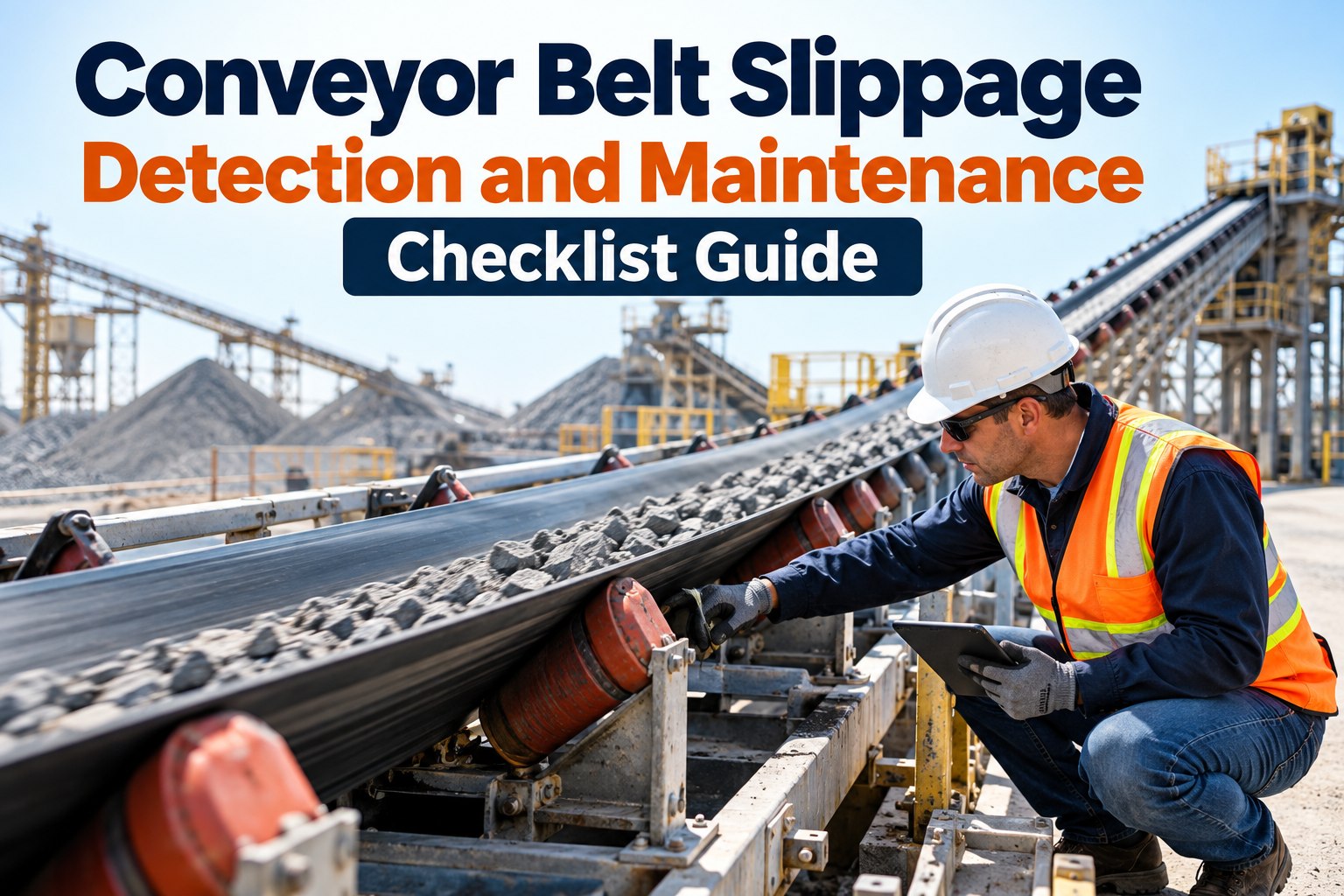
Conveyor Belt Slippage Detection and Maintenance Checklist Guide
By Willam Jerry on October 8, 2026
When a conveyor belt slips, the drive pulley keeps turning but the belt lags behind it and the friction that should move the load turns into heat instead. Left alone, slippage glazes the pulley, burns the belt cover, overloads the motor, and on dusty duties it is a real fire risk. The frustrating part is that slip is almost always a maintenance condition you can catch early: tension, lagging, tracking and loading. This checklist walks through what to inspect and correct to keep the belt gripping, and OXMAINT AI — the AI-powered maintenance management software — schedules the checks, flags the early signs and turns them into work orders.
Conveyor Belt Slippage Detection and Maintenance Checklist
Slip is a warning, not a mystery — it means the belt has lost grip on the drive. The OXMAINT AI maintenance management software keeps tension, lagging, tracking and loading on a schedule, watches for the early signs, and raises the work order before a lagging belt becomes a burnt one.
slip is the belt moving slower than the drive pulley it rides on
Friction → heat
the grip that should move the load becomes heat at the pulley face
Early signs
squeal, smell, speed lag and motor load all show before failure
Four levers
tension, lagging, tracking and loading fix the vast majority of slip
Why the Belt Slips in the First Place
Slip comes down to the belt losing grip on the drive pulley — and a handful of causes account for nearly all of it. Knowing which one you're chasing tells you where on the checklist to look; book a demo to see slip causes tracked in OXMAINT AI.
Low belt tension
A take-up that's lost tension lets the belt go loose, so the pulley spins under it instead of pulling it.
Worn or glazed lagging
Smooth, worn pulley lagging has little friction left — the belt skates across a polished face.
Overload or surge
A load heavier than the drive was sized for — or a sudden material surge — asks for more grip than friction can give.
Wet or fouled face
Water, fines or spilled material between belt and pulley cut friction — a clean, dry interface is what grips.
The Conveyor Slippage Maintenance Checklist
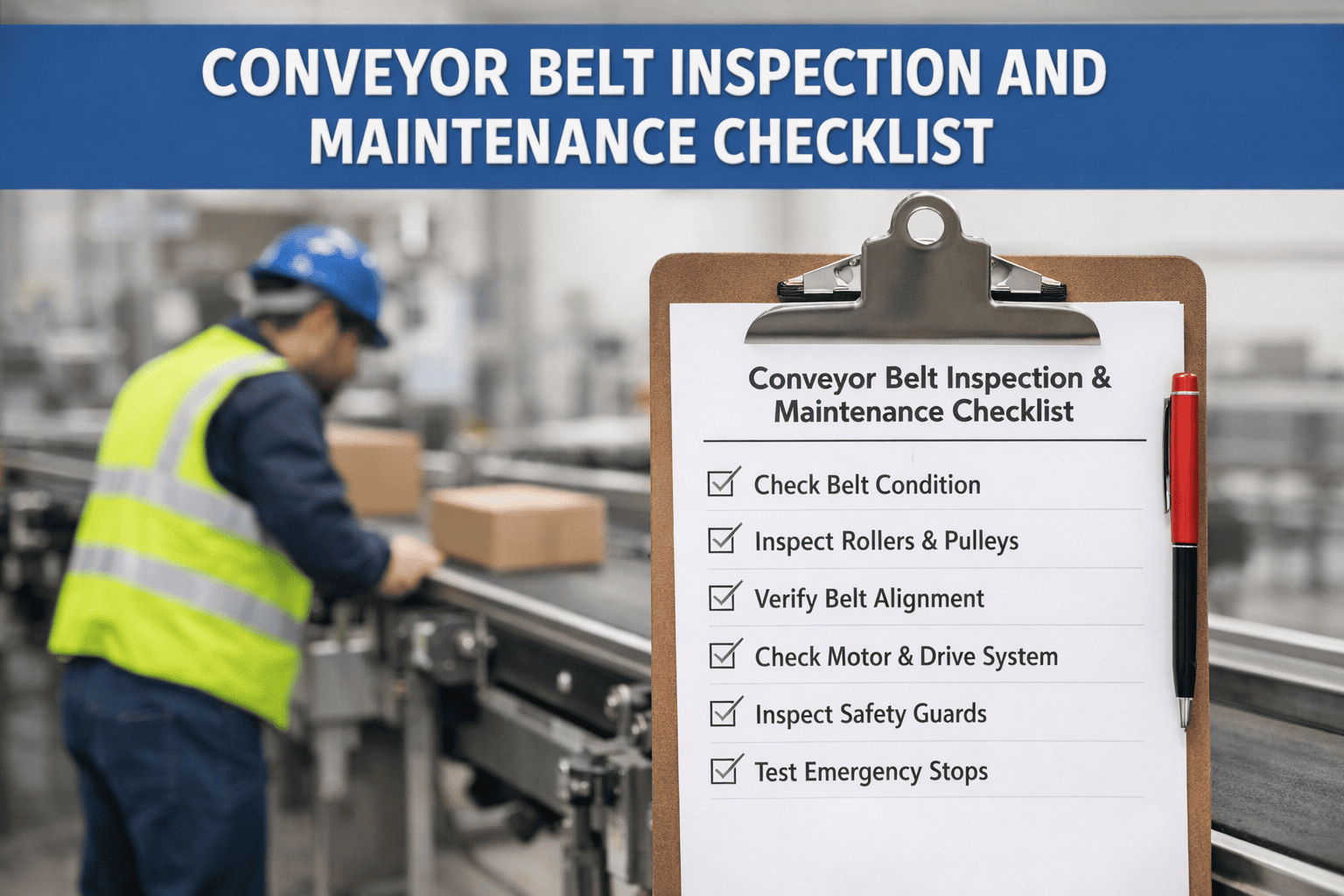
Five areas keep the belt gripping — tension and take-up, the drive and its lagging, tracking, loading, and the monitoring that catches slip early. Run each belt against this list on its schedule; start free and put these checks on a plan in OXMAINT AI.
Belt Tension & Take-Up
Drive Pulley, Lagging & Scrapers
Tracking & Alignment
Loading & Material Flow
Condition Monitoring & Slip Detection
Slip Doesn't Start as a Breakdown — It Starts as a Squeal.
Every slip leaves a trail of early signs before it stops the line. The OXMAINT AI maintenance management software keeps the slip checks on schedule, trends motor load and temperature, and raises the work order the moment the belt starts losing its grip.
Slip announces itself long before it halts the line — these are the signs to act on while it's still a quick fix. Catch any one and go to the checklist; book a demo to see early-sign alerts in OXMAINT AI.
Squeal or chirp
A high-pitched noise at the drive is the belt skating across the pulley face — rarely anything else.
Burning smell
Friction heat scorching the belt cover — a sign to act fast, since this is where fire risk begins.
Speed lag
A slip switch sees the belt running slower than the drive — the clearest hard signal of all.
Rising motor load
Current climbing while throughput falls means the drive is working against a belt that won't grip.
Hot drive pulley
A pulley face warmer than its neighbours on a thermal check is friction turning into heat.
Scuff or glaze marks
A shiny, polished band on the lagging or belt underside is the physical record of a belt that slipped.
How OXMAINT AI Keeps the Belt Gripping
The checklist only works when the checks actually happen and the early signs get seen. Here's what the OXMAINT AI maintenance management software brings to conveyor slippage; start free and keep your belts on a plan in OXMAINT AI.
Scheduled slip checks
Tension, lagging, tracking and loading set on a recurring plan per belt, so no inspection quietly lapses.
Digital inspection forms
Each checkbox captured on a device with readings and photos, so the condition of every belt is on record.
Motor & temperature trends
Current and temperature readings trended over time, so climbing load or a hot pulley surfaces as a signal.
Early-sign alerts
A squeal report, a slip-switch trip or a load spike becomes an alert routed to the right technician at once.
Auto work orders
A failed check or an alert raises a work order with the belt, the finding and the parts already attached.
Slip history per belt
Every slip event, cause and fix logged against the asset, so repeat offenders and worn lagging stand out.
“
We used to find out a belt was slipping when an operator smelled burning rubber. By then the lagging was glazed and the cover was cooked. Putting the tension and lagging checks on a schedule and trending the drive motor changed that — now a climbing load flags days before anyone hears a squeal. We re-lag on our terms instead of after a scorched belt, and the material-handling line has stopped surprising us.
Reliability Lead · Bulk Material Handling Operation
Frequently Asked Questions
What causes a conveyor belt to slip?
Almost always a loss of grip between the belt and the drive pulley — low take-up tension, worn or glazed lagging, a load heavier than the drive was sized for, or a wet and fouled pulley face. Tracking and loading problems feed into it too. Start free and track slip causes per belt.
How do I know the belt is slipping and not just worn?
Slip has its own signature: a squeal or burning smell at the drive, a slip switch showing the belt slower than the drive, motor current climbing while throughput falls, a hot drive pulley, and polished glaze marks on the lagging. Wear shows as fraying, cover loss or cracking without the heat and noise.
Why is belt slippage a safety risk, not just a downtime one?
A slipping belt turns drive power into friction heat at the pulley face. On dusty or combustible duties — coal, grain, some bulk solids — that heat is a recognised ignition source, which is why a burning smell is a signal to act fast, not later. Book a demo to see early-sign alerts.
How often should slip checks be done?
Tension, tracking and pulley-face condition suit a routine walkdown; lagging wear and take-up travel suit a deeper periodic check; and slip switches, motor load and drive temperature are best monitored continuously where the belt is critical. The right interval depends on duty and criticality — a CMMS keeps each one on its own schedule.
How does a CMMS help prevent conveyor slippage?
It keeps the tension, lagging, tracking and loading checks on a recurring plan, captures each inspection digitally, trends motor current and temperature so early signs surface, turns a failed check or an alert into a work order automatically, and logs every slip event against the belt so repeat causes are easy to see.
Keep Every Belt Gripping — and Catch the Slip Before the Smell.
Put conveyor slippage on a plan with the OXMAINT AI maintenance management software — scheduled tension, lagging and tracking checks, digital inspections, motor and temperature trends, early-sign alerts and automatic work orders. Stop finding slip by the burning smell and start catching it in the data.