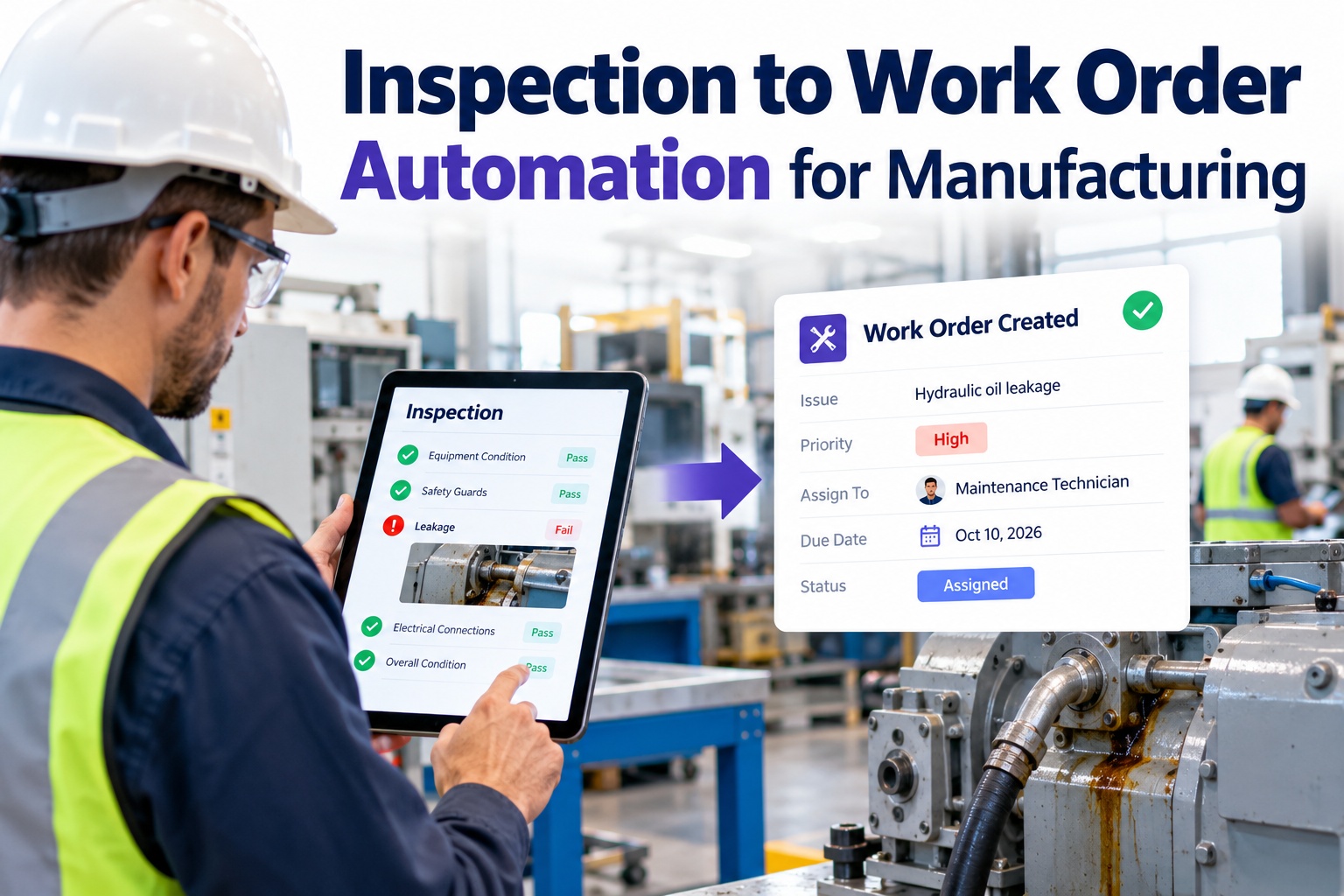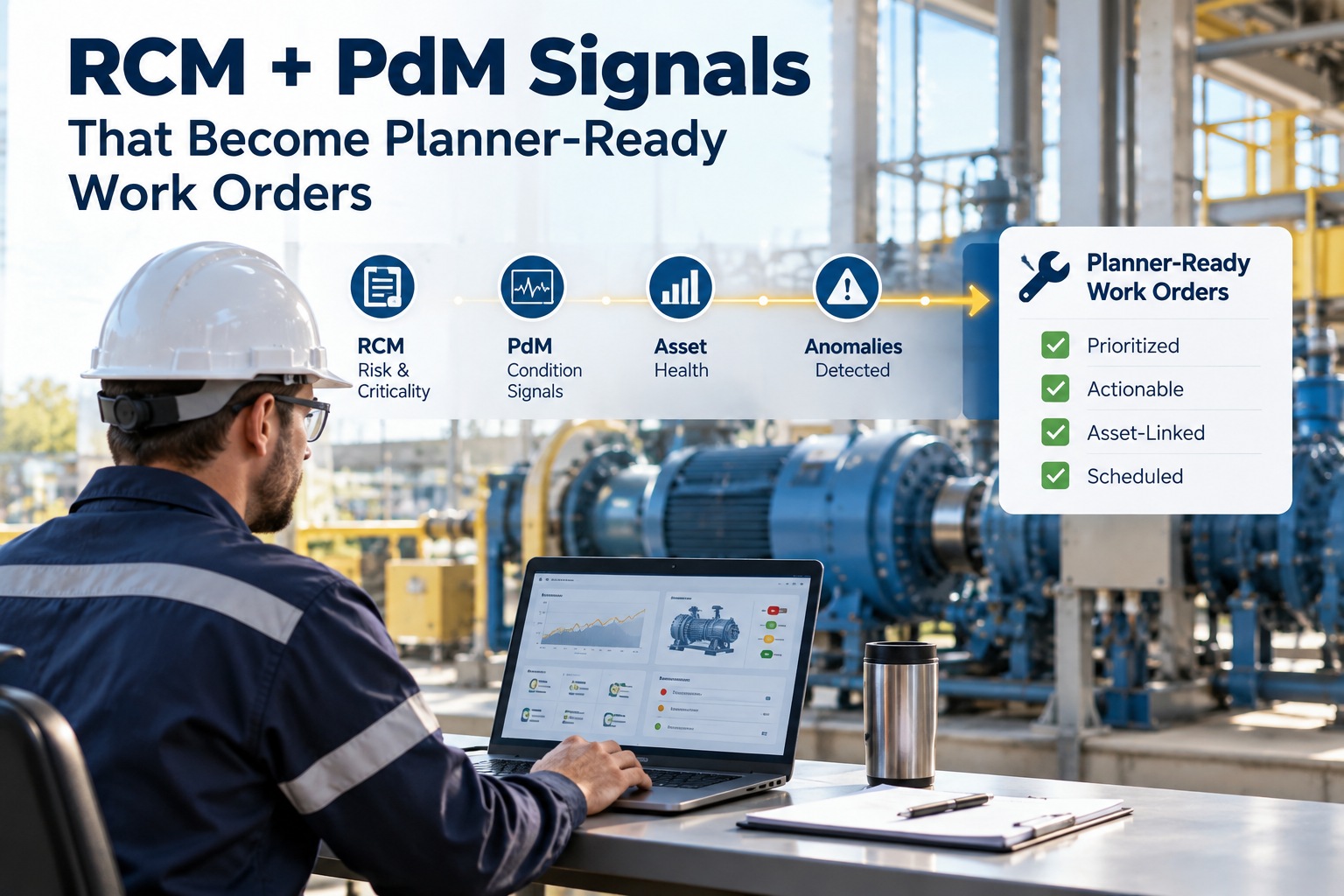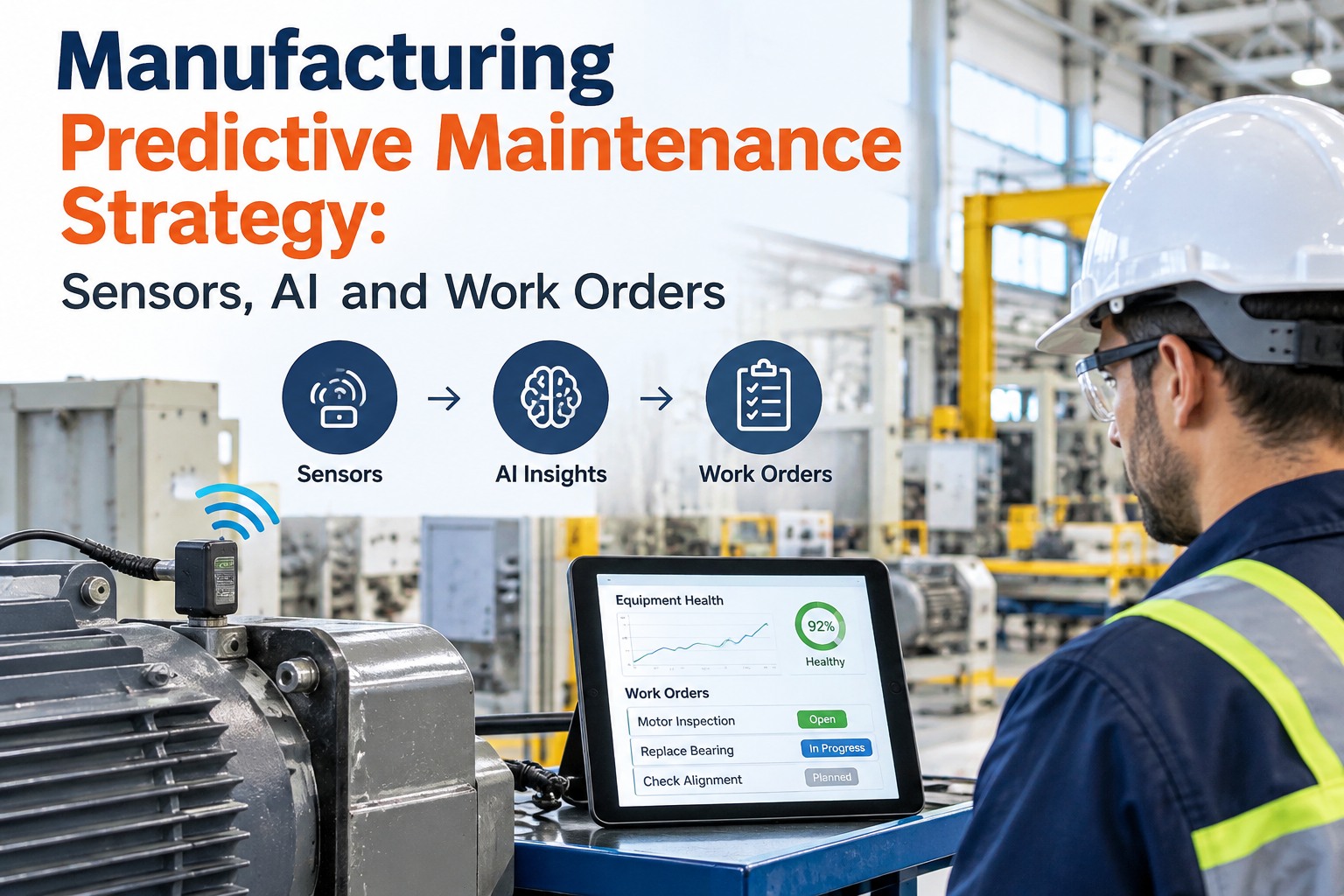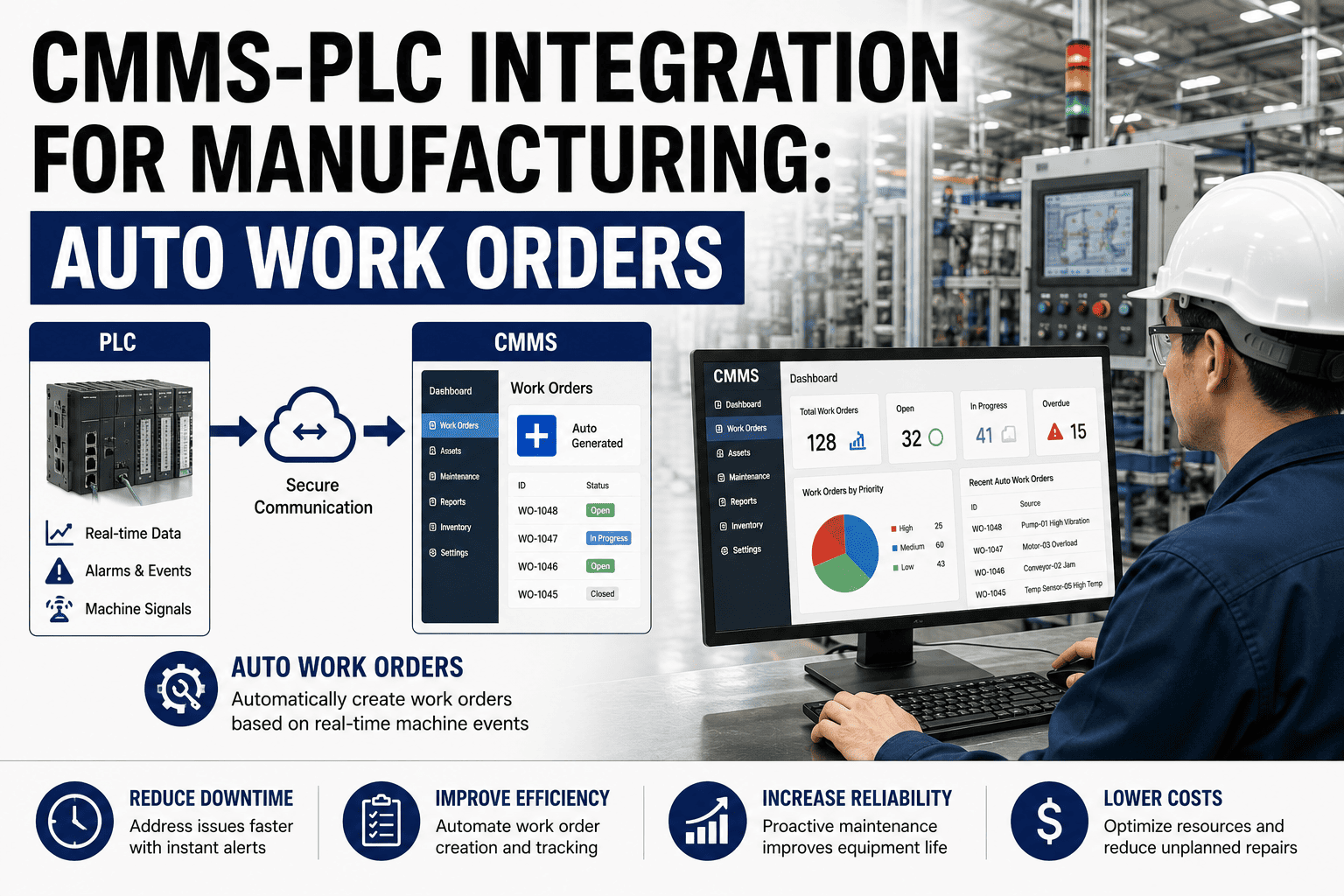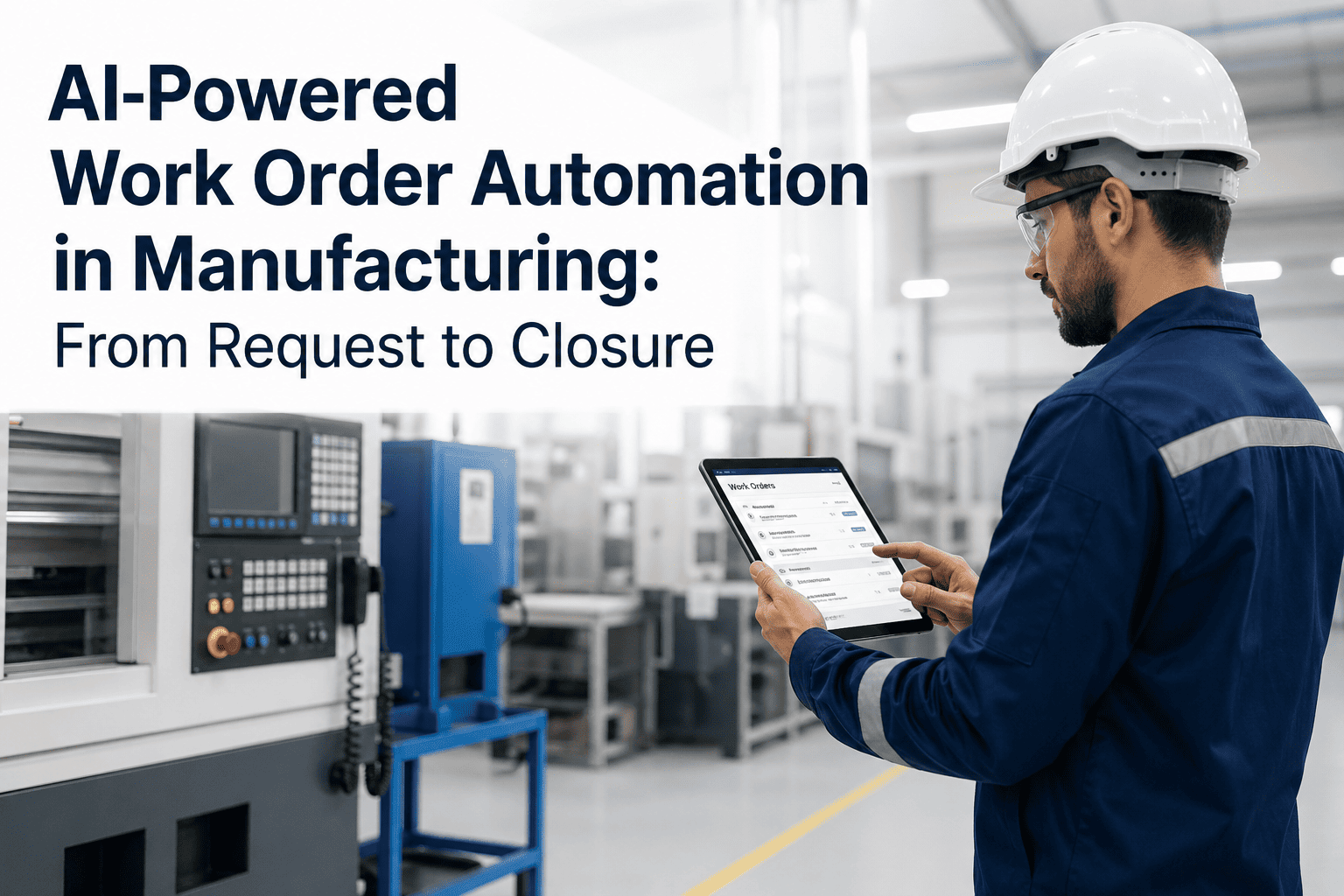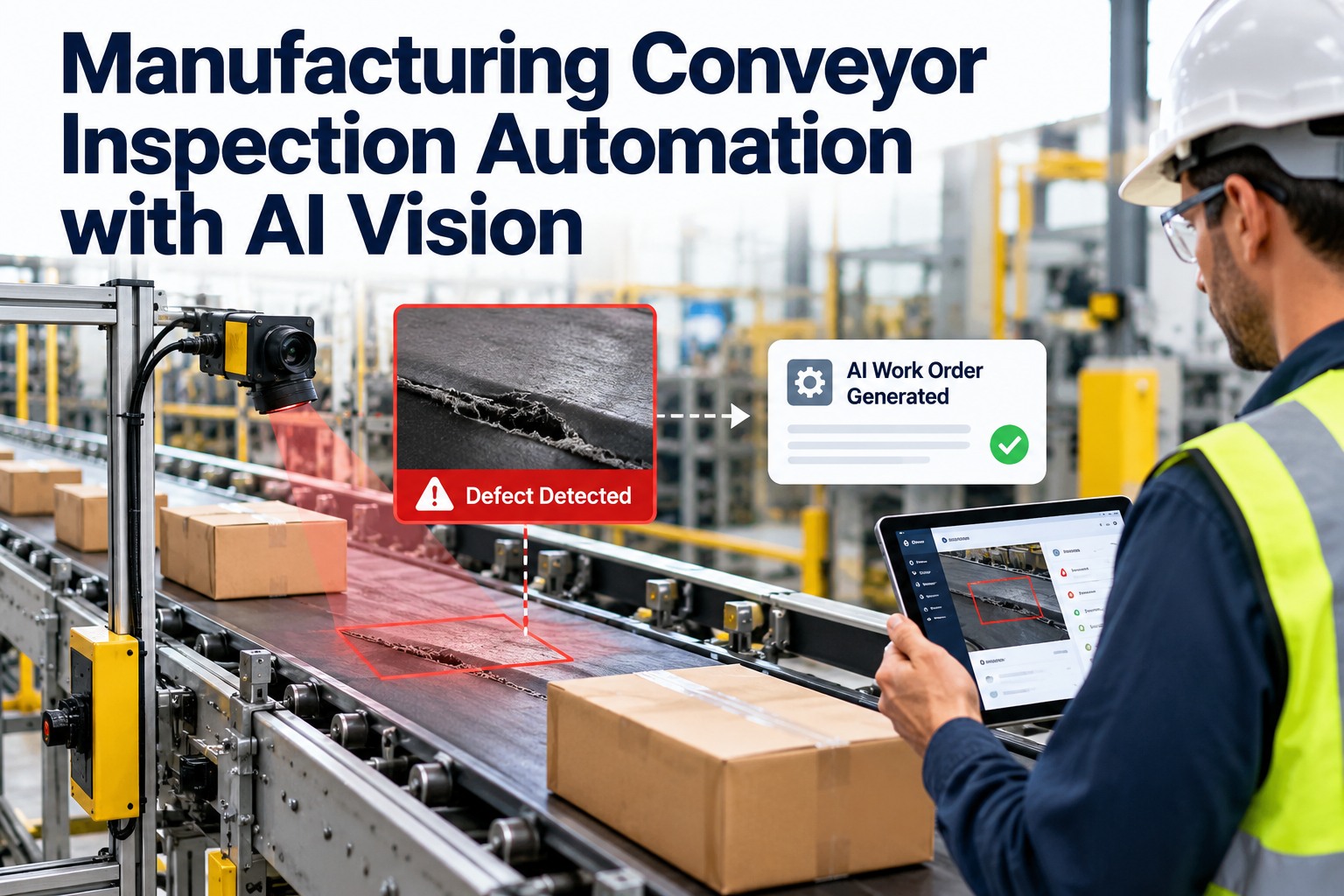
A belt edge wandering a few millimetres toward the frame, a splice starting to separate, carryback building on the return side — on a once-a-shift walk-around, all of it grows unseen between rounds. An AI-vision camera watches every second and turns the first sign into a work order. This is how manufacturing conveyor inspection automation works, and how OXMAINT AI, the AI-powered maintenance CMMS, routes each detection from camera to closed-out repair.
Manufacturing Conveyor Inspection Automation with AI Vision
A rip that spreads between shift rounds, a splice separating unwatched, spillage piling at a transfer point — conveyor faults don't wait for the next walk-around. OXMAINT AI, the AI-powered CMMS and maintenance management software, watches the belt continuously, flags wear, mistracking and spillage the moment they appear, and raises a prioritized work order with the frame attached.
What The Camera Is Watching For
AI vision doesn't look for everything at once — it watches for three families of defect that account for most belt trouble, each with its own visual signals. Catch any of them early and it's a scheduled repair; miss it and it becomes a torn belt or a stopped line, so you can book a demo to see belt detection in OXMAINT AI.
The Failure Modes Behind The Signals
Vision catches what shows on the surface; a reliability program pairs it with the condition methods that catch what doesn't. Here's how the common conveyor failure modes map to symptom, cause and the detection method that finds them, so you can start free and build conveyor asset records in OXMAINT AI.
| Failure mode | Symptom / effect | Common cause | Detection method |
|---|---|---|---|
| Belt mistracking | Edge wear, downtime, product spill | Off-center loading, pulley misalignment, seized idler, splice angle | AI vision + edge sensor; tracking inspection with laser alignment check |
| Splice failure | Rip propagation, belt loss | Cure age, fastener wear, angle drift, cyclic fatigue | AI vision + time- or cycle-count splice inspection with photos |
| Idler bearing seizure | Belt drag, frictional damage, failure risk | Debris ingress, seal failure, lubrication gap | Vibration & thermal signature; condition monitoring on critical idlers |
| Drive motor overload | Trips, overheating, lost throughput | Overloaded belt, gearbox drag, cooling failure | Motor current signature; anomaly-triggered work orders |
| Skirt / chute wear | Spillage, dust, liner gaps | Abrasive material, misaligned liners, flow change | Wear-thickness gauge; recurring measurement PM per liner |
| Guard interlock bypass | Nip-point exposure, safety risk | Operator override, faulty switch, wiring damage | Failure-finding inspection; frequent functional testing |
Representative conveyor failure modes and methods. Scroll sideways on mobile to see every column.
A Detection On A Screen Is Not A Repair.
A camera that only alerts is another monitor nobody owns. Routed into the CMMS, a flagged rip or wander becomes a located, prioritized, assigned work order with the frame attached — and a wear history that builds on the conveyor itself.
From Frame To Closed Work Order
Every detection follows the same five steps, so a flagged defect never stalls between the camera and the crew. OXMAINT AI runs the chain and feeds the result back into the preventive schedule, and you can book a demo to see the detection-to-work-order flow in OXMAINT AI.
Where The Cameras Watch
Coverage is placed where defects actually start — the transfer and loading zones, the running surface, the return side, the pulleys, and the skirting and cleaners. Placement, lighting and detection tuning are set to the material, environment and belt speed.
What OXMAINT AI Adds
The camera finds the defect; the CMMS makes it count. OXMAINT AI ties detection, work orders, asset history and the preventive schedule together so inspection becomes a closed loop, and you can start free and connect your conveyor cameras in OXMAINT AI.
Our belts failed between inspections, not during them — a splice would start separating right after a round and run for days before anyone saw it. Putting vision on the transfer points and the return side, wired into the maintenance system, means a wander or a rip now raises a work order with the picture attached the moment it shows. The line stops on our schedule now, not the belt's.
Frequently Asked Questions
Stop Inspecting On A Schedule. Start Watching Continuously.
Automate conveyor inspection on the OXMAINT AI maintenance management software — continuous vision for wear, mistracking and spillage, evidence-attached work orders routed by severity, conveyor wear history, and detections that feed the preventive schedule. Catch the defect on camera, not after the belt tears.