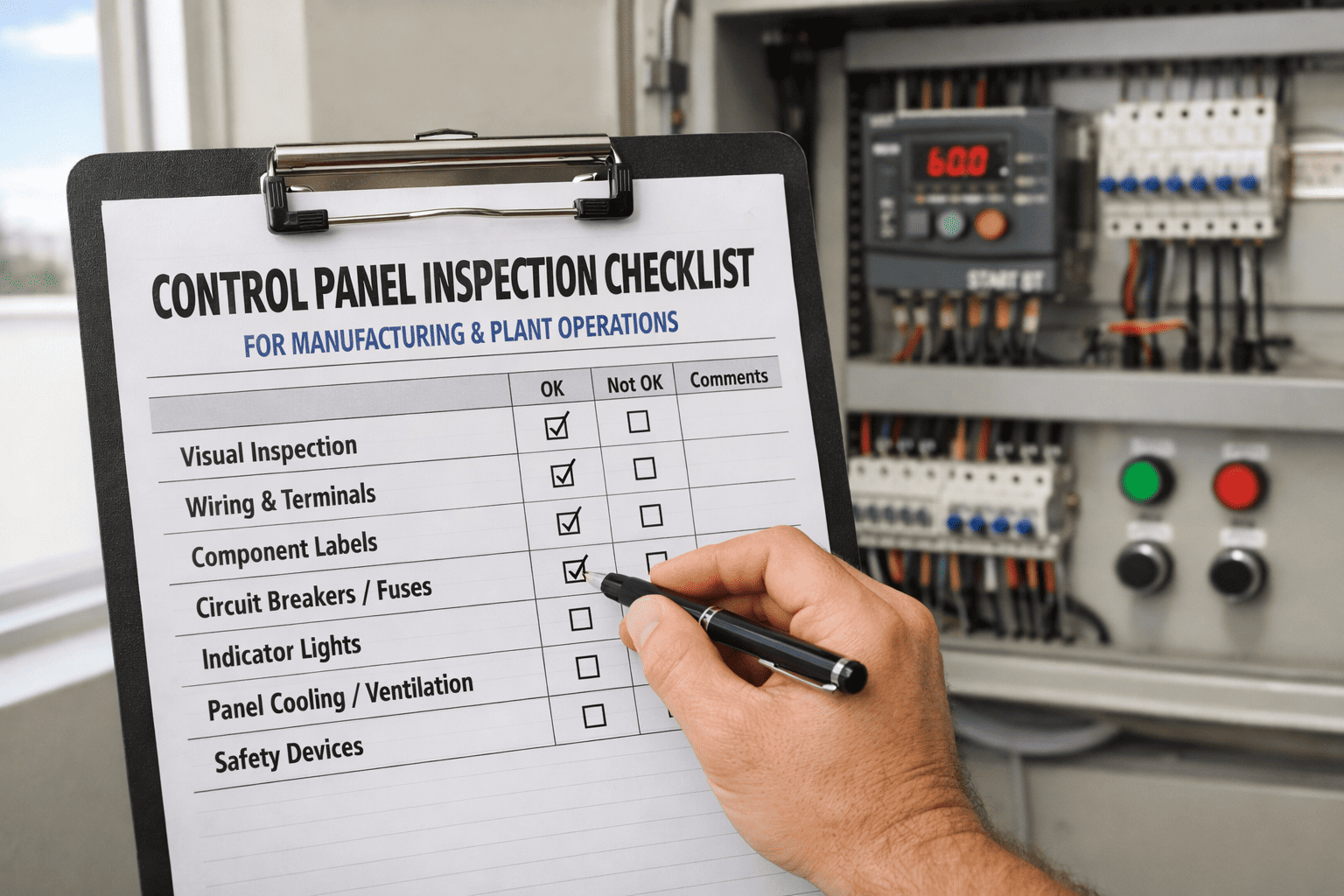
Electrical panel failures account for 31% of plant-wide power outages in manufacturing facilities, with each incident averaging $89,000 in lost production and damaged equipment according to IEEE power reliability surveys. The difference between plants that experience annual electrical emergencies versus those running decades without major panel failures is not equipment age — it's scheduled thermal scanning, systematic breaker testing, and documented busbar inspection tracked in CMMS software that identifies degradation months before catastrophic failure occurs. This guide covers NFPA 70B-compliant maintenance for switchgear, MCCs, and distribution panels in industrial environments, with detailed inspection checklists and testing frequencies that meet insurance requirements and prevent unplanned downtime.
Electrical Panel Failure Progression: From Warning Signs to Catastrophic Fault
Most electrical failures announce themselves through measurable indicators long before arc flash or complete failure. Understanding this progression enables intervention at low-cost early stages rather than high-cost emergency response.
Stage 1: Early Degradation
Months 0-6
Detectable Indicators:
Connection resistance increases 15-30% above baseline
Thermal scan shows 5-10°C temperature rise at terminals
Dust accumulation begins on components and ventilation
Minor contact discoloration visible on breaker terminals
Required Action:
Schedule connection tightening and cleaning
Intervention Cost: $500-1,500
Stage 2: Accelerating Wear
Months 6-12
Detectable Indicators:
Hot spots exceed 40°C above ambient temperature
Breakers trip at 90-95% of rated load due to internal heating
Burning odor detectable during high-load periods
Terminal discoloration darkens and oxidation spreads
Required Action:
Replace affected breakers and terminals immediately
Intervention Cost: $3,000-8,000
Stage 3: Imminent Failure
Months 12-18
Detectable Indicators:
Thermal imaging shows critical hot spots above 80°C
Nuisance tripping occurs at normal operating loads
Visible arcing marks on busbars or breaker lugs
Insulation degradation visible around high-temperature zones
Required Action:
Emergency shutdown and complete section replacement
Intervention Cost: $15,000-40,000
Stage 4: Catastrophic Failure
Sudden Event
Failure Manifestations:
Arc flash incident causing equipment destruction and injury risk
Complete panel burnout requiring full replacement
Facility-wide power loss and production shutdown
Potential fire damage to surrounding equipment and structure
Required Action:
Emergency contractor response and facility evacuation
Total Cost: $75,000-250,000+
The Math That Justifies Preventive Electrical Maintenance
$2,400/year
Annual thermal scanning and breaker testing for 480V panel
$89,000
Average cost of single electrical panel failure event
37:1
ROI ratio — one prevented failure funds 37 years of PM
Industrial Electrical Equipment: Maintenance Requirements by Type
Different electrical distribution equipment serves different functions and requires different inspection approaches. Voltage class, current rating, and criticality determine maintenance frequency and testing methods.
Primary distribution from utility service to facility loads. Contains main breaker, metering, and feeder breakers.
Thermal Scan:
Quarterly
Breaker Testing:
Annual
Full Inspection:
3 Years
Critical Components:
Main breaker contacts, busbar connections, insulator condition, ground bus integrity, ventilation system
Houses motor starters, overload protection, and control circuits for multiple motors in centralized cabinet.
Thermal Scan:
Semi-Annual
Breaker Testing:
18 Months
Full Inspection:
Annual
Critical Components:
Starter contacts, coil condition, overload heaters, control transformers, wiring terminations, bucket connections
Branch circuit distribution to lighting, receptacles, and small equipment loads throughout facility.
Thermal Scan:
Annual
Breaker Testing:
3-5 Years
Full Inspection:
3 Years
Critical Components:
Breaker terminations, neutral and ground bus torque, panel cover fit, circuit labeling accuracy
Variable frequency drives for motor speed control. Generates harmonic content and requires specialized cooling.
Thermal Scan:
Quarterly
Breaker Testing:
Annual
Full Inspection:
Annual
Critical Components:
Cooling fans and filters, DC bus capacitors, IGBT modules, line and load reactors, control power supply
Your Electrical Panels Are Degrading Right Now — You Just Can't See It
Oxmaint Schedules Thermal Scans, Tracks Hot Spot Trends, and Alerts Before Failures
Stop relying on memory or annual calendar reminders for critical electrical maintenance. Oxmaint automatically schedules thermal imaging based on equipment voltage class and criticality, stores thermal scan reports with trend analysis, generates work orders when temperature thresholds are exceeded, and maintains NFPA 70B compliance documentation for insurance audits.
Infrared Thermal Scanning: Detection, Diagnosis, and Action Thresholds
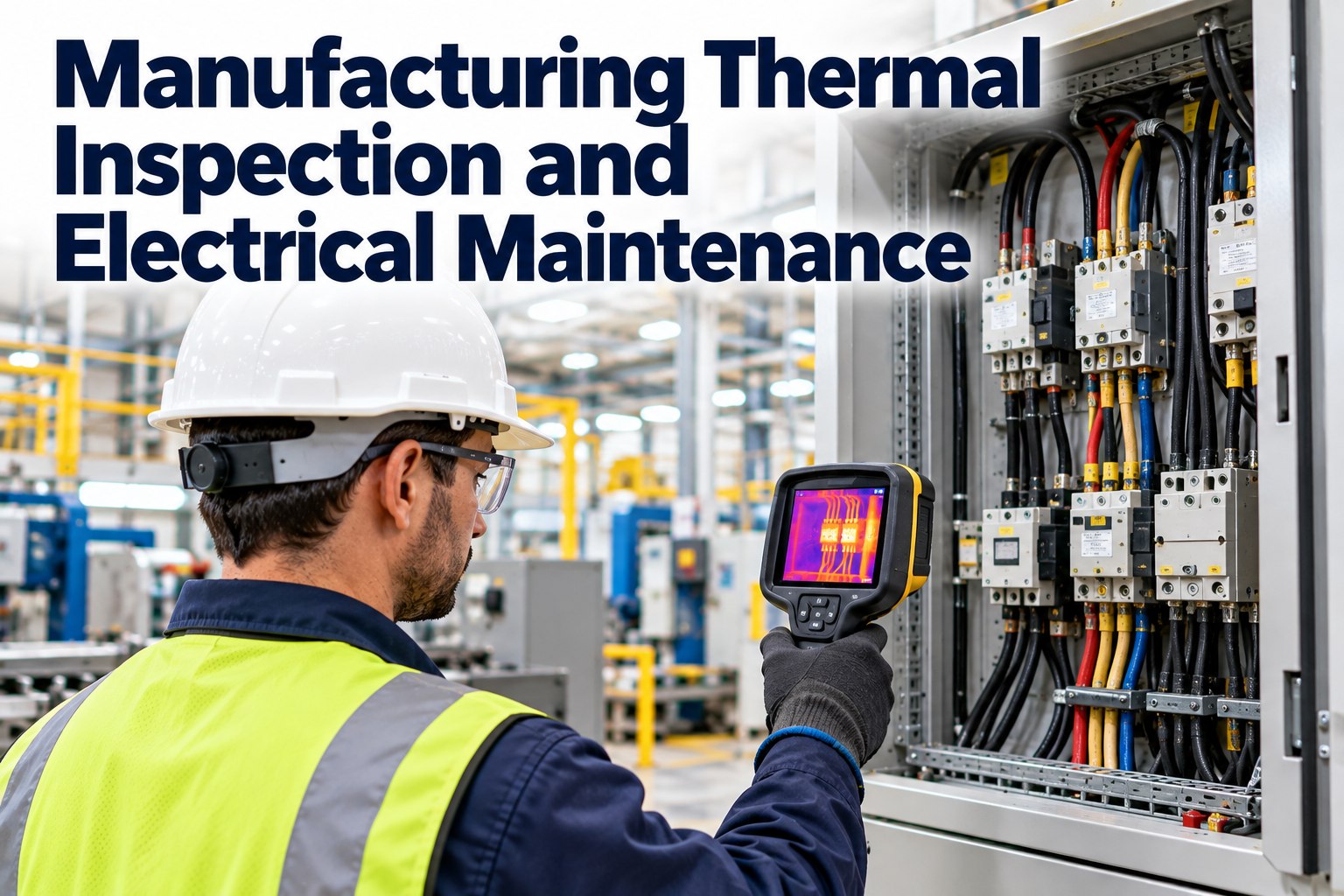
Thermal imaging is the single most effective predictive tool for electrical equipment. Temperature rise above ambient directly correlates with connection resistance and imminent failure risk.
Thermal Scan Procedure
1
Load Equipment to 40%+ Capacity
Thermal problems only manifest under load. Scan during normal production when current draw is representative of typical operation.
2
Remove Panel Covers Safely
De-energized inspection misses 90% of problems. Use NFPA 70E PPE and qualified personnel to scan energized equipment with covers removed.
3
Scan All Connections and Components
Image breaker terminals, busbar joints, neutral and ground connections, transformer terminations. Compare hot spots to similar unloaded connections.
4
Document Findings with Temperature Deltas
Record actual temperatures and temperature rise above ambient. Store images with equipment tags for trend comparison on future scans.
5
Generate Work Orders for Action Items
Create prioritized work orders based on severity classification. Critical items require immediate shutdown and repair — moderate items schedule during next available window.
Temperature Rise Severity Classifications
No significant temperature difference from adjacent components or baseline scan
No action required — continue normal monitoring schedule
Priority: Routine
Elevated temperature indicates developing problem — early stage connection degradation
Schedule inspection and connection tightening within 30 days — increase scan frequency to monthly
Priority: Plan Work
Significant degradation — high resistance connection or component failure in progress
Schedule repair within 7 days — reduce loading if possible — rescan after repair to verify correction
Priority: Urgent
Imminent failure condition — arc flash or equipment destruction likely within days to weeks
Shut down immediately or continuously monitor until emergency repair completed — same shift response required
Priority: Emergency
Circuit Breaker Testing: Verification, Calibration, and Replacement Criteria
Breakers protect equipment and personnel from overcurrent and fault conditions. Testing verifies they will operate correctly when called upon — waiting for a failure to test a breaker is waiting until lives are at risk.
Visual and Mechanical Inspection
Frequency: Annual for critical circuits, 3 years for general distribution
Inspection Points:
Contact condition:
Inspect for pitting, burning, or discoloration indicating arcing damage
Operating mechanism:
Manually operate breaker — smooth action with distinct on/off position and audible click
Arc chutes:
Check for cracks, carbon tracking, or debris accumulation that impairs arc extinction
Terminal torque:
Verify all connections torqued to nameplate specification — loose lugs cause 60% of breaker failures
Insulation Resistance Testing
Frequency: Every 3 years or after exposure to moisture or contamination
Test Parameters:
Test voltage:
Apply 1000V DC for 600V class equipment, 2500V for medium voltage breakers
Acceptance criteria:
Minimum 100 megohms for low voltage, 1000 megohms for medium voltage circuits
Polarization index:
Ratio of 10-minute to 1-minute reading should exceed 2.0 — lower values indicate contamination
Failure indicators:
Readings below 1 megohm indicate severe insulation degradation requiring immediate breaker replacement
Contact Resistance Measurement
Frequency: Annual for main breakers and feeders over 200A
Test Parameters:
Measurement method:
Use micro-ohmmeter with 100A+ test current to overcome contact surface films and get accurate reading
Baseline comparison:
Compare to manufacturer specification and previous test results — 50% increase indicates degradation
Typical values:
Molded case breakers: 100-500 microhms. Power circuit breakers: 20-100 microhms depending on rating
Action threshold:
Replace breaker if contact resistance exceeds 150% of manufacturer specification or baseline measurement
Trip Time and Calibration Testing
Frequency: Every 5 years for protective breakers, annual for critical process protection
Test Parameters:
Long-time pickup:
Inject 110% rated current — breaker should trip within specified time band per ANSI curve
Instantaneous trip:
Test at 10x rated current — trip time should be under 0.1 seconds for fault protection
Ground fault:
If equipped, test ground fault trip at 50% and 100% of setting — verify operates within tolerance
Coordination verification:
Confirm trip characteristics coordinate with upstream and downstream protective devices per one-line diagram
NFPA 70B Compliance Is Not Optional — Insurance Requires Documented Testing
Oxmaint Tracks Every Test, Stores Every Report, Alerts Before Deadlines
Insurance auditors ask for three things during electrical inspections: thermal scan reports, breaker test records, and proof of scheduled maintenance completion. Oxmaint maintains all three automatically with date-stamped documentation, standardized test forms, and automatic reminders 60 days before testing deadlines. Upload thermal images, log test results, and generate compliance reports for auditors without searching through file cabinets or email archives.
Complete Electrical Panel Maintenance Schedule: NFPA 70B Compliance
This schedule represents minimum requirements for industrial facilities. High-criticality equipment or harsh environments may require more frequent inspection and testing.
| Task |
Frequency |
Voltage Class |
Duration |
Key Actions |
| Visual Inspection |
Monthly |
All |
30 min |
Check for signs of overheating, unusual odors, moisture intrusion, pest activity, obstructed ventilation |
| Thermal Imaging Scan |
Quarterly |
480V+ |
1-2 hours |
Scan all connections under load. Document hot spots and temperature deltas. Generate work orders for anomalies over 20°C rise |
| Thermal Imaging Scan |
Annual |
208V-480V |
1-2 hours |
Same protocol as quarterly scans but lower frequency acceptable for lower voltage distribution panels |
| Connection Torque Check |
Annual |
All |
2-4 hours |
Verify all terminations torqued to specification. Check busbar joint bolts. Retorque any connections below spec |
| Breaker Exercising |
Annual |
All |
1 hour |
Manually operate all breakers full cycle to prevent contact welding and mechanism binding from disuse |
| Insulation Resistance Test |
3 Years |
All |
4-6 hours |
Megger test all circuits and equipment. Document readings and compare to baseline and previous tests |
| Breaker Contact Resistance |
Annual |
Mains/Feeders |
3-5 hours |
Micro-ohm test on breakers over 200A. Replace breakers with resistance 50% above baseline |
| Ground Resistance Testing |
3 Years |
All |
2-3 hours |
Test facility ground electrode system. Verify under 25 ohms for general systems, under 5 ohms for sensitive electronics |
| Protective Relay Calibration |
5 Years |
480V+ with relays |
1-2 days |
Inject test currents to verify pickup, time delay, and instantaneous settings match protective coordination study |
| Complete Panel Overhaul |
15-20 Years |
All |
1-2 weeks |
Replace aging breakers, upgrade bus connections, clean all components, replace worn hardware, update labeling |
Common Electrical Panel Problems: Root Causes and Corrective Actions
Electrical failures rarely occur without warning. Recognizing these symptoms and addressing root causes prevents emergency outages and equipment damage.
Nuisance Tripping Under Normal Load
Root Causes:
Breaker internal heating from loose connections or worn contacts increasing resistance. Breaker rated current drift below nameplate from age. Harmonic currents from VFDs causing thermal overload on non-harmonic rated breakers. Incorrect breaker sizing for actual load profile.
Diagnostic Steps:
Measure actual load current and compare to breaker rating — should be under 80% continuous. Thermal scan breaker under load to detect hot spots. Test contact resistance — high resistance indicates worn contacts. Check for harmonics with power quality analyzer if VFDs present.
Solutions:
Replace breaker if contact resistance elevated or age exceeds 15 years. Upsize breaker if load calculation shows undersizing. Install harmonic-rated breaker for VFD circuits. Tighten all terminal connections to specification torque.
Hot Spots Detected on Thermal Scan
Root Causes:
Loose terminal connections creating high-resistance contact points. Oxidation on aluminum conductors or busbars increasing resistance. Undersized conductors for actual load creating excessive I²R heating. Overloaded neutral conductors from harmonic triplen currents.
Diagnostic Steps:
Schedule de-energized inspection to access connections. Measure torque on suspect connections and compare to specification. Inspect conductor size versus actual load current. For aluminum connections, check for oxide layer and joint compound presence.
Solutions:
Re-torque all connections to manufacturer specification using calibrated torque wrench. Clean oxidized aluminum connections and apply joint compound rated for dissimilar metals. Upsize conductors if load exceeds 80% of conductor ampacity. Install harmonic filters if triplen currents overload neutral.
Breaker Won't Reset After Trip
Root Causes:
Fault condition still present on load side of breaker — attempting reset without clearing fault. Breaker internal mechanism damaged from high fault current during trip event. Trip latch binding from corrosion or contamination. Breaker lockout feature engaged after multiple rapid trips.
Diagnostic Steps:
Verify fault is cleared before reset attempt — check for short circuits, ground faults, or overloads on load side. Inspect breaker handle — damaged internal mechanism often prevents handle from latching. Check for breaker lockout indicator if equipped with electronic trip unit.
Solutions:
Isolate and repair fault on load side before energizing. Replace breaker if mechanism damaged — never force a breaker that won't reset. Clean and lubricate trip mechanism if binding from contamination. Reset electronic trip unit lockout per manufacturer procedure after fault correction.
Ground Fault Indication Without Load
Root Causes:
Insulation breakdown allowing leakage current to ground — degradation from moisture, heat, or contamination. Ground fault sensor calibration drift causing false trips. Neutral-ground bond issue creating circulating currents detected as ground fault. Cable insulation damage from rodents or mechanical stress.
Diagnostic Steps:
Perform insulation resistance test on all circuits — readings below 1 megohm indicate insulation failure. Inspect cables for visible damage, moisture intrusion, or contamination. Test ground fault sensor calibration with known current injection. Verify neutral-ground bonds only at service entrance per NEC.
Solutions:
Replace cables with failed insulation resistance. Seal panel against moisture if environment is humid or wet. Recalibrate or replace ground fault protection device if drift confirmed. Correct improper neutral-ground bonds downstream of service entrance.
Frequently Asked Questions
Electrical Failures Happen Fast — But They Develop Slowly
Start Catching Problems Early with Oxmaint's Electrical Maintenance Platform
Every electrical panel in your facility should have a documented inspection history, scheduled thermal scans, and tracked test results — but most plants manage this with spreadsheets or paper files that get lost or forgotten until an auditor asks for them. Oxmaint builds your electrical maintenance program from your equipment list, creates customized PM schedules based on voltage class and criticality, sends automatic reminders before testing deadlines, and maintains all compliance documentation in searchable digital records. Start with your most critical switchgear and expand to your entire electrical infrastructure as you see the impact on reliability and audit readiness.