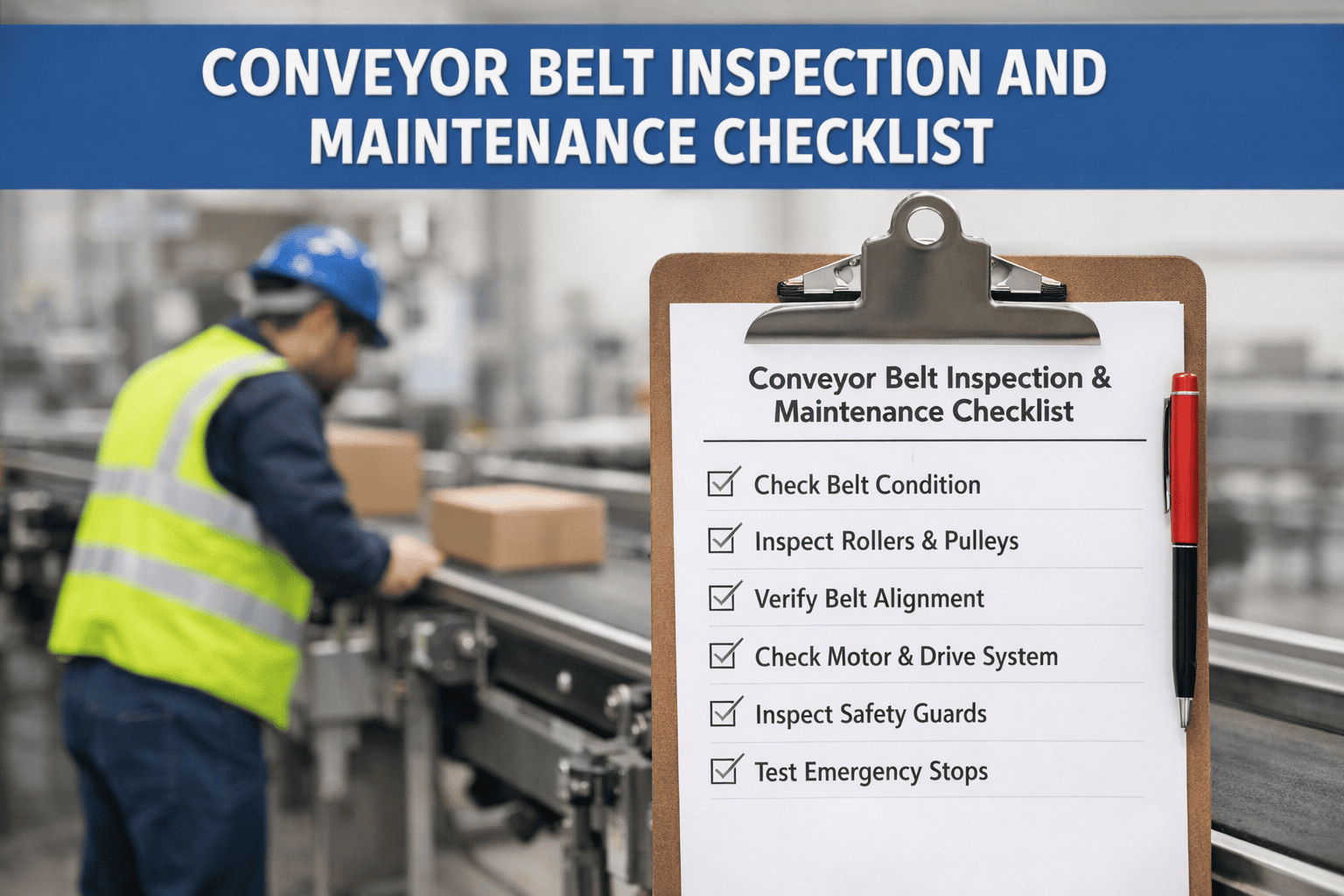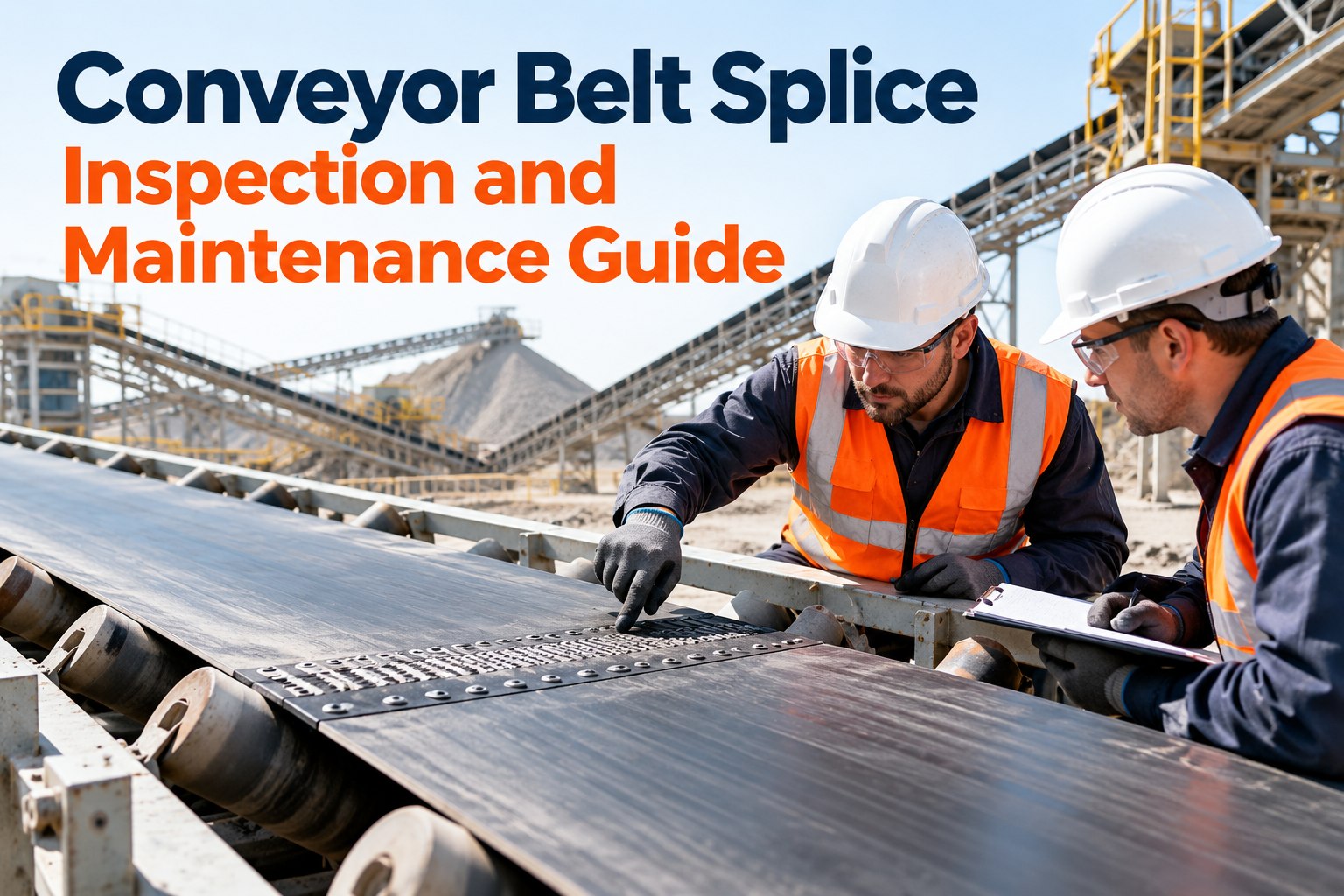
A conveyor belt is only as strong as its weakest point, and that point is almost always the splice. When it fails, it usually fails without warning: a few lifted fingers on a Monday, a torn joint on Friday, and an entire line stopped while a crew scrambles to re-splice. Most splice failures leave signs days or weeks earlier, and a short, regular inspection will catch them. This guide covers the splice types, what to look for, how to rate what you find, and how to keep a record that predicts the next failure. OxMaint AI maintenance management software schedules splice inspections, logs findings against each belt, and turns warning signs into work orders.
Conveyor Belt Splice Inspection and Maintenance Guide
weakest point
Know your splice type, inspect it on a routine, rate every defect, and act before the joint lets go.
1. Know Your Splice Type
The right inspection depends on how your belt is joined. Each method wears and fails differently. Start free and record the splice type for every belt.
Metal fasteners or lacing joined with a pin. Easy to repair on site, but the joint is generally weaker than a bonded one and wears with use.
Belt ends are bonded under heat and pressure into a near-continuous joint. It needs skilled labor and downtime but gives the best strength.
Adhesive bonds the belt ends without a heated press. A practical option where hot work is restricted, though results depend on careful preparation.
2. Walk the Splice: What to Inspect
Inspect with the belt stopped and locked out, and again while running at a safe distance. Check these six points every time. Book a demo to see photo-based inspections.
3. Rate What You Find: Watch, Plan, Stop
Not every defect needs a shutdown. A simple three-level rating keeps decisions consistent between shifts. Set your own limits with the splice manufacturer's guidance. Start free and build this rating into your checklists.
Minor wear, slight edge fraying, small surface marks. Photograph it and re-check next round.
Action: log & monitorVisible lifting, growing cracks, repeated tracking drift. Schedule a repair at the next planned stop.
Action: work orderTorn plies, failed fasteners, joint opening or major separation. Do not run the belt.
Action: stop & repair nowA Splice Rarely Fails Overnight. The Warning Just Wasn't Written Down.
When findings live in notebooks and memory, the slow decline of a joint stays invisible. OxMaint AI keeps each belt's inspection history in one place, so you see the trend and act before it becomes a breakdown.
4. Why Splices Fail
Fixing the splice without fixing the cause just resets the clock. These are the usual culprits. Book a demo to track failure causes.
5. A Practical Inspection Schedule
Adjust frequency to load, hours of operation and criticality. This is a sensible starting point. Start free and schedule it per conveyor.
| Frequency | Task | Owner |
|---|---|---|
| Every shift | Visual check of splice and tracking while running | Operator |
| Weekly | Stopped, locked-out inspection of splice and edges | Maintenance tech |
| Monthly | Check idlers, pulleys, belt tension, alignment | Maintenance tech |
| Quarterly | Detailed splice assessment, photos, wear measurements | Reliability / supervisor |
| After any event | Re-inspect after jams, impacts or tracking faults | Maintenance tech |
6. What to Record for Every Splice
How OxMaint AI Supports Conveyor Reliability
Frequently Asked Questions
Catch the Splice Before It Lets Go.
Put every belt on a schedule, record every finding, and turn small warnings into planned repairs instead of line-stopping surprises.