A conveyor gear motor rarely fails without warning — it runs a little hotter, draws a little more current and weeps a little oil for weeks first. The plants that avoid line stoppages are the ones that act on those quiet signals: the run-hour oil change, the amp trend and the spare seal already on the shelf. OXMAINT AI is the conveyor maintenance management software that ties all three together for every drive in your plant.
CONVEYOR DRIVE MAINTENANCE · GEAR MOTORS · OIL · AMPS · SPARES · 2027
Conveyor Gear Motor Maintenance for Manufacturing Plants (2027)
Oil change intervals, breathers and seals, alignment and motor amp trending that warn you before a gear motor overheats. OXMAINT AI runs the three clocks that keep it alive: run hours, current and spares.
Run-hour oil change
Amp trending
Seals and breathers
Spare parts
500 h
first oil change after start-up on many industrial gear units, to clear break-in wear
90 / 100 °C
housing temperature limits SEW-EURODRIVE lists for mineral and synthetic oil
12 months
longest interval SEW suggests between breather checks, with yearly replacement recommended
Monthly
oil level and leak check on a gear unit, per the same maintenance schedule
THE PATTERN
Gear motor failures usually trace back to one of three neglected basics: oil that was never changed on time, a seal or breather nobody looked at, or a load creeping up unnoticed. All three are visible weeks ahead if somebody is counting.
Anatomy of a Conveyor Drive: Where to Look
Follow the drive train from the motor to the pulley. Seven points decide whether it runs for years or fails in months. Sign up free and put each point on a round.
MOTOR
1Amps and heat
6Coupling and alignment
→
GEARBOX
2Breather
3Oil level and colour
4Drain and magnetic plug
→
OUTPUT SHAFT
5Shaft seal
7Mounting and torque arm
→
CONVEYOR PULLEY
!Where load shows up
Numbers match the seven checks in the service-interval strip below.
Clock One: The Run-Hour Oil Change
Calendar dates miss the point. A drive that runs three shifts ages its oil twice as fast as one that runs a single shift, so the oil change belongs on a run-hour trigger. Book a demo to see hour-based preventive maintenance in OXMAINT AI.
MONTHLY
Oil level and leaks
Check level with the unit at rest. Look for wet seals and drips.
500 HOURS
First oil change
Clears break-in wear. Confirm with the manual for your unit.
3,000 H / 6 MO
Seals and oil condition
Regrease greasable seals, every 3 months in dusty areas, and check the oil.
12 MONTHS
Breather and alignment
Replace or clean the breather, check shaft alignment and bolt tightness.
Intervals paraphrase SEW-EURODRIVE guidance for its gear units. Routine oil change hours depend on your oil, load and temperature, so follow your own OEM manual. Typical mineral oil life is quoted at roughly 4,000 to 8,000 hours, with synthetics lasting two to four times longer.
Heat Is the Oil's Biggest Enemy
The old rule says oil life halves for every 10 °C of extra sump temperature. Modern synthetics can beat that rule, but the direction holds: hot oil ages faster. Treat housing temperature as an early alarm. Start free and log a daily temperature reading.
HOUSING TEMPERATURE · MONITORING LIMITS
Normal running
Watch
Over limit
Up to 70 °C: typical sump reference
90 °C: mineral oil limit
100 °C: synthetic oil limit
Limits are SEW-EURODRIVE housing-temperature figures and act as monitoring limits, not oil-change triggers. Heavy washdown, dust or poor airflow around the drive can shorten any interval.
Clock Two: Amp Trending That Warns You Early
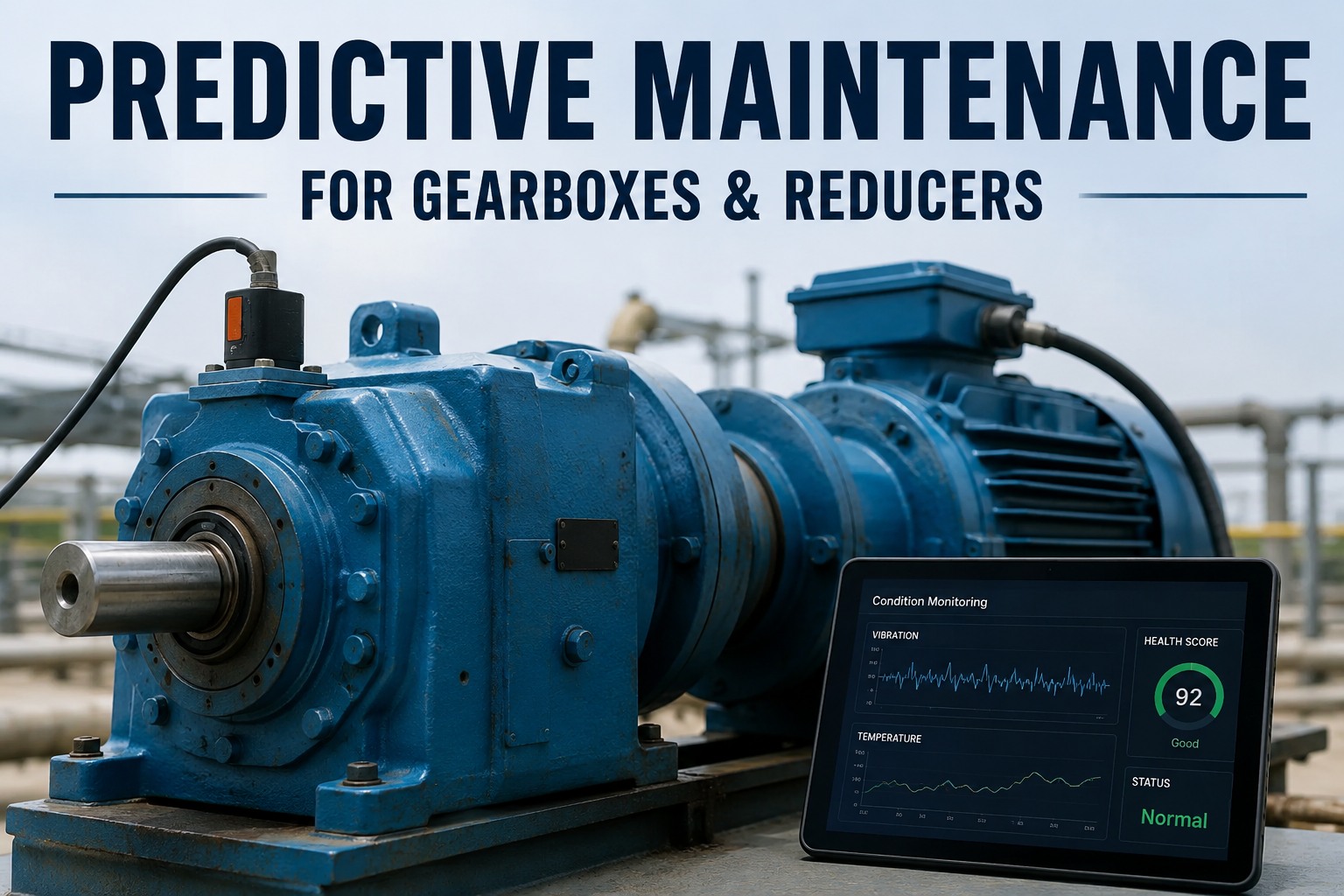
When a gearbox starts to wear or a seal starts to bind, the motor works harder to move the same belt. Current climbs slowly, long before the drive overheats or trips. Trend the amps and you see it. Book a demo to see current alerts raise a work order.
MOTOR CURRENT AS % OF BASELINE · ILLUSTRATIVE, 10 WEEKS
Example alert at 110%
W1
W2
W3
W4
W5
W6
W7
W8
W9
W10
The bars cross the example alert in week 8 and keep climbing. Set your own alert from a measured baseline at normal load, and compare like with like: same product, same belt loading.
Stop Finding Out From the Breakdown.
Put your conveyor drives into OXMAINT AI. Run hours trigger the oil change, current readings raise the alert and the spare is already allocated.
Symptom to Cause: A Quick Guide
Match what you see to the likely cause before you open anything. Start free and attach the fix to the asset history.
What you see
Likely cause
First action
Dark oil, burnt smell
Overheating has oxidised the oil
Change oil, find the heat source
Milky or cloudy oil
Water through a seal or breather
Find the entry point before refilling
Wet output shaft seal
Worn seal, blocked breather or overfill
Check breather and level, then replace seal
Glittering flakes on the plug
Fatigue damage to gears or bearings
Plan an inspection and rebuild
Amps creeping up
Rising friction, belt load or misalignment
Check alignment, oil, and the conveyor itself
Scroll sideways on a phone to see every column.
Clock Three: The Spares That Stop a Short Stop Becoming a Long One
The seal is a ten-minute job when you have it, and a two-day wait when you do not. Hold the small parts that every drive of the same type uses. Book a demo to see spares linked to drives.
OILRight grade gear oil, matched to the nameplate
BREATHEROne per gear unit, replaced yearly
SEALSInput and output shaft seals
COUPLINGWear element for the motor coupling
PLUGSFill, level and magnetic drain plugs
BEARINGSCritical-drive bearing sets for your worst-case unit
EXPERT REVIEWReliability engineering view
Do not wait for a leak to change the seal. Most output-shaft leaks begin with a blocked breather or an overfilled unit, so check both before you blame the seal. If you replace the seal without fixing the cause, the new one will usually leak again. Record the reading and the fix on the asset so the next technician sees the history.
How OXMAINT AI Runs the Three Clocks
OXMAINT AI links run hours, current readings and spare parts to the same gear motor record. Try it free on your most critical conveyor.
HOURSRun-hour PM triggers
Oil changes and seal checks come due by operating hours, not calendar guesses.
AMPSCurrent trend alerts
Log or feed motor current and raise an alert when it climbs past baseline.
ORDERAlert-to-work-order flow
An alert opens a work order with the asset history already attached.
SPARESParts linked to drives
Seals, breathers and oil assigned to each gear motor, with reorder levels.
ROUNDSMobile inspection rounds
Level, leak, noise and temperature checks with photos from the floor.
HISTORYFailure history per drive
See which drives repeat so you can fix the cause, not the symptom.
Questions Maintenance Teams Ask
How often should conveyor gear motor oil be changed?
Why is my gear motor overheating?
How often should the breather be replaced?
What does rising motor current tell me?
Which spares should we keep for each gear motor?
Keep Every Conveyor Drive Running — With OXMAINT AI.
Run-hour oil changes, amp alerts and the right spares, all on one gear motor record. Start with your busiest line.