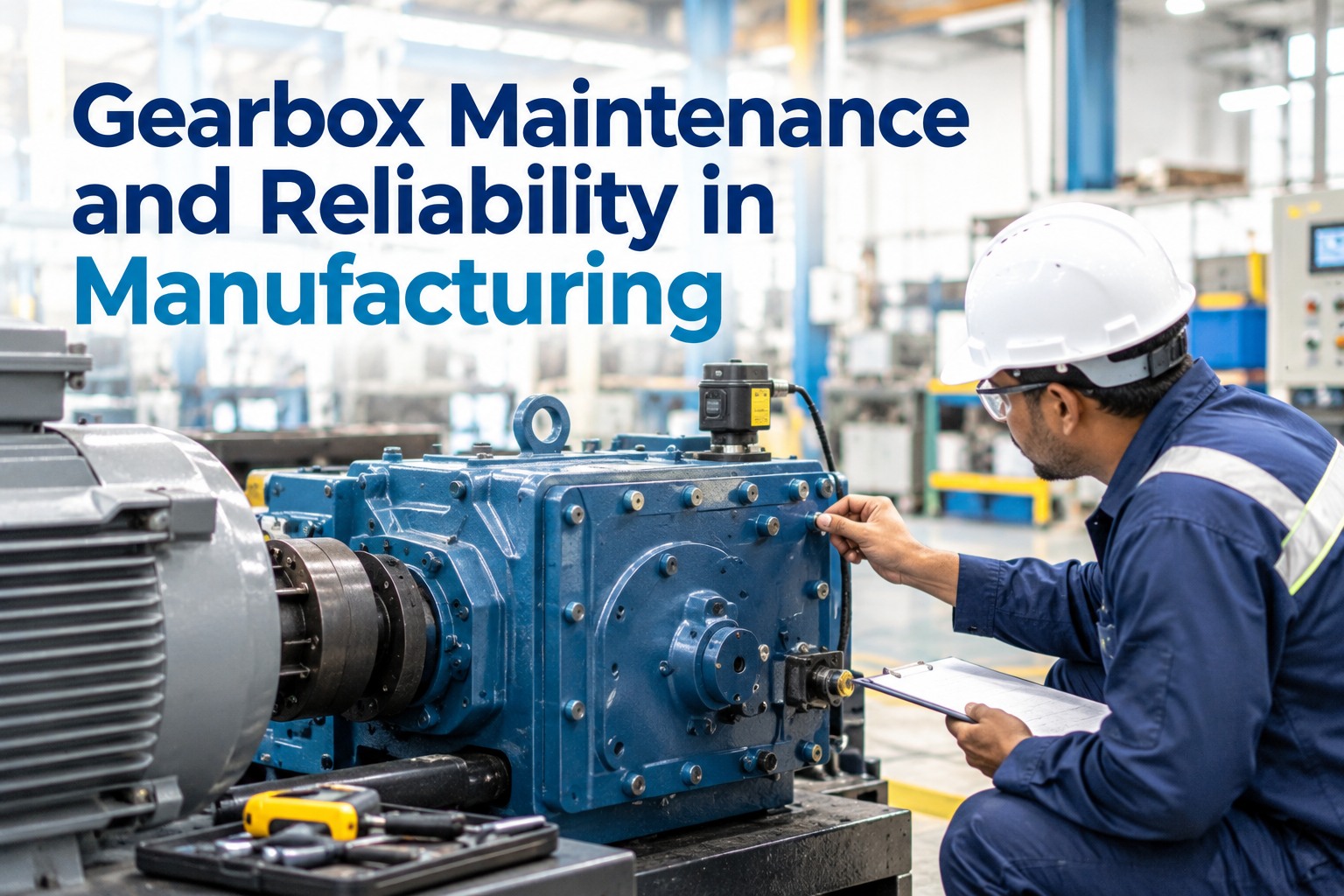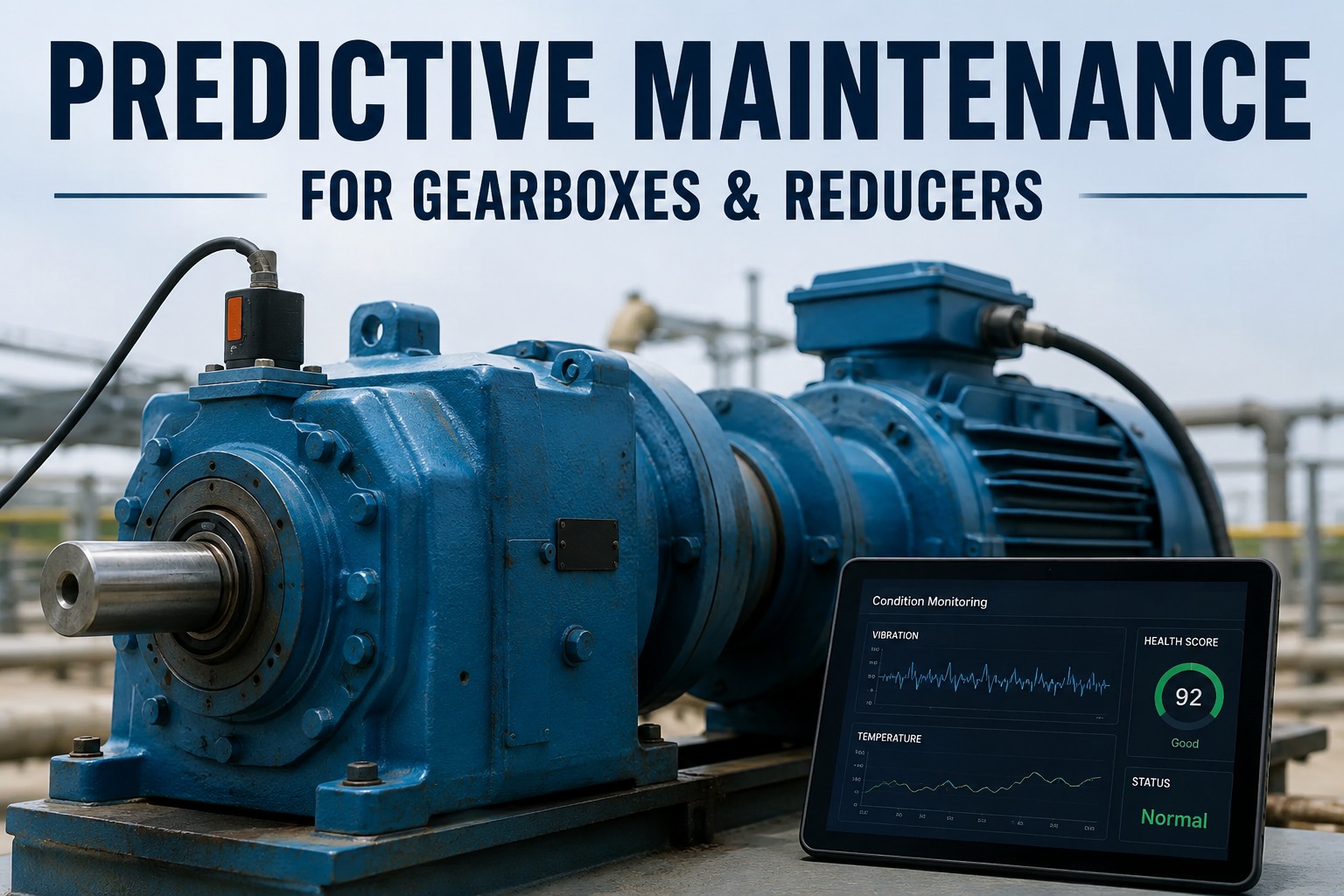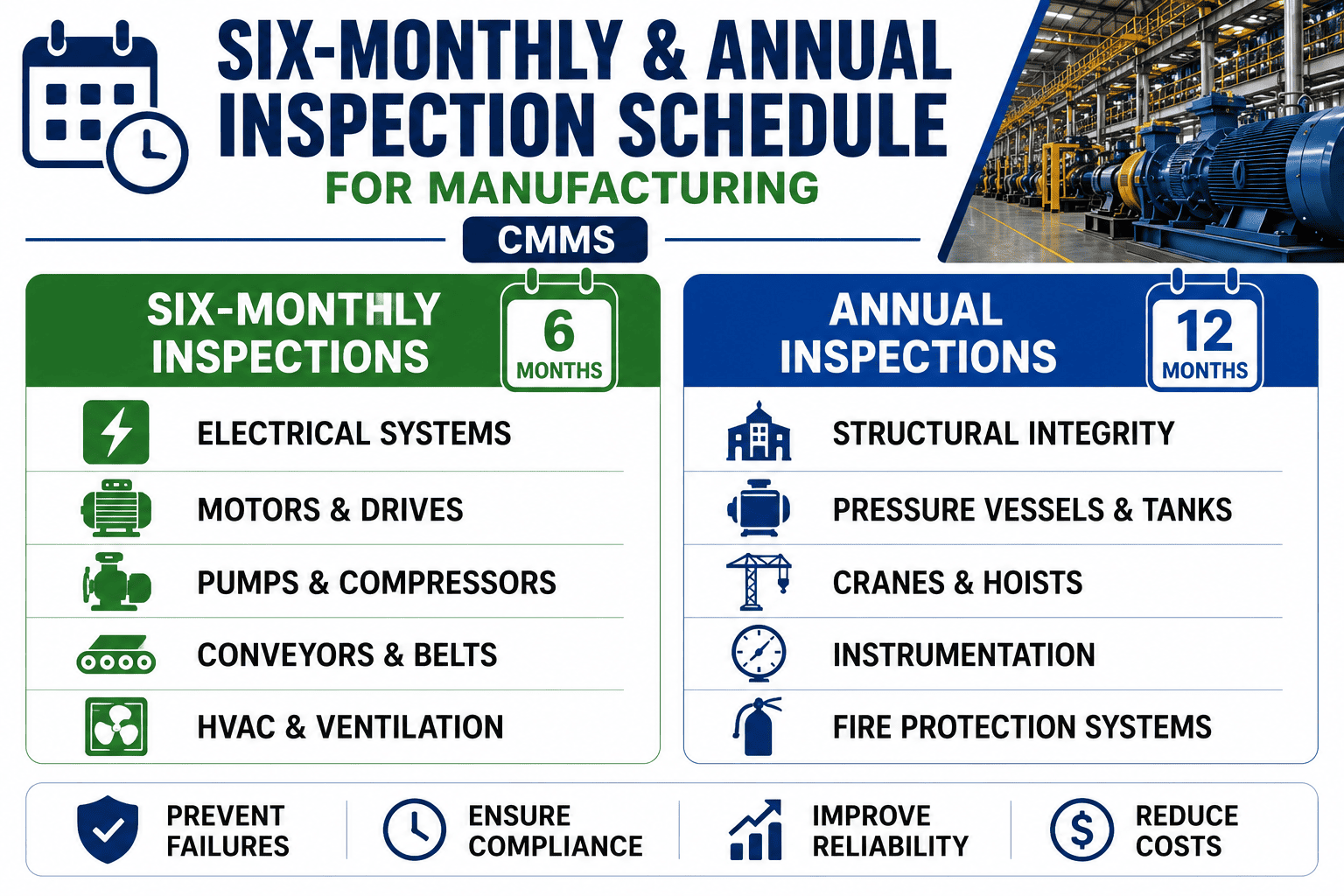
Gear reducer maintenance in manufacturing plants is the difference between a gearbox that runs 60,000+ hours and one that fails at 15,000 — yet most facilities still treat gearboxes as fit-and-forget components until vibration, leakage, or catastrophic seizure forces a reactive repair. This gearbox maintenance guide covers the inspection intervals, oil analysis triggers, backlash measurement techniques, and thermal monitoring practices that reliability teams use to catch warning signs early, plus how to automate the entire PM schedule in a CMMS. Whether you manage five reducers or five hundred, systematizing your gear reducer PM schedule with a platform like OxMaint cuts unplanned downtime by 30–50% and extends asset life by years — you can Start Free Trial today or book a personalized walkthrough to see it mapped to your assets.
Is your gearbox telling you it's about to fail — and is anyone listening?
Over 70% of gearbox failures in manufacturing plants are preceded by detectable warning signs — rising particulate in oil, shifting vibration signatures, housing hotspot formation — for weeks or months before seizure. The problem isn't the gearbox; it's the absence of a condition-based PM system that captures and acts on those signals in time.
detectable warning signs
weeks before breakdown
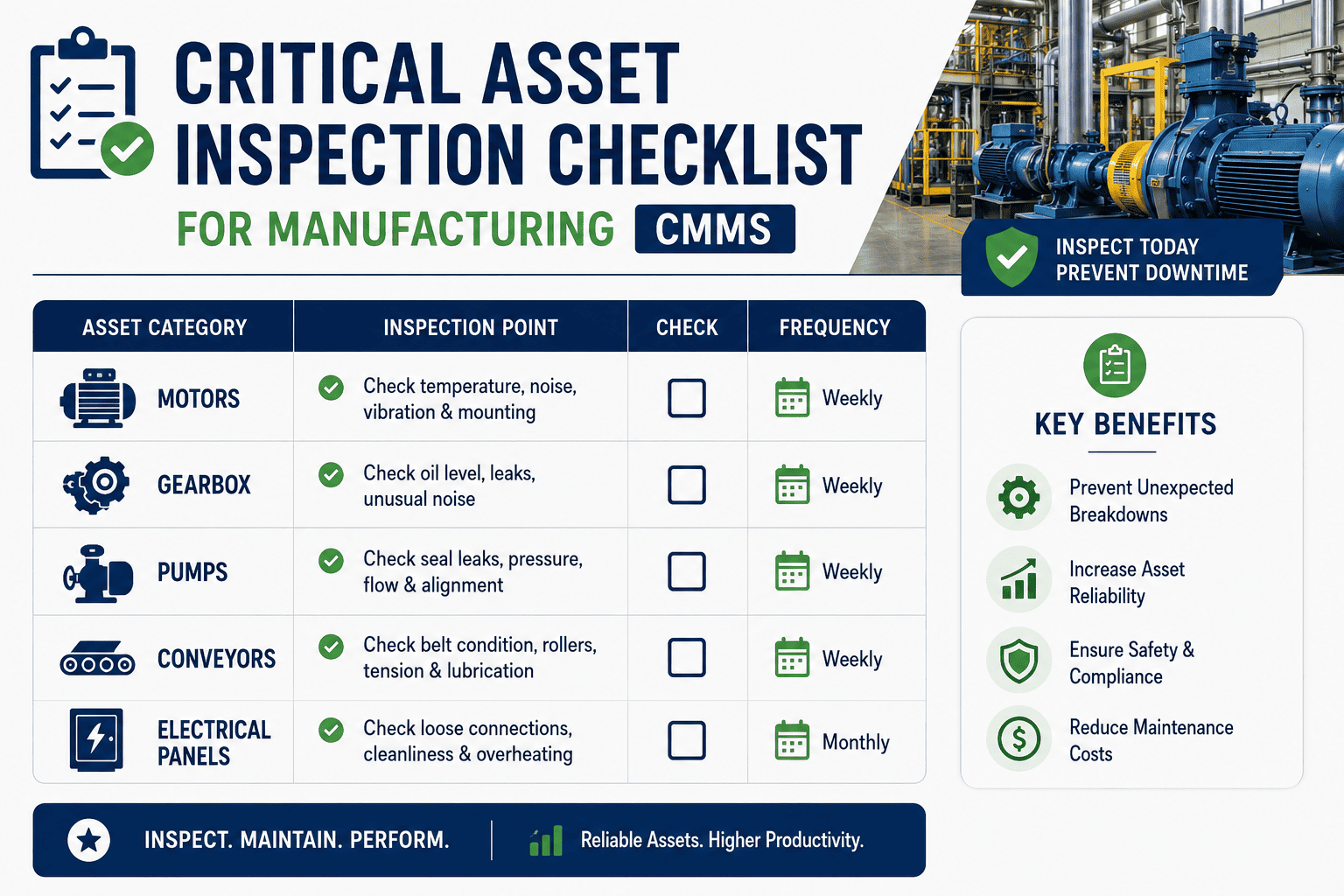
Gear Reducer Inspection Checklist: What to Check, How Often
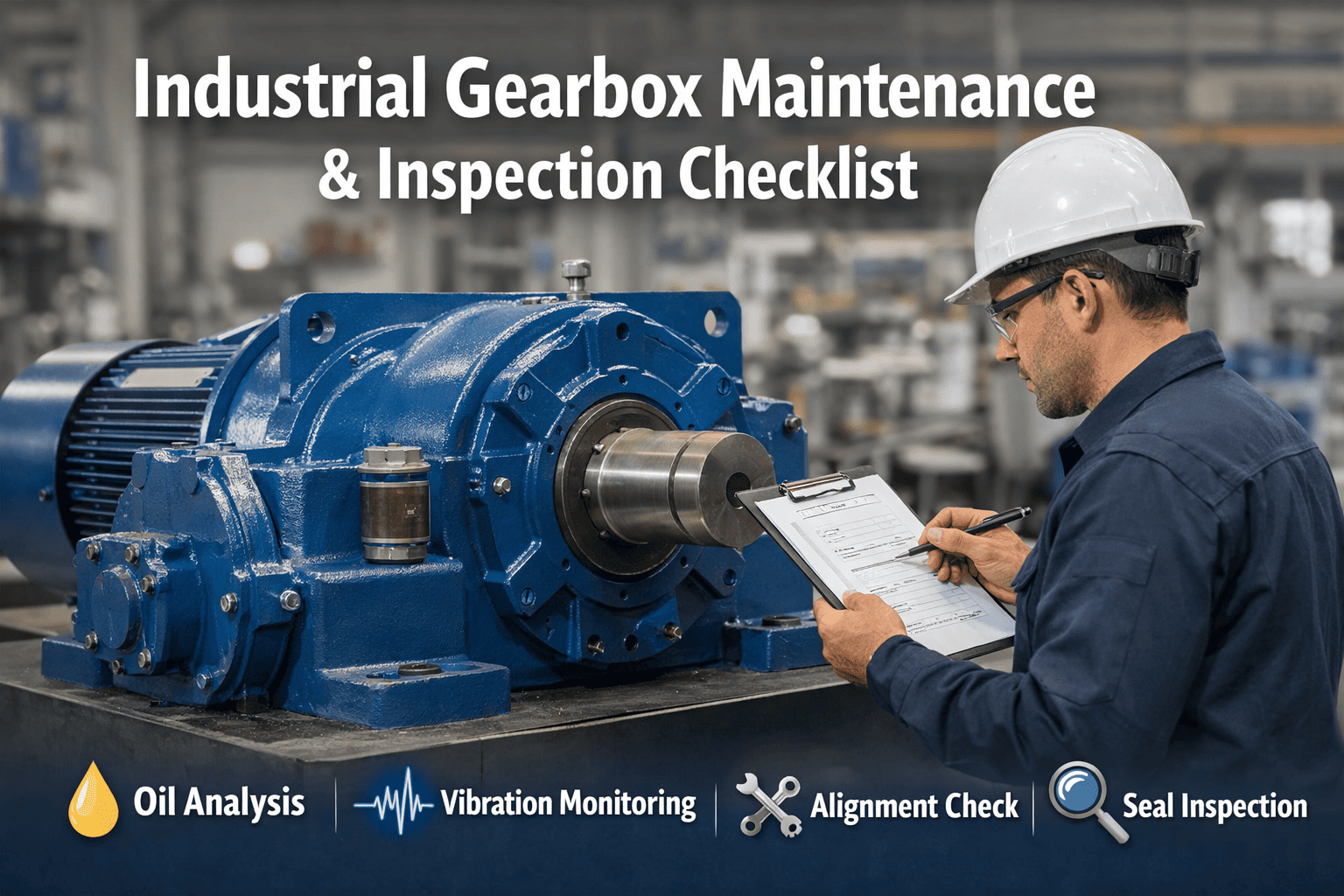
A defensible gear reducer PM schedule breaks inspections into three cadences — shift-level visual checks, monthly condition monitoring, and quarterly deep inspections — each with specific pass/fail criteria. Use these checklist tiers as the baseline for your CMMS gearbox maintenance triggers.
Visual & Sensory Checks
- Oil sight glass level — between MIN/MAX lines; top up if dropped ≥5% since last check
- Housing temperature by infrared gun — flag if >80°C (176°F) at the bearing zone
- Audible noise change — new whine, knock, or grinding is an immediate work-order trigger
- Shaft seal leakage — any oil weeping past the input/output shaft seals
- Breather vent — clear, not clogged with dust or paint overspray
Condition Monitoring
- Vibration spectrum at input & output bearings — trend RMS velocity (mm/s); alarm at ISO 10816 Zone C
- Oil sample — particle count (ISO 4406); target ≤19/16 for industrial gear oils
- Oil sample — ferrography for large ferrous particles indicating gear-tooth wear
- Thermal image of housing — compare to baseline; delta >15°C from ambient is a flag
- Torque / current draw on the motor — rising amps under constant load signal mechanical drag
Deep Mechanical Inspection
- Backlash measurement with dial indicator on output shaft; compare to OEM spec (typically 0.05–0.20 mm)
- Gear tooth contact pattern — inspect through inspection cover for pitting, scuffing, or macropitting
- Oil viscosity test — kinematic viscosity at 40°C; flag if ±10% from nominal grade (e.g. ISO VG 220)
- Water content (Karl Fischer or crackle test) — reject if >500 ppm for mineral gear oils
- Mounting bolt torque — verify to spec; loose foundations cause misalignment and housing stress
Gearbox Oil Change Schedule: Hours, Conditions & Triggers
Time-based gearbox oil changes waste lubricant and labor — and often miss contamination events that occur between intervals. The modern approach is condition-based: set a baseline oil-change ceiling, then use oil analysis to pull the change forward when particulate, water, or viscosity drift exceeds limits.
| Operating Condition | Oil Type | Max Interval (Hours) | Oil Analysis Sample Frequency | Change Trigger |
|---|---|---|---|---|
| Clean, dry, indoor — light duty | Mineral ISO VG 220 | 8,000 h | Every 1,000 h | ISO 4406 > 21/18 or viscosity ±10% |
| Moderate — intermittent shock loads | Mineral ISO VG 320 | 5,000 h | Every 750 h | Water > 500 ppm or Fe > 200 ppm |
| Heavy duty — high ambient / dust | Synthetic PAO ISO VG 220 | 10,000 h | Every 500 h | PQ index > 30 or particle count doubling |
| Washdown / high-moisture environment | Synthetic PAG ISO VG 220 | 6,000 h | Every 500 h | Water > 300 ppm or TAN rise > 1.0 mg KOH/g |
| First fill (break-in period) | Per OEM spec | 500 h | At 250 h & 500 h | Always change — flush break-in debris |
Gearbox Vibration Signatures & Thermal Monitoring for Early Fault Detection
Gear faults produce distinct vibration frequencies long before they're audible or visible — a meshing frequency amplitude rise of just 1.5× baseline can indicate early-stage pitting, while a sideband spacing equal to the shaft RPM points to eccentricity or misalignment. Pairing vibration with thermal imaging gives reliability teams a two-sensor early-warning system that catches 80%+ of mechanical faults in their incipient stage.
Gear Mesh Frequency (GMF)
GMF = (Number of teeth) × (Shaft RPM) ÷ 60. A healthy gearbox shows a clean GMF peak with low amplitude (<3.5 mm/s). Rising GMF amplitude or new sidebands around the GMF indicate tooth wear, misalignment, or localized defects.
Bearing Defect Frequencies
BPFO, BPFI, BSF, and FTF frequencies calculated from bearing geometry. Envelope analysis (demodulation) amplifies these impact signals, revealing outer-race spalling or rolling-element fatigue up to 3–6 months before functional failure.
Housing Thermal Mapping
Infrared thermography of the gearbox housing reveals bearing-zone hotspots, oil starvation, and internal friction build-up. A sustained ΔT of >15°C above the housing's established baseline is a precursor to lubricant breakdown and accelerated wear.
Backlash Trending
Dial-indicator backlash measurements tracked quarterly reveal gear-tooth wear progression. A 50% increase from the OEM specification (e.g., from 0.10 mm to 0.15 mm) signals the gearbox is entering the wear-acceleration phase and should be scheduled for internal inspection.
How to Schedule Gear Reducer PM in a CMMS with Condition-Based Triggers
Moving from a clipboard-and-calendar PM system to a CMMS with condition-based triggers is the single highest-ROI step a maintenance team can take for gearbox reliability. Here's a worked example: a 180-asset manufacturing plant spending $42,000/year on reactive gearbox repairs and replacement implemented OxMaint's condition-based PM triggers — oil analysis alarms, vibration trend breaches, and thermal delta flags auto-generating work orders. Within 12 months, unplanned gearbox downtime dropped 38%, emergency repair spend fell to $19,500, and average gearbox service life extended from 4.2 to 6.8 years.
Register each gearbox as a tracked asset
Input OEM specs, tooth counts, bearing part numbers, oil grade & capacity, and baseline vibration/thermal readings into OxMaint's asset registry. This creates the digital twin every PM trigger references.
Build the PM checklist templates
Create reusable PM templates for daily, monthly, and quarterly cadences — each checklist item carries pass/fail criteria, measurement fields, and photo upload requirements so technicians capture structured data, not free-text notes.
Set condition-based trigger rules
Configure OxMaint's trigger engine: if oil analysis returns Fe > 200 ppm → auto-generate a work order for oil change + internal inspection. If vibration RMS breaches Zone C → auto-generate a vibration diagnostic work order. If thermal ΔT > 15°C → auto-generate a bearing inspection work order.
Link spare parts & vendors
Attach BOMs (bearings, seals, gaskets, oil) to each asset record so condition-triggered work orders auto-reserve inventory and alert purchasing when stock falls below min — no more discovering you're out of the correct seal mid-repair.
Trend, analyze & optimize intervals
OxMaint's analytics dashboard trends vibration, oil, and thermal data per asset over time, letting reliability engineers spot systemic issues (e.g., one gearbox model consistently failing at 12,000 hours) and optimize PM intervals based on real condition data — not guesswork.
How OxMaint Transforms Gear Reducer Maintenance for Manufacturing Plants
OxMaint is an AI-powered CMMS and EAM platform built for maintenance and reliability teams who can't afford reactive gear reducer failures. Here's how four core capabilities map directly to the gearbox maintenance challenges covered above — each with a measurable outcome plants see within the first 90 days.
Condition-Based Work Order Automation
Connect oil analysis lab results, vibration sensors, and thermal imaging data to OxMaint's trigger engine. When any parameter breaches its limit, a prioritized work order auto-generates with the correct checklist, parts, and technician assignment — no manual entry, no missed alarms.
Asset-Level Trending & Analytics
Every vibration reading, oil sample result, and thermal image is stored against the asset record and trended automatically. OxMaint's AI analyzes multi-parameter correlations to predict failure modes weeks before they escalate — turning raw data into maintenance decisions.
Spare Parts & Inventory Linking
Attach BOMs to every gearbox asset — bearings, seals, gaskets, lubricants — with min/max levels and auto-reorder points. Condition-triggered work orders reserve parts instantly and notify purchasing when stock is low, eliminating the "right part, wrong shelf" problem.
Audit-Ready Compliance Records
Every PM, inspection, oil change, and repair is logged with timestamps, technician signatures, measurement data, and photos — building a defensible maintenance history for ISO 55000, OSHA, and insurance audits. Export any asset's full history in one click.
See OxMaint on your gear reducers — book a 30-min demo
We'll map your gearbox fleet, import OEM specs, and build live condition-based PM triggers with you on the call. No slides, no sales pitch — just your assets in the system.
Gear Reducer Maintenance FAQs
How often should gear reducer oil be changed in a manufacturing plant?
For mineral gear oils under normal operating conditions, the maximum interval is 8,000 operating hours or 12 months, whichever comes first. Synthetic oils can extend to 10,000–12,000 hours. However, the best practice is condition-based: sample oil every 500–1,000 hours and change when particulate (ISO 4406 > 21/18), water (> 500 ppm), or viscosity drift (±10%) breaches limits — this typically extends drain intervals 20–40% while catching contamination events early. You can automate these triggers in OxMaint — Start Free Trial to set it up on your assets.
What vibration signature indicates gear tooth wear?
Gear tooth wear shows as an increase in amplitude at the gear mesh frequency (GMF = tooth count × shaft RPM ÷ 60), often accompanied by sidebands spaced at the shaft RPM. A healthy gearbox's GMF amplitude is typically below 3.5 mm/s RMS. Macropitting and scuffing produce impulsive time-waveform patterns, while early-stage micro-pitting may only be visible in envelope (demodulated) spectra. Trend GMF amplitude monthly and trigger a diagnostic work order if it rises 1.5× above baseline.
What is the acceptable backlash for a gear reducer?
Typical OEM backlash specifications range from 0.05 mm to 0.20 mm depending on gearbox size and gear type (helical, bevel, worm, planetary). Measure with a dial indicator on the output shaft while locking the input shaft. The action threshold is 1.5× the OEM spec — if a gearbox rated at 0.10 mm measures 0.15 mm, schedule an internal inspection for tooth wear. Backlash trending quarterly in your CMMS catches progressive wear before it causes shock loading and accelerated failure.
How does a CMMS improve gearbox maintenance compared to spreadsheets?
A CMMS like OxMaint replaces static spreadsheets with automated PM scheduling, condition-based work-order triggers, asset-level data trending, and linked spare-parts inventory. Instead of remembering to check a gearbox every 90 days, the system auto-generates work orders when oil analysis, vibration, or thermal data breaches limits — and reserves the correct parts automatically. Plants typically cut unplanned downtime 30–50%, extend gearbox life by 2–3 years, and eliminate the documentation gaps that fail audits. Book a Demo to see it configured for your fleet.
What temperature should a gearbox housing not exceed?
For most industrial gear reducers, the housing surface temperature at the bearing zone should not exceed 80°C (176°F) under normal operating conditions, and the oil sump temperature should stay below 95°C (203°F) for mineral oils or 110°C (230°F) for synthetics. More important than the absolute temperature is the delta from the established baseline — a sustained increase of more than 15°C at the same load and ambient conditions indicates a developing fault (lubricant degradation, bearing distress, or internal misalignment) and should trigger an inspection work order.
Stop reacting to gearbox failures. Start predicting them.
Join the manufacturing plants using OxMaint to cut unplanned gearbox downtime by up to 50%, extend asset life by years, and eliminate paper work orders for good. Set up your first gear reducer PM trigger in under 15 minutes.
Free 14-day trial · No credit card