A cooling water system does one job — carry heat away from the process and reject it to the air — and it does that job quietly right up until the water turns against the metal it flows through. Scale insulates the surfaces meant to transfer heat, corrosion eats the tubes and piping, and biological growth clogs the fill and breeds organisms you do not want in an open loop. Every one of those is a water problem before it is an equipment problem, which is why cooling water maintenance is really the management of three threats across one loop. This guide covers the threats, the loop, the water chemistry that holds it together, and the maintenance cadence that keeps it running. The OXMAINT AI — the AI-powered maintenance management software — schedules that cadence and holds the readings on every asset in the loop.
Industrial Facilities · Cooling Water Systems · Maintenance Guide · 2026
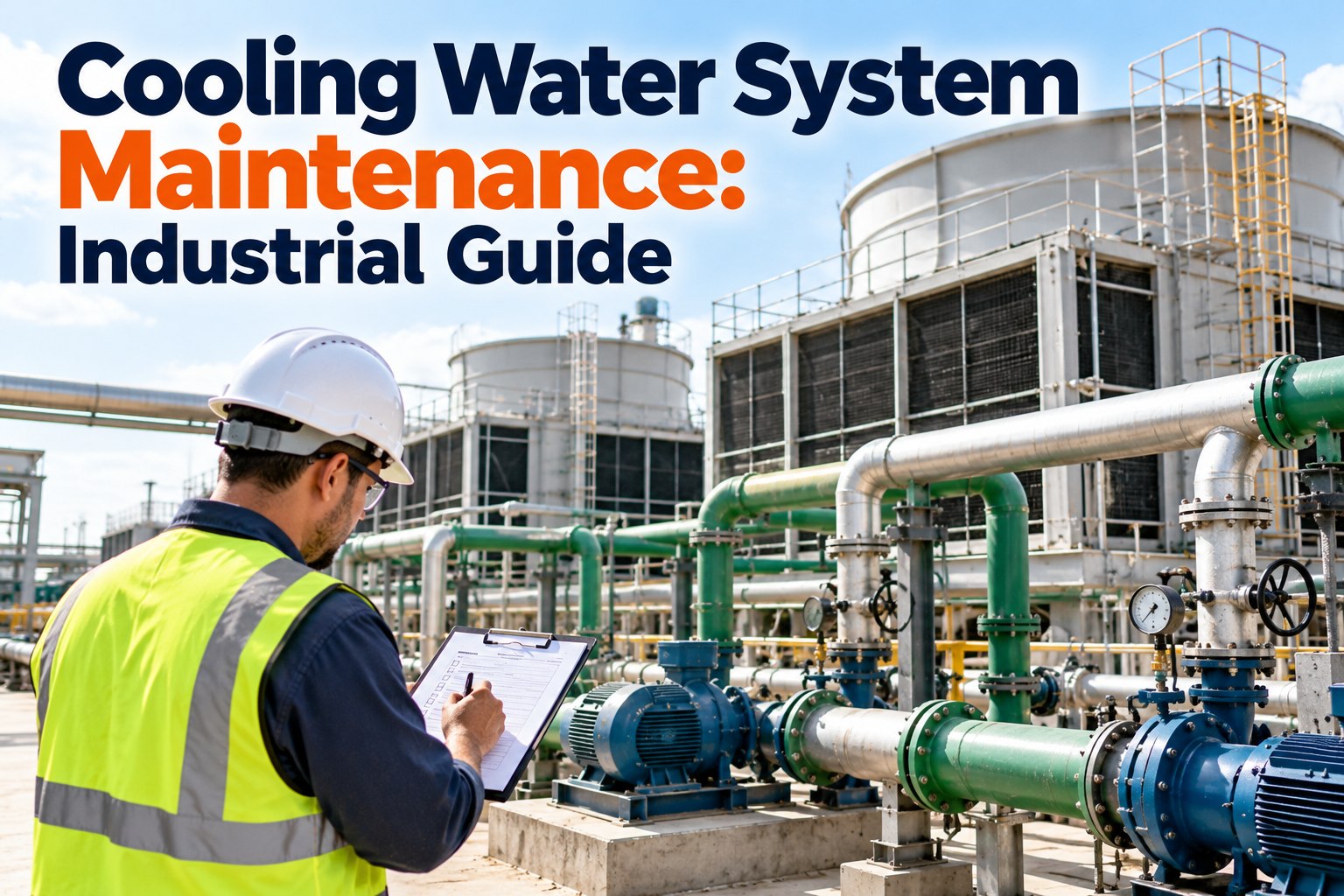
Cooling Water System Maintenance: Industrial Guide
Scale, corrosion and biological growth are the three enemies of every cooling loop. This guide ties them to the system they attack, the water chemistry that holds them back, and the PM cadence that keeps the whole loop reliable — with OXMAINT AI running the schedule.
The Three Enemies of Cooling Water
Almost every cooling water problem is one of three, and water treatment exists to hold all three in balance at once — push too hard against one and you often feed another. Knowing which threat you are fighting is the whole game; start free and track water readings against each threat in OXMAINT AI.
Scale
WhatMinerals come out of the water and harden on hot surfaces
CostsInsulates heat transfer — efficiency and capacity fall
Held byControlling cycles of concentration and scale inhibitor
Corrosion
WhatThe water attacks metal in tubes, piping and the basin
CostsLeaks, thinning tubes and shortened equipment life
Held byCorrosion inhibitor and a controlled pH band
Biological fouling
WhatMicrobial growth and biofilm form in the warm open water
CostsClogged fill, lost transfer and a Legionella risk
Held byBiocide dosing and keeping the loop clean
Where the Threats Attack — the Loop
A cooling loop moves the same water in a circle, and each threat has a place it prefers. Follow the water and you know where to look; book a demo to map every asset in the loop in OXMAINT AI.
Cooling tower
Rejects heat to the air; open to the environment
Biological growth, drift, debris
→
Basin & pumps
Collects cold water and drives it round the loop
Sediment, corrosion, cavitation
→
Heat exchanger / condenser
Where the water actually picks up the process heat
Scale, fouling, approach-temp loss
→
Warm return
Carries heat back to the tower and round again
Where readings are taken
An open tower loop is exposed to air, sun and airborne dirt, so it fights all three threats; a closed loop is sealed and fights mainly corrosion. Most industrial sites run both, which is why the maintenance program has to cover the whole circuit, not one box in it.
The Water Chemistry That Holds It Together
Treatment is a balance of a handful of controlled values. Hold these in band and the three threats stay in check; let them drift and one of the three takes over. This is what a water program actually watches. It scrolls sideways on a phone; start free and log these readings on a schedule in OXMAINT AI.
Parameter
Why it matters
What it controls
pH
Too high scales, too low corrodes
The scale-versus-corrosion balance
Cycles of concentration
How concentrated the recirculating water is
Scale risk versus water and chemical use
Conductivity
A fast proxy for dissolved solids
When to bleed and add makeup water
Inhibitor level
The protective film on the metal
Corrosion and scale protection
Biocide residual
Active agent left to control growth
Biological fouling and Legionella risk
The Loop Does Not Fail All at Once. It Fouls a Little Every Day.
Scale, corrosion and growth are slow — a few thousandths of efficiency here, a slightly higher approach temperature there — until the chiller is working far harder than it should and nobody can say when it started. The OXMAINT AI maintenance management software schedules the readings and the cleaning, trends the numbers and flags the drift, so the loop is managed by data instead of by the next breakdown.
The Maintenance Cadence
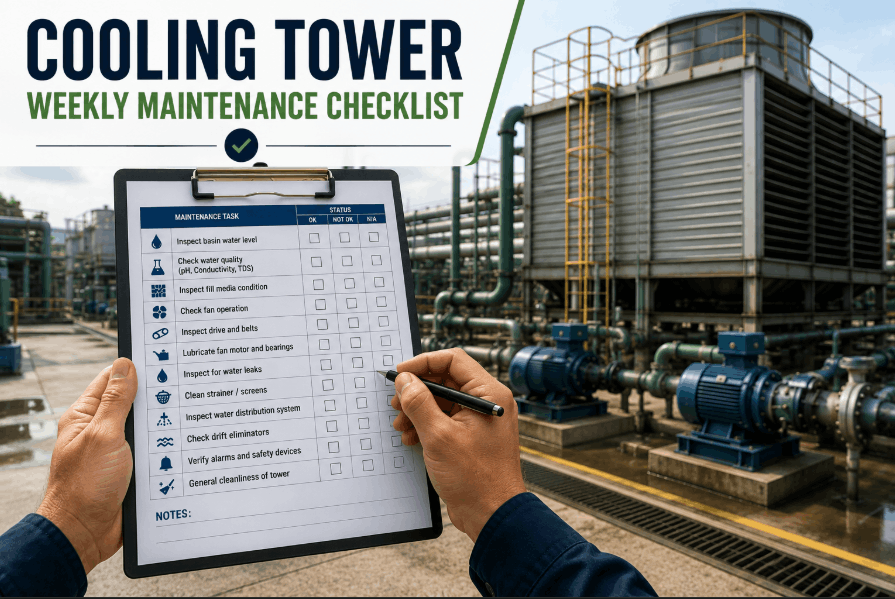
Cooling water work is paced by interval — some things are watched daily, others opened up once a year. This is the rhythm of a sound program, from the quick daily look to the annual teardown; book a demo to put this cadence on auto-schedule in OXMAINT AI.
Daily
Check water levels and makeup, scan for leaks and noise, confirm pumps and fans are running normally.
Weekly
Test pH, conductivity, inhibitor and biocide; inspect the basin for sediment and the fill for fouling.
Monthly
Review water-treatment trends, clean strainers, check drift eliminators and verify bleed and dosing are working.
Quarterly
Inspect heat-exchanger and condenser approach temperatures, check corrosion coupons, service pumps and motors.
Annual
Drain and clean the tower and basin, inspect fill and structure, clean exchanger tubes, overhaul as findings require.
Reading the Symptoms
When performance slips, the symptom usually points straight at one of the three threats — if you know the map. This is the quick read from what you see to what to check; start free and turn a symptom into a work order in OXMAINT AI.
Symptom
Likely cause
Check first
Rising approach temperature
Scale or fouling on exchanger surfaces
Water chemistry, tube cleanliness
Cloudy or slimy water
Biological growth out of control
Biocide residual and dosing
Rust, pitting, thin tubes
Corrosion from chemistry out of band
pH and inhibitor levels
High makeup water use
Excess bleed, drift or a leak
Bleed rate, drift eliminators, piping
White chalky deposits
Scale from high cycles or pH
Cycles of concentration, inhibitor
How OXMAINT AI Runs the Cooling Loop
A cooling water program is a lot of small, timed tasks and readings across many assets — which is exactly what a maintenance platform is built to hold together. Here is what the OXMAINT AI maintenance management software brings to the loop; start free and run the whole cooling program in OXMAINT AI.
Interval-based PM
Daily to annual tasks scheduled across the tower, pumps and exchangers so nothing in the cadence is missed.
Water-reading trends
pH, conductivity, inhibitor and biocide logged and trended, so drift in any one shows up early.
Loop asset register
Every tower, pump, exchanger and dosing unit held as an asset with its own readings and history.
Out-of-band alerts
A reading outside its limit raises a work order, so a chemistry excursion is handled before it attacks metal.
Mobile readings & rounds
Operators capture tower and water readings from a phone on their round, straight onto the record.
Legionella & compliance log
Treatment and testing recorded against the schedule, building the audit trail a water-safety plan needs.
Frequently Asked Questions
What are the three main threats to a cooling water system?
Scale, corrosion and biological fouling. Scale insulates heat-transfer surfaces, corrosion attacks the metal, and biological growth clogs the system and raises a Legionella risk. Water treatment exists to hold all three in balance at once.
What are cycles of concentration?
A measure of how concentrated the recirculating water has become compared with the fresh makeup water, as evaporation leaves minerals behind. Running more cycles saves water but raises scale risk, so it is balanced against chemistry and bleed.
How often should cooling water be tested?
Core chemistry — pH, conductivity, inhibitor and biocide — is commonly tested weekly, with daily visual and level checks and deeper inspections monthly to annually. High-duty or higher-risk systems are tested more often, with the interval set to the system.
What is the difference between an open and a closed loop?
An open loop, like a cooling tower circuit, is exposed to the air, so it concentrates minerals through evaporation and faces all three threats. A closed loop is sealed and recirculates the same water, so it mainly fights corrosion and needs far less makeup.
How does a CMMS help with cooling water maintenance?
It schedules the interval-based tasks, logs and trends the water readings, holds every asset in the loop with its history, raises a work order when a reading goes out of band and keeps the treatment and testing record;
OXMAINT AI runs the whole cooling water program.
Keep the Three Threats in Check — on a Schedule, Not a Shutdown.
Run cooling water system maintenance inside the OXMAINT AI maintenance management software — interval-based PM across the whole loop, water-reading trends, a loop asset register, out-of-band alerts, mobile rounds and a Legionella compliance log — so scale, corrosion and biological growth are managed by data and the loop keeps rejecting heat the way it should.