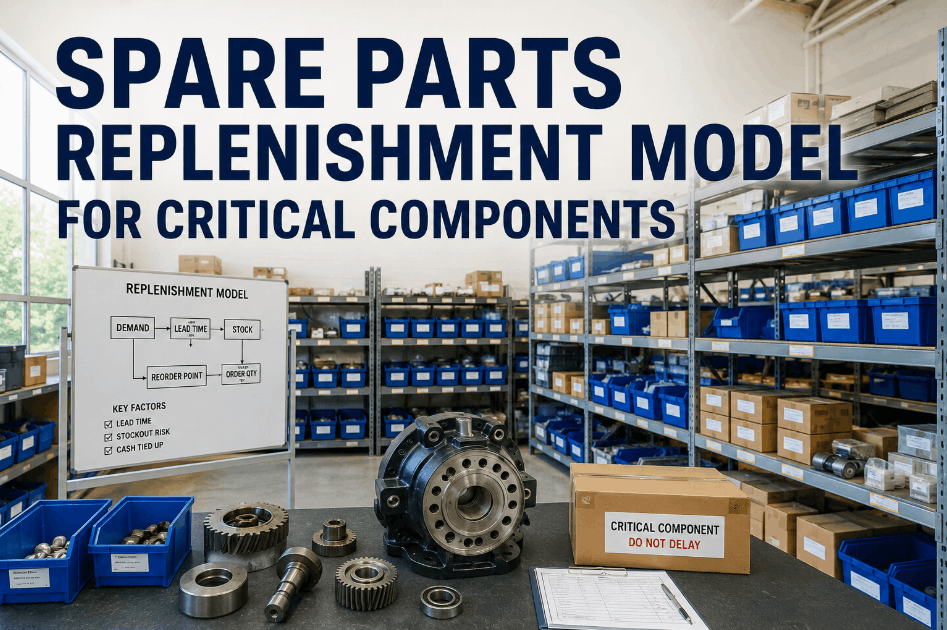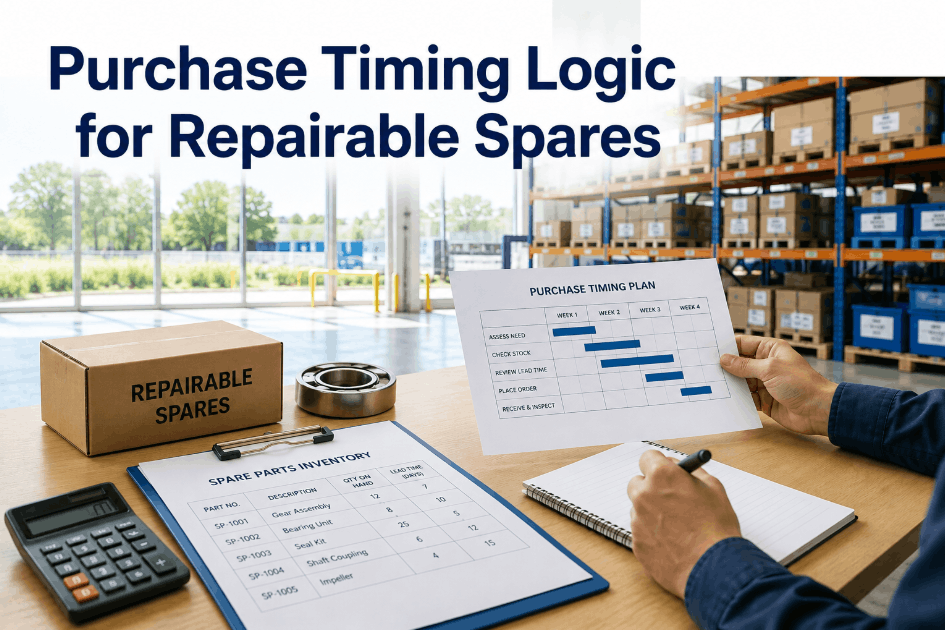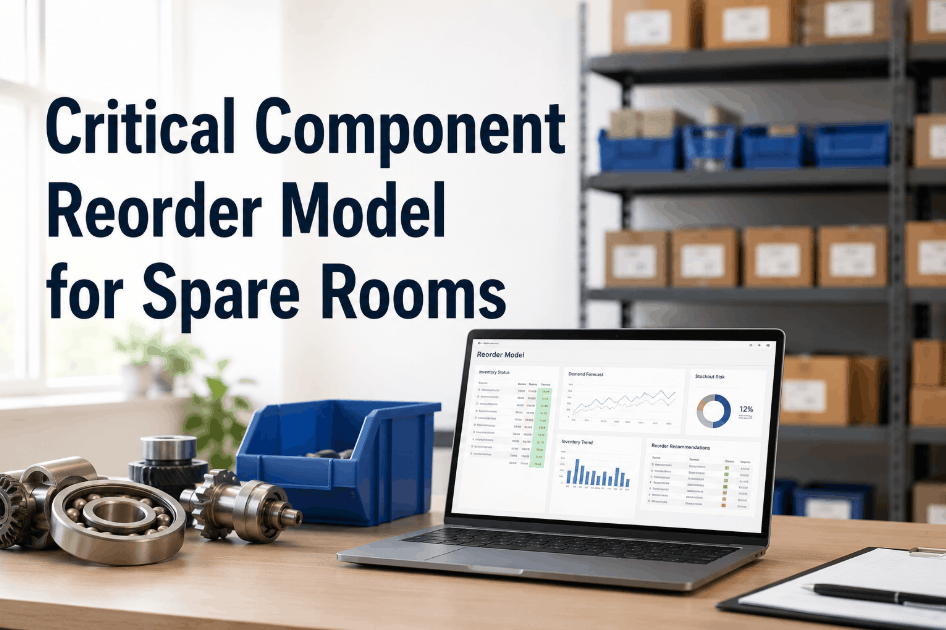
Every storeroom manager has lived the scenario: a technician needs a critical bearing or seal during an urgent breakdown, the shelf is empty, and the next available shipment is five days out. A critical component reorder model eliminates this outcome by defining minimum stock levels, reorder triggers, and lead time buffers for each item in the spare parts register—so the shelf is never empty when an urgent job arrives. Sign Up Free to build your critical component reorder model inside OxMaint, connecting parts inventory to asset records and PM schedules so reorder triggers are automatic rather than reactive. Without a structured reorder model, procurement becomes a series of emergencies: panic purchases at premium prices, expedited freight charges, and production downtime that far exceeds the cost of the part itself. OxMaint tracks every part transaction, links consumption to the asset and work order that used it, and generates reorder alerts before the safety stock level is breached. Book a Demo to see how OxMaint manages critical component inventory across multiple storerooms.
Critical Component Reorder Model for Spare Rooms
Stockouts on critical parts cost more in downtime than the parts themselves. OxMaint connects your spare parts register to asset consumption history, auto-generates reorder alerts, and eliminates panic purchasing with structured lead time management.
What a Critical Component Reorder Model Covers
A critical component reorder model is not a simple min-max spreadsheet. It accounts for demand variance across different maintenance cycles, lead time variability by supplier, criticality of the asset the part serves, and seasonal production patterns that affect consumption rates. For each critical component, the model defines a safety stock level based on worst-case lead time and peak demand, a reorder point that triggers procurement before safety stock is touched, and an order quantity that balances carrying cost against stockout risk. OxMaint stores all of this in the parts register linked to the asset record—so when a part is consumed from a work order, the inventory count updates automatically and triggers a purchase request when the reorder point is reached. Sign Up Free to map your critical components to reorder parameters inside OxMaint. The connection between parts consumption and work orders also gives the model a self-improving data set: as actual consumption is logged against real maintenance events, reorder parameters can be refined based on observed demand rather than estimated usage rates. Book a Demo to see how OxMaint's parts-to-work-order linkage improves reorder accuracy over time.
Connecting Reorder Models to Work Orders and Procurement Workflow
The reorder model is only as reliable as the consumption data feeding it. When technicians pick parts from the storeroom without logging the work order connection, the inventory count drifts from reality and reorder triggers fire at the wrong time—or not at all. OxMaint closes this loop by requiring parts to be issued against a work order, so every consumption transaction is recorded, the inventory count stays accurate, and the reorder model has real demand data to work from. This discipline converts the storeroom from a passive shelf into an active part of the maintenance planning system. Book a Demo to see OxMaint's work-order-to-parts-consumption workflow in a live environment. Vendor performance tracking adds a second layer of reliability: when lead time actuals are logged against purchase orders in OxMaint, the reorder model automatically adjusts safety stock buffers for suppliers whose delivery performance is inconsistent. This removes the human judgement error that causes most safety stock miscalculations in manual systems. Sign Up Free to start tracking vendor lead time performance inside OxMaint.
| Criticality Tier | Min Safety Stock | Reorder Point | Lead Time Buffer | Review Frequency |
|---|---|---|---|---|
| Tier 1 — Critical | 90-day supply | 60 days of demand | Worst-case + 20% | Monthly |
| Tier 2 — Important | 45-day supply | 30 days of demand | Standard + 10% | Quarterly |
| Tier 3 — Routine | 30-day supply | 14 days of demand | Standard lead time | Semi-annual |
| Slow-Moving | 1–2 units | On-hand = 0 | Expedite capable only | Annual review |
Stop Running Out of Critical Parts
OxMaint connects your spare parts register to asset criticality, work order consumption history, and vendor lead times—generating automatic reorder alerts before safety stock is touched and ending panic purchasing for good.
Frequently Asked Questions — Critical Component Reorder Model for Spare Rooms
Build Your Critical Component Reorder Model with OxMaint
OxMaint automates spare parts reorder triggers, tracks consumption against work orders, manages vendor lead times, and eliminates the panic purchasing cycle. Free to start. Keep your storeroom ready for every urgent job.